
Montana Pawprint Economy 2026: Dog-Friendly Travel Guide to Bozeman, Yellowstone, and Big Sky
With pet-inclusive travelers spending 30% more per trip and extending stays by 15%, Montana transforms into the premier Western frontier for adventurous dogs and their owners.

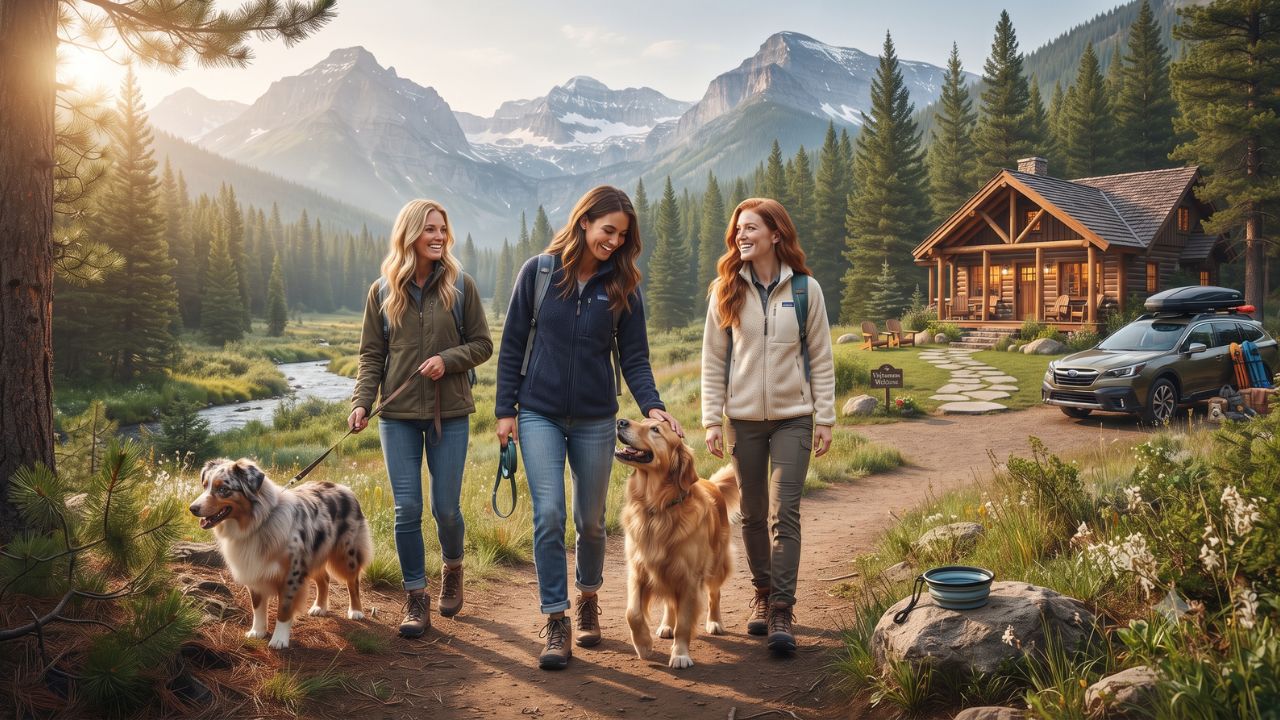
While federal regulations strictly restrict domestic pets to within 100 feet of paved roads inside Yellowstone and Glacier National Parks to prevent dangerous wildlife encounters, neighboring national forests provide millions of acres of open backcountry trails for leashed four-legged explorers. Fueling a high-yield travel sector across Big Sky Country, pet-inclusive travelers spend an estimated 30% more per vacation on specialized lodging, local dining, and gear than traditional tourists, generating extended stays that sustain year-round mountain economies.
The $5.45 Billion Pawprint Economy: High-Yield Canine Tourism in Big Sky Country
According to state economic impact reports published through Visit Montana, non-resident tourism brings over 12.5 million annual visitors who contribute upwards of US$5.45 billion in direct expenditure, sustaining 66,550 local jobs and generating US$414 million in state and municipal taxes—saving the average Montana household approximately US$930 annually in local tax burdens.
Within this broader visitor economy, the global pet travel market is projected to expand from US$2.8 billion toward US$4.0 billion at an 8.9% compound annual growth rate, with North America capturing 40% to 42% of global volume. Because roughly 78% of pet owners actively prioritize animal-friendly amenities when booking holidays, gateway hubs like Bozeman, Big Sky, Whitefish, and Gardiner are experiencing strong commercial returns.
Accommodations catering to pets—including Element Bozeman, The Lark Hotel, and Sage Lodge in Paradise Valley—record a 15% higher average length-of-stay metric compared to standard bookings.
| Land Management Jurisdiction | Permitted Pet Zones | Strict Leash & Boundary Mandates | Top Recommended Corridors |
|---|---|---|---|
| Yellowstone & Glacier National Parks | Paved roads, parking lots, developed campgrounds | 100-foot limit from pavement; barred from all trails | Scenic vehicle pullouts & paved viewpoint loops |
| Custer Gallatin National Forest | Entire backcountry & alpine trail system | Leash required around trailheads & campgrounds | Hyalite Reservoir & Emerald Lake trails |
| Flathead National Forest | Mountain trail networks & lake shores | Voice control or physical leash on wilderness trails | Whitefish trail networks & Flathead Lake |
| Montana State Parks | Designated recreation trails & picnic areas | 8-foot maximum physical leash length mandatory | Missouri Headwaters & Lewis and Clark Caverns |
| City of Bozeman Municipal Parks | Dedicated off-leash acreage | Off-leash permitted within designated park fences | Snowfill Dog Park & Gallatin County Regional Park |
Regional private transportation outfitters, such as Whitefish Tours & Shuttle, report a 25% year-over-year increase in private charter requests from travelers arriving via Bozeman Yellowstone International Airport and Missoula Montana Airport who require direct, pet-safe transport to backcountry trailheads.
What Makes Montana's Public Lands and National Parks Different
Navigating outdoor recreation with a dog in Montana requires understanding the boundary distinctions between National Park Service land and United States Forest Service terrain. In high-density reserves like Glacier National Park—which draws over 3 million annual recreational visitors—and the Yellowstone National Park caldera, pets are completely prohibited on boardwalks, hiking trails, and thermal basins to protect sensitive geothermal crusts and avoid provoking grizzly bears, bison, or gray wolves.
Conversely, adjacent public lands managed by the US Forest Service welcome leashed dogs across rugged alpine routes. The Hyalite Canyon recreation area outside Bozeman offers pristine glacial reservoirs and forested switchbacks where pets can hike freely alongside their owners.
Under dining regulations enforced by the Montana Department of Public Health and Human Services, animals are prohibited inside commercial kitchen and indoor dining spaces, but local craft breweries and cafes have built heated outdoor patios and side entrances to welcome leashed pets.
Visitor Insider Tips
- Observe the 100-Foot National Park Rule: When driving the Grand Loop Road in Yellowstone, keep your dog within 100 feet of your vehicle and never leave pets unattended inside parked cars during warm summer days.
- Obtain Veterinary Core Records Before Departure: Carry physical copies of your dog's signed rabies vaccination certificate and ensure permanent microchip registration is active before crossing state lines.
- Administer Proactive Tick and Parasite Preventatives: Regional veterinary clinics report a 20% seasonal spike in tick-borne treatments; apply preventative tick treatments before exploring dense sagebrush or riverbanks.
- Utilize Dedicated Off-Leash Havens in Bozeman: Visit the 37-acre fenced Snowfill Dog Park in northern Bozeman or Gallatin County Regional Park to let your dog run off-leash safely.
- Pack an 8-Foot Leash and Bear Spray: State park guidelines mandate an eight-foot maximum leash length; always carry EPA-approved bear deterrent spray on an accessible chest or waist holster while hiking forest trails.
Cultural and Environmental Context
Responsible pet tourism depends on strict adherence to Leave No Trace principles. Domestic dog scent and territorial barking can disturb native ungulate populations like bighorn sheep and elk, particularly during spring calving seasons.
By cleaning up all pet waste, respecting working ranch livestock fences, and keeping animals secured on authorized trails, traveling dog owners help preserve Montana's fragile wilderness balance while supporting rural gateway communities.
FAQ: Traveling with Dogs in Montana & Yellowstone 2026
Are dogs allowed on hiking trails in Yellowstone or Glacier National Parks?
No, dogs are strictly prohibited on all hiking trails, boardwalks, and thermal areas; they are only permitted within 100 feet of paved roads, parking areas, and campgrounds.
What is the maximum leash length allowed in Montana State Parks?
Montana State Parks require pets to remain secured on a physical leash measuring no longer than eight feet in length at all times.
Can dogs join diners at restaurants and breweries in Montana?
State health codes prohibit live animals inside indoor dining rooms, but dozens of craft breweries and restaurants allow leashed dogs on outdoor patios.
Which national forests near Bozeman allow dogs on hiking trails?
Custer Gallatin National Forest and Flathead National Forest permit leashed dogs on extensive backcountry trails, including the Hyalite Reservoir corridor.
From high-alpine pine trails to welcoming patio firesides in Bozeman, exploring Montana alongside your loyal companion unlocks the true spirit of the American frontier.
Related Travel Guides
Disclaimer
This article is for informational and educational purposes only. It does not constitute legal, financial, or professional advice. While we strive to provide accurate and up-to-date information, travel policies, regulations, and conditions change rapidly. Always verify information with official sources before making travel decisions. Nomad Lawyer makes no representations about the accuracy, reliability, completeness, or suitability of the information provided. Readers should consult qualified professionals for advice specific to their circumstances. The views expressed in this article are those of the author and do not necessarily reflect the views of Nomad Lawyer.
Preeti Gunjan
Contributor & Community Manager
A passionate traveller and community builder. Preeti helps grow the Nomad Lawyer community, fostering engagement and bringing the reader experience to life.
Learn more about our team →