
Mohe China Travel Guide: Arctic Village, -53°C Frost, and Greater Hinggan Ecotourism

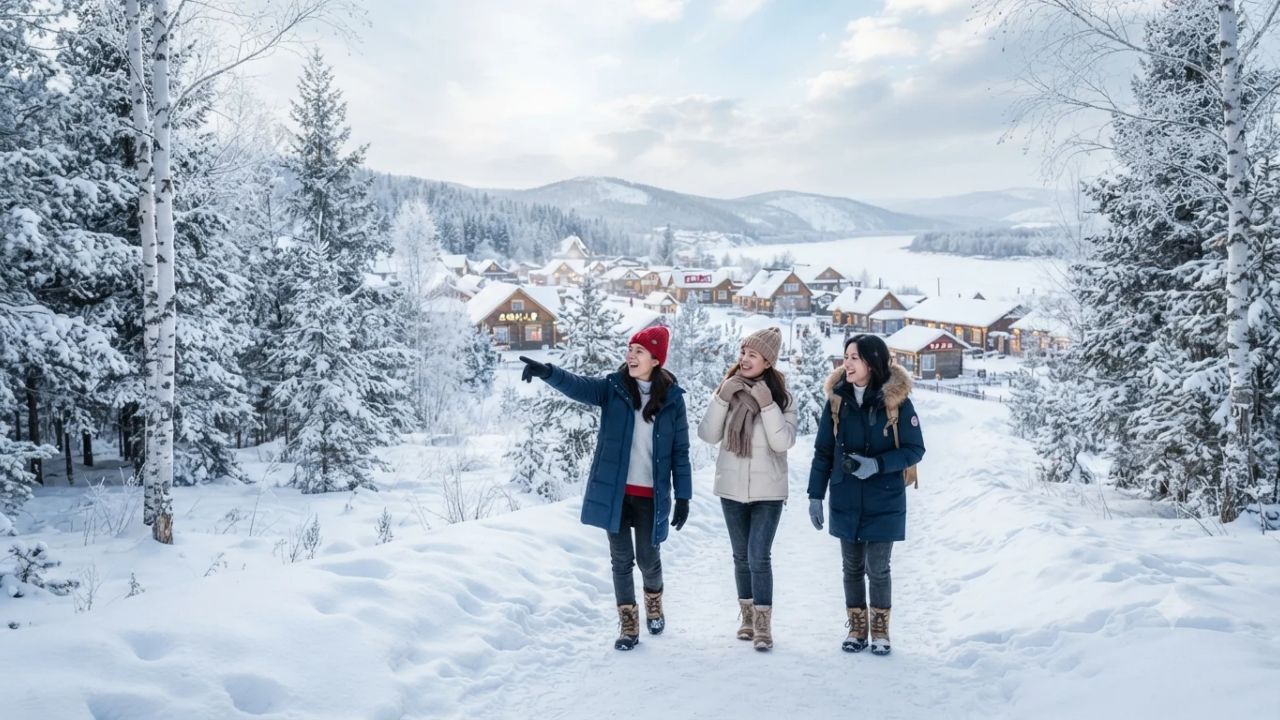
At 53 degrees north latitude along the Russian frontier, Mohe holds the record for China's all-time coldest temperature at minus 53 degrees Celsius. Once an isolated outpost reliant on destructive placer gold mining and industrial timber harvesting, China's northernmost city has engineered a massive economic pivot into cold-climate ecotourism, drawing 2.73 million visitors to Beiji Village alone and generating 2.57 billion yuan in annual tourism revenue in 2025.
Perched at the northern crown of Heilongjiang Province within the boreal forests of the Greater Hinggan Mountains, Mohe has turned extreme sub-zero weather into its greatest asset. Today, travelers make the long trek north to sleep in heated rural homestays, sample artisanal blueberry ice wine, carve through deep powder at the Arctic Ski Resort, and search for northern lights along the frozen bends of the Amur River.
From Sub-Zero Frontier to Thriving Arctic Hub
The transformation of Mohe centers on Beiji Village (Arctic Village), located right on the international border. Over the past three years, over 200 entrepreneurs and hospitality workers arrived from across China to establish new businesses, constructing more than 130 boutique guesthouses and hotels containing over 2,600 guest beds. This hospitality expansion is backed by 25 major investment projects totaling 1.292 billion yuan, transforming rustic timber cabins into cozy, well-insulated sanctuaries equipped with energy-efficient radiant heating systems.
Mohe's sub-polar climate has also attracted high-tech automotive engineering alongside leisure travelers. The city completed a specialized 22,000-square-meter cold-region vehicle testing center. During the 2025–2026 winter testing season, 75 automobile manufacturers and more than 2,400 engineers and technicians arrived to test electric vehicle batteries, cold-start engines, and electronic braking systems under real-world Arctic conditions.
For leisure travelers, winter sports begin earlier here than anywhere else in China. The Arctic Ski Resort routinely ranks among the nation's earliest ski destinations to open each year, offering early-season alpine skiing and snowboarding when other regional resorts are still waiting for autumn frosts. Travelers can plan train journeys across Heilongjiang Province directly via China Railway, which operates daily overnight express sleeper routes from Harbin to Mohe.
What Makes Mohe Different
Mohe offers an Arctic encounter distinct from Scandinavian or North American sub-polar destinations. It blends northern Chinese village traditions, Evenki and Oroqen indigenous heritage, and Russian cross-border influences into a distinctive cultural experience.
The primary attraction remains the sensory encounter with extreme cold. In temperatures hovering between minus 30°C and minus 45°C during peak winter months, boiling water tossed into the air instantly vaporizes into an expanding cloud of ice crystals—a favorite ritual among visiting photographers. Yet inside village homestays, traditional brick kang bed-stoves and modern floor-heating keep rooms toasty warm at 22°C.
The local culinary scene reflects the abundance of the taiga forest. The region's wild berry cultivation generates roughly 450 million yuan in annual output, supported by over 400,000 cultivated blueberry plants. Visitors can taste artisanal blueberry ice wine fermented from frost-kissed wild berries, paired with braised wild forest mushrooms, cold-water Amur river fish, and mountain ginseng stews.
Under clear, dark night skies between September and March, lucky travelers can spot faint ribbons of the aurora borealis, making Beiji Village China's premier domestic location for polar light observation. Official cultural tourism planning details and regional permits can be referenced through the Ministry of Culture and Tourism of China.
Visitor Insider Tips
Navigating deep sub-zero travel in China’s far north requires careful logistical and physical preparation:
- Four-Layer Clothing Rule: Dressing for minus 40°C requires a moisture-wicking thermal base layer, a heavy fleece or wool mid-layer, an 800-fill down jacket, and a windproof, waterproof outer shell. Wear thick-soled snow boots with wool socks, insulated mittens, face balaclavas, and ski goggles.
- Battery Management: Extreme cold drains lithium smartphone and camera batteries within minutes. Keep phones inside inner coat pockets close to body heat, carry portable power banks with chemical hand warmers taped to them, and bring mechanical camera spares.
- Transit Routing via Harbin: Fly into Harbin Taiping International Airport or Mohe Gulian Airport. For a classic northern journey, take the K7041 or K7039 overnight sleeper train from Harbin, watching the dense birch and larch forests roll past your frosted window.
- Summer vs. Winter Timing: December to February provides prime snow and ice scenery. However, visiting between June and August offers 18-hour summer daylight, midnight twilight phenomena, green forest hiking, and pleasant 20°C weather.
- Forest Foraging Specialties: Shop for dried wild morel mushrooms, mountain honey, and certified wild blueberry jams from farmer co-op shops in Beiji Village rather than souvenir stalls at the train station. For international travel advisories, consult the China National Tourist Office.
Cultural and Environmental Context
Mohe’s shift from resource exploitation to environmental conservation represents one of northern China’s most significant ecological success stories. For decades during the late 20th century, placer gold mining scarred riverbeds and commercial logging stripped ancient larch and pine forests across the Greater Hinggan range.
Recognizing the severe risk of environmental degradation, regional authorities permanently banned placer gold mining and halted commercial timber logging in natural old-growth forests. Extensive reforestation programs restored degraded river valleys, creating secure habitats for more than 180 species of migratory birds that now nest across the wetlands during summer months.
The local economy now thrives on preserving biodiversity rather than cutting it down. Former loggers and miners work as forest rangers, wildlife guides, and guesthouse operators. By upgrading village heating grids to clean electric systems, Mohe protects its pristine air quality and fragile snowscapes, demonstrating how remote border communities can achieve sustainable prosperity through conservation-led tourism.
FAQ: Visiting Mohe 2026
What is the coldest temperature ever recorded in Mohe?
Mohe recorded China's lowest official temperature on record at minus 53 degrees Celsius (-53°C).
How do I get to Beiji Village from Mohe Airport or Railway Station?
Local shuttle buses and licensed shared minivans run regularly from Mohe town center and Gulian Airport to Beiji Village, taking about 90 minutes.
Can you see the Northern Lights in Mohe?
Yes, during periods of high solar activity and clear winter or summer solstices, the aurora borealis can occasionally be observed from Beiji Village.
What kind of food is popular in Mohe?
Local cuisine centers on hearty northeastern dishes, wild forest mushrooms, mountain ginseng, cold-water fish, and specialty wild blueberry ice wine.
At the far northern edge of China, where breath turns to frost in seconds, Mohe proves that the world's coldest frontiers can offer the warmest hospitality.
Related Travel Guides
Disclaimer
This article is for informational and educational purposes only. It does not constitute legal, financial, or professional advice. While we strive to provide accurate and up-to-date information, travel policies, regulations, and conditions change rapidly. Always verify information with official sources before making travel decisions. Nomad Lawyer makes no representations about the accuracy, reliability, completeness, or suitability of the information provided. Readers should consult qualified professionals for advice specific to their circumstances. The views expressed in this article are those of the author and do not necessarily reflect the views of Nomad Lawyer.
Kunal K Choudhary
Co-Founder & Contributor
A passionate traveller and tech enthusiast. Kunal contributes to the vision and growth of Nomad Lawyer, bringing fresh perspectives and driving the community forward.
Learn more about our team →