
7.8 Magnitude Mindanao Earthquake Kills 50+ in Philippines, Triggers Tsunami Alerts and Mass Evacuations
A devastating 7.8 magnitude earthquake struck Mindanao on June 8, 2026, killing dozens, triggering tsunami warnings, and causing massive infrastructure collapse across southern Philippines.

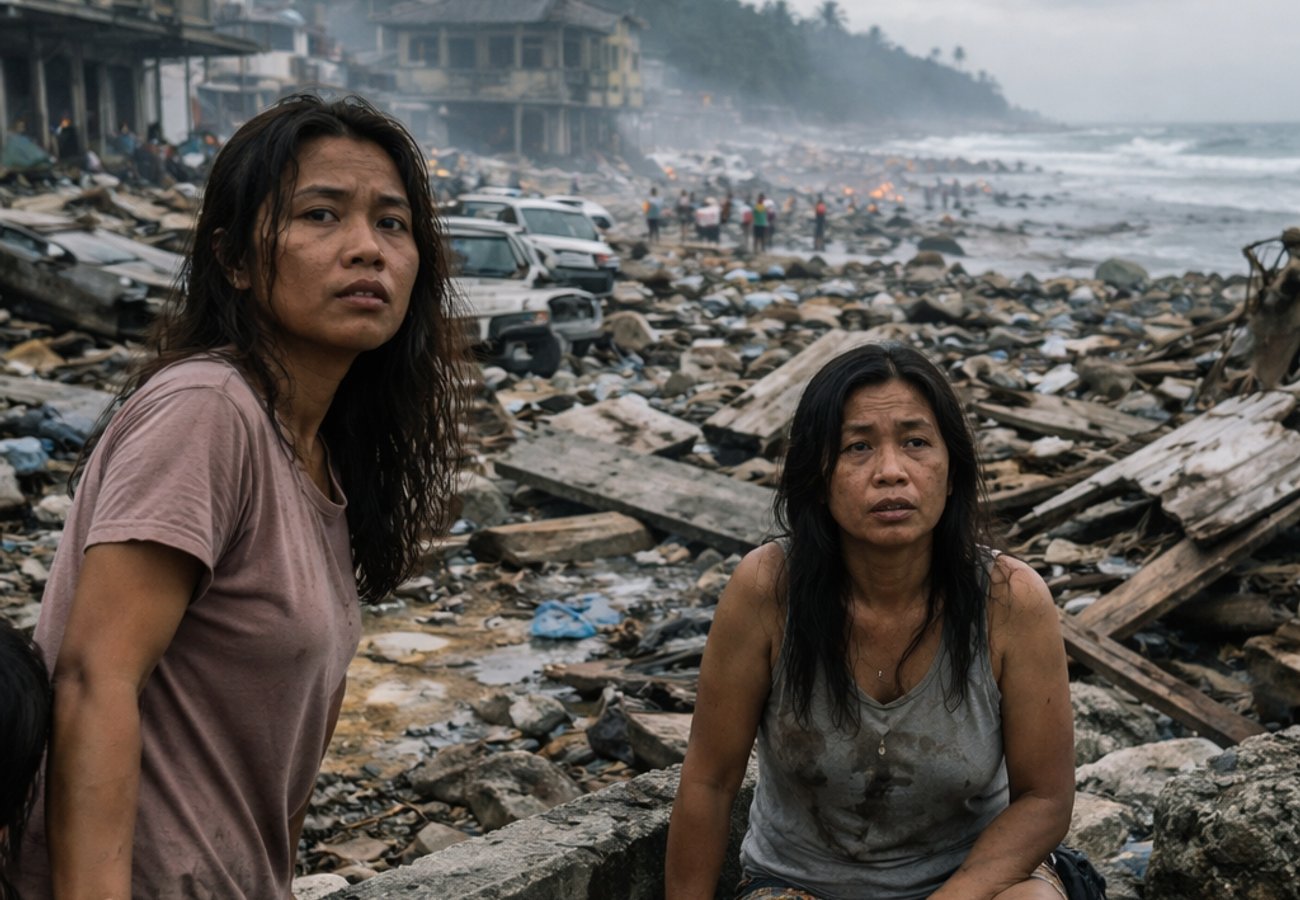
Image generated by AI
Southern Philippines Plunged into Crisis as Violent Earthquake Strikes Without Warning
The morning of June 8, 2026, began like any other in the Philippines—until the ground itself became the enemy. At approximately 7:37 am local time, a catastrophic magnitude 7.8 earthquake ripped through the waters off Sarangani Province in Mindanao, shaking the region with such violence that buildings crumbled, families were torn from sleep, and an entire nation held its breath.
The Philippine Institute of Volcanology and Seismology (PHIVOLCS) confirmed the epicenter lay 32 kilometers south of Maasim, at a depth of approximately 33 kilometers beneath the ocean floor. What followed was a nightmare unfolding in real time across southern Philippines' most vulnerable communities.
The Ground Becomes Treacherous: Eyewitness Accounts of Destruction
Witnesses described scenes of pure chaos as the earth convulsed with terrifying force. Buildings swayed like trees in a hurricane, concrete cracked open like eggshells, and panic-stricken residents poured into the streets, many still in their nightclothes.
General Santos City bore the brunt of the devastation. Schools, hospitals, and residential structures suffered catastrophic damage or total collapse. In nearby towns like Glan and Tupi, entire blocks of buildings were reduced to rubble. The unpredictability of the violence meant there was no time to prepare—residents simply had to react and pray.
Reddit: "My cousin was at school when it hit. She said the entire building swayed and kids were screaming. Teachers had to drag them outside." — r/Philippines
Death Toll Climbs as Search and Rescue Teams Race Against Time
Initial reports from the Office of Civil Defense (OCD) confirmed at least 15 confirmed deaths, though authorities warned that the true toll would likely climb as rescue teams penetrated collapsed structures and remote communities reported in. Families remained missing under tons of concrete and twisted metal, their fate unknown as rescue workers operated around the clock.
The scale of the disaster triggered an immediate national mobilization. The National Disaster Risk Reduction and Management Council (NDRRMC) coordinated emergency response operations, dispatching military units, search and rescue teams, and local disaster volunteers to affected zones across the Soccsksargen and Davao Regions.
Tsunami Warnings Force Mass Coastal Evacuations
In the earthquake's immediate aftermath, PHIVOLCS issued urgent tsunami warnings for Sarangani Province and all surrounding coastal areas. Residents were ordered to move inland or to elevated ground immediately. The alert extended beyond Philippine borders—the Pacific Tsunami Warning Center extended warnings to Indonesia, Malaysia, Palau, and other Pacific nations.
Coastal evacuations unfolded with remarkable speed. Fishing communities and low-lying towns were cleared as authorities braced for potential ocean surge. Fortunately, when ocean waves were eventually monitored, they posed far less widespread risk than initially feared, and warnings were later lifted. The precaution, however, likely saved lives.
Infrastructure Lies in Ruins Across Multiple Provinces
Damage assessments revealed a catastrophe of staggering proportions. Roads fractured into jagged canyons. Power lines snapped and hung like severed veins. The Department of Energy immediately mobilized to restore electricity across quake-hit provinces—a critical necessity for sustaining rescue operations, hospital functions, and emergency communications.
Hospitals themselves had been compromised, forcing medical staff to triage patients in outdoor areas. Schools were evacuated and deemed unsafe pending full structural evaluations. Water systems ruptured. Fuel supply chains were disrupted. The interconnected nature of modern infrastructure meant that one earthquake didn't just destroy buildings—it crippled the systems that keep communities alive.
Aftershocks Extend the Terror for Survivors
Even as the main quake faded into memory, the ground refused to settle. The region continued experiencing numerous aftershocks, some registering significant magnitudes of their own. Each tremor sent survivors racing back outdoors, triggering fresh panic and hampering rescue efforts as teams had to pause work on unstable sites.
Authorities issued dire warnings: compromised buildings remained life-threatening traps. Hillsides prone to landslides posed secondary hazards. Engineers and safety officials would need to inspect every structure before residents could safely return. The psychological toll was mounting as fast as the physical destruction.
A Disaster on the First Day of School: Students, Parents, and Trauma
The timing could hardly have been more tragic. The earthquake struck on the first day of the school year in the Philippines—a date typically marked by fresh beginnings, new uniforms, and hopeful faces. Instead, it became a date etched in trauma.
Videos from General Santos captured the horror: terrified students huddling together in open spaces as classrooms shook violently and roofs rattled overhead. Parents arrived frantically, searching for their children amid the confusion. The Department of Education made the only logical decision—temporarily suspending classes in the most severely affected provinces to allow families to reunite and survivors to process the shock.
National Government Mobilizes Resources and Promises Coordinated Response
At a press briefing, the Presidential Communications Office (PCO) assured the nation that resources were available and mobilized. The Philippine President issued direct orders: all relevant agencies must work in lockstep with regional governments to execute rescue operations swiftly, provide humanitarian relief, and begin rebuilding critical infrastructure.
The national budget was declared sufficient to meet immediate needs. Relief supplies were being pre-positioned for distribution. Emergency hotlines were activated. The machinery of government, for once, seemed to be grinding into action without bureaucratic delay.
The Ring of Fire Claims Victims Again: Philippines' Ongoing Seismic Vulnerability
The Philippines' location along the Pacific Ring of Fire is both a geographical fact and a persistent curse. The archipelago sits atop one of the world's most tectonically volatile zones, making powerful earthquakes not a matter of if but when.
This June 8 quake ranks among the strongest seismic events in recent memory for the nation. It serves as a brutal reminder that despite all preparations and warnings, nature's destructive power remains humbling and often overwhelming. For a nation that has endured countless earthquakes, tsunamis, and typhoons, disaster preparedness isn't a luxury—it's survival.
Resilience Emerges from Rubble as Communities Rally Together
As daylight faded and night descended on the disaster zone, something remarkable began emerging from the chaos: human solidarity. Families sifted through rubble searching for loved ones. Volunteers distributed food and water to survivors. Emergency workers, exhausted and grief-stricken, pressed forward.
Neighbors helped neighbors. Strangers offered shelter. Entire towns pulled together with unconditional support for one another. In the midst of profound loss and destruction, acts of compassion illuminated the darkness. This earthquake will be remembered not just for its destructive violence, but for the indomitable human spirit that refused to break under its weight.
The Philippines rebuilds, one rubble-filled dawn at a time.
Related Travel Guides
Disclaimer
This article is for informational and educational purposes only. It does not constitute legal, financial, or professional advice. While we strive to provide accurate and up-to-date information, travel policies, regulations, and conditions change rapidly. Always verify information with official sources before making travel decisions. Nomad Lawyer makes no representations about the accuracy, reliability, completeness, or suitability of the information provided. Readers should consult qualified professionals for advice specific to their circumstances. The views expressed in this article are those of the author and do not necessarily reflect the views of Nomad Lawyer.
Raushan Kumar
Founder & Lead Developer
Full-stack developer with 11+ years of experience and a passionate traveller. Raushan built Nomad Lawyer from the ground up with a vision to create the best travel and law experience on the web.
Learn more about our team →