
Military Aircraft Avionics: The New Battleground of 21st-Century Warfare
Military aircraft avionics systems have become the decisive factor in modern air combat. In 2026, advanced avionics technology transforms warplanes into flying supercomputers, shifting warfare focus from speed to information dominance.

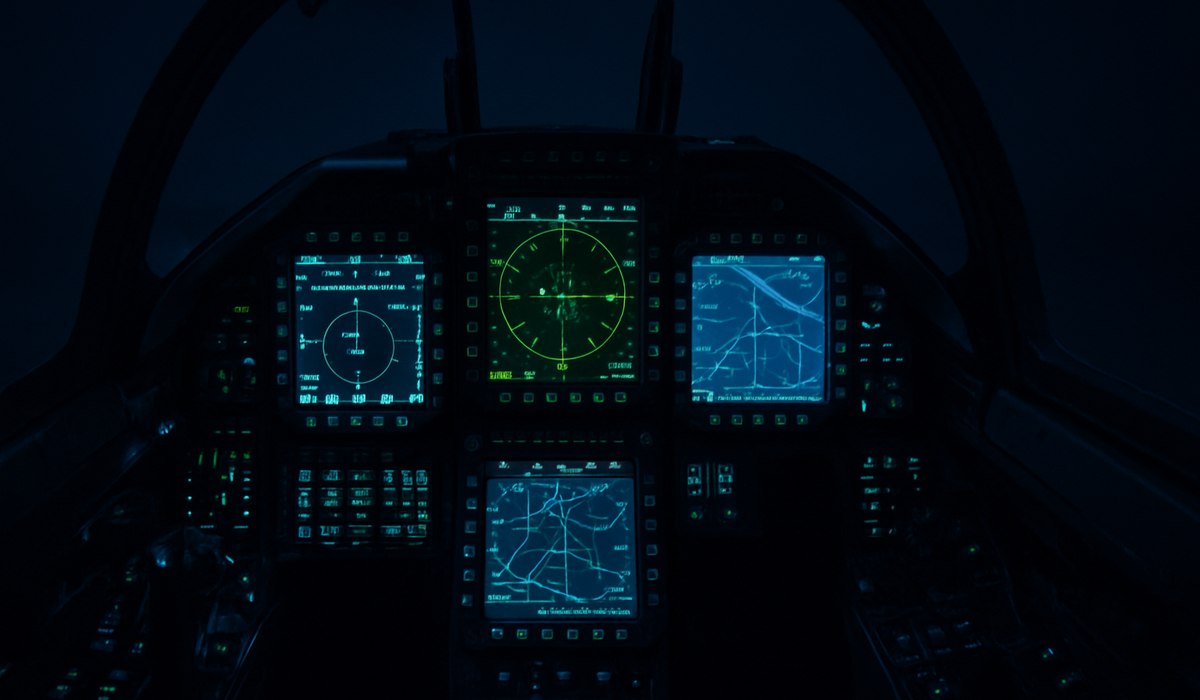
Image generated by AI
The Avionics Revolution Defines Modern Combat Strategy
Advanced military aircraft avionics have fundamentally reshaped 21st-century air warfare. Gone are the days when supersonic speed and extreme altitude determined aerial dominance. Today's conflict landscape revolves around information supremacy, sensor fusion, and real-time tactical intelligence. Modern warplanes function as flying supercomputers, equipped with sensors, processors, and communication systems that rival ground-based command centers. This technological shift has prompted the United States, allied nations, and peer competitors to invest billions into next-generation avionics platforms. The competition to field the most sophisticated complex avionics systems drives innovation across military aviation globally, making avionics capability the primary measure of aerial superiority.
How Complex Avionics Systems Transform Tactical Operations
Military aircraft avionics integration fundamentally changes how pilots process battlefield information. Modern systems synthesize data from radar, infrared sensors, electronic warfare receivers, and satellite feeds into single cockpit displays. Pilots no longer rely solely on visual detection or mechanical instruments. Instead, they operate within networked ecosystems where their aircraft communicates with other platforms, ground stations, and command centers simultaneously.
The Boeing E-7 Wedgetail exemplifies this transformation. This airborne early warning platform carries phased-array radar capable of tracking hundreds of targets across continental distances. Its avionics suite processes terabytes of sensor data, transforming raw signals into actionable intelligence distributed to allied forces. Similar capabilities appear in advanced fighter platforms, where complex avionics systems enable pilots to engage threats from standoff distances, never establishing visual contact.
Tactical doctrine has evolved accordingly. Modern air combat emphasizes information warfare, jamming resistance, and networked operations. Speed remains relevant, but situational awareness superiority determines engagement outcomes.
Six Most Technologically Advanced Military Aircraft
The US Air Force and partner nations operate several platforms that represent the pinnacle of military aircraft avionics sophistication:
Boeing E-7 Wedgetail (Royal Australian Air Force, US Air Force): Carries advanced phased-array radar systems with 360-degree coverage, processing capability exceeding 1,000 simultaneous tracks. Integrates with NATO command networks, providing real-time tactical intelligence across theater areas.
Lockheed Martin F-35 Lightning II (US Air Force, Navy, Marine Corps, allied nations): Features Northrop Grumman's Scalable Agile Beam Radar (SABR) integrated with helmet-mounted display systems. The airframe itself functions as a sensor platform, fusing data from onboard and networked sources.
Boeing F/A-18 Super Hornet (US Navy, allied forces): Equipped with conformal active electronically scanned array (AESA) radar, infrared search and track systems, and advanced electronic warfare suites. Recent Block III variants introduce autonomous performance enhancement capabilities.
Eurofighter Typhoon (European nations): Integrates Captor-E AESA radar with distributed aperture sensors and advanced targeting pods. Its avionics architecture emphasizes multi-sensor fusion and network-centric operations.
Saab JF-17 Thunder (Pakistan Air Force, international operators): Incorporates cutting-edge AESA radar, integrated electronic warfare systems, and open architecture avionics enabling rapid software updates and system reconfiguration.
Dassault Rafale (French Air Force, international partners): Features Thales RBE2 AESA radar, panoramic cockpit displays, and advanced flight control systems. The platform emphasizes rapid target identification and engagement capabilities.
Impact on Commercial Aviation and Passenger Operations
The expansion of military aircraft avionics research benefits commercial aviation development. Technologies pioneered for defense applications—including advanced radar systems, collision avoidance technology, and automated navigation—eventually transition to civilian aircraft. Avionics manufacturers work across both sectors, ensuring innovations in military platforms influence passenger safety standards.
However, military and civilian avionics remain largely separate. Commercial aircraft prioritize passenger safety, fuel efficiency, and reliability over tactical capabilities. The 737 MAX avionics systems, while sophisticated, serve entirely different operational purposes than fighter jet platforms. Understanding this distinction helps travelers recognize that advanced military aircraft avionics development does not directly impact routine commercial flight operations. For current flight information, visit FlightAware for real-time tracking and operational data.
The Future of Military Aviation Technology
Next-generation military aircraft avionics systems incorporate artificial intelligence, machine learning, and autonomous decision-making capabilities. The US Air Force's next-generation fighter program (NGAD) emphasizes "human-machine teaming," where artificial intelligence augments rather than replaces pilot decision-making. Avionics systems will autonomously manage routine tasks, flag critical threats, and recommend tactical options based on evolving battlefield conditions.
Hypersonic platforms currently under development will require avionics that function effectively in extreme thermal and electromagnetic environments. Software-defined avionics architectures allow military aircraft to reconfigure capabilities mid-mission, adapting to emerging threats without physical modifications.
International competition drives accelerating innovation. China's J-20 stealth fighter and Russia's Su-57 both feature advanced avionics designed for contested electromagnetic environments. NATO nations continue enhancing their platforms to maintain technological advantage. This arms race ensures complex avionics systems will remain central to military aviation strategy for decades.
| Military Aircraft | Primary Nation | Radar Type | Target Tracking Capacity | Network Integration | Notable Avionics Feature |
|---|---|---|---|---|---|
| Boeing E-7 Wedgetail | Australia/USA | Phased-Array | 1,000+ simultaneous | NATO-wide | Theater-wide coverage |
| F-35 Lightning II | USA/Allies | SABR AESA | 300+ targets | Link 16/NATO | Helmet-mounted display |
| F/A-18 Super Hornet | USA/International | Conformal AESA | 400+ tracks | Link 16 | Autonomous performance |
| Eurofighter Typhoon | Europe | Captor-E AESA | 350+ targets | EATC network | Multi-sensor fusion |
| Saab JF-17 Thunder | Pakistan/Export | AESA | 250+ tracks | Local networks | Open architecture |
| Dassault Rafale | France/Export | RBE2 AESA | 300+ targets | NATO-compatible | Panoramic cockpit |
What This Means for Travelers
While military aircraft avionics development occurs in defense sector laboratories, travelers benefit indirectly through safety innovations. Commercial aviation adopts proven military technologies after appropriate civilian certification. Understanding these connections provides context for aviation industry news.
Traveler Action Checklist:
-
Monitor FAA announcements for airworthiness directives affecting civilian fleets, often derived from military platform experiences.
-
Check FlightAware for real-time flight status and route information before traveling.
-
Review US Department of Transportation passenger rights guidance if experiencing delays or cancellations.
-
Understand that civilian avionics follow different standards than military platforms, prioritizing safety and efficiency equally.
-
Stay informed about airline technological upgrades, which sometimes derive from defense sector innovation.
-
Verify current flight information with your airline directly, as avionics capabilities do not affect schedule reliability.
Frequently Asked Questions
Q: Does military aircraft avionics technology make commercial flights safer?
A: Indirectly, yes. Safety technologies pioneered in military contexts—including terrain awareness systems, collision avoidance, and advanced navigation—eventually appear in civilian aircraft after certification. However, commercial aviation maintains separate, equally rigorous safety standards developed specifically for passenger operations.
Q: How does the Boeing E-7 Wedgetail's avionics compare to commercial aircraft systems?
A: The Wedgetail's radar and processing systems focus on military threat detection across vast areas. Commercial aircraft avionics prioritize navigation, weather awareness, and collision avoidance for passenger routes. They serve fundamentally different purposes.
Q: Will future fighter jet avionics technology appear in passenger aircraft?
A: Yes, eventually. Artificial intelligence and autonomous systems currently under development for military platforms will influence commercial aviation over the next decade, particularly for autonomous flight management and predictive maintenance systems.
Q: Does understanding military avionics help me prepare for commercial air travel?
A: Not directly. Commercial aviation operates under entirely different regulatory frameworks. Your preparation should focus on weather conditions, security procedures, and airline-specific requirements rather than military technology developments.
Related Travel Guides
- Thailand Joins India and Japan in Driving Climate-Resilient Airports and Sustainable Aviation Growth Across the Asia-Pacific Region for 2026
- IndiGo Deploys Direct Lucknow to Noida Route, Bypassing Delhi Airport Disruptions and Severe Travel Chaos
- Delta Flight DL2351 Makes Emergency Landing in Dallas After Abrupt Turnaround: What Happened?
Disclaimer
This article provides educational context about military aircraft avionics development in 2026. Information derives from publicly available defense industry publications and military procurement announcements. This content is not military analysis and should not inform defense policy opinions.
The connection between military and commercial aviation technology exists, but remains distinct. Commercial aircraft certification occurs through FAA and international aviation authorities using civilian-specific standards. Military platforms operate under entirely different regulatory frameworks.
For travel planning, consult official airline websites and FlightAware for current flight information. Review passenger rights through the US Department of Transportation. Always verify specific travel details with your airline or service provider before departure.
Disclaimer
This article is for informational and educational purposes only. It does not constitute legal, financial, or professional advice. While we strive to provide accurate and up-to-date information, travel policies, regulations, and conditions change rapidly. Always verify information with official sources before making travel decisions. Nomad Lawyer makes no representations about the accuracy, reliability, completeness, or suitability of the information provided. Readers should consult qualified professionals for advice specific to their circumstances. The views expressed in this article are those of the author and do not necessarily reflect the views of Nomad Lawyer.
Preeti Gunjan
Contributor & Community Manager
A passionate traveller and community builder. Preeti helps grow the Nomad Lawyer community, fostering engagement and bringing the reader experience to life.
Learn more about our team →