
Midnight Sun Arctic Circle: Witnessing the Final Hours in Svalbard 2026
Experience the midnight sun arctic circle's last moments in Svalbard during 2026. Luxury expeditions aboard advanced icebreakers capture the final golden glow over Northwest Spitsbergen's glaciers before polar darkness returns.

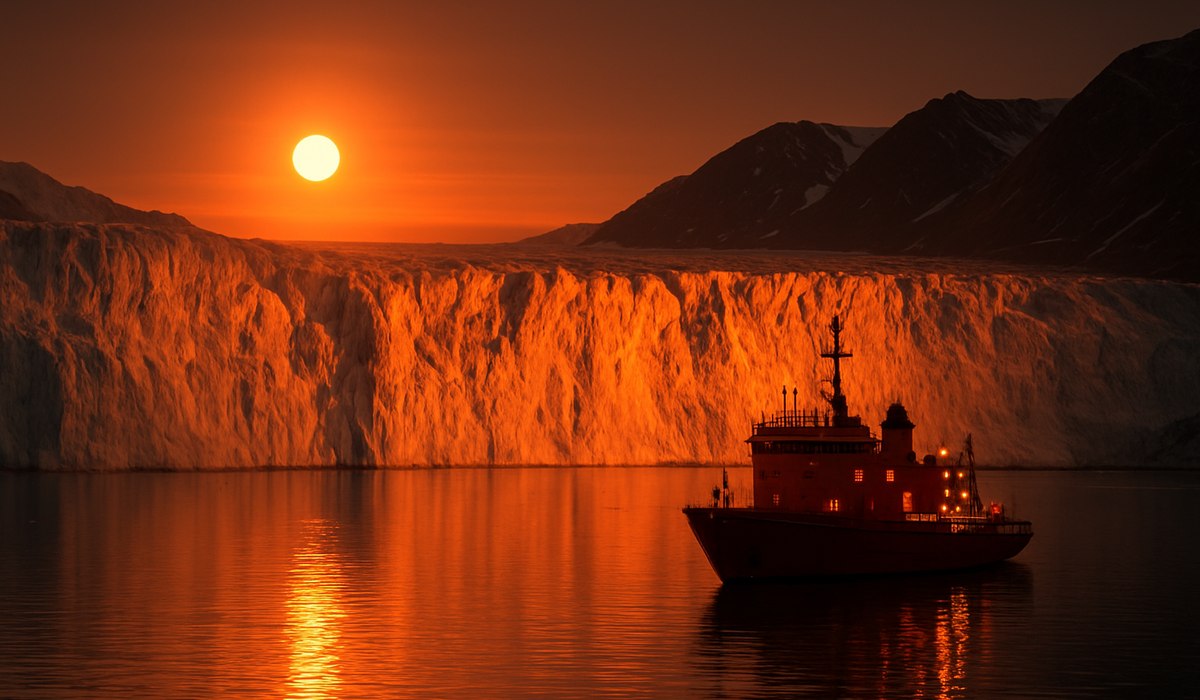
Image generated by AI
The Arctic's Most Enchanting Final Chapter Unfolds This Season
As summer reaches its crescendo across the polar north, the midnight sun arctic circle phenomenon creates one of Earth's most captivating natural spectacles. During the final weeks of June and early July 2026, Arctic explorers and luxury travelers are converging on Svalbard's Northwest Spitsbergen to witness the last sliver of sun grazing the horizon at midnight—a fleeting moment when golden light bathes ancient glaciers in otherworldly brilliance. This rare celestial event marks the conclusion of weeks when daylight never fully surrenders to darkness, a phenomenon that draws adventurers seeking experiences beyond the ordinary.
The Ponant Icebreaker Experience: Luxury Meets Polar Exploration
Modern Arctic expeditions have transformed from rugged endurance tests into sophisticated adventures blending comfort with scientific discovery. Luxury expedition vessels like the Le Commandant Charcot exemplify this evolution, offering passengers gourmet dining—including an onboard Alain Ducasse restaurant—alongside genuine polar research. These advanced icebreakers carry teams of researchers with active laboratory facilities, allowing travelers to participate in real scientific work while observing the Arctic's delicate ecosystems.
The expedition experience extends beyond comfort. Expert naturalists and polar scientists deliver daily lectures about Arctic geology, wildlife behavior, and climate science. Passengers enjoy unparalleled wildlife encounters with polar bears, blue whales, walruses, and seals in their natural habitats. The journey culminates near Northwest Spitsbergen's glaciers, where the midnight sun arctic circle creates unforgettable photography opportunities. Many operators now offer zodiac excursions from anchored vessels, bringing adventurers closer to calving glaciers and wildlife congregations. The combination of luxury accommodation, expert guidance, and scientific engagement redefines what Arctic travel means for discerning explorers.
Svalbard's Northwest Spitsbergen: Where the Midnight Sun Bids Farewell
Svalbard's Northwest Spitsbergen National Park represents one of the Arctic's most pristine and dramatic landscapes. Located well above the Arctic Circle, this Norwegian territory experiences the midnight sun phenomenon during an extended summer period. The region's glaciers—some advancing, others retreating due to climate change—dominate the visual landscape, creating stark beauty against relatively mild summer temperatures.
The final days of the midnight sun arctic circle event carry special significance. Around June 21st and extending into early July, the sun barely dips below the horizon at night. Visitors witness a progression: the sun circles the sky at midnight, casting everything in shades of gold and amber. By late June, even at midnight, enough light remains to read a newspaper without artificial illumination. The last moments of this phenomenon—typically the final week of June through early July—provide the most dramatic photographic conditions, as the sun reaches its lowest arc across the horizon.
Northwest Spitsbergen's accessible glacier fjords, combined with relatively stable weather during this period, make it the preferred location for experiencing these final moments. The landscape itself—with rugged mountains, calving glaciers, and Arctic tundra—amplifies the visual drama of the midnight sun arctic circle's conclusion.
Arctic Wildlife Encounters and Scientific Discovery
The Arctic's summer abundance creates extraordinary opportunities for observing polar megafauna. During midnight sun season, Svalbard waters host feeding concentrations of marine mammals attracted by seasonal productivity. Polar bears hunt on diminishing sea ice. Blue whales and fin whales migrate through fjords pursuing fish schools. Walrus haul-outs gather on accessible ice floes. Seals bob near zodiac excursions, curious about visitors.
Beyond wildlife viewing, expedition vessels facilitate genuine scientific participation. Researchers conduct water sampling, measuring ocean temperature, salinity, and nutrient concentrations to track climate impacts. Passengers assist with wildlife surveys, documenting bear movements and marine mammal sightings that contribute to conservation efforts. This citizen-science approach transforms tourism into meaningful environmental engagement, creating deeper appreciation for Arctic ecosystems facing unprecedented change.
Ornithology enthusiasts find abundant research opportunities as well. Arctic tern, little auk, and kittiwake populations thrive during the perpetual daylight. The ability to observe bird behavior around the clock provides unique scientific advantages. Many expeditions include dedicated ornithology specialists who enhance observation sessions.
Best Time to Visit: Capturing the Midnight Sun Arctic Circle's Final Days
The optimal window for experiencing the midnight sun arctic circle's last moments spans late June through early July 2026. June 21st marks the summer solstice, when the sun reaches its highest arc. However, the most dramatic and photogenic conditions occur during the final week of June, when the sun dips lowest while still remaining above the horizon at midnight.
Weather patterns peak in stability during this period, with minimal storm systems crossing the region. Temperatures average 5-8°C, requiring thermal layers but remaining more comfortable than winter expeditions. Ice conditions vary annually; 2026 projections suggest moderate pack ice presence, affecting accessibility to certain fjords while ensuring authentic polar exploration conditions.
Early booking is essential. Luxury icebreaker berths for late June and early July typically fill by January. Operators limit passenger numbers to preserve environmental integrity, making availability increasingly constrained as the season approaches.
| Aspect | Details |
|---|---|
| Primary Keyword Window | Late June – Early July 2026 |
| Solstice Date | June 21, 2026 |
| Best Photography Time | June 24-30, 2026 (lowest sun arc) |
| Average Temperature | 5-8°C (41-46°F) |
| Daylight Duration | 24 hours continuous |
| Pack Ice Coverage | Moderate; variable by fjord |
| Optimal Expedition Duration | 10-14 days |
| Typical Group Size | 200-300 passengers per vessel |
| Cost Range | $15,000-$45,000 per person |
How to Get There: Reaching Arctic Expedition Departure Points
Most Arctic expeditions depart from Tromsø or Longyearbyen, Norway. Getting there requires planning several legs of travel.
From North America, flights typically route through Oslo, connecting to regional carriers serving northern Norwegian airports. SAS Scandinavian Airlines and Norwegian Air operate the most frequent connections. From Europe, direct flights reach Tromsø (4.5 hours from Oslo) and Longyearbyen (3.5 hours from Oslo). Allow 24-48 hours for the complete journey, including inevitable layovers.
Longyearbyen, Svalbard's capital, serves as the primary embarkation point for Northwest Spitsbergen expeditions. The town is accessible only by air; no roads connect Svalbard to mainland Norway. The Svalbard Airport handles both regional and international flights, though international service primarily connects through Oslo or other Scandinavian hubs.
Plan arrival 2-3 days before departure to acclimate to Arctic conditions and explore Longyearbyen's unique polar culture. The settlement—home to 2,400 residents at 78°N—offers Arctic museums, dog sledding facilities, and coal mining heritage sites worth exploring before your expedition begins.
What This Means for Travelers: Your Arctic Adventure Awaits
Experiencing the midnight sun arctic circle's final moments represents a bucket-list achievement with profound personal impact. Consider these essential planning elements:
-
Book immediately: Luxury Arctic expedition berths for late June 2026 are disappearing rapidly. Contact operators within the next 30-60 days to secure preferred dates and vessel categories.
-
Invest in proper gear: Arctic travel demands specialized
Disclaimer
This article is for informational and educational purposes only. It does not constitute legal, financial, or professional advice. While we strive to provide accurate and up-to-date information, travel policies, regulations, and conditions change rapidly. Always verify information with official sources before making travel decisions. Nomad Lawyer makes no representations about the accuracy, reliability, completeness, or suitability of the information provided. Readers should consult qualified professionals for advice specific to their circumstances. The views expressed in this article are those of the author and do not necessarily reflect the views of Nomad Lawyer.
Raushan Kumar
Founder & Lead Developer
Full-stack developer with 11+ years of experience and a passionate traveller. Raushan built Nomad Lawyer from the ground up with a vision to create the best travel and law experience on the web.
Learn more about our team →