
Middle East Flight Suspensions Surge: 141 Services Halted as Airspace Chaos Grows
Thousands of travelers face mounting disruption as six major Middle Eastern airlines suspend 141 flights amid persistent airspace restrictions. Regional security developments since late February continue to strain hubs across the Gulf.

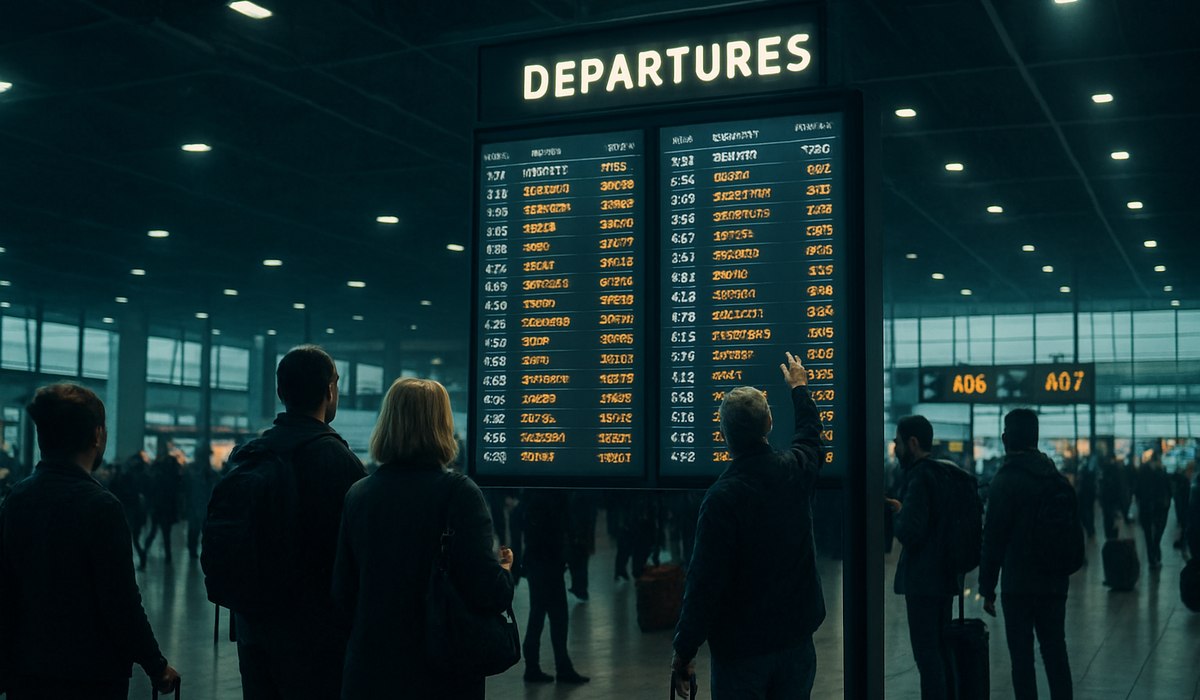
Image generated by AI
Breaking: Major Middle East Flight Disruptions Escalate Across Six Carriers
Thousands of travelers across the Middle East face unprecedented disruption as Gulf Air, Saudia, FlyDubai, IndiGo, EgyptAir, and Royal Jordanian suspend 141 flights while registering over 100 additional delays. The cascading cancellations impact key hubs in Bahrain, Saudi Arabia, the United Arab Emirates, Qatar, and Egypt. These mounting disruptions stem directly from ongoing regional airspace restrictions that have persisted since late February, forcing major carriers into emergency schedule revisions and network consolidations.
Airspace Restrictions Keep Gulf Hubs Under Mounting Strain
Regional security developments since late February have triggered a cascade of airspace closures and restrictions that continue reshaping Middle East flight patterns. Authorities across multiple states have curtailed or tightly managed overflights through critical corridors, forcing airlines into rapid reactive planning. Long-haul routes crossing Iranian, Iraqi, Jordanian, and Gulf airspace now require costly diversions or temporary suspension.
The pressure intensifies at major connection hubs. Dubai, Abu Dhabi, Doha, Manama, and Riyadh normally function as high-frequency interchange points linking Europe, Asia, and Africa. As corridors narrow, airport capacity drops sharply. Carriers consolidate flights, extend ground times, and reassign crews on short notice. According to real-time tracking via FlightAware, the disruption pattern shifts hourly rather than following a single shutdown window.
This uncertainty persists even when individual airports appear operationally open. Regional travel intelligence shows that passengers cannot rely on standard schedule assumptions anymore. Rerouting through less-affected corridors now requires longer travel times and unplanned layovers.
Which Airlines and Routes Face the Most Severe Cuts
Gulf Air, Bahrain's flag carrier, has absorbed disproportionate impact as Bahrain International Airport experiences sharply reduced operations. A significant share of the 141 suspended Middle East flight services clusters around Gulf Air's regional network—short and medium-haul rotations into Saudi Arabia, Qatar, and the UAE now blocked by airspace constraints. The airline has concentrated remaining capacity on select trunk routes while canceling or retiming numerous flights by several hours.
Saudia confronts parallel pressures across Riyadh and Jeddah airports. The carrier shows elevated cancellation volumes and late departures as it adjusts to shifting overflight permissions. Operational data reveals Saudia trimming frequencies on regional routes while prioritizing widebody intercontinental services for higher-yield passengers. Knock-on delays ripple outward—an inbound aircraft delayed by diversion pushes back subsequent departures, multiplying the delay tally even without formal cancellations.
FlyDubai operates dense short-haul networks from Dubai now severed where routings intersect most-restricted airspace. Secondary cities typically dependent on high-frequency service face partial service suspension. Meanwhile, IndiGo has scaled back flights into Bahrain, Saudi Arabia, Qatar, and UAE. Thousands of passengers shift onto alternative dates or reroute through less-affected corridors, adding overnight layovers at non-Gulf hubs.
EgyptAir and Royal Jordanian, both deeply integrated into regional networks, make targeted cuts affecting Cairo and Amman gateways. Gulf-bound departures face temporary removal from published timetables.
Real-Time Disruption: Delays and Service Consolidation Patterns
Current operational summaries show consolidation rather than simple cancellation. Airlines group multiple flight loads onto single aircraft departures, extending ground times for connection swaps. Passenger rebooking onto alternate dates stretches passenger frustration across weeks rather than days.
Monitoring platforms tracking live Middle East flight status reveal four primary disruption patterns. First, high-frequency regional routes see service cuts entirely. Second, longer intercontinental flights receive priority rebooking. Third, crew repositioning flights run empty to maintain schedule flexibility. Fourth, ground handling backlogs create secondary delays unrelated to airspace restrictions.
The FAA provides airspace management guidance at FAA.gov, though Middle East operations fall under regional authority jurisdiction. However, international carriers reference FAA protocols when advising passengers.
Passenger volume impacts reach beyond the Gulf. European and Asian carriers feeding passengers into Middle East hubs now contend with downstream delays. A single suspension at Dubai cascades through Frankfurt, London, and Singapore operations.
What Passengers Need to Know Right Now
Affected travelers must take immediate action. Real-time flight status requires verification directly with airlines rather than relying on published schedules. The U.S. Department of Transportation provides passenger protection guidelines at DOT.gov, including rebooking rights and compensation eligibility.
Carriers generally offer three rebooking options: alternative flights on same carrier, competitor airline services, or date changes without penalty. However, coverage varies by airline, booking class, and ticket origin. Gulf Air and Saudia provide more generous rebooking on premium fares. Budget carriers like FlyDubai apply stricter policies.
Travel insurance becomes critical. Standard policies often exclude "civil unrest" or "government action" clauses covering airspace closures. Comprehensive coverage specifying airspace restrictions provides claim pathways standard policies deny.
Passengers booked into or out of affected hubs should contact airlines immediately. Waiting for formal cancellation notifications costs days of rebooking flexibility. Early intervention secures preferred alternative flights before seat inventory depletes.
Refund policies differ sharply. International flights allow refund processing per EU261 or equivalent regulations. Domestic Gulf flights often lock passengers into future travel credits without cash refunds. This distinction matters significantly for budget-conscious travelers.
Traveler Action Checklist
-
Contact your airline immediately—don't wait for formal cancellation notices. Call, use the airline app, or visit ticket counters for earliest rebooking options.
-
Document your booking confirmation and receipt—screenshot current flight status from your airline's website and FlightAware for compensation claims.
-
Verify airspace status with your carrier—confirm whether your specific routing faces restrictions by asking about planned flight paths.
-
Request written confirmation of rebooking or refund eligibility—email confirmation protects against later disputes over what options were offered.
-
Check travel insurance coverage immediately—review your policy for "government action" and "airspace closure" language; file claims promptly if eligible.
-
Explore multi-airline rebooking options—if your carrier lacks available seats, request interline agreements with competitors through your booking agent.
-
Monitor airline social media channels—major carriers post real-time schedule updates on Twitter/X and Facebook before official website changes.
-
Book accommodations only after rebooking confirmation—avoid duplicate hotel costs by securing new flight details before booking ground arrangements.
-
Consider alternative gateways—if Middle East hub flights remain blocked, research routing through Doha, Muscat, or Istanbul as secondary access points.
-
Register for airline notifications—opt into text and email alerts so you receive real-time status changes before missing connections.
FAQ: Middle East Flight Disruptions Explained
Q: Why are Middle East flights being suspended if airports remain open?
A: Regional airspace closures differ from airport closures. Airports operate normally, but aircraft cannot legally fly through restricted corridors. This forces airlines to cancel flights lacking viable alternate routes, or reroute through more congested corridors creating secondary delays. A flight from London to Dubai might have no legal alternative routing, forcing cancellation even with an operational runway.
Q: Which Middle East destinations remain least affected by suspensions?
A: Istanbul, Mus
Disclaimer
This article is for informational and educational purposes only. It does not constitute legal, financial, or professional advice. While we strive to provide accurate and up-to-date information, travel policies, regulations, and conditions change rapidly. Always verify information with official sources before making travel decisions. Nomad Lawyer makes no representations about the accuracy, reliability, completeness, or suitability of the information provided. Readers should consult qualified professionals for advice specific to their circumstances. The views expressed in this article are those of the author and do not necessarily reflect the views of Nomad Lawyer.
Kunal K Choudhary
Co-Founder & Contributor
A passionate traveller and tech enthusiast. Kunal contributes to the vision and growth of Nomad Lawyer, bringing fresh perspectives and driving the community forward.
Learn more about our team →