
Middle East Aviation Disruption: FlyDubai, Air Arabia Cancel and Delay 34 Flights Across Key Routes
FlyDubai, Air Arabia, and Uzbekistan Airways cancel 12 flights and delay 22, causing severe disruptions across Dubai, Sharjah, Muscat, Peshawar, and Cairo.

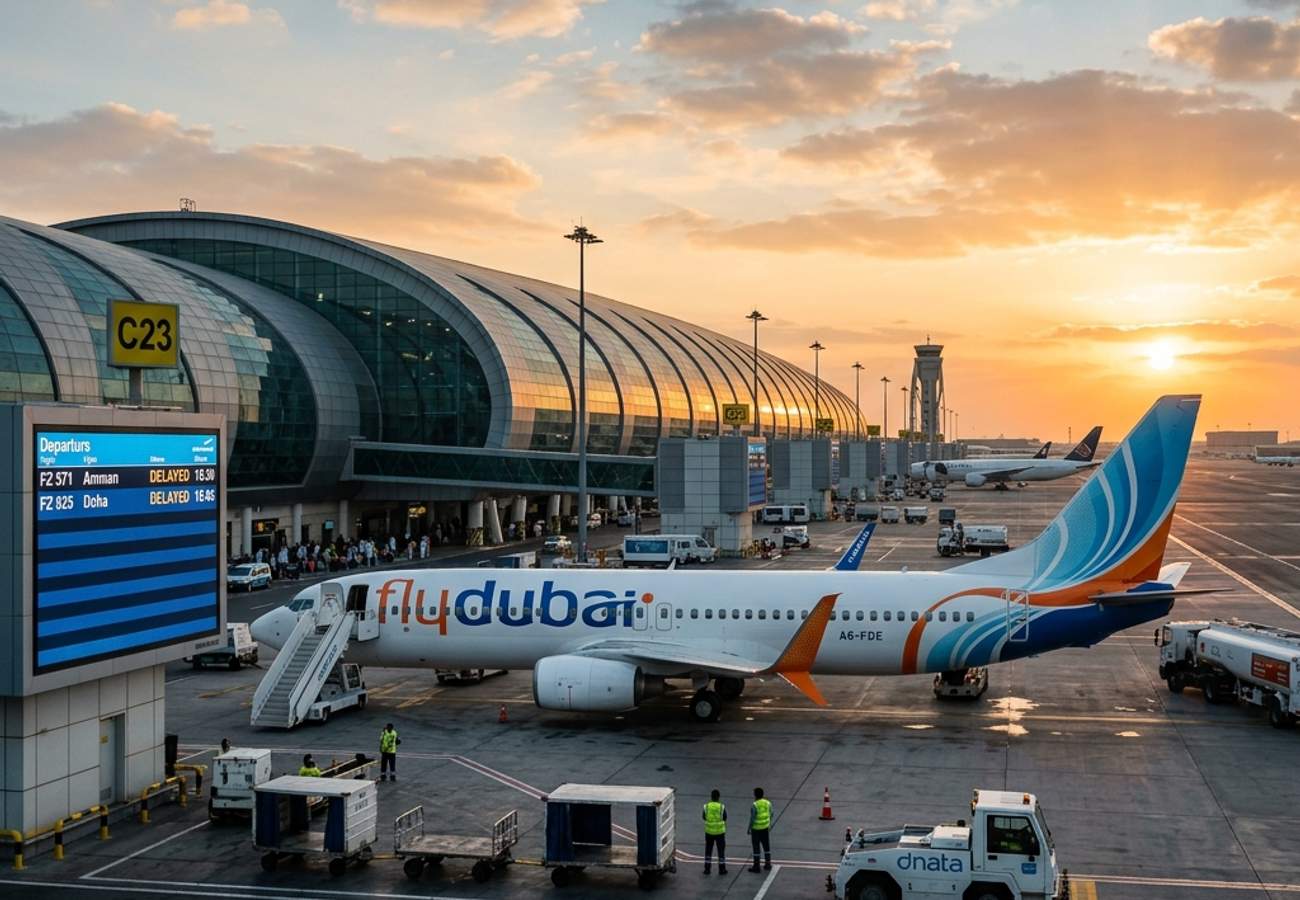
Image generated by AI
Travel across some of the world’s busiest and most critical aviation corridors has been thrown into sudden turmoil. FlyDubai, Air Arabia, and Uzbekistan Airways are facing severe operational setbacks, resulting in the cancellation of 12 flights and the delay of 22 more within a highly compressed timeframe.
This localized crisis has rapidly evolved into a broader regional travel disruption, leaving hundreds of passengers stranded and highlighting the fragile interconnectedness of Middle Eastern and Central Asian flight networks.
Breaking Down the Regional Impact
The immediate impact of these 34 disrupted flights is being felt most acutely at massive regional transit hubs, particularly Dubai International (DXB) and Sharjah (SHJ). The resulting bottleneck has slowed passenger movement and escalated uncertainty for international tourists and diaspora travelers alike.
Here is the precise breakdown of the affected carriers:
| Airline | Cancelled Flights | Delayed Flights | Total Disruptions |
|---|---|---|---|
| FlyDubai | 6 | 11 | 17 |
| Air Arabia | 4 | 2 | 6 |
| Uzbekistan Airways | 2 | 9 | 11 |
Gulf-to-South Asia Routes Bear the Brunt
Crucial international routes connecting the Gulf region with Pakistan and Egypt have emerged as the most heavily impacted zones. Flights destined for Peshawar, Lahore, Karachi, and Cairo (Sphinx) are facing repeated cancellations.
Because these specific routes handle exceptionally high volumes of diaspora travel, business movement, and religious tourism, the disruption has affected a massive, highly time-sensitive demographic. Travelers arriving at Dubai and Sharjah airports are currently navigating sprawling queues and highly restricted rebooking options.
What This Means for Travelers in the Region
- Extreme Rebooking Pressure: Because these routes consistently operate at high load factors, securing a seat on the next available flight is incredibly difficult. Wait times for alternative flights may exceed 24 hours.
- Tourism Sector Strain: Local hospitality providers in Dubai, Muscat, and Cairo are reporting sudden shifts in booking patterns as delayed passengers are forced to extend stays, while incoming tourists cancel excursions.
- Central Asian Connectivity: Delays logged by Uzbekistan Airways highlight that the disruption is pushing northward, impacting connections through Urgench, Bukhara, and Moscow Vnukovo.
FAQ: Middle East Flight Disruptions
Which airports are experiencing the most congestion due to these cancellations? Dubai International (DXB) and Sharjah International (SHJ) are facing the highest levels of congestion as they serve as the primary hubs for FlyDubai and Air Arabia, respectively.
What should I do if my FlyDubai or Air Arabia flight is delayed? Check your flight status via the airline's official app before leaving for the airport. If you are already at the terminal, approach the transfer desk immediately, as rebooking options are strictly first-come, first-served.
Are flights to Pakistan completely halted? No, but routes to Peshawar, Lahore, and Karachi are severely congested. Expect significant delays and monitor real-time updates from your carrier.
Related Travel Guides
Disclaimer
This article is for informational and educational purposes only. It does not constitute legal, financial, or professional advice. While we strive to provide accurate and up-to-date information, travel policies, regulations, and conditions change rapidly. Always verify information with official sources before making travel decisions. Nomad Lawyer makes no representations about the accuracy, reliability, completeness, or suitability of the information provided. Readers should consult qualified professionals for advice specific to their circumstances. The views expressed in this article are those of the author and do not necessarily reflect the views of Nomad Lawyer.
Kunal K Choudhary
Co-Founder & Contributor
A passionate traveller and tech enthusiast. Kunal contributes to the vision and growth of Nomad Lawyer, bringing fresh perspectives and driving the community forward.
Learn more about our team →