
Major Airlines Scrap 194 Flights, Delay 2,603 in Spring Travel Crisis
Major airlines scrap 194 flights and delay 2,603 more in a single day during peak spring travel. Tourist hubs in Florida, the Caribbean, and Mexico hit hardest as operational strain and weather collide in 2026.

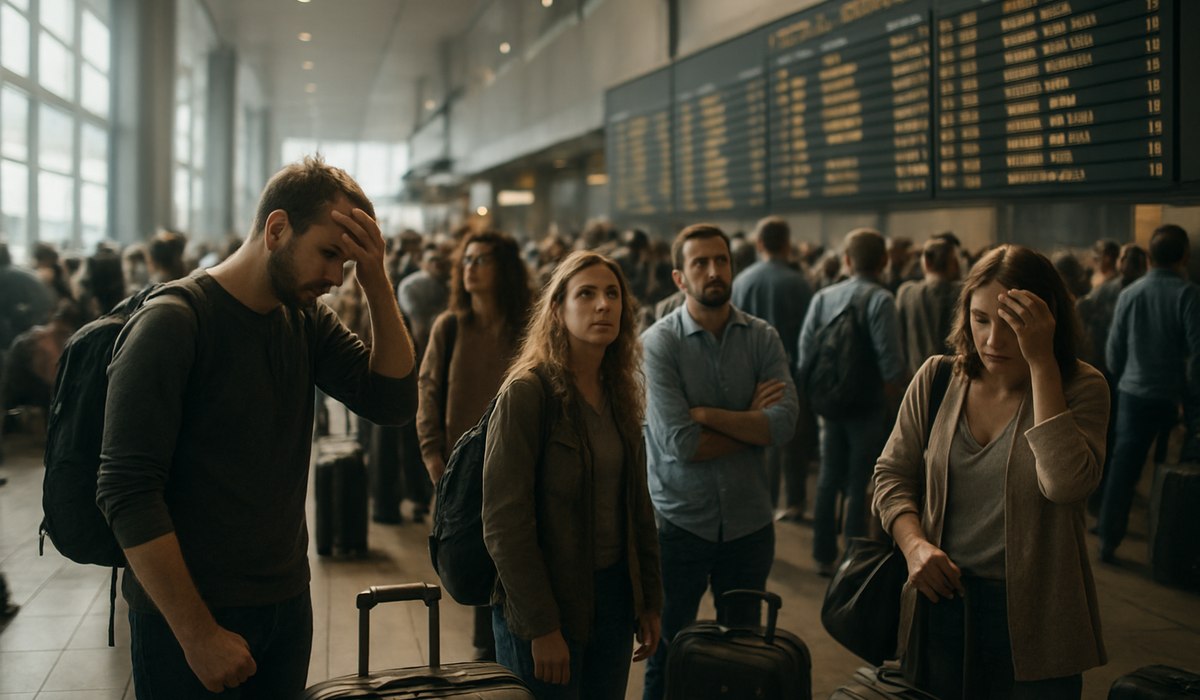
Image generated by AI
Spring Travel Chaos: Major Airlines Scrap 194 Flights in Single Day
Major carriers across North America and Europe canceled 194 flights and delayed nearly 2,700 more on May 7, 2026, as operational bottlenecks and unsettled weather converged during peak spring leisure season. The disruption hit tourist gateways particularly hard, with travelers heading to Florida's beaches, Caribbean islands, Mexico, and European city breaks facing the brunt of cancellations and extended waits. Hub airports in Atlanta, Dallas, Chicago, Miami, New York, and Los Angeles acted as chokepoints, with cascading delays spreading across secondary airports and resort-bound routes throughout the day.
Tourist Gateways Bear Brunt of Single Day Disruption
When major airlines scrap flights at primary hub airports, the impact radiates far beyond the departure cities themselves. Aviation tracking data from May 7 revealed that disruption concentrated heavily at airports serving leisure destinations. Connections feeding traffic into Florida's coastal regions, Caribbean gateways, Cancún, and popular European breaks all reported elevated cancellation and delay rates as afternoon operations intensified.
The concentration of disruption on leisure-focused corridors meant that holidaymakers faced disproportionate hardship compared to business travelers. Many tourist-heavy routes operate only once or twice daily, leaving passengers with limited rebooking options. Ground handling teams at resort airports struggled to process compressed arrival windows, creating bottlenecks in baggage systems and border processing facilities. Local media reported crowded departure halls and extended passenger queues as travelers sought alternative flights or waited for aircraft to arrive from upstream connection points. While 194 cancellations represent a modest figure compared to major weather events, the combination with nearly 2,700 delays created cascading problems throughout vacation-bound networks.
How Hub Delays Cascade Across Resort Networks
Understanding network effects helps explain why single-day disruptions affect millions of passengers. Modern airlines schedule aircraft and crews in tightly connected sequences, often with minimal recovery time between flights. A delay at a major hub like Miami or Newark at 7 a.m. doesn't resolve by 9 a.m.—it propagates through an entire aircraft's daily schedule.
When an aircraft misses its departure slot, every subsequent flight faces potential delay or cancellation. Crews hitting duty-time limits cannot legally continue flying, forcing cancellations during evening hours even if earlier delays were small. Air traffic control programs that manage capacity at congested airports further restrict the ability to recover. Ground handling staffing constraints slow aircraft turnarounds, extending gate times and delaying crew repositioning. Each factor independently manageable becomes critical when combined. Leisure-focused airlines operating point-to-point networks face particular vulnerability—a single aircraft rotation running hours late may leave no spare equipment available to protect subsequent departures as airport curfews approach.
Operational Strains and Weather Combine in a Fragile System
The May 7 disruption resulted from both controllable operational factors and unpredictable weather. Patchy thunderstorms in multiple regions triggered temporary ground stops at several major hubs, reducing the rate at which airports could handle arrivals and departures. Strong winds and low cloud ceilings further compressed runway utilization windows. Airlines operating at maximum capacity throughout spring season had minimal buffer to absorb weather delays.
Industry staffing constraints compounded the problem. Ground handling services, maintenance teams, and air traffic control facilities operated with thinner margins than in previous years. Each function—aircraft turnaround, baggage loading, crew positioning—lengthened incrementally, but collectively extended network-wide recovery times. Larger carriers have invested in spare aircraft positioning and advanced crew scheduling technology, yet these safeguards proved insufficient when multiple hubs experienced simultaneous constraints. Legacy airlines with hub-and-spoke networks can absorb single-hub disruptions better than low-cost carriers operating lean schedules. However, when weather or airspace restrictions affect Atlanta, Chicago, and Dallas simultaneously, even major network carriers exhaust recovery capacity.
Check FlightAware for real-time tracking of ongoing delays and cancellations at your departure airport.
What Travelers Should Know About Spring Disruptions
Spring represents peak leisure travel season, yet weather volatility and full aircraft schedules create heightened disruption risk through May and June. Travelers booking spring vacations should anticipate potential delays on routes connecting major hubs to beach and resort destinations.
Airlines cannot always control weather-related disruptions, but passengers retain specific protections under U.S. Department of Transportation and European Commission regulations. The U.S. DOT requires airlines to provide meals, hotels, and communication access when significant delays or cancellations occur. European passengers on delayed EU flights may qualify for compensation up to €600 regardless of cause, under EU261 regulations. Understanding your rights prevents frustration and enables you to claim reimbursement or rebooking on competing carriers when eligible.
Flexible booking practices reduce spring travel stress. Booking flights departing early in the morning or late evening provides better recovery options if cancellations occur. Avoiding tight connections through major hubs during spring season—or allowing 3+ hours between flights—protects against missing continued flights. Airlines can recover single-flight disruptions quickly, but connections through congested hubs magnify risk. Consider purchasing travel insurance that covers weather-related delays and cancellations.
Key Spring Disruption Data
| Metric | Value | Impact |
|---|---|---|
| Flights Canceled | 194 | Peak-season leisure routes most affected |
| Flights Delayed | 2,603 | Cascading effects through evening operations |
| Primary Hub Cities | 6 major | Atlanta, Dallas, Chicago, Miami, NYC, LA |
| Affected Leisure Routes | Florida, Caribbean, Mexico, Europe | Tourist-dependent destinations hit hardest |
| Weather Contributing Factors | Thunderstorms, wind, low cloud | Temporary ground stops and flow control measures |
| Ground Handling Impact | Gate turnarounds, baggage systems | Compressed arrival windows created bottlenecks |
Traveler Action Checklist
-
Check real-time flight status using FlightAware or your airline's app before arriving at the airport.
-
Understand your airline's rebooking policy for cancellations—some carriers automatically rebook on competitors, while others only offer alternatives within their own network.
-
Document delays exceeding 3 hours with flight records and receipts for meals, transport, or hotels to claim compensation under DOT or EU261 regulations.
-
Contact your airline immediately after cancellation notification rather than waiting in airport queues—phone agents can often access seats other passengers haven't discovered yet.
-
Review your travel insurance policy to confirm weather and delay coverage before departure, especially for spring leisure bookings through busy hubs.
-
Book arrival flights early in the day when disruptions are less likely to cascade, and allow 3+ hours between connections at major hubs during peak season.
-
Register for airline alerts to receive automatic notifications of schedule changes before you reach the airport.
Frequently Asked Questions
What causes major airlines to scrap flights on peak travel days?
Airlines cancel flights when operational recovery becomes impossible—typically when crew duty-time limits approach, ground handling cannot service additional aircraft, or airport curfews near. Weather, maintenance issues, and staffing shortages trigger initial disruptions, then network effects force cancellations as evening approaches and no spare equipment remains available.
Why do delays at hub airports affect remote vacation destinations?
Hub airports connect multiple flight sequences. When an aircraft running Miami-New York-Boston gets delayed early, it misses subsequent departure slots, triggering cascading delays across the entire day. Leisure passengers on subsequent flights through that hub experience knock-on
Disclaimer
This article is for informational and educational purposes only. It does not constitute legal, financial, or professional advice. While we strive to provide accurate and up-to-date information, travel policies, regulations, and conditions change rapidly. Always verify information with official sources before making travel decisions. Nomad Lawyer makes no representations about the accuracy, reliability, completeness, or suitability of the information provided. Readers should consult qualified professionals for advice specific to their circumstances. The views expressed in this article are those of the author and do not necessarily reflect the views of Nomad Lawyer.
Kunal K Choudhary
Co-Founder & Contributor
A passionate traveller and tech enthusiast. Kunal contributes to the vision and growth of Nomad Lawyer, bringing fresh perspectives and driving the community forward.
Learn more about our team →