
Middle East Aviation Disruption: Saudia, Emirates, and Etihad Cancel 249 Flights 2026
Flight tracking systems show Saudia, Emirates, and Etihad cancel 249 flights and delay 887 across Dubai, Riyadh, and Jeddah due to regional geopolitical escalation.

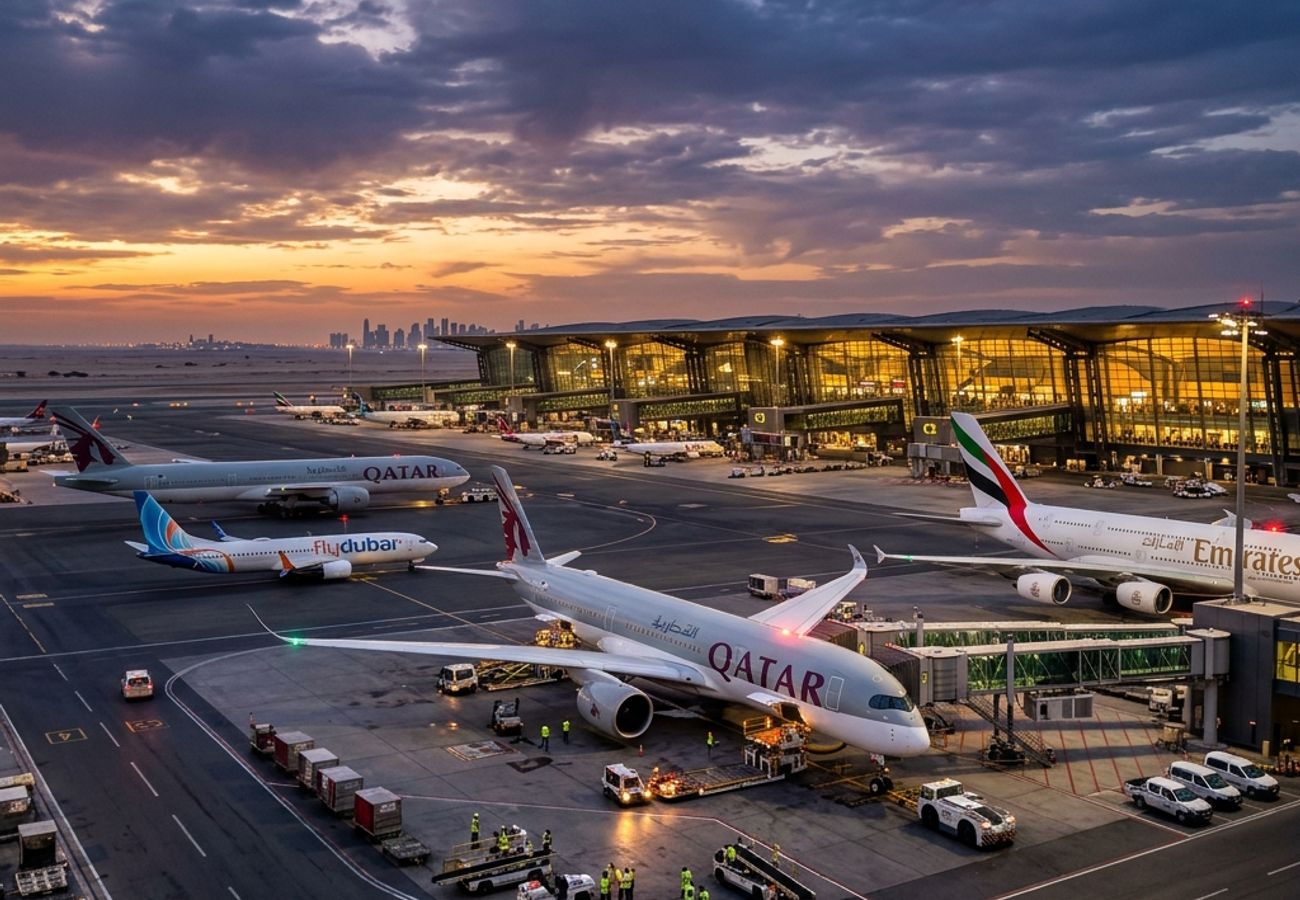
Image generated by AI
Saudia, Emirates, and Etihad Cancel 249 Flights and Delay 887 Across Dubai, Riyadh, and Jeddah Amid Worsening Middle East Geopolitical Disruption
A sudden wave of flight disruptions has swept across the Middle East, resulting in 249 cancellations and 887 delays impacting major transport hubs. Regional carriers, including Saudia, Emirates, and Etihad, are adjusting schedules as airspace security remains unstable.
The Disruption Details
Our analysis indicates that regional airspace insecurity has forced immediate tactical adjustments to commercial flight operations. Flight tracking systems show widespread schedule changes across Saudi Arabia, the United Arab Emirates, Kuwait, and Oman. The most significant operational impact is concentrated at major transit hubs, leaving thousands of international transit passengers stranded at terminal gates.
According to data aggregated via FlightAware, the disruptions follow recent exchanges of military strikes affecting regional airports, including Abha Airport. The breakdown of the 2022 truce has prompted civil aviation authorities to place airlines on high alert. Carriers are coordinating closely with national ministries to reroute flights away from active conflict vectors.
Flight & Airport Impact Breakdown
The operational impact is distributed across several key airports and airlines. The statistical data regarding cancellations and delays is summarized in the tables below:
Airport Disruption Telemetry
| Airport Hub | Code | Flight Delays | Flight Cancellations | Hardest-Hit Carriers |
|---|---|---|---|---|
| Dubai International | DXB | 300 | 14 | Emirates, FlyDubai |
| King Khalid (Riyadh) | RUH | 108 | 52 | Saudia, Flynas, flyadeal |
| King Abdulaziz (Jeddah) | JED | 70 | 58 | Saudia, Flynas, flyadeal |
| Abha Airport | AHB | 12 | 52 | Saudia, flyadeal, Flynas |
| Kuwait International | KWI | 106 | 7 | Kuwait Airways, Jazeera Airways |
Airline Operational Breakdown
| Airline | Cancellations Recorded | Delays Accumulated | Primary Affected Hubs |
|---|---|---|---|
| Saudia | 149 | 45 | Riyadh (RUH), Jeddah (JED), Abha (AHB) |
| Emirates | 0 | 203 | Dubai International (DXB) |
| Etihad Airways | 4 | 150 | Abu Dhabi (AUH), Muscat (MCT) |
| flyadeal | 36 | 28 | Riyadh (RUH), Jeddah (JED) |
- Flight tracking systems indicate that Saudia accounts for nearly 60% of all regional cancellations, primarily affecting domestic and regional routes.
- Dubai International (DXB) registered the highest overall delay total, with Emirates bearing the largest volume of disrupted passenger connections.
- Operational strain continues to affect secondary airports in southern Saudi Arabia, including Jizan (GIZ), Najran (EAM), and Abha (AHB).
Passenger Rights & Advisory (Information Gain)
- Compensation and Care Under Saudi GACA Rules:
- For flights operating within or departing from Saudi Arabia, the Saudi General Authority of Civil Aviation (GACA) enforces passenger protection rules.
- In the event of a flight cancellation, the carrier must offer alternative routing or a full ticket refund.
- For delays exceeding 3 hours, passengers are entitled to complimentary meals and beverages. If the delay extends past 6 hours, the airline must provide hotel accommodations and transport.
- Passenger Rights Under UAE Civil Aviation Rules:
- The UAE General Civil Aviation Authority (GCAA) mandates that carriers operating from UAE hubs (such as Dubai and Abu Dhabi) provide timely rebooking or refunds for cancelled departures.
- While geopolitical disruptions are classified as extraordinary circumstances—relieving carriers of cash compensation duties—airlines are still required to fulfill their duty of care, providing food, drinks, and communications.
- Applicability of EU261/2004:
- Travelers flying to the Middle East from an EU airport, or traveling on an EU-based carrier, are protected under EU261/2004.
- If your flight is delayed over 3 hours or cancelled, you are entitled to meals, refreshments, and hotel accommodation during the wait, regardless of the cause of the disruption.
Industry Analyst View
The rapid escalation of airspace risks presents a complex logistics challenge for Middle Eastern network carriers. Standard flight corridors connecting Europe, East Asia, and Africa pass directly through Gulf airspace. Rerouting flights to bypass volatile zones requires longer flight paths, which increases fuel consumption and limits crew duty times.
Additionally, aircraft displacement is causing gate congestion at major hubs like Dubai and Riyadh. As airplanes arrive out of sequence, ground handling resources are stretched, causing secondary delays. To manage operations, airlines are keeping reserve aircraft on standby and coordinating with local air traffic control to secure alternative transit gates.
FAQ: Middle East Flight Disruptions
Why are flights being cancelled and delayed in the Middle East?
Flights are disrupted due to regional security instability and airspace restrictions, forcing tactical flight cancellations and rerouting.
Are passengers entitled to hotel vouchers during these delays?
Yes. Under GACA and GCAA rules, airlines must provide hotel accommodation and transport for extended delays, even during airspace security events.
What should transit passengers at Dubai Airport do?
Transit passengers should monitor their flight status via airline portals, allow extra time for connection gates, and keep essential items in carry-on bags.
Related Travel Guides
- Vietnam, Brazil, Morocco, Bhutan, and Japan Inbound Transit Expansion 2026
- Bahrain International Airport Experiences Widespread Flight Disruption with 39 Delays and 6 Cancellations Impacting Global Routes in 2026
- United States Solidifies Position as World Largest Air Passenger Market Handling 890 Million Travelers According to IATA Report
Disclaimer
This article is for informational and educational purposes only. It does not constitute legal, financial, or professional advice. While we strive to provide accurate and up-to-date information, travel policies, regulations, and conditions change rapidly. Always verify information with official sources before making travel decisions. Nomad Lawyer makes no representations about the accuracy, reliability, completeness, or suitability of the information provided. Readers should consult qualified professionals for advice specific to their circumstances. The views expressed in this article are those of the author and do not necessarily reflect the views of Nomad Lawyer.
Kunal K Choudhary
Co-Founder & Contributor
A passionate traveller and tech enthusiast. Kunal contributes to the vision and growth of Nomad Lawyer, bringing fresh perspectives and driving the community forward.
Learn more about our team →