
Middle East Airspace Crisis June 2026: Six Nations Close Skies After Iranian Missile Strikes
Iraq, Syria, Jordan, Lebanon, Iran, and Israel implement sweeping airspace closures and airport shutdowns following escalating missile exchanges, disrupting major aviation hubs and international flight corridors.

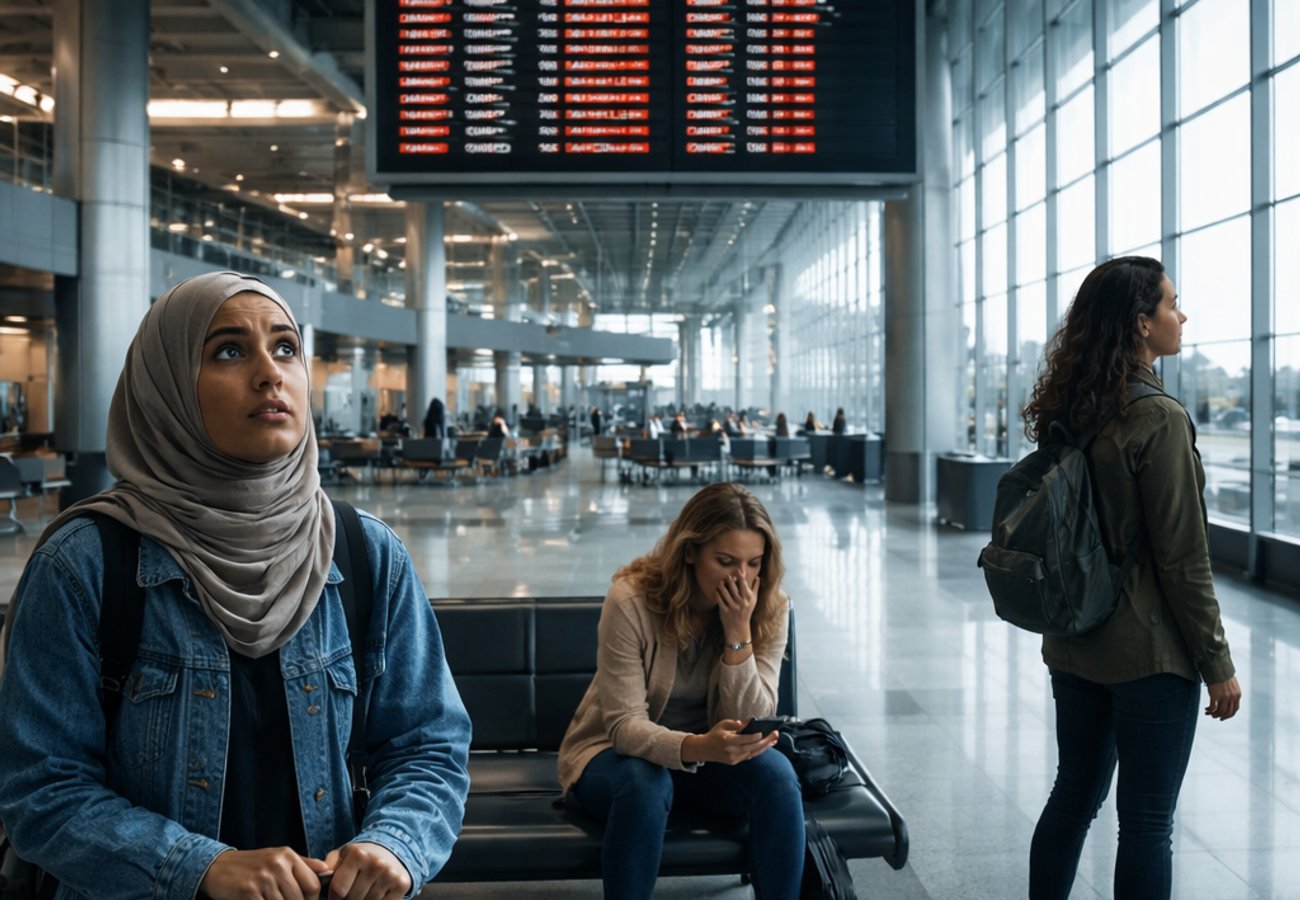
Image generated by AI
The Middle East's aviation sector has lurched into crisis mode. As I tracked the unfolding situation on June 8, 2026, a coordinated wave of airspace closures swept across six nations—Iraq, Syria, Jordan, Lebanon, Iran, and Israel—after escalating missile exchanges and cross-border military hostilities forced civil aviation authorities to ground flights and seal critical air corridors. The result: unprecedented disruption to international travel, regional operations, and the intricate network of flight paths connecting Europe, Asia, and Africa.
Iraq Implements 72-Hour Complete Airspace Shutdown
The cascade began with Iraq. The Iraqi Civil Aviation Authority announced a sweeping closure of the nation's entire airspace to all incoming, outgoing, and transit flights for 72 hours. This wasn't a partial restriction—it was a complete suspension affecting one of the world's most strategically vital air corridors.
For airlines and passengers, the implications were immediate and severe. Every flight normally routed through Iraqi airspace faced rerouting along extended alternate paths or outright cancellation. International carriers connecting European hubs to Asian gateways had to scramble for alternatives, adding hours to journey times and straining already-stretched logistics.
Reddit: "Just got my flight rerouted through Central Asia instead of Iraq. Added 4 hours and a fuel stop. Absolutely brutal timing." — r/travel
The closure reflects the gravity of how authorities assessed the security situation. When a nation shuts down its entire airspace, it signals not routine caution but genuine, measurable danger to civilian aircraft.
Syria Seals Southern Corridors, Damascus International Halts
Syria followed with its own restrictions. The General Authority of Civil Aviation and Air Transport declared a temporary closure of southern air corridors—effectively splitting the country's navigable airspace and suspending operations at Damascus International Airport, one of the region's principal gateways.
The southern closure initially spanned 12 hours from late Sunday into Monday morning but signaled deeper uncertainty. With southern routes sealed, airlines servicing the Levant region faced immediate operational chaos. Approaches, departures, and overflight routings through Syria became impossible, forcing additional rerouting and schedule adjustments.
Iran Restricts Western Airspace, Major Tehran Hubs Affected
Iran implemented its own precautionary measures, restricting airspace in its western sector. This directly impacted operations at two critical international gateways: Imam Khomeini International Airport (Iran's primary international hub) and Mehrabad International Airport (Tehran's domestic center).
While domestic flights technically continued, the uncertainty was palpable. Carriers issued advisories, adjusted schedules, and absorbed delays as authorities conducted ongoing security assessments. Officials stated these measures would remain "until further notice"—a phrase that sent chills through the aviation industry.
Israel Tightens Ben Gurion Operations Amid Air Defense Activation
In Israel, Ben Gurion International Airport near Tel Aviv implemented strict flight restrictions following incoming missile alerts and activation of air defense systems. Commercial flight suspensions were widespread, with limited operations reserved for emergency services, evacuations, and essential travel only.
The disruption mirrored the chaos across the broader region. One of the Middle East's busiest international airports was effectively operating at a fraction of normal capacity—a stark illustration of the security environment's severity.
Lebanon and Jordan Restrict Approach Corridors
Jordan and Lebanon followed suit with their own airspace restrictions, particularly in zones adjacent to active conflict areas. Queen Alia International Airport in Amman and Beirut Rafic Hariri International Airport avoided complete closure but enforced mandatory flight plan alterations, delayed departures, and rerouted arrivals.
Airlines servicing these hubs coordinated closely with authorities to navigate the operational minefield. What should have been routine departures became complex logistical calculations designed around shrinking airspace.
Global Flight Networks Reroute, Costs and Delays Spike
The regional closures created cascading effects across global aviation networks. International carriers—particularly those operating long-haul services through Middle Eastern corridors—scrambled to adjust schedules and reroute flights away from hazard zones.
Passengers faced widespread cancellations, delays, and logistical complications. Airlines absorbed cost impacts from extended flight times, additional fuel burns, and altered crew scheduling. The disruption highlighted a hard truth: when a strategically vital region closes its skies, the ripple effects reach across continents.
According to ICAO protocols, such regional closures trigger mandatory coordination among national regulators and international aviation bodies to ensure continued safe operations in adjacent airspaces and maintain critical overflight routing.
What Travelers Must Do Now
For passengers planning travel through affected regions, the guidance is clear: consult the latest Notices to Air Missions (NOTAMs) before any departure. These official advisories provide real-time updates on airspace restrictions, airport closures, and operational limitations.
Airlines are actively managing responses to minimize disruptions, but significant delays, route changes, and cancellations should be anticipated until airspace conditions are certified secure. The International Civil Aviation Organization (ICAO) continues monitoring the situation alongside national regulators, with safety remaining the paramount concern.
Major Affected Airports at a Glance
Damascus International Airport, Syria – Complete operational suspension during southern corridor closure.
Imam Khomeini International Airport, Iran – Western airspace restrictions affecting international arrivals and departures.
Mehrabad International Airport, Iran – Domestic flight disruptions and mandatory schedule adjustments.
Ben Gurion International Airport, Israel – Commercial operations suspended; limited emergency movements only.
Queen Alia International Airport, Jordan – Flight adjustments and temporary delays in restricted zones.
Beirut Rafic Hariri International Airport, Lebanon – Restricted approach corridors and mandatory flight rerouting.
What's Next?
Uncertainty defines the immediate outlook. National authorities emphasize these closures are precautionary and subject to adjustment as risk assessments evolve. Yet uncertainty may persist for travelers until de-escalation measures are confirmed or regional security stabilizes.
The Middle East's civil aviation sector now operates in a highly volatile environment. Airlines, passengers, and regulatory bodies are adapting in real time—prioritizing passenger safety across strategically vital air routes while managing the operational costs of unprecedented disruption.
This crisis underscores how quickly geopolitics can reshape global aviation logistics.
Related Travel Guides
Disclaimer
This article is for informational and educational purposes only. It does not constitute legal, financial, or professional advice. While we strive to provide accurate and up-to-date information, travel policies, regulations, and conditions change rapidly. Always verify information with official sources before making travel decisions. Nomad Lawyer makes no representations about the accuracy, reliability, completeness, or suitability of the information provided. Readers should consult qualified professionals for advice specific to their circumstances. The views expressed in this article are those of the author and do not necessarily reflect the views of Nomad Lawyer.
Preeti Gunjan
Contributor & Community Manager
A passionate traveller and community builder. Preeti helps grow the Nomad Lawyer community, fostering engagement and bringing the reader experience to life.
Learn more about our team →