
Miami Aviation Meltdown Exposes World Cup Travel Chaos as Uruguay Suffers 2-Hour Flight Delay and Global Airlines Battle Systemic Airport Disruptions
Breaking airline news: Massive World Cup travel chaos strikes Miami as Uruguay suffers a 2-hour flight delay, exposing severe logistical cracks for global airlines like American, Emirates, and Lufthansa.

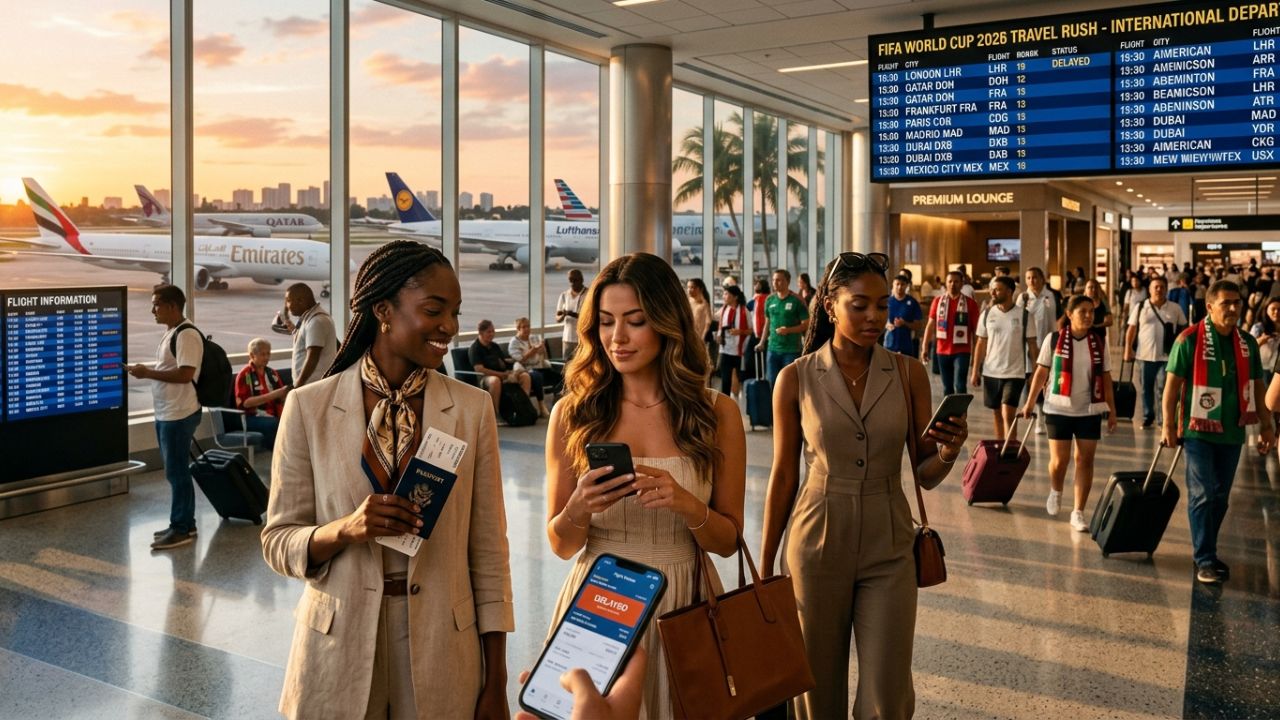
Image representing the intense operational pressure and severe travel chaos currently gripping Miami, as global carriers including American Airlines, Emirates, and Lufthansa battle massive airport disruptions caused by the incredibly compressed scheduling of the 2026 FIFA World Cup, highlighted by a high-profile two-hour flight delay for the Uruguay national team. (Image Credit: International Aviation Tracking)
Miami Aviation Meltdown Exposes World Cup Travel Chaos as Uruguay Suffers 2-Hour Flight Delay and Global Airlines Battle Systemic Airport Disruptions
A High-Profile Delay for the Uruguay National Team Reveals Massive Logistical Vulnerabilities as the 2026 FIFA World Cup Pushes the Global Aviation Network to the Breaking Point
The absolute logistical nightmare of hosting the world's largest sporting event is currently violently exposing the structural limits of global aviation. According to the absolute latest breaking airline news and highly critical aviation updates, severe travel chaos is aggressively worsening in Miami as the incredibly complex logistics of the 2026 FIFA World Cup stretch international airlines to the breaking point. The severity of the situation was violently highlighted when the Uruguay national football team suffered a sudden, highly disruptive 2-hour flight delay departing from Cancun, Mexico, just prior to their massive clash with Saudi Arabia. This high-profile disruption is a terrifying warning sign regarding the fragility of scheduled international transportation. With the global network currently experiencing a highly compressed peak travel window, massive global carriers including American Airlines, Emirates, Aeroméxico, Lufthansa, Qatar Airways, Air France, and Iberia are battling simultaneous and unprecedented surges in demand.
What travelers are actively not being told is that during a mega-event of this scale, there is absolutely zero elasticity within the aviation grid. Even highly minor operational delays for a single airline can violently trigger massive, unrecoverable airport disruptions that cascade across meticulously planned World Cup travel itineraries. The sheer volume of international teams, VIP delegations, global media, and massive fan contingents converging simultaneously on a single hub like Miami guarantees that ground handling, airspace sequencing, and terminal security are perpetually operating at the brink of collapse. If a highly protected, chartered national team flight can suffer a 2-hour clearance delay, standard commercial passengers navigating this heavily strained network must remain fiercely prepared for sudden flight cancellations and agonizing multi-leg friction.
Section-Wise Breakdown: The Anatomy of the World Cup Aviation Meltdown
The highly detailed operational and scheduling data definitively exposes exactly how this massive sporting event is fracturing the global aviation network:
The Miami Stress Test: Global Carriers Under Siege Miami has officially become ground zero for the 2026 air travel disruption crisis. The massive influx of international arrivals specifically funneled from Europe and South America has collided violently with the incredibly tight match scheduling at Hard Rock Stadium. Aviation trends explicitly indicate that the simultaneous arrival of highly coordinated national teams alongside massive commercial fan flows instantly creates catastrophic friction. Airlines are currently suffering from excruciating ground handling delays, severe traffic holds, delays in motion, and massively increased pressure on highly sensitive crew flight rotations. The lack of operational flexibility for chartered sports flights means that when airspace bottlenecks occur, there is simply nowhere to put the excess traffic, guaranteeing systemic gridlock.
The Uruguay Delay: A Warning for World Cup Logistics The incredibly tense travel situation for the Uruguay national squad serves as the absolute perfect case study for this crisis. The team was scheduled to depart from Cancun, Mexico, on a highly coordinated flight directly to Miami. However, a sudden airline permitting and clearance issue violently halted the departure, resulting in an estimated 2-hour tarmac delay before the aircraft could finally arrive in Miami later that same night. To prevent the situation from escalating, FIFA officials immediately confirmed direct communication with the respective airport authorities to expedite the arrival. Fortunately, team officials explicitly confirmed that the delay caused absolutely no loss in training and no impact on squad rotation, as the players utilized the delay to rest and recover. However, this level of friction for a highly prioritized VIP flight exposes exactly what standard fans face: sudden, unexplainable delays driven by administrative airspace gridlock.
High Pressure Worldwide Operations The operational pressure is absolutely not limited to Miami. Massive legacy carriers like American Airlines, Emirates, Aeroméxico, Lufthansa, Qatar Airways, Air France, and Iberia operate highly interlinked networks that currently form a highly tense travel web across the US, Mexico, and Europe. These mega-carriers are desperately attempting to manage the rapid turnaround of charter flights while seamlessly coordinating massive international arrival flows into saturated hubs like Miami, New York, and Dallas. Furthermore, the massive surge in premium travel demand and the chaotic reality of last-minute travel changes for advancing matches have eliminated any remaining operational buffers. While aviation experts note that no complete global failures have occurred yet, the system is fundamentally plagued by extreme capacity challenges.
Flight Details: The Factual Airline Constraint Matrix
To provide exact, factual clarity on the immense operational pressure forced upon individual carriers, aviation analysts have mapped the specific network constraints. The following factual matrix details the precise breakdown of the airline strain:
Factual Airlines and World Cup Routes: Constraints by Request
| Airline | Area of Interest | Type of Factual Constraint |
|---|---|---|
| American Airlines | US Domestic | High Matchday Congestion |
| Emirates | Mideast to US | Long-haul Premium Demand |
| Aeromexico | Mexico to US | Cross-border Scheduling |
| Lufthansa | Europe to US | Increased Chartered Flights |
| Qatar Airways | All Connecting | High Volume International Travel |
| Air France | Europe to US | High Season Demand |
| Iberia | Spain to US | Demand-Adjusted Travel |
Note: Strain strictly refers to extreme demand concentration, NOT a guaranteed systemic or mechanical challenge for the airline. (Source: International Aviation Tracking)
Passenger Impact: The Global Fan Mobility Crisis
The 2026 World Cup Travel Madness has engineered a highly volatile environment for the global traveling public. Because the 2026 tournament officially spans 16 host cities heavily spread across 3 massive countries, the logistical friction is unprecedented. Travelers are currently facing massive fare and pricing volatility, requiring them to constantly adjust itineraries on terrifyingly short notice. Accommodations specifically located near stadiums are completely booked, forcing fans to heavily rely on localized transit networks. The massive pressure across borders guarantees that passengers will suffer an increased need for layovers and connecting flights. The top 5 nations specifically impacted by this massive fan mobility flow include the United States (domestic fan movement), Mexico (cross-border demand), the United Kingdom (massive European outbound flow), France and Germany (premium long-haul segments), and Saudi Arabia (high-level fan and team coordination).
Industry Analysis: FIFA Coordination and Systemic Fragility
Aviation analysts closely monitoring the 2026 World Cup logistics emphasize that the primary stressors on the global network are geographically unprecedented. Because some national teams have strictly less than 72 hours between massive events, and because flights routinely cross multiple time zones requiring long-haul operations, the margin for error is essentially zero. National teams are rightfully subjected to high-security protocols at the airport, which requires the highly coordinated segregation of charter operations across multiple carriers. In this hyper-compressed environment, even a minor two-hour delay can instantly devastate critical recovery schedules, ruin required training sessions, delay mandatory media obligations, and jeopardize the timed arrival to the venue.
Conclusion: A Masterclass in Adaptability
The highly publicized 2-hour delay of the Uruguay national team in Miami serves as a highly definitive warning regarding the fragility of World Cup travel logistics. When airlines are forced to operate within the incredibly dense pressure cooker of a global sporting event, minor airspace clearance issues are instantly amplified into massive, systemic travel chaos. As American Airlines, Emirates, and Lufthansa desperately battle to stabilize their saturated networks, the absolute best remedy for standard travelers attempting to navigate these severe airport disruptions is flawless advance planning and fierce adaptability. For international attendees, the reality is stark: prepare for horrifyingly long immigration lines, secure travel between host cities months in advance, and always build massive buffer zones into your connecting flights. (Source: International Aviation Tracking via Nomad Lawyer)
Key Takeaways
- Massive VIP Delay: The Uruguay national football team suffered a sudden 2-hour flight delay from Cancun, Mexico, prior to arriving in Miami for their clash with Saudi Arabia.
- Administrative Friction: The 2-hour tarmac delay was officially caused by a sudden airline permitting and clearance issue, requiring FIFA intervention with airport authorities.
- Global Airline Strain: Mega-carriers including American Airlines, Emirates, Aeroméxico, Lufthansa, Qatar Airways, Air France, and Iberia are battling unprecedented demand surges and capacity challenges.
- Multi-National Chaos: The logistics of spanning 16 host cities across 3 countries have engineered massive fare volatility and forced incredibly tight turnaround times (less than 72 hours) for teams.
- Passenger Warning: Commercial travelers navigating World Cup host hubs must expect severe congestion, massive ground handling delays, and increased pressure on cross-border connecting flights.
✈️ Frequently Asked Questions (Factual Aviation Disruption Data)
What specifically is causing the increasing airline travel disruptions during 2026? The massive disruptions are a direct consequence of the World Cup’s unique structure heavily spanning multiple countries, drastically increased traveler numbers, and a massive surge in international flights constrained by incredibly tight match schedules.
Which specific airlines are currently feeling the most operational pressure? Aviation analysts expect vastly increased bidirectional operational pressure across the USA, Europe, and Latin America specifically for American Airlines, Emirates, Lufthansa, Qatar Airways, Air France, Iberia, and Aeroméxico.
How did the 2-hour flight delay specifically impact the Uruguay national team? Fortunately, team officials explicitly confirmed that the delay caused absolutely no loss in training and no impact on squad rotation, as players simply utilized the delay time for rest and recovery.
What specific issue physically caused the 2-hour delay from Cancun to Miami? The delay was officially sparked by a highly disruptive airline permitting and clearance issue that forced the aircraft to hold before departure.
What are the primary logistical stressors caused by the 2026 World Cup structure? The primary stressors include teams having less than 72 hours between events, navigating multiple time zones, enforcing high-security airport protocols, and managing heavily coordinated charter operations.
Which specific nations are heavily impacted by the massive fan mobility flows? The top impacted nations explicitly include the United States, Mexico, the United Kingdom, France, Germany, and Saudi Arabia.
What specific operational challenges are airlines currently facing at mega-hubs like Miami? Airlines are battling severe ground handling delays, vastly increased traffic holds, delays in motion, and massive pressure on highly sensitive crew flight rotations.
What specific actions can commercial travelers take to reduce their risk of World Cup delays? Travelers are fiercely advised to purchase flexible tickets, utilize airline apps to continuously monitor flight status and gate changes, avoid tight layovers, and build a massive buffer of 3 to 5 hours for all connecting flights.
🌍 Related Travel Guides & Flight Resources
- Navigate Airport Disruptions Like a Pro Master the art of surviving unexpected travel chaos with our expert strategies.
- Breaking Airline News & Evasion Routes Stay ahead of the delays with our real-time aviation updates and route intelligence.
- Global Flight Cancellation Defense Grid Essential legal rights and compensation tactics when your flight goes down.
⚖️ Disclaimer
The flight delay timelines, airline operational constraints, and logistical routing analyses provided in this report are for informational purposes only. The specific aviation variables regarding the 2026 World Cup travel disruptions—including the 2-hour flight delay experienced by the Uruguay national team from Cancun to Miami, the specific constraints facing carriers like American Airlines and Emirates, and the 72-hour turnaround stressors—are based on official aviation tracking data as of June 15, 2026. NomadLawyer does not guarantee the absolute accuracy or current validity of the operational recovery timelines provided and assumes no liability for unannounced flight cancellations, extreme immigration wait times, severe hotel price volatility, or any financial consequences resulting from the use of this analytical content. Passengers navigating the 16 host cities during the tournament are strongly advised to constantly monitor official airport advisories.
Disclaimer
This article is for informational and educational purposes only. It does not constitute legal, financial, or professional advice. While we strive to provide accurate and up-to-date information, travel policies, regulations, and conditions change rapidly. Always verify information with official sources before making travel decisions. Nomad Lawyer makes no representations about the accuracy, reliability, completeness, or suitability of the information provided. Readers should consult qualified professionals for advice specific to their circumstances. The views expressed in this article are those of the author and do not necessarily reflect the views of Nomad Lawyer.
Kunal K Choudhary
Co-Founder & Contributor
A passionate traveller and tech enthusiast. Kunal contributes to the vision and growth of Nomad Lawyer, bringing fresh perspectives and driving the community forward.
Learn more about our team →