
The Transpacific Bridge: Inside Miami's Strategic Bid for Direct Tokyo Flights with American and JAL
Miami International Airport targets American Airlines and Japan Airlines for a landmark nonstop Tokyo link, backed by revenue guarantee proposals and incoming Airbus A350-1000 fleets.

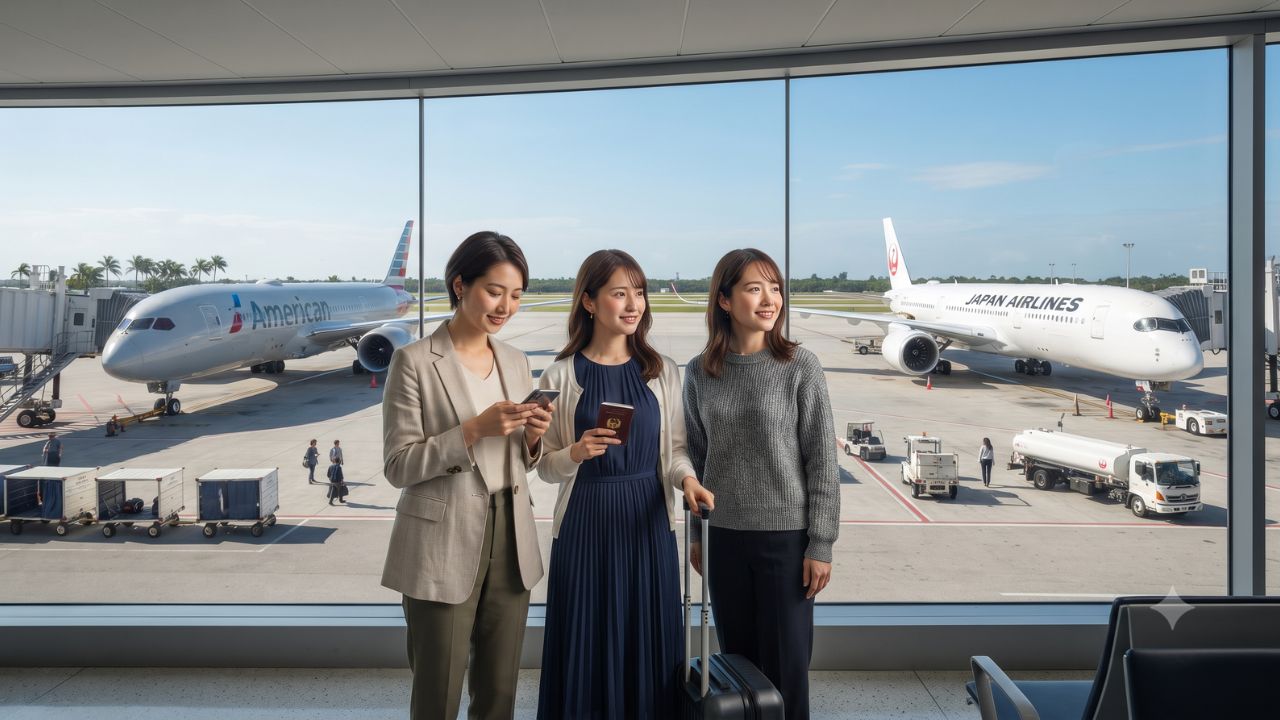
Miami International Airport evaluates financial incentive packages to secure direct nonstop flights to Tokyo.
Despite processing 55.3 million total passengers and 24.9 million international travelers in 2025, Miami International Airport remains one of the largest global gateways without a single nonstop air link to East Asia. To eliminate this geographic gap, Miami-Dade County leadership and airport officials are actively developing a financial incentive package—including a minimum revenue guarantee evaluated by Mayor Daniella Levine Cava—to attract a direct Tokyo route operated by oneworld alliance partners American Airlines or Japan Airlines (JAL).
Supported by Miami Aviation Director Ralph Cutié, the initiative seeks to establish a nonstop transpacific corridor linking Florida, Latin America, and the Caribbean directly to Japan’s capital. With Japan Airlines operating 22 Boeing 787-9 and 11 flagship Airbus A350-1000 aircraft as of March 31, 2026—and preparing to integrate 20 additional international A350 widebodies beginning in financial year 2027—ultra-long-haul fleet expansion is revitalizing feasibility discussions.
Evaluating the Miami Gateway: Passenger Traffic and Fleet Data
The business case for a direct Tokyo connection relies on Miami’s substantial international transit volume and cargo strength, balanced against the fleet realities of transpacific carriers.
| Aviation Indicator / Carrier Asset | 2025–2026 Reported Metric | Strategic Impact for Tokyo Route |
|---|---|---|
| MIA Total Annual Passengers | ~55.3 Million Passengers (2025) | Demonstrates large-scale domestic and international demand |
| MIA International Passenger Traffic | ~24.9 Million Passengers (2025) | High-volume cross-border transit hub for the Americas |
| MIA Domestic Passenger Traffic | ~30.5 Million Passengers (2025) | Broad feeder network across Florida and the US Southeast |
| MIA Total Annual Freight Handled | Nearly 3.5 Million Tons (+13.6% growth) | Lucrative cargo hold belly revenue for ultra-long-haul flights |
| Japan Airlines Boeing 787-9 Fleet | 22 Aircraft (as of March 31, 2026) | Proven long-range transpacific twin-engine workhorse |
| Japan Airlines Airbus A350-1000 Fleet | 11 Aircraft (as of March 31, 2026) | Premium-heavy flagship with exceptional ultra-long range |
| JAL Future International A350 Orders | 20 Aircraft (delivering from FY2027) | Expansion capacity for prospective new long-haul destinations |
Official traffic figures from Miami International Airport confirm that MIA's cargo throughput reached nearly 3.5 million tons in 2025, a 13.6 percent annual increase that provides critical freight revenue essential for sustaining ultra-long-haul flight economics.
The Transpacific Joint Business: American Airlines and JAL Synergies
A direct route between Miami (MIA) and Tokyo Haneda (HND) or Narita (NRT) would capitalize on the established joint business agreement between American Airlines and Japan Airlines:
- American Airlines' Miami Fortress Hub: American operates extensive feeder banks connecting South Florida with dozens of secondary cities across the eastern United States, alongside unparalleled frequencies into Central America, South America, and the Caribbean.
- Japan Airlines' Asian Distribution: Operating from its primary Tokyo hubs, JAL offers connections across Northeast and Southeast Asia, creating one-stop journeys between Asian commerce centers and Latin American capitals that currently require double-connection itineraries.
- The Minimum Revenue Guarantee Mechanism: Under the municipal structure under review, Miami-Dade County would establish an agreed financial floor for an introductory period, mitigating early commercial operating risks while the carrier builds route profitability.
What Makes the Miami to Tokyo Corridor Different
Operating a nonstop flight between South Florida and Tokyo involves unique geographic and operational dynamics compared to traditional West Coast transpacific routes:
- Great Circle Overflight: A nonstop flight between Miami and Tokyo spans over 7,400 nautical miles, requiring advanced widebody aircraft with high payload capabilities and modern fuel efficiency to navigate polar and trans-continental flight paths against prevailing headwinds.
- Latin American Interline Traffic: Travelers originating in São Paulo, Buenos Aires, or Bogotá could transit Miami with a single connection to reach Tokyo, transforming MIA into a dual-hemisphere junction.
- Cultural and Culinary Synergy: Direct access would connect Tokyo's Michelin-starred gastronomic scene with South Florida's international arts, design, and marine trade ecosystems, promoting bi-directional cultural tourism highlighted by the Japan National Tourism Organization.
Key Passenger Facts & Highlights
- Major Gateway Gap: Miami handles 55.3M annual passengers but lacks direct air service to East Asia.
- Financial Incentive Package: Mayor Levine Cava is evaluating a minimum revenue guarantee to de-risk launching the route.
- Leading Candidate Carriers: American Airlines and Japan Airlines lead candidate discussions under their oneworld transpacific alliance.
- Fleet Modernization: JAL's 20 incoming Airbus A350-1000 aircraft (starting FY2027) enhance long-haul feasibility.
- Cargo Economics: MIA's 3.5M tons of annual freight (+13.6%) provides key belly cargo revenue.
Visitor Insider Tips: Navigating Florida–Japan Journeys Today
- Optimize One-Stop Connections via Dallas or Los Angeles: Until a nonstop service is finalized, book American Airlines and JAL joint-venture codeshare tickets routed through Dallas/Fort Worth (DFW) or Los Angeles (LAX) for the shortest layover times and checked baggage transfers.
- Review US Transit Regulations for International Itineraries: International passengers connecting through Miami from Latin America must clear US Customs and Border Protection upon arrival, requiring valid ESTA authorization or a US transit visa regardless of onward ticket status.
- Leverage Oneworld Frequent Flyer Reciprocity: Elite members of American Airlines AAdvantage and JAL Mileage Bank can enjoy reciprocal lounge access, priority baggage handling, and seat selection across both carriers' transpacific networks.
- Monitor Haneda vs. Narita Gateways: When planning travel to Tokyo, prioritize flights landing at Tokyo Haneda Airport (HND), located just 15 minutes by monorail or Keikyu line from central Tokyo districts like Ginza and Shibuya, compared to Narita’s 60-minute express train journey.
Cultural and Environmental Context
The push for direct transpacific flights highlights how aviation networks are evolving toward ultra-efficient direct routing rather than multi-stop hub transfers. Eliminating intermediate domestic connections not only saves travelers four to six hours of transit time but also significantly reduces cumulative landing and takeoff cycles.
Modern widebody aircraft like the Airbus A350-1000 and Boeing 787-9 feature advanced carbon-composite airframes, Rolls-Royce Trent XWB and GEnx engines, and optimized aerodynamics that consume up to 25 percent less fuel per seat compared to previous-generation four-engine widebodies. By pairing fuel-efficient long-haul technology with strategic point-to-point connections, global aviation can expand international cultural exchange while minimizing per-passenger carbon output.
FAQ: Miami to Tokyo Flights and Travel 2026
Is there currently a confirmed nonstop flight between Miami and Tokyo?
No. Nonstop Miami to Tokyo flights remain an active strategic proposal under evaluation by Miami airport authorities, with no published launch dates, fares, or flight schedules yet confirmed.
Which airlines are being targeted for the Miami–Tokyo route?
Miami International Airport is focusing on American Airlines and Japan Airlines due to their established transpacific joint business partnership and complementary hubs.
What is a minimum revenue guarantee in airport route development?
A minimum revenue guarantee is a financial incentive where local authorities agree to cover qualifying revenue shortfalls below a predetermined threshold during a new route's introductory operating period.
How long would a nonstop Miami to Tokyo flight take?
A direct flight between Miami and Tokyo would take approximately 14 to 15.5 hours depending on seasonal jet stream winds and routing.
Related Travel Guides
Disclaimer
This article is for informational and educational purposes only. It does not constitute legal, financial, or professional advice. While we strive to provide accurate and up-to-date information, travel policies, regulations, and conditions change rapidly. Always verify information with official sources before making travel decisions. Nomad Lawyer makes no representations about the accuracy, reliability, completeness, or suitability of the information provided. Readers should consult qualified professionals for advice specific to their circumstances. The views expressed in this article are those of the author and do not necessarily reflect the views of Nomad Lawyer.
Raushan Kumar
Founder & Lead Developer
Full-stack developer with 11+ years of experience and a passionate traveller. Raushan built Nomad Lawyer from the ground up with a vision to create the best travel and law experience on the web.
Learn more about our team →