
Mexico Tourism Hits Historic Peak With 51.1 Million International Arrivals in First Half of 2026
Mexico recorded a landmark 51.1 million international visitors in the first six months of 2026, driven by a surge in cruise travel and robust air connectivity.
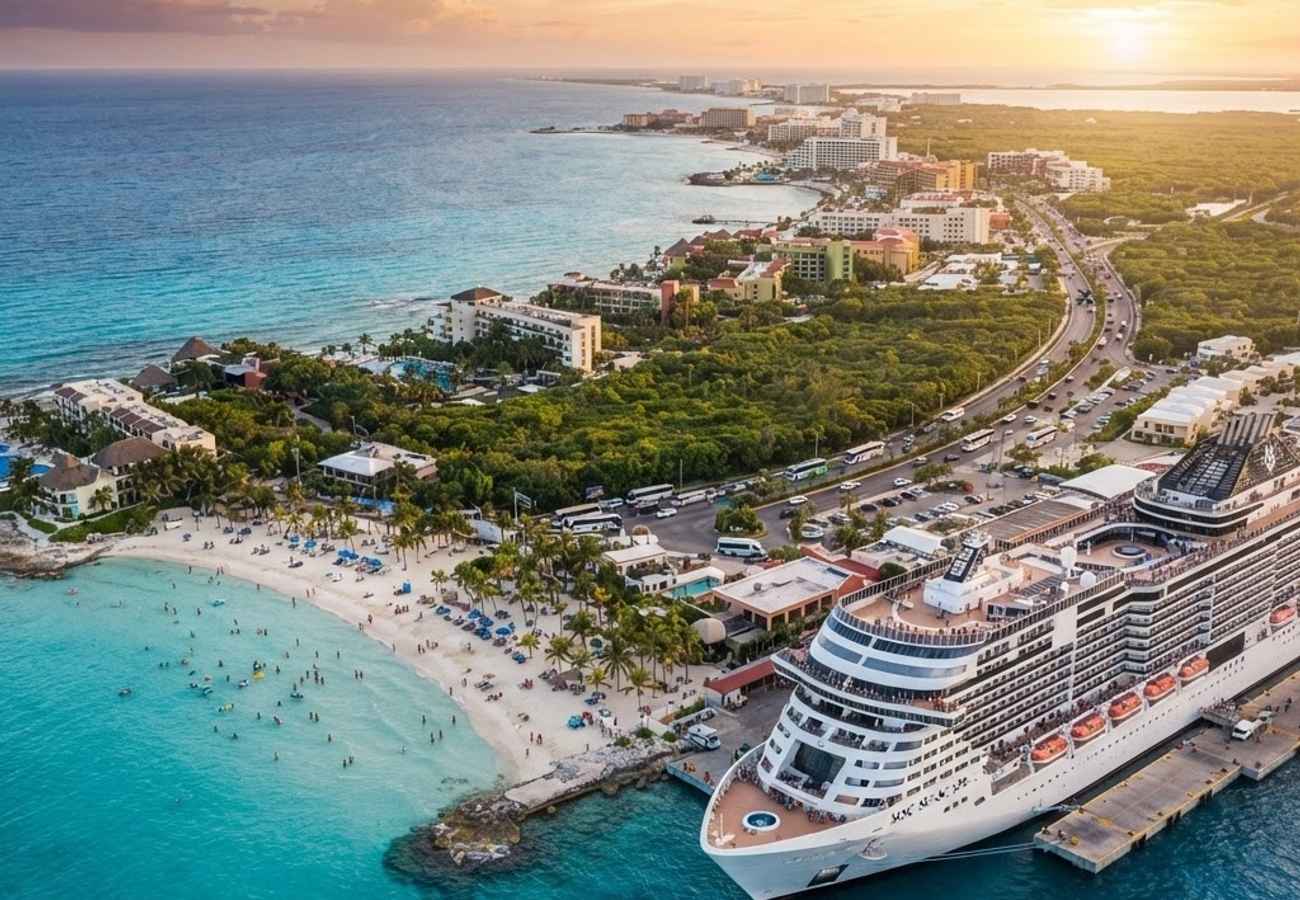
Image generated by AI
Mexico has shattered previous tourism benchmarks by welcoming 51.1 million international visitors during the first six months of 2026, marking a 7.7 percent increase over the same period in 2025. This surge in arrivals, coupled with record-breaking spending and cruise passenger volumes, cements the nation's position as a primary global travel hub.
The growth trajectory indicates a comprehensive recovery and expansion beyond pre-pandemic levels, with both air and sea gateways operating at peak capacity. Government figures suggest that the country is no longer merely recovering but has entered a new phase of structural growth in its tourism economy.
Historic Growth in International Visitor Volumes
Data released by the National Institute of Statistics and Geography (INEGI) and the Secretariat of Tourism (Sectur) confirm that the 51.1 million arrivals recorded between January and June 2026 represent an all-time high for a first-half period. Of these visitors, 24.5 million were categorized as international tourists—those who spent at least one night within the country. This specific segment saw a year-on-year expansion of 4.6 percent.
Financial inflows have mirrored this volume growth. According to the Sectur Datatur platform, international visitors injected 18.78 billion dollars into the Mexican economy during the first half of the year. This figure represents a 0.5 percent increase compared to the first half of 2025. While the revenue growth is more conservative than the arrival rate, industry analysts view this as a stabilization of high-volume traffic.
This upward trend was already evident in the first quarter of 2026, which saw 26.22 million international visitors and 12.66 million international tourists, setting the stage for the record-breaking second quarter.
Cruise Sector and Aviation Reach All-Time Highs
The surge in arrivals is being driven heavily by the cruise and aviation sectors. Cruise tourism, in particular, has emerged as a primary growth engine. Between January and June 2026, 6.6 million cruise passengers docked at Mexican ports, a substantial 15.2 percent increase over the first half of 2025.
The economic impact of these sea-bound travelers is disproportionately high. Cruise passengers generated an estimated 575 million dollars in revenue during the first six months of 2026, an 18.7 percent increase year-on-year. This indicates that visitors are spending more on shore excursions and local services per capita than in previous years.
Air travel has shown similar strength. Datatur reports that scheduled flights—both domestic and international—carried 51 million passengers from January through May 2026. The United States continues to be the dominant source market, accounting for approximately 62 percent of air arrivals during that five-month window.
Regional Economic Distribution and Employment
The 18.78 billion dollars in revenue is fueling regional development across the country. The national business chamber for commerce, services, and tourism (Concanaco Servytur) has noted that the semester saw five distinct tourism records, urging the government to implement policies that ensure these profits reach family-owned businesses and small enterprises.
Employment in the sector remains robust. Labor-force surveys via Datatur indicate that more than 5 million people are currently employed in tourism-related activities, with net job gains recorded against 2025 figures.
While traditional beach resorts continue to report record hotel occupancy, there is a strategic push to move visitors toward colonial cities and nature-based destinations in the central and southern states to diversify the economic benefit. This is supported by a strong domestic market, with over 36 million domestic tourists utilizing hotels in early 2026, providing a critical buffer against fluctuations in foreign demand.
Tourism Performance Metrics H1 2026
| Metric | H1 2026 Value | Year-on-Year Change |
|---|---|---|
| Total International Visitors | 51.1 Million | +7.7% |
| International Tourists (Overnight) | 24.5 Million | +4.6% |
| Total International Revenue | $18.78 Billion | +0.5% |
| Cruise Passenger Arrivals | 6.6 Million | +15.2% |
| Cruise Passenger Spending | $575 Million | +18.7% |
| US Market Share (Air Arrivals) | ~62% | Stable |
Long-Term Strategic Positioning and Global Standing
Mexico's current trajectory is the result of a decade-long evolution. Before the pandemic, annual international visitors typically remained under 100 million. After a sharp decline in 2020, the country utilized open borders, competitive pricing, and expanded air connectivity to rebound.
By 2023, Mexico had already surpassed its pre-pandemic benchmarks. The 2026 data suggests that the country has reached a "higher structural plateau," meaning the baseline for annual visitors has permanently shifted upward. Globally, this keeps Mexico in the top tier of international destinations, particularly for the North American market.
However, this growth brings logistical challenges. Industry observers are now highlighting the need for sustainable management to prevent environmental degradation in coastal corridors and to upgrade infrastructure in secondary cities that are seeing unexpected growth.
Projections for Late 2026
The momentum is expected to carry through the remainder of the year, bolstered by peak travel seasons in Europe and North America. June 2026 alone saw 8.2 million international travelers, including 4 million overnight tourists and 843,417 cruise passengers. Notably, average spending by air travelers in June rose 9.6 percent compared to June 2025, suggesting a shift toward higher-spending luxury segments.
While exchange rate volatility and global economic shifts remain risks, the combination of geographic proximity to the US and a diversified tourism product makes Mexico highly resilient.
Why This Matters (Information Gain & Experience)
For the traveler, these record numbers signal a double-edged sword. On one hand, the massive increase in flight capacity and cruise routes means more options and potentially more competitive pricing due to high volume. On the other hand, "record-breaking" arrivals often translate to extreme crowding at primary hubs like Cancún or Tulum, leading to longer wait times at immigration and higher peak-season hotel rates.
From a logistical standpoint, the shift toward "secondary destinations" mentioned in the data is the most critical takeaway for 2026. As the government pushes for visitor dispersion to the south and center of the country, travelers will likely find better value and more authentic experiences away from the saturated coastal corridors. For the digital nomad or long-term visitor, this suggests that the infrastructure in colonial cities is improving, making them more viable alternatives to the traditional beach resorts.
Mexico's tourism engine is firing on all cylinders, but the challenge now shifts from attracting visitors to managing the sheer scale of their arrival.
Related Travel Guides
Disclaimer
This article is for informational and educational purposes only. It does not constitute legal, financial, or professional advice. While we strive to provide accurate and up-to-date information, travel policies, regulations, and conditions change rapidly. Always verify information with official sources before making travel decisions. Nomad Lawyer makes no representations about the accuracy, reliability, completeness, or suitability of the information provided. Readers should consult qualified professionals for advice specific to their circumstances. The views expressed in this article are those of the author and do not necessarily reflect the views of Nomad Lawyer.