
Category 4 Hurricane Simon Paralyzes Mexico Pacific Travel with 150 MPH Winds and Airport Shutdowns
Category 4 Hurricane Simon halts aviation at Puerto Vallarta and Manzanillo with 150 mph winds, triggering 30-inch rainfall alerts and evacuations across 28 municipalities.

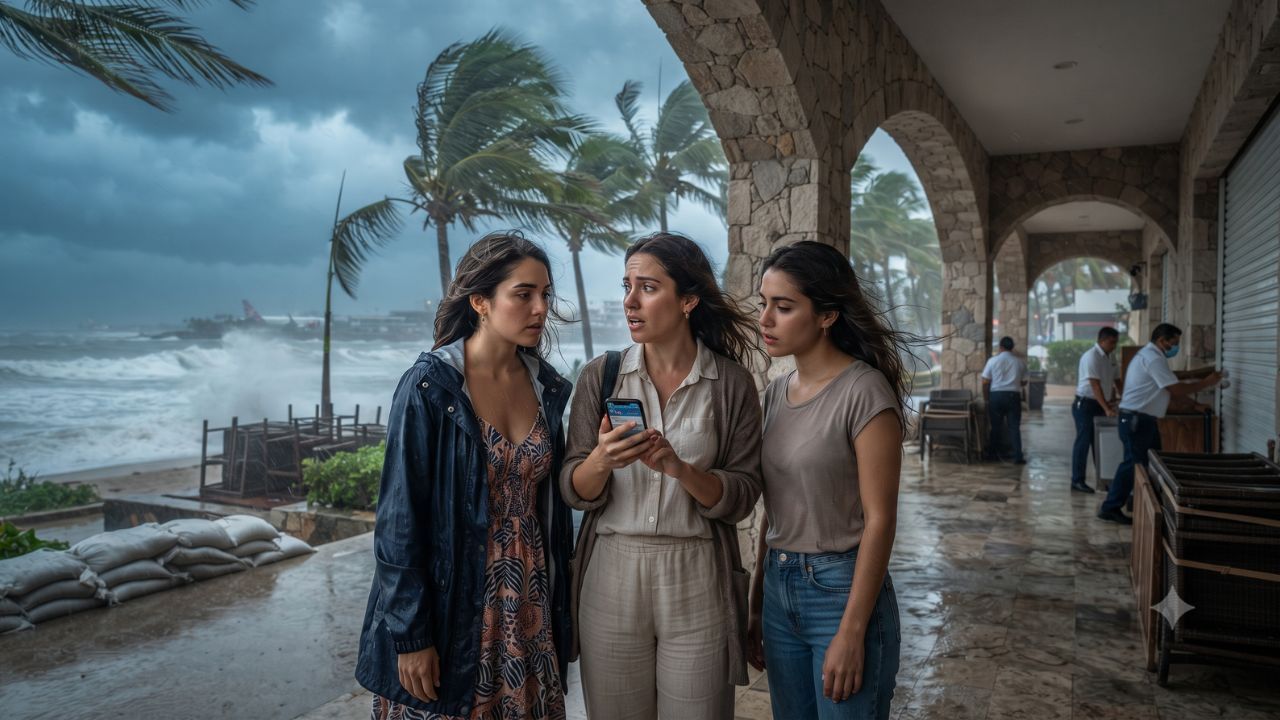
Sustained winds of 150 mph (240 km/h) and severe precipitation forecasts projecting up to 30 inches of torrential rainfall brought commercial aviation to an abrupt halt along Mexico's west-central Pacific seaboard as Category 4 Hurricane Simon swept along the coast. Intensifying with destructive speed across the weekend of 10–11 October 2026, the major cyclone triggered emergency operational shutdowns at Licenciado Gustavo Díaz Ordaz International Airport in Puerto Vallarta and Playa de Oro International Airport in Manzanillo. With outer squalls battering coastal resort towns across Jalisco, Colima, Michoacán, and Nayarit, civil protection agencies placed 28 municipalities under maximum Red alert, grounded commercial air links connecting North America to the Pacific coast, and evacuated vulnerable communities into emergency shelters.
The disruption extends far beyond local beachfronts. The sudden closure of major Pacific aviation gateways has severed transit routes for thousands of leisure travelers, stranding resort guests and snarling airline operations across the United States, Canada, and central Mexico. With the slow-moving cyclone threatening severe river flooding, catastrophic landslides, and storm surges, international travelers face immediate hurdles in securing shelter, obtaining rebooking waivers, and navigating consumer protection rights under Mexican aviation law.
Meteorological Tracking: Lethargic Forward Motion and Extreme Precipitation
Hurricane Simon developed into a high-end Category 4 system over open waters before turning northward along the Mexican continental shelf. An early Sunday assessment by the National Hurricane Center (NHC) recorded maximum sustained winds reaching approximately 150 mph (240 km/h). At that juncture, the eyewall was positioned roughly 110 miles south-southeast of Cabo Corrientes, moving north-northwest at an unusually sluggish forward velocity of approximately 6 mph. Subsequent meteorological advisories registered winds near 145 mph, verifying that the cyclone maintained life-threatening force.
Because Hurricane Simon translated along the coastline at only 6 mph, its outer feeder bands remained parked over coastal estuaries and adjoining mountain ridges for an extended duration. The NHC issued specialized flash flood warnings forecasting broad accumulations of 10 to 20 inches across southwestern Mexico. More critically, isolated highland zones across Jalisco, Colima, and Michoacán were projected to receive up to 30 inches of rain.
These massive water volumes heighten the threat of catastrophic flash floods and highland mudslides, particularly along mountain passes that connect coastal enclaves to inland cities like Guadalajara. Simultaneously, the Mexican Navy enacted strict maritime navigation closures, suspending all recreational, fishing, and commercial departures across Puerto Vallarta, Manzanillo, San Blas, and Lázaro Cárdenas to prevent shipwrecks caused by dangerous ocean swells and lethal rip currents.
Aviation Ground Stops, Municipal Red Alerts, and Emergency Evacuations
The commercial aviation shutdown unfolded progressively over the weekend as airport operators prioritized passenger and ground crew safety.
| Transport Hub / Jurisdictional Zone | Official Operational Status | Verified Meteorological / Civic Metric | Emergency Provisions & Passenger Advisories |
|---|---|---|---|
| Puerto Vallarta Airport (PVR) | Operations suspended 6:00 pm Sat, 10 Oct | Category 4 winds ~145–150 mph offshore | Provisional reopening scheduled for 8:00 am Mon, 12 Oct pending safety audits |
| Manzanillo Airport (ZLO) | Operations suspended Saturday evening | Commercial arrivals/departures canceled 11 Oct | Facility closed to non-emergency flights; apron tie-downs enforced |
| Jalisco State Civil Protection | 261 residents evacuated from danger zones | 13 temporary shelters prepared (1,900 capacity) | Strict alerts for Cabo Corrientes, Cihuatlán, La Huerta, Tomatlán |
| Colima State Emergency Corps | 5 emergency reception centers activated | Over 1,500 emergency personnel deployed | Priority focus on coastal Armería, Tecomán, and Manzanillo |
| Regional Cyclone Alert Tier | 28 municipalities on Red (Maximum) Alert | 93 municipalities on High Alert status | Suspension of school classes and non-essential commercial operations |
| Maritime Harbor Master (SEMAR) | Complete navigation ban across four ports | Severe storm surge and extreme sea states | Suspensions enforced across Puerto Vallarta, Manzanillo, San Blas, Lázaro Cárdenas |
At Puerto Vallarta International Airport, managed by Grupo Aeroportuario del Pacífico (GAP), commercial operations ceased at 6:00 pm local time on Saturday, 10 October. Airport administrators designated 8:00 am on Monday, 12 October, as a provisional reopening time, explicitly conditioning flight resumptions on runway inspections, navigational aid recertification, and drainage clearance. In Colima, Manzanillo International Airport halted flights on Saturday night, leading to the cancellation of all scheduled commercial services throughout Sunday, 11 October.
Civic defense authorities mobilized quickly to protect human life. A formal briefing from the Jalisco State Government on 9 October verified the proactive evacuation of 261 residents from high-risk beachfront locations, alongside the preparation of 13 shelters designed to accommodate 1,900 people. Colima authorities activated five public shelters and dispatched more than 1,500 emergency personnel to coastal settlements in Tecomán, Armería, and Manzanillo. While hotels along the Costa Alegre and Banderas Bay boarded exterior windows and placed sandbags, authorities advised tourists to shelter in interior rooms and dial 911 for emergency medical or rescue assistance.
Expert Analysis: Force Majeure, Fleet Repositioning, and Consumer Rights Under Mexican Aviation Law
The grounding of flights across Puerto Vallarta and Manzanillo highlights the acute legal and logistical friction travelers experience during tropical weather disasters. Because cyclonic storms are legally classified as natural force majeure (caso fortuito o fuerza mayor), standard airline liability frameworks undergo immediate changes.
For travelers booking this route, the direct consequence is that mandatory cash indemnities and complimentary hotel accommodations required for commercial delays do not apply. Under statutory consumer rules enforced by Mexico's Federal Consumer Attorney's Office (PROFECO) and the Civil Aviation Law (Ley de Aviación Civil), airlines are relieved of providing lodging vouchers or food allowances when disruptions are caused by meteorological closures. However, carriers operating into Mexico remain legally obligated to offer passengers three distinct remedies without financial penalties: rebooking on the next available flight to the destination once operations resume, issuing an open travel voucher valid for twelve months, or providing a full, unpenalized ticket refund via the original form of payment.
The pricing pressure this creates means that stranded passengers attempting to secure independent hotel extensions face rapid room inventory exhaustion. With hundreds of tourists unable to depart and arriving vacationers prevented from landing, airport-adjacent hotels and secure inland properties quickly reach full capacity. Furthermore, spontaneous bookings on regional highways carry substantial physical risk, as mountain roads like Federal Highway 200 face severe landslide threats between Puerto Vallarta and Colima.
From an airline operational standpoint, reopening an airport terminal does not guarantee immediate flight restoration. Once GAP completes civil engineering inspections on Monday morning, carriers must reposition aircraft and flight crews scattered across Dallas, Houston, Phoenix, and Mexico City. This equipment imbalance creates multi-day rolling backlogs, meaning travelers whose Sunday flights were canceled may not secure confirmed departure seats until midweek. International travelers must obtain formal written cancellation documentation directly from airlines to validate trip interruption and lodging reimbursement claims through private travel insurance policies.
Key Takeaways
- Major Hurricane Force: Hurricane Simon reached Category 4 status with maximum sustained winds of 150 mph (240 km/h) before leveling at 145 mph near Cabo Corrientes.
- Dual Airport Shutdowns: Puerto Vallarta Airport suspended operations at 6:00 pm on 10 October with an 8:00 am 12 October provisional reopening target; Manzanillo canceled all 11 October commercial flights.
- Severe Rainfall Warnings: The US National Hurricane Center warned of 10 to 20 inches of rainfall across southwestern Mexico, with localized mountain areas facing up to 30 inches.
- Massive Civic Mobilization: 28 municipalities entered maximum Red alert status, supported by over 1,500 emergency personnel in Colima and 261 evacuated residents in Jalisco.
- Aviation Passenger Rights: Under PROFECO regulations, weather disruptions excuse airlines from paying hotel compensation, but passengers retain legal rights to fee-free rebooking or complete refunds.
FAQ: Hurricane Simon Mexico Travel Disruption 2026
What caused the airport closures in Puerto Vallarta and Manzanillo?
Category 4 Hurricane Simon brought 150 mph winds, severe flooding risks, and storm surges, prompting airport operator GAP and aviation regulators to shut terminals for safety.
Are airlines required to pay for hotel rooms during hurricane cancellations in Mexico?
No. Under Mexican aviation law and PROFECO guidelines, hurricanes constitute extraordinary force majeure events. Airlines are exempt from providing hotel vouchers, but must offer fee-free rebooking or full ticket refunds.
When are flights expected to resume at Puerto Vallarta International Airport?
A provisional reopening was scheduled for 8:00 am on Monday, 12 October 2026, subject to runway safety evaluations, terminal damage checks, and weather clearing.
What should travelers in coastal Jalisco and Colima do during the storm?
Shelter indoors away from windows, follow civil protection evacuation directives, avoid driving on mountain highways, and contact emergency services via 911 if immediate danger arises.
When major cyclonic systems paralyze Pacific gateways, a traveler's financial survival depends entirely on documented airline waivers and formal civil protection decrees.
Related Travel Guides
Disclaimer
This article is for informational and educational purposes only. It does not constitute legal, financial, or professional advice. While we strive to provide accurate and up-to-date information, travel policies, regulations, and conditions change rapidly. Always verify information with official sources before making travel decisions. Nomad Lawyer makes no representations about the accuracy, reliability, completeness, or suitability of the information provided. Readers should consult qualified professionals for advice specific to their circumstances. The views expressed in this article are those of the author and do not necessarily reflect the views of Nomad Lawyer.
Naina Thakur
Contributor & Travel Specialist
Travel enthusiast and legal writer covering visa regulations, responsible tourism, and cultural journeys across global destinations.
Learn more about our team →