
Mexico Launches Digital Tourism Blitz in Shanghai to Capture Chinese Travelers
Mexico's Tourism Ministry deployed an aggressive digital strategy at ITB China 2026, restoring access to WeChat, Weibo, and partnering with CTRIP to capture share of 155M+ annual Chinese outbound tourists.

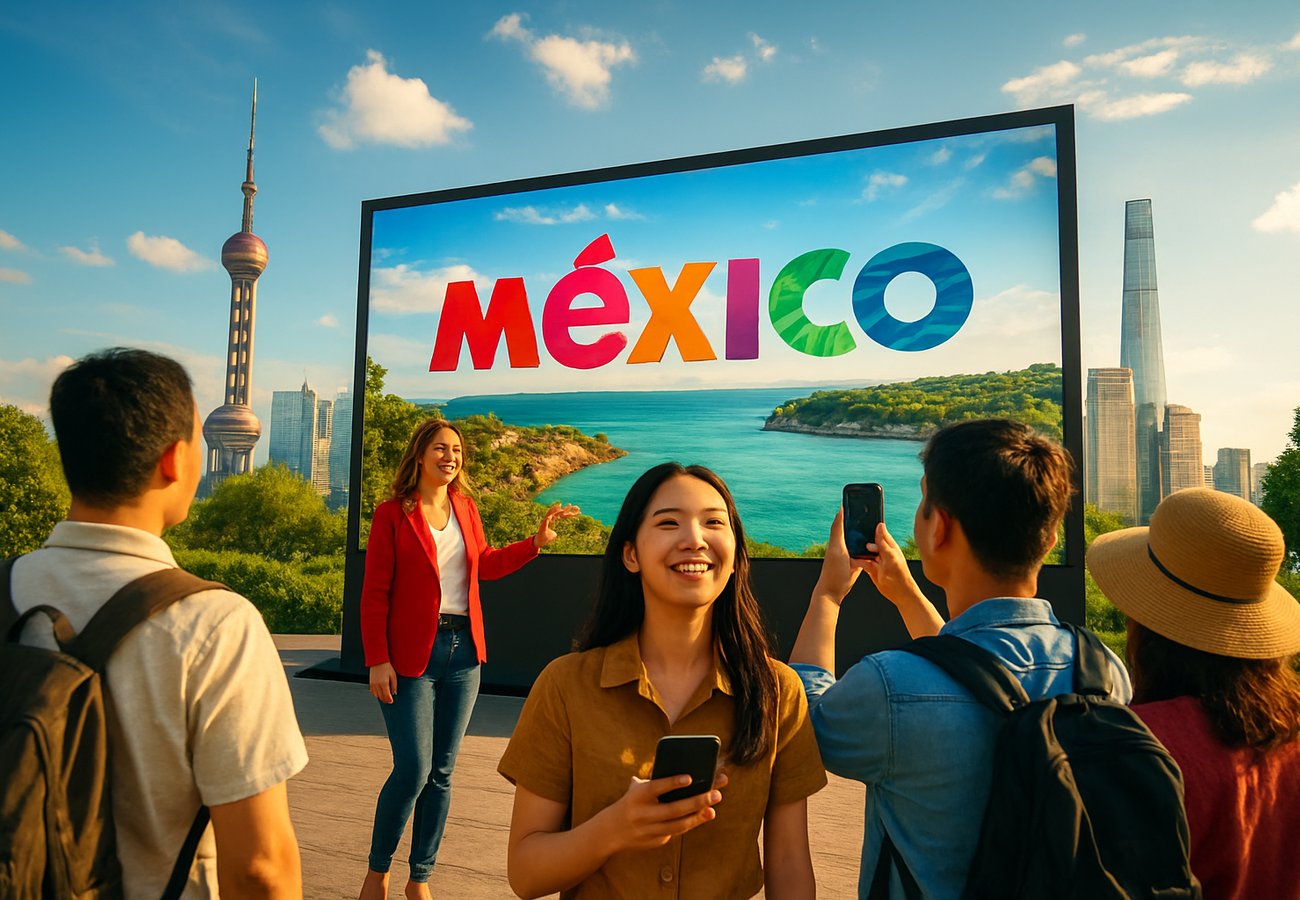
Image generated by AI
Mexico's Tourism Ministry Targets Asia's Biggest Travel Market
Mexico's aggressive push into China's outbound tourism market is reshaping how destinations compete for international visitors. During ITB China 2026 in Shanghai, Tourism Minister Josefina Rodríguez Zamora unveiled a comprehensive digital strategy designed to reconnect Mexican destinations with Chinese travelers—a market generating over 155 million international trips annually.
The strategy marks a significant pivot for Mexico's tourism sector. Rather than relying on traditional marketing channels, Mexican authorities are now leveraging localized digital platforms, airline partnerships, and technology company alliances to penetrate one of the world's highest-value travel markets.
Reddit: "Mexico finally gets it—you can't reach Chinese travelers through Facebook or Instagram. You need WeChat, Weibo, and travel apps they actually use." — r/travel
Eight-Year Digital Void Closes as Mexico Reconnects with Chinese Social Media
One of the most dramatic announcements from ITB China 2026 was Mexico's restoration of official accounts on China's dominant social media platforms after an eight-year absence from these channels.
Mexican tourism authorities confirmed reactivation of presence on WeChat, Weibo, and Red Note (internationally known as Xiaohongshu)—the three platforms that control digital communication for Chinese consumers planning international travel. This wasn't a minor administrative move; industry analysts consider it fundamental to reaching Chinese audiences at scale.
"Because Facebook, Instagram, and YouTube face severe restrictions in mainland China, successful tourism marketing absolutely depends on mastering localized platforms," explains travel technology analyst commentary from the tourism fair. The digital ecosystem gap means destinations either adapt to Chinese platforms or effectively disappear from Chinese travelers' decision-making processes.
Mexico's Tourism Ministry is now developing culturally tailored content specifically for Chinese users' browsing habits, social media consumption patterns, and travel preferences. This localization strategy directly addresses why previous mass-market approaches failed to generate significant China-to-Mexico visitor flows.
CTRIP Partnership Could Reshape Mexico's Visitor Demographics
The second major announcement involved high-level discussions between Tourism Minister Josefina Rodríguez Zamora and Jane Jie Sun, CEO of CTRIP, one of Asia's largest online travel platforms and a subsidiary of Trip.com Group.
CTRIP isn't just another booking platform. It controls hotel reservations, flight bookings, destination visibility, and package distribution for millions of Chinese travelers. The platform essentially shapes which destinations appear first when Chinese consumers search for international vacations.
Direct partnership discussions focused on increasing Mexican destination visibility throughout CTRIP's ecosystem—a strategic move that could significantly influence visitor flows from China. Tourism analysts note that securing preferential placement on major Chinese travel apps is now essential for destinations competing for long-haul international tourists.
For Mexico, the partnership represents access to younger, higher-spending Chinese travelers who increasingly rely on CTRIP for complex, long-distance bookings. As CTRIP expands its influence across Asian outbound tourism markets, destinations without direct platform relationships risk being sidelined.
Direct Flight Routes Between China and Mexico Remain Strategic Priority
Mexico's tourism strategy specifically highlighted the importance of maintaining and expanding direct air connectivity between China and Mexico. Current direct routes connecting Shenzhen and Beijing with Mexico City were identified as "central pillars" of the country's visitor growth strategy.
Direct flight connectivity fundamentally changes destination competitiveness. Long-haul travel from China to Latin America typically involves multiple connections, extended travel times, and higher costs—friction points that discourage bookings. Direct flights eliminate these barriers and improve destination appeal among time-conscious, high-spending international travelers.
"Latin America remains dramatically underserved by direct China-**U.S.-Latin America routes compared to Europe and Southeast Asia," noted observers at ITB China 2026. Destinations securing reliable Chinese carrier partnerships gain measurable advantages. Airlines play a critical role in determining long-haul tourism success rates, and Mexico's focus on protecting existing Beijing and Shenzhen connections reflects this reality.
Tourism officials indicated that existing air routes will actively support future marketing campaigns and travel partnerships targeting Chinese consumers.
Cultural Authenticity and Luxury Experiences Drive New Mexico Marketing
The Mexican delegation showcased cultural offerings specifically calibrated to evolving Chinese traveler preferences. Tourism Minister Josefina Rodríguez Zamora and Michoacán State Tourism Minister Roberto Monroy García highlighted Mexico's UNESCO-recognized heritage sites, archaeological treasures, culinary traditions, artisan culture, colonial cities, and biodiversity.
Chinese travelers increasingly demand immersive, experience-based tourism rather than conventional sightseeing itineraries. They're seeking authentic cultural encounters, local gastronomy, luxury accommodations, and personalized travel plans—areas where Mexico possesses genuine competitive advantages over other long-haul destinations.
The strategic emphasis on Mexico's indigenous traditions, culinary heritage, and archaeological sites directly addresses documented shifts in Chinese outbound tourism preferences. This isn't generic destination promotion; it's precision-targeted positioning aligned with how affluent Chinese consumers actually spend tourism budgets.
China's Outbound Tourism Market Continues Reshaping Global Competition
China's outbound tourism sector represents the world's most economically influential travel market. Before pandemic-related disruptions, Chinese international tourists ranked among global travel's highest-spending segments.
As recovery continues, destinations across Europe, the Middle East, Southeast Asia, and Latin America have intensified competition for Chinese visitors through customized marketing strategies, visa facilitation, digital platform adaptation, and airline expansion. Countries are investing heavily in multilingual campaigns and localized tourism infrastructure.
Mexico's participation at ITB China 2026 reflects this intensifying global competition. The country is shifting from generic international marketing toward precision-targeted strategies designed to capture specific demographic segments within China's enormous outbound tourism base.
Through restored digital engagement on WeChat, Weibo, and Red Note, direct partnerships with platforms like CTRIP, strategic focus on existing Beijing and Shenzhen flight routes, and cultural positioning aligned with Chinese consumer preferences, Mexico is methodically repositioning itself within Asia's most valuable travel market.
Mexico finally realized: reaching Chinese travelers requires meeting them where they actually are—on their platforms, their apps, with their preferences.
Related Travel Guides
Canada Airlines Overhaul: 100K Complaints, CA$1M Fines, Faster Refunds
Flight Disruptions Argentina: 10+ Cancellations Hit Aerolíneas, American Airlines, Flybondi
Disclaimer
This article is for informational and educational purposes only. It does not constitute legal, financial, or professional advice. While we strive to provide accurate and up-to-date information, travel policies, regulations, and conditions change rapidly. Always verify information with official sources before making travel decisions. Nomad Lawyer makes no representations about the accuracy, reliability, completeness, or suitability of the information provided. Readers should consult qualified professionals for advice specific to their circumstances. The views expressed in this article are those of the author and do not necessarily reflect the views of Nomad Lawyer.
Preeti Gunjan
Contributor & Community Manager
A passionate traveller and community builder. Preeti helps grow the Nomad Lawyer community, fostering engagement and bringing the reader experience to life.
Learn more about our team →