
Melbourne Airport Ground Transport Guide 2026: Taxi Fares, Uber Zones, and SkyBus Analysis
A comprehensive analyst report on navigating Melbourne Airport (Tullamarine) ground transport in 2026, detailing CBD taxi fares, rideshare PIN systems, and terminal-specific pickup zones.

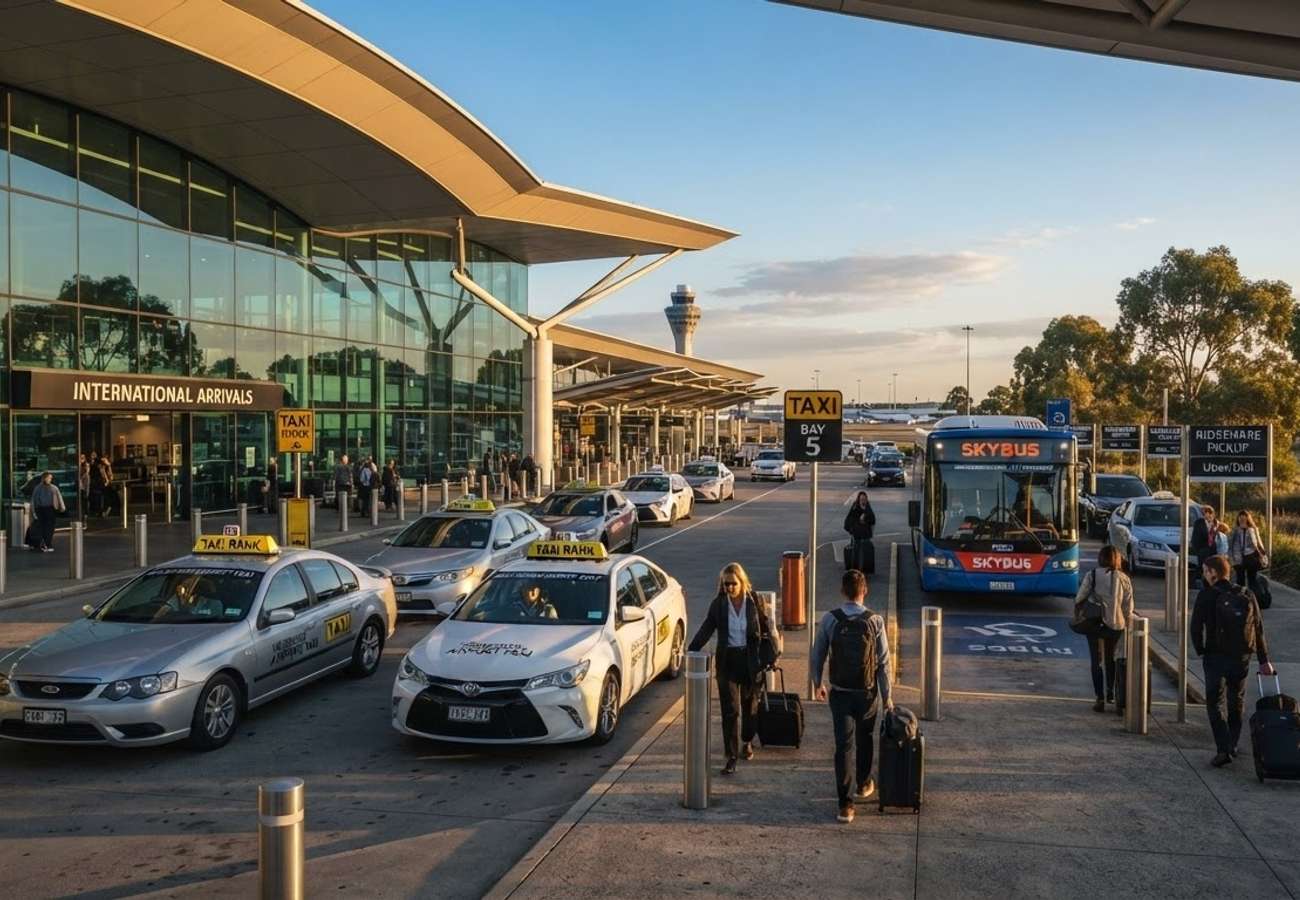
Image generated by AI
Navigating the 22-kilometre transit from Melbourne Airport (Tullamarine) to the CBD requires a strategic choice between metered taxis, rideshare PIN systems, and fixed-route shuttles. Misunderstanding terminal-specific pickup zones can lead to significant delays and unnecessary walking during peak transit windows.
Terminal Layout and Transport Logistics
Melbourne Airport is divided into four primary terminals, each with distinct transport access points. Understanding these locations is essential for avoiding navigation errors upon arrival.
- Terminal 1: Qantas and QantasLink domestic flights.
- Terminal 2: International arrivals and departures.
- Terminal 3: Virgin Australia and regional carriers.
- Terminal 4: Budget carriers, including Jetstar and Rex.
While all terminals are connected via a main loop road, ground transport is not uniformly distributed. Official taxi ranks are positioned directly across from Terminals 1, 2, and 4. Rideshare zones are more concentrated, primarily clustered around Terminal 2 and the Terminal 4 car park.
Our analysis of the airport layout indicates that walking between terminals is a viable option for those seeking shorter queues. A transit from the T2 international zone to the T1–T3 domestic side takes approximately five minutes, while reaching T4 requires roughly ten minutes.
Official Taxi Operations: Ranks and Security
Authorized taxis operate from designated ranks across from T1, T2, and T4. Passengers should follow the yellow "Taxi" signage upon exiting the arrivals hall.
Verification and Safety
To avoid unlicensed vehicle scams, passengers must verify three critical markers:
- A visible roof sign.
- A functioning meter.
- An accredited taxi number displayed on the vehicle doors.
Avoid any individuals offering "private cars" or "cheap taxis" inside the terminal. All legitimate on-demand taxis are accessed via the external ranks.
Pre-booked and Specialized Services
Pre-booked vehicles, including silver service and wheelchair-accessible taxis, do not use the standard on-demand ranks. These drivers typically meet passengers at specific designated zones, such as the "T2 pre-booked taxi zone" or the "T123 car park pickup."
Fare Analysis: Melbourne Airport to CBD
The transit from Tullamarine to the Central Business District (CBD) is one of the longest airport runs in Australia. Fares are subject to traffic density and time-of-day tariffs.
| Trip Condition | Estimated Fare (AUD) | Notes |
|---|---|---|
| Standard Daytime | $70 – $80 | Includes airport fee and CityLink tolls |
| Peak Hour/Congestion | $80 – $90 | Based on Tullamarine Freeway traffic |
| Non-Tolled Route | Save $6 – $10 | Adds 10–15 minutes to travel time |
Fares are calculated via meter, but an automatic airport fee is applied when the vehicle exits the airport boom gates. Most operators accept credit cards, debit cards, and contactless payments (Apple Pay/Google Pay), though small surcharges may apply. Tipping is not a standard requirement in Australian aviation transport.
Rideshare and Uber Integration
Uber and other rideshare services utilize a specific zoning system that differs from traditional taxi ranks.
- T1, T2, and T3 Passengers: Rideshare pickups are primarily located near the Terminal 2 zone.
- T4 Passengers: Pickups are located within the marked rideshare level of the T4 car park.
For standard UberX trips, the airport employs a PIN system. Passengers request the ride via the app, receive a numeric code, and join a physical queue. The code is provided to the driver at the front of the line to link the passenger to the vehicle.
Passenger Rights & Advisory
For the affected passenger, navigating airport transport involves understanding the legal obligations of the carrier and the passenger.
Fare Disputes and Overcharging If a taxi driver refuses to use the meter or overcharges significantly beyond the $70–$90 range for a standard CBD trip, passengers should record the taxi's accreditation number and the vehicle's license plate. Under Victorian transport regulations, passengers are entitled to a fair metered fare.
Rideshare Safety Our analysis of rideshare policies suggests that using the official PIN zones is the only way to ensure a legal pickup. Attempting to arrange "kerbside" pickups at the terminal front is prohibited; drivers face heavy fines, and passengers risk being stranded as security clears these areas quickly.
Rebooking and Delays While taxis and Ubers are on-demand, peak windows (7 am – 9 am weekdays and Sunday evenings) can result in 15–20 minute wait times. For passengers with strict deadlines, the SkyBus offers a fixed timetable and priority freeway access, reducing the volatility of arrival times.
The 2026 transport ecosystem at Melbourne Airport reflects a broader trend toward "hub-and-spoke" ground transit. By concentrating rideshare services into PIN-coded zones and keeping taxis in traditional ranks, the airport reduces curbside congestion. However, the reliance on a few concentrated zones creates bottlenecks during peak international arrival windows at T2. Travelers are advised to utilize the walking paths between T1, T2, and T3 to find the shortest queue, rather than waiting in a single congested zone.
Efficient transit from Tullamarine requires a balance of timing, terminal knowledge, and budget planning.
Related Travel Guides
Disclaimer
This article is for informational and educational purposes only. It does not constitute legal, financial, or professional advice. While we strive to provide accurate and up-to-date information, travel policies, regulations, and conditions change rapidly. Always verify information with official sources before making travel decisions. Nomad Lawyer makes no representations about the accuracy, reliability, completeness, or suitability of the information provided. Readers should consult qualified professionals for advice specific to their circumstances. The views expressed in this article are those of the author and do not necessarily reflect the views of Nomad Lawyer.
Preeti Gunjan
Contributor & Community Manager
A passionate traveller and community builder. Preeti helps grow the Nomad Lawyer community, fostering engagement and bringing the reader experience to life.
Learn more about our team →