
North Dakota Highway Infrastructure and Regional Shuttles Expand Capacity to Support Record Medora Theodore Roosevelt Presidential Library Tourist Surge
North Dakota upgrades the Interstate 94 corridor, regional shuttle networks, and parking grids to manage record tourist traffic in Medora.

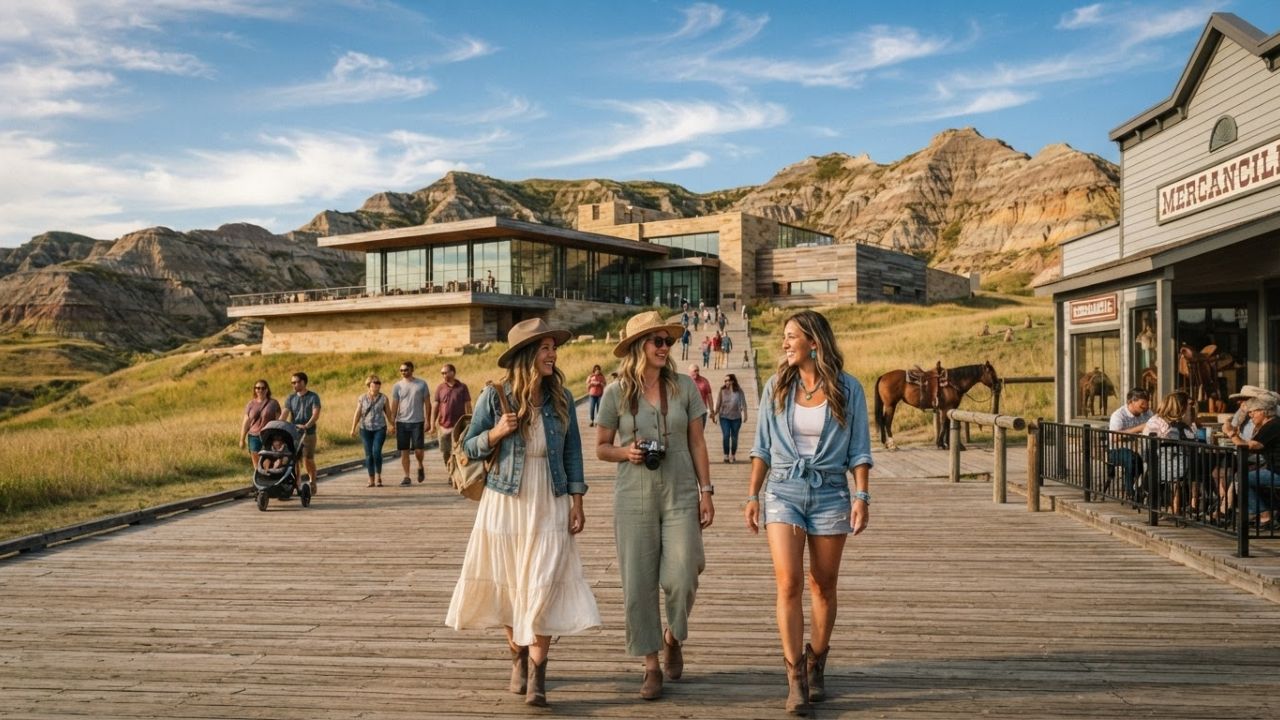
Image generated by AI
North Dakota transit planners are expanding highway corridors, town shuttle services, and public parking networks to handle a historic visitor surge in Medora. The logistics initiatives are designed to manage passenger traffic generated by the new Theodore Roosevelt Presidential Library, which has driven lodging demand and record theatre attendance.
Municipal transit planners and regional highway boards are expanding road infrastructure and shuttle services in western North Dakota to accommodate a historic surge in passenger arrivals. Driving this Medora transit capacity expansion, the North Dakota Department of Transportation (NDDOT) is coordinating highway upgrades along the Interstate 94 corridor. The infrastructure investments are designed to support visitor traffic generated by the launch of the new Theodore Roosevelt Presidential Library, which has drawn record crowds to the town's historical attractions, theatres, and national park entry points.
The Core Transit Update
The introduction of the Theodore Roosevelt Presidential Library has transformed western North Dakota's transit dynamics, requiring a coordinated response from county and state transport agencies. The library adds a major cultural hub to a region already known for Theodore Roosevelt National Park and its Western heritage attractions. Since its launch, the facility has drawn national attention, resulting in a significant increase in vehicle arrivals, tour buses, and regional road trips.
To prevent gridlock in the historic town center, municipal planners are implementing traffic management programs and expanding park-and-ride options. The upgrades are designed to accommodate peak summer transit volumes, which have led to record attendance figures at local entertainment venues. For example, the Medora Musical, a long-running outdoor theatre production at the Burning Hills Amphitheatre, recorded tens of thousands of guests during a recent two-week period, highlighting the need for efficient regional transport.
Additionally, the visitor surge has created major lodging demand, exhausting local hotel capacity and forcing travelers to seek accommodations in outlying cities. Transport planners are addressing this spillover by optimizing transit corridors connecting Medora with regional commercial centers, ensuring that commuters and tourists can travel safely between lodging hubs and the historic district.
Transit Schedule and Route Specifications
To assist travelers and logistics coordinators, the table below outlines the primary transit routes, managing agencies, passenger capacities, and service schedules for the Medora transport network:
| Transit Route / Hub | Managing Agency | Corridor Coverage | Transit Capacity / Frequency | Connections & Logistics |
|---|---|---|---|---|
| Interstate 94 (I-94) | NDDOT | Links Bismarck, Dickinson, Medora, and Beach | Multi-lane highway / High-volume capacity | Primary road route for regional passenger cars and tour buses |
| Dickinson Regional Airport (DIK) | FAA & Dickinson Airport Authority | 35 miles east of Medora | Daily scheduled flights to Denver (DEN) | Serves as the primary air gateway for national travelers |
| Medora Town Shuttle | Medora Chamber / Private Operator | Historical district and amphitheatre loops | Runs every 15–20 minutes during events | Connects parking lots with the library and theatre |
| Highway 85 Corridor | NDDOT | Connects Watford City and I-94 | Secondary arterial route | Direct highway link for visitors staying in northern hotels |
Traveler Logistics Guide
For travelers planning a trip to Medora, coordinating flight and road connections in advance is recommended. The primary air gateway is Dickinson Theodore Roosevelt Regional Airport (DIK), located approximately 35 miles east of the town. From the airport, travelers can rent vehicles to drive west along Interstate 94. Alternatively, Bismarck Airport (BIS) sits approximately 130 miles east, offering a wider range of direct national flights and vehicle rental services for a scenic Badlands road trip.
Once in Medora, navigating the town center is best done on foot or by utilizing the local shuttle loops, as street parking is highly limited during the peak summer season. The town shuttle runs continuously during event hours, connecting the primary public parking lots with the Theodore Roosevelt Presidential Library, local museums, and the Burning Hills Amphitheatre.
Because of the high demand for accommodations in town, visitors should secure bookings well in advance. If local hotels are fully booked, Dickinson (35 miles east), Beach (30 miles west), and Watford City (75 miles north) offer reliable lodging alternatives with direct highway access to Medora. During the peak summer travel window, which runs through mid-September, travelers should monitor NDDOT real-time road reports for traffic delays or construction updates along I-94.
Infrastructure Impact Assessment
The expansion of Western North Dakota's transit infrastructure is improving regional connectivity, transforming Medora into a sustainable cultural destination. By linking Interstate 94 upgrades with town shuttle systems and expanded parking grids, planners are ensuring that the local transport network can support long-term growth without compromising the natural environment of the Badlands.
The infrastructure developments also support neighboring communities by distributing tourist traffic and economic benefits across a wider area. By enabling visitors to stay in Dickinson, Beach, or Watford City and commute easily via upgraded highways, the transit network prevents local resources from becoming overwhelmed.
By reducing parking congestion and promoting pedestrian and shuttle transit in the historic core, the city is minimizing the environmental impact of visitor vehicles. This integrated approach to destination management ensures that Medora can support rising traveler numbers while preserving the heritage and landscapes that define the region.
Related Travel Guides
Disclaimer
This article is for informational and educational purposes only. It does not constitute legal, financial, or professional advice. While we strive to provide accurate and up-to-date information, travel policies, regulations, and conditions change rapidly. Always verify information with official sources before making travel decisions. Nomad Lawyer makes no representations about the accuracy, reliability, completeness, or suitability of the information provided. Readers should consult qualified professionals for advice specific to their circumstances. The views expressed in this article are those of the author and do not necessarily reflect the views of Nomad Lawyer.
Raushan Kumar
Founder & Lead Developer
Full-stack developer with 11+ years of experience and a passionate traveller. Raushan built Nomad Lawyer from the ground up with a vision to create the best travel and law experience on the web.
Learn more about our team →