
The 99th Maui County Fair: Agricultural Heritage, Community Resilience, and Living Hawaiian Culture in Wailuku

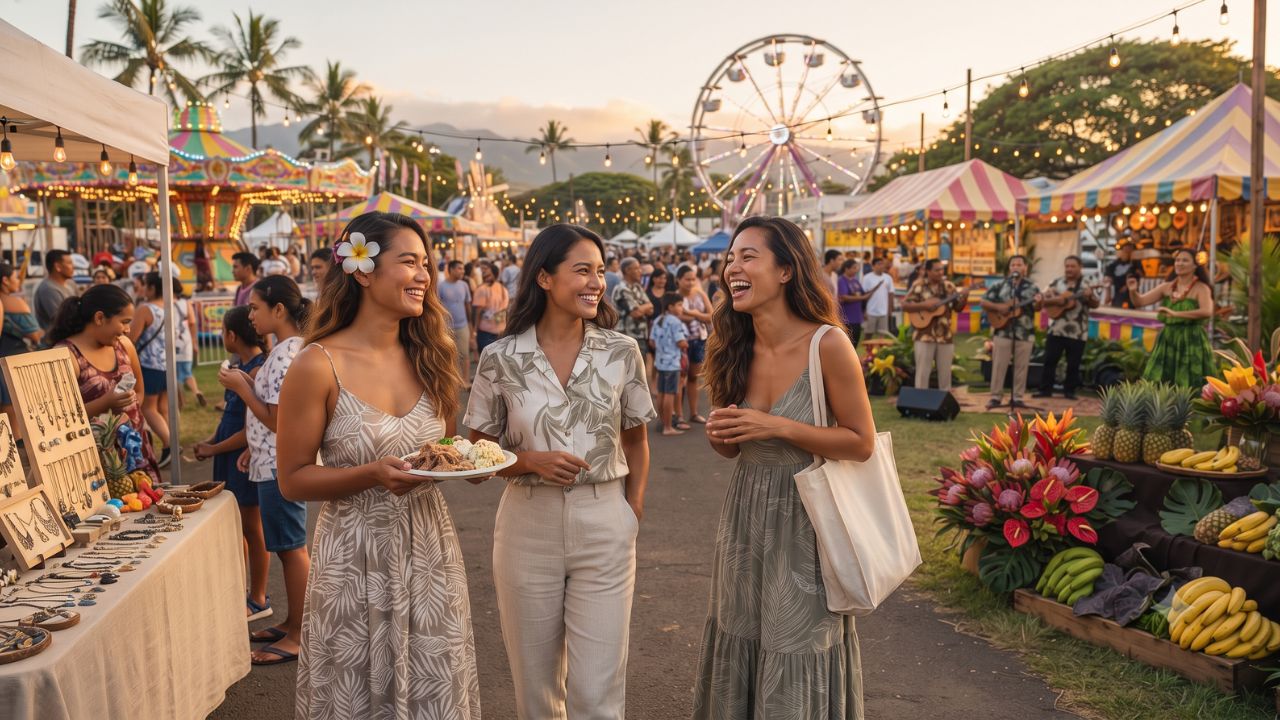
Following a six-year hiatus prompted by global disruptions and the catastrophic August 2023 Lahaina wildfires, the historic 99th Annual Maui County Fair returned to Wailuku from 1 to 4 October 2026. Unlike typical commercial carnivals, over 40 local non-profit organizations and school clubs operate the food courts, generating upwards of $1.5 million in direct grassroots funding during a single four-day civic celebration.
Staged across the War Memorial Special Events Complex on Halia Nakoa Street, the fair stands on the threshold of its centennial milestone under the municipal oversight of the County of Maui. The gathering unites Maui's historic ranching (paniolo) legacy, tropical orchid cultivation, 4-H youth livestock shows, and sacred hula hālau traditions with the classic midway rides of E.K. Fernandez Shows.
Community Resilience and Agricultural Traditions in Central Maui
While world-renowned agricultural exhibitions like Canada’s Calgary Stampede or Australia’s Sydney Royal Easter Show operate on massive commercial scales, Maui’s gathering serves as an intimate focal point of community recovery and inter-island kinship.
The complex was divided into dedicated cultural and agricultural pavilions:
- Livestock & Tropical Horticulture: Upcountry Maui cattle ranchers, 4-H youth breeders, and master orchid growers presented heritage livestock, exotic floral hybrids, and native crop displays.
- Non-Profit Culinary Row: More than 40 school clubs and charities served signature island foods—from sugar-dusted malasadas and piping hot plantation-style chow fun to teriyaki beef sticks and smoked pork—acting as their primary annual fundraising mechanism.
- The Cultural Main Stage: Continuous performances featuring live slack-key guitar, contemporary Hawaiian music, youth talent showcases, and traditional hula hālau dancers.
- E.K. Fernandez Midway Carnival: Hawaii’s iconic amusement operator provided family carnival rides, games of skill, and midway entertainment.
Visitor Demographics and Economic Dynamics
Data compiled by the State of Hawaii Department of Business, Economic Development & Tourism (DBEDT) and the Hawaii Tourism Authority (HTA) details the regional draw and financial impact of the event:
| Demographic & Economic Metric | Official Percentage / Volume | Source Market & Operational Details |
|---|---|---|
| Inter-Island Kamaʻāina | 65% – 70% of Attendees | Neighboring island travelers from Oahu, Hawaii Island & Kauai |
| U.S. West Coast Travelers | 20% – 25% of Attendees | Concentrated arrivals from California, Washington, and Oregon |
| International Visitors | 5% – 10% of Attendees | Long-haul travelers primarily from Canada and Japan |
| Direct Non-Profit Concession Revenue | Over $1.5 Million | Kept 100% locally within Maui schools, youth sports & charities |
| Regional Aviation & Lodging Surge | Inter-island flight expansion | Hawaiian Airlines & Southwest flights fill Kahului/Central Maui rooms |
| Fair Operational Dates | 1–4 October 2026 | 99th annual edition at War Memorial Complex, Wailuku |
Global Agricultural Shows vs. The Maui Model
| Country & Event | Historical Focus & Primary Attraction | Cultural & Community Profile |
|---|---|---|
| United States: Maui County Fair | Tropical agriculture, 4-H livestock, paniolo heritage | 40+ non-profit food booths; 100% local charity retention |
| Canada: Calgary Stampede / Royal Winter Fair | Western rodeo, chuckwagon racing, grain exhibits | Global commercial exposition & equestrian championships |
| Australia: Sydney Royal Easter Show | Pastoral sheep shearing, livestock auctions, woodchopping | National agricultural show with extensive commercial midways |
| United Kingdom: Royal Highland Show | Heritage cattle breeds, equestrianism, artisan foods | Scottish agricultural celebration and rural commerce |
| New Zealand: Christchurch A&P Show | Wool grading, pastoral farming, family entertainment | Canterbury agricultural showcase and sheep farming heritage |
Visitor Insider Tips
Experiencing the fair through a respectful local lens requires practical planning:
- Pace Your Food Court Strategy: Do not eat before arriving. Enter through the non-profit concession area on Halia Nakoa Street and look for the longest lines—they invariably lead to traditional Maui community specialties like hot dry mein, freshly fried malasadas, or local smoke meat plates.
- Avoid Peak Friday and Saturday Traffic: Friday evening and Saturday afternoon draw heavy local crowds from across the island. Visit during Thursday opening night or Sunday morning for shorter carnival lines and easier parking near the War Memorial Stadium.
- Respect Sacred Protocol During Hula Presentations: When hula hālau perform on the main stage, avoid walking directly in front of dancers, keep noise to a minimum, and refrain from using flash photography.
- Base in Wailuku or Kahului: If planning a trip around the fair, book boutique accommodations in historic Wailuku town or Kahului harbor rather than staying in west or south Maui resort corridors, avoiding Highway 30 traffic bottlenecks.
Cultural and Environmental Context
In the wake of the devastating 2023 Lahaina fires, cultural gatherings like the Maui County Fair represent crucial milestones in communal healing. By bringing together families, cultural practitioners, and agricultural producers from Hana to Kula, the event reinforces the foundational Hawaiian value of mālama ‘āina—caring for the land and nurturing the community.
Furthermore, the fair exemplifies authentic regenerative tourism. Because municipal policies restrict commercial corporate food chains in favor of local non-profits, visitor spending directly finances island youth programs, cultural schools, and rural civic initiatives, ensuring that tourism directly strengthens Maui's social fabric.
FAQ: Visiting the Maui County Fair 2026
When and where does the Maui County Fair take place?
The 99th edition took place from 1 to 4 October 2026 at the War Memorial Special Events Complex on Halia Nakoa Street in Wailuku, Maui.
Why was the fair on hiatus between 2020 and 2024?
The fair was paused for six years due to global pandemic disruptions, operational challenges, and the devastating August 2023 Lahaina wildfires before returning in 2025.
What kind of food is available at the fair?
Over 40 local non-profit booths serve traditional Hawaiian and local dishes, including fresh malasadas, plantation-style chow fun, dry mein, and teriyaki beef sticks.
Where do most attendees travel from?
According to DBEDT data, 65% to 70% of non-Maui attendees are inter-island Kamaʻāina from Oahu, Kauai, and Hawaii Island, followed by 20% to 25% from the US West Coast.
Under the shadow of the emerald West Maui Mountains, the laughter, music, and aromas of the fairground remind us that Maui's enduring strength lives in the heart of its people.
Related Travel Guides
Disclaimer
This article is for informational and educational purposes only. It does not constitute legal, financial, or professional advice. While we strive to provide accurate and up-to-date information, travel policies, regulations, and conditions change rapidly. Always verify information with official sources before making travel decisions. Nomad Lawyer makes no representations about the accuracy, reliability, completeness, or suitability of the information provided. Readers should consult qualified professionals for advice specific to their circumstances. The views expressed in this article are those of the author and do not necessarily reflect the views of Nomad Lawyer.
Raushan Kumar
Founder & Lead Developer
Full-stack developer with 11+ years of experience and a passionate traveller. Raushan built Nomad Lawyer from the ground up with a vision to create the best travel and law experience on the web.
Learn more about our team →