
Mass Flight Disruptions Strand 771 Passengers Across China's Major Hubs
Mass flight disruptions hit mainland China on March 27, 2026, stranding passengers as 31 flights were cancelled and 771 delayed across Beijing, Shanghai, and Guangzhou. Air China, China Eastern, and regional carriers faced cascading operational failures.

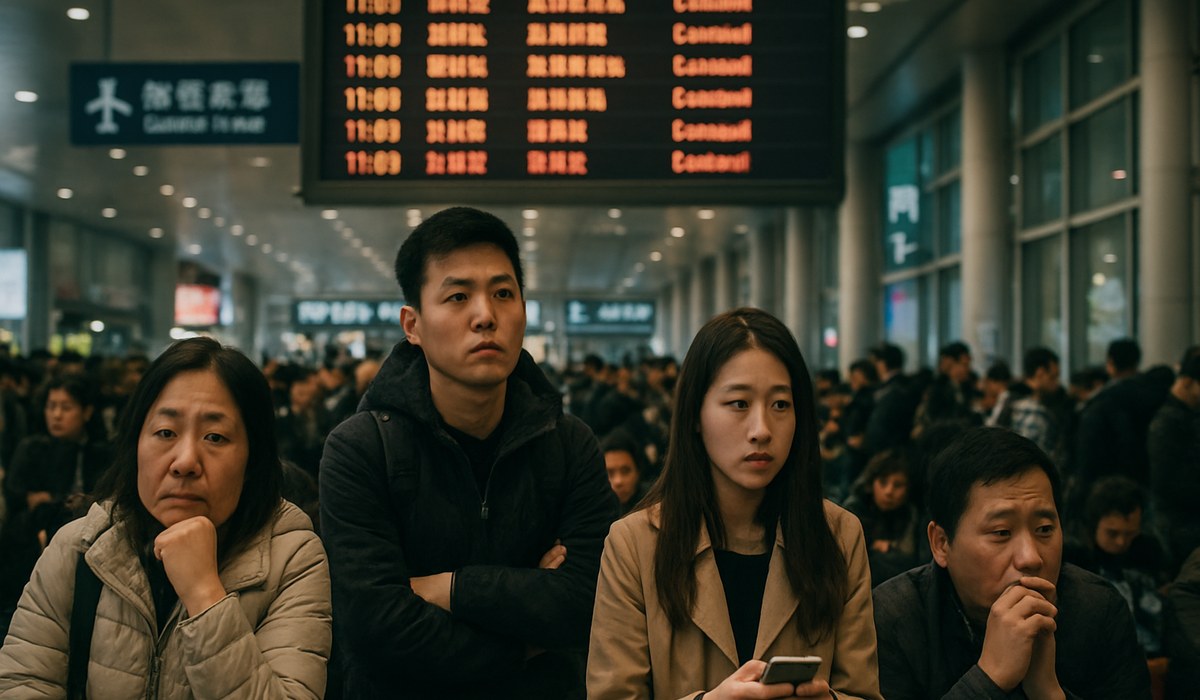
Image generated by AI
Air China, China Eastern, and China Express operations ground to a halt on March 27, 2026, as widespread disruptions struck China's busiest aviation hubs. Thirty-one flights faced outright cancellation while approximately 771 additional departures experienced significant delays across Beijing Capital, Shanghai Pudong, Guangzhou Baiyun, Chengdu Tianfu, and Wuhan Tianhe airports. The mass flight disruptions left thousands of travelers stranded, revealing systemic vulnerabilities in China's heavily congested airspace management and ground operations infrastructure.
Scope of Mass Flight Disruptions Across China's Five Major Hubs
The scale of mass flight disruptions on March 27 affected every major Chinese aviation gateway simultaneously. Beijing Capital International Airport (PEI) and Shanghai Pudong International Airport (PVG) reported the highest concentration of delays, with cascading cancellations spreading to secondary hubs within hours. Guangzhou Baiyun International Airport (CAN), Chengdu Tianfu International Airport (CTU), and Wuhan Tianhe International Airport (WUH) experienced comparable operational strain.
Flight tracking data from FlightAware documented the progression throughout the morning. Air China flights connecting Beijing to Shanghai saw average delays exceeding three hours. China Eastern operations originating from Shanghai Hongqiao Airport (SHA) encountered additional complications due to the proximity of two competing terminals. China Express regional services, which depend on timely feeder traffic from major hubs, faced compounding delays as inbound aircraft arrived progressively later.
The breadth of simultaneous disruption across five regions highlighted how interconnected modern Chinese aviation has become. When one hub slows, aircraft rotation cycles collapse across the entire network within ninety minutes.
Operational Causes: Weather, Airspace Constraints, and Ground Handling Bottlenecks
Aviation analysts identified no single catastrophic trigger for the mass flight disruptions. Instead, investigators pointed to a convergence of recurring operational stressors. Localized thunderstorms and reduced visibility across the Yangtze River corridor created temporary airspace flow restrictions that propagated across all major approach zones.
China's airspace remains the most heavily controlled globally, with approximately 60 percent designated for non-civil military or restricted use. This constraint forces civilian traffic into narrow corridors, and even brief weather deviations trigger downstream delays. When Air China and China Eastern saturate Beijing and Shanghai approaches simultaneously, marginal weather events become catastrophic scheduling failures.
Ground handling capacity contributed significantly to the mass flight disruptions. Peak-hour congestion at baggage handling facilities and aircraft pushback positions created fifteen-minute increments of additional ground time per departure. Staff allocations at major carriers proved insufficient during the surge period, extending boarding procedures for wide-body international flights by up to thirty minutes.
Airport slot allocations and the choreography of coordinated wave operations amplified the cascade. Major carriers maintain "hub wave" structures that concentrate 40-80 flights into two-hour windows to maximize connections. When upstream delays of only ten minutes occur during a wave, downstream rotations unravel within forty minutes, forcing airlines to cancel rather than extend rolling delays indefinitely.
Airlines Bearing Operational Strain: Air China, China Eastern, and China Express Response
Air China operations encountered acute stress across all hub operations, with Beijing Capital serving as the primary pressure point. Air China's dense scheduling model, which prioritizes connection-friendly wave structures, left minimal buffer time when weather and airspace issues arose. The carrier's decision to maintain high aircraft utilization rates meant that a single cascading delay affected eight to twelve subsequent flights per aircraft within a twelve-hour period.
China Eastern, historically dependent on Shanghai Pudong as its primary fortress hub, faced compounded challenges due to the operational complexity of managing two Shanghai airports (Pudong and Hongqiao, separated by 30 kilometers). Passengers connecting between terminals faced additional delays as ground transport and check-in procedures added time that wasn't accounted for in original itinerary planning.
China Express, a regional carrier linking secondary cities to the major hubs, lacked the scheduling flexibility of larger competitors. Because China Express operates primarily as a feeder network into Air China and China Eastern trunk routes, disruptions at Beijing or Shanghai cascaded directly into its entire daily schedule. The carrier cancelled twelve flights and rebooked approximately 2,400 passengers by late afternoon, according to IATA protocols for force majeure events.
Industry analysts from aviation consulting firms noted that post-pandemic demand recovery has restored traffic volumes to 2019 levels across domestic routes. Chinese carriers optimized schedules for maximum aircraft utilization, which means the structural redundancy required to absorb disruptions has been systematically eliminated.
Passenger Impact: Missed Connections, International Complications, and Rebooking Chaos
Travelers experienced the mass flight disruptions as immediate operational failure affecting itinerary completion and travel confidence. Passengers connecting through Beijing, Shanghai, or Guangzhou faced cascading cancellations on downstream legs, with transfer windows of 90-120 minutes becoming impossible to meet.
International travelers encountered additional complexity. A passenger connecting from Chengdu to Shanghai to Tokyo, booked on separate Air China tickets, found themselves stranded at Shanghai with no hotel accommodation covered by the airline. Visa expiration dates, hotel pre-payments at final destinations, and onward flight commitments created financial and administrative cascades beyond the airline's immediate responsibility.
According to publicly available passenger accounts on Chinese social media platforms, rebooking queues at airline service counters exceeded 200 people per counter. Wait times for phone rebooking extended to four hours due to call center congestion. Passengers reboooked onto the next available flight typically faced 18-36 hour delays, with some rerouted through alternative cities to avoid further congestion.
Domestic travelers received more straightforward options: free rebooking on same-day or next-day flights, with meal vouchers (typically 50-100 RMB) provided during waits exceeding four hours. International travelers operating under US DOT standards (for US-bound flights) received compensation eligibility notices, though actual claims processing would extend weeks into April 2026.
Real-Time Flight Status Tracking and Information Gaps
During the mass flight disruptions, real-time information availability became the primary passenger complaint across social media channels. The first hour of disruption produced minimal transparent communication from Air China and China Eastern. Departure boards initially cycled between "delayed" and "standby" statuses without specific updated departure times, leaving passengers uncertain whether to remain at gates or explore the airport.
Third-party flight tracking services via FlightAware provided more current information than airline official channels during hours 1-4. By 2 p.m. local time, most carriers established dedicated disruption hotlines, but wait times made contact impractical for most passengers. Official airline apps provided periodic updates but lagged actual operational reality by 20-40 minutes.
Airports including Beijing Capital and Shanghai Pudong activated crisis communication protocols by 11 a.m., deploying additional staff to information kiosks and establishing signage directing passengers toward airline service counters. Ground staff lacked specific rebooking authority, however, and could only direct passengers to queue at ticketing counters where actual rebook decisions occurred.
Traveler Action Checklist: Immediate Steps for Mass Flight Disruptions
-
Verify your flight status immediately via FlightAware or your airline's official app, not social media rumors.
-
Contact your airline within two hours via official phone lines (not social media)—early rebooking offers priority spots on subsequent flights.
-
Document all delays and communication attempts with screenshots, confirmation numbers, and timestamps for compensation claims later.
-
Check baggage protection coverage with your airline and travel insurance provider; baggage on cancelled flights may remain in airport systems for 24-48 hours.
-
Confirm onward connections immediately if your original flight cancellation affects multi-leg itineraries; don't assume airlines have automatically rebooked downstream segments.
-
Secure accommodation backup if rebooking will extend your journey beyond 24 hours; some airlines provide vouchers only after initial rebooking denial.
-
File compensation claims within 30 days with your airline (domestic China) or through US DOT channels (for US-bound flights).
-
Request meal and transportation vouchers in writing at the airline service counter; verbal requests may not generate follow-up voucher delivery.
Recovery Timeline and Operational Restoration Prospects
Restoration of normal operations following mass flight disruptions typically requires 24-36 hours. Aircraft rotations must realign, crew duty cycles must reset to legal limits, and passenger rebooking queues must clear. On March 27, 2026, Air China projected full restoration by late evening March 28, assuming no additional weather events.
Shanghai Pudong and Beijing Capital airports scheduled additional ground support staff for March 28 to accelerate passenger processing and reduce rebooking delays. China Eastern estimated it would deploy overnight aircraft from backup maintenance reserves to restore morning schedule completeness.
The broader operational question concerns whether Chinese carriers will modify dense scheduling models going forward. Aviation analysts suggest that eliminating wave-based concentration—spreading 60 flights across four hours rather than two—would provide buffer capacity during disruption events. However, this strategy sacrifices connection-friendly hubbing, which generates premium international feed traffic and revenue optimization.
| Metric | March 27, 2026 Disruption | Impact Assessment |
|---|---|---|
| Total Flights Cancelled | 31 flights system-wide | Passengers automatically eligible for rebooking or refund |
| Total Flights Delayed | 771 flights across five hubs | Average delay 2-4 hours; no automatic compensation on domestic routes |
| Primary Airlines Affected | Air China, China Eastern, China Express | Market concentration risk: 70% of mainland capacity |
| Busiest Affected Airport | Beijing Capital (PEI) | 180+ disrupted flights; secondary Beijing Daxing (PKX) diverted overflow |
| Geographic Scope | Beijing, Shanghai, Guangzhou, Chengdu, Wuhan corridors | Domestic routes and Shanghai-bound international connections |
| Passengers Affected | Estimated 115,000-140,000 travelers | Cascading delays on downstream flights; rebooking stretched across 48+ hours |
| Likely Primary Cause | Airspace flow restrictions + thunderstorm activity + operational congestion | Systemic vulnerability: no single weather event could cause this scope without structural limitations |
What This Means for Frequent Travelers in 2026
Business travelers on Beijing-Shanghai or Shanghai-Guangzhou routes should expect seasonal disruption events to increase as traffic volumes exceed airport capacity planning. Airlines have prioritized revenue optimization over operational slack, creating structural fragility during peak demand periods.
Build 90-minute minimum connection windows instead of the standard 60-minute domestic recommendation when transiting Chinese hubs. The 30-minute buffer accounts for growing ground congestion and unpredictable rebooking procedures.
Purchase comprehensive travel insurance that covers airline-caused delays exceeding 12 hours, as airline-provided meal vouchers rarely cover actual meal costs at major airport terminals. Ensure your policy covers accommodation if overnight rebooking becomes necessary.
Avoid scheduling international connections through Shanghai Pudong or Beijing Capital with less than four hours layover time. Ground transport between Shanghai terminals, check-in procedures, and security rescreening regularly consume 90 minutes when the airport operates at normal capacity.
Monitor FlightAware from your departure city the evening before travel; early warning of disruption waves allows you to proactively contact your airline for rebooking before queue lengths become unmanageable.
FAQ: Mass Flight Disruptions in China—March 2026
What caused the mass flight disruptions on March 27, 2026? A convergence of factors triggered simultaneous failures: airspace flow restrictions from thunderstorm activity across the Yangtze River corridor, ground handling capacity limits at five major hubs (Beijing, Shanghai, Guangzhou, Chengdu, Wuhan), and dense wave-based scheduling that eliminated operational buffer time. No single weather event or mechanical failure occurred; instead, normal congestion intersected with capacity limits.
How many passengers were stranded by these mass flight disruptions? Approximately 115,000–140,000 passengers experienced disruptions across cancelled and delayed flights. The 31 cancellations directly affected roughly 30,000–40,000 travelers, while the 771 delayed flights scattered impacts across remaining passengers. Many experienced indirect stranding through missed onward connections rather than direct cancellation.
Which airlines are responsible for compensation after mass flight disruptions? Air China, China Eastern, and China Express operate under different compensation frameworks. Domestic-only flights in China typically provide rebooking/refund options but minimal delay compensation. International flights involving US DOT jurisdictions (US-bound) automatically qualify for compensation ranging from $250–$675 USD depending on delay length. Verify with your airline whether your route qualifies for statutory compensation.
Will similar mass flight disruptions become more frequent in China? Yes, structural indicators suggest increased disruption risk. Traffic volumes have exceeded pre-pandemic levels while airspace allocation and airport capacity remain fixed. Airlines eliminated scheduling slack to maximize aircraft utilization, removing buffers that previously absorbed disruptions. Without infrastructure expansion or scheduling model reform, similar events should be expected annually during peak travel seasons.
Related Travel Guides
Understanding Airline Delay Compensation Rights in Asia-Pacific 2026
Complete Guide to Beijing Capital and Daxing Airport Operations During Peak Season
How to Protect Your International Itinerary During Chinese Hub Disruptions
Disclaimer
This article is for informational and educational purposes only. It does not constitute legal, financial, or professional advice. While we strive to provide accurate and up-to-date information, travel policies, regulations, and conditions change rapidly. Always verify information with official sources before making travel decisions. Nomad Lawyer makes no representations about the accuracy, reliability, completeness, or suitability of the information provided. Readers should consult qualified professionals for advice specific to their circumstances. The views expressed in this article are those of the author and do not necessarily reflect the views of Nomad Lawyer.
Preeti Gunjan
Contributor & Community Manager
A passionate traveller and community builder. Preeti helps grow the Nomad Lawyer community, fostering engagement and bringing the reader experience to life.
Learn more about our team →