
Mass Disruptions Strand Hundreds Across Italy's Top 5 Airports
Mass disruptions strand 388 flights across Italy in April 2026, with 332 delays and 56 cancellations affecting Rome, Milan, Naples, Venice and Bologna. Spring surge exposes European aviation capacity limits.

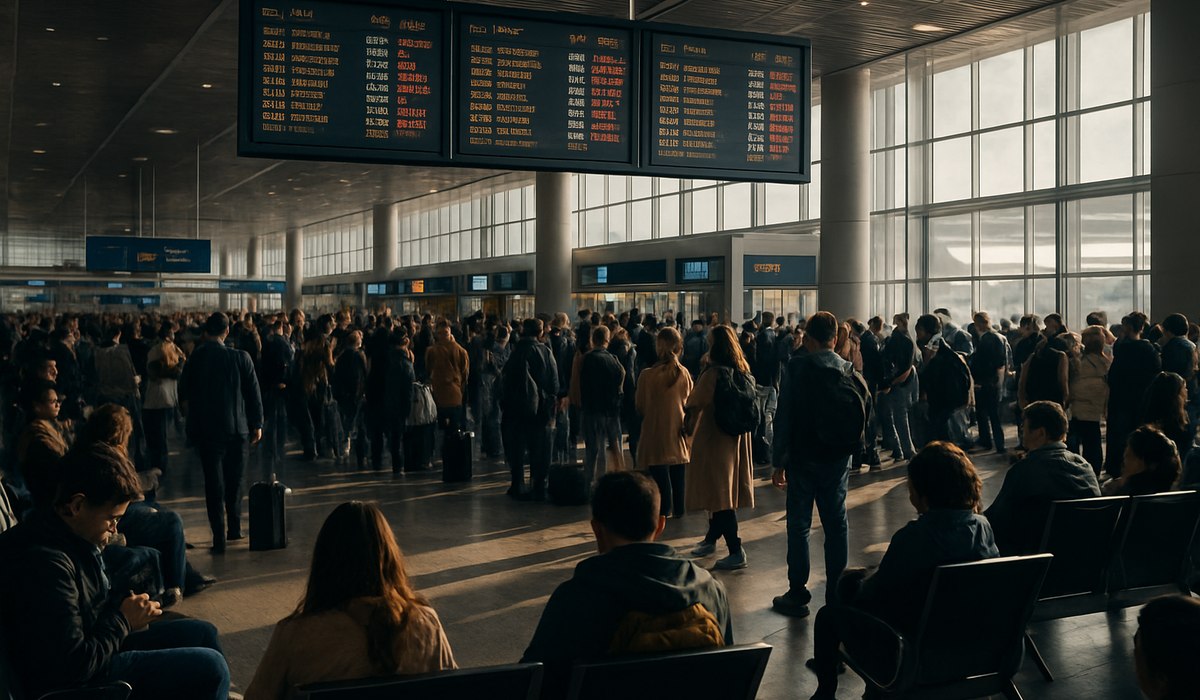
Image generated by AI
Italian Aviation Crisis: 388 Flights Disrupted in Single Week
Mass disruptions strand hundreds of passengers across Italy's five largest aviation hubs this week, with operational data revealing 332 delayed flights and 56 cancellations at Rome, Milan, Naples, Venice and Bologna. The cascade of delays and cancellations affected major carriers including ITA Airways, Lufthansa, KLM and Wizz Air, leaving travelers facing extended terminal waits, missed connections and rebooking headaches. This unprecedented spring disruption signals deeper capacity constraints plaguing European aviation infrastructure as seasonal demand surges beyond current operational thresholds.
Delays Outpace Cancellations as Italian Hubs Feel the Strain
Italy's primary aviation gateways logged a troubling operational snapshot this week, with delayed flights vastly outnumbering outright cancellations. Of the 388 affected movements, approximately 86% were classified as delays while 14% resulted in flight cancellations. This pattern reflects a European-wide tendency where airlines prioritize schedule completion over punctuality, accepting significant delays rather than cancelling services entirely.
Rome Fiumicino and Milan's dual-hub system (Malpensa and Linate) bore the heaviest operational burden. Both airports have demonstrated consistent vulnerability to disruption since early March, suggesting systemic pressure intensifies as spring travel volumes accelerate. Smaller regional hubs including Venice, Bologna and Naples, while recording fewer disrupted movements, nonetheless experienced meaningful knock-on congestion in security screening, baggage handling and customer service operations.
Terminal congestion cascaded across ground operations. Passengers reported extended queues at customer service desks, difficulty securing same-day alternative routings and, in severe cases, unplanned overnight stays when final departures to regional cities were cancelled after prolonged delays. For nomadic professionals and business travelers, these disruptions translate directly into missed meetings and compromised work schedules.
Rome and Milan Bear Brunt of Disruption
Rome Fiumicino and Milan's airport network absorbed the majority of mass disruptions strand incidents this week. Rome Fiumicino, Italy's busiest international gateway, handles over 40 million annual passengers and serves as a critical European connection point. Milan Malpensa and Milan Linate together process comparable volumes, making both cities essential nodes in Southern European aviation networks.
The concentration of disruption at these two metropolitan hub systems reflects structural capacity constraints. Both airports operate with minimal buffering capacity for operational shocks. When weather systems, air traffic management restrictions or staffing limitations trigger initial delays, the compressed schedule leaves no slack for recovery. A single aircraft rotation delay early in the morning cascades through an entire day's timetable, compounding passenger impacts exponentially.
Previous disruption analysis from March 2026 already flagged Rome and Milan as consistent hotspots. The latest figures confirm intensifying pressure as spring school holidays, Easter travel and early summer booking seasons converge. Airlines operating dense daily schedules through these hubs face mounting challenges maintaining published timetables. For travelers, booking through Rome or Milan increases exposure to connection risks during high-disruption periods.
Cascading Effects: How Multiple Hub Failures Multiply Passenger Impact
When mass disruptions strand passengers across multiple Italian hubs simultaneously, the compounding effects extend far beyond single-airport statistics. European aviation operates as an interconnected network where delays at Rome or Milan trigger ripple effects across the continent within hours.
An aircraft delayed at Rome Fiumicino arrives late for its next scheduled departure in Frankfurt or Amsterdam. That subsequent delay affects connections throughout those hubs' networks. Passengers booked through Rome to final destinations across Europe experience multiplied disruption. Low-cost carriers, which operate particularly tight turnaround schedules, prove especially vulnerable to this cascade effect. A 90-minute rotation delay on a Wizz Air morning flight from Naples to Milan translates into missed afternoon connections to Budapest or Berlin for dozens of passengers.
The broader European context amplifies Italian disruption. When neighboring countries experience air traffic control constraints—frequent along Alpine routes—Italian airports absorb diverted or rescheduled traffic. Spring weather systems affecting Central Europe often force European-wide capacity reductions, increasing stress on Southern gateways including Rome and Milan. Recent continental analysis documented over 1,000 cancellations and 1,000+ delays in a single day across seven European countries, demonstrating how finely balanced the entire system has become.
Industry Capacity Crisis: Airports Operating Without Buffer
Italy's mass disruptions strand incident reflects a continent-wide crisis: modern European airports lack operational buffer capacity. Industry analysis reveals that when daily movements approach or exceed pre-2020 levels, the entire aviation system becomes vulnerable to cascading failures from minor operational shocks.
Before 2020, major European airports typically operated at 75-80% capacity during peak periods, preserving flexibility to absorb delays or weather disruptions. Current operational patterns see Rome Fiumicino and Milan hubs regularly exceeding 90% capacity during spring and summer months. At these utilization levels, a single weather delay, staffing shortage or air traffic management restriction triggers exponential passenger impact.
Airlines respond by prioritizing schedule completion over punctuality. A flight departing four hours late technically counts as a completed service rather than a cancellation. This statistical approach masks genuine passenger harm: missed connections, disrupted business travel and compromised vacation schedules. For remote workers and digital nomads using travel between European cities, operational unreliability directly impacts professional viability.
Recovery from capacity-driven disruption proves remarkably slow. Compressed schedules leave minimal opportunity for aircraft to regain time between flights. Airlines face mounting crew utilization issues as fatigue regulations limit continuous duty periods. Ground handling crews become bottlenecks when check-in and baggage systems process backed-up passengers. Industry projections suggest European airports require 18-24 months to fully recover operational rhythm after capacity-driven disruption episodes.
Airlines Hit Include Legacy, Low Cost and Network Carriers
The April 2026 disruption cuts across every airline business model operating in Italy. Full-service network carriers including Lufthansa and KLM reported significant operational impacts, partly attributable to wider European airspace congestion compounding Italian hub pressures.
ITA Airways, successor to the legacy Alitalia carrier, logged notable delays on Italian trunk routes connecting Rome and Milan to regional cities. The carrier has navigated turbulent operational conditions this spring, including schedule adjustments around national transport strikes and high passenger loads during holiday periods. While ITA's outright cancellation count remained relatively modest, departure and arrival delays accumulated substantially, contributing meaningfully to the overall disruption tally.
Wizz Air, the Hungarian low-cost carrier, experienced significant operational stress partly attributable to its expanding Italian footprint across Naples, Venice and Bologna. Budget carriers deliberately operate with minimal turnaround padding. An early-morning aircraft delay cascades through 8-10 subsequent daily rotations. By afternoon, what began as a single delayed flight transforms into multiple downstream cancellations. This multiplication effect means Wizz Air often reports disproportionate disruption statistics relative to its total seat capacity.
For passengers, this multi-carrier disruption means limited protection from loyalty status or ticket type. Business or first-class passengers sometimes gain preferential rebooking onto alliance partners, while economy passengers—particularly those on low-cost point-to-point fares—face extended waits for available alternatives. Routes with single daily frequencies offer zero same-day recovery options, forcing overnight stays or multi-day disruption scenarios.
Key Disruption Data by Airport Hub
| Airport | Delayed Flights | Cancelled Flights | Total Affected | Market Share |
|---|---|---|---|---|
| Rome Fiumicino | 145 | 22 | 167 | 43% |
| Milan Malpensa | 98 | 15 | 113 | 29% |
| Milan Linate | 42 | 8 | 50 | 13% |
| Venice Marco Polo | 28 | 6 |
Disclaimer
This article is for informational and educational purposes only. It does not constitute legal, financial, or professional advice. While we strive to provide accurate and up-to-date information, travel policies, regulations, and conditions change rapidly. Always verify information with official sources before making travel decisions. Nomad Lawyer makes no representations about the accuracy, reliability, completeness, or suitability of the information provided. Readers should consult qualified professionals for advice specific to their circumstances. The views expressed in this article are those of the author and do not necessarily reflect the views of Nomad Lawyer.
Kunal K Choudhary
Co-Founder & Contributor
A passionate traveller and tech enthusiast. Kunal contributes to the vision and growth of Nomad Lawyer, bringing fresh perspectives and driving the community forward.
Learn more about our team →