
Malaysia’s Penang International Airport Expansion to 12 Million Passengers Drives Direct Global Flights and Cultural Tourism Boom
Penang International Airport expands annual capacity from 6.5M to 12.0M passengers, backed by an Air Connectivity Fund targeting direct flights from Japan, South Korea, Australia, and the Middle East.

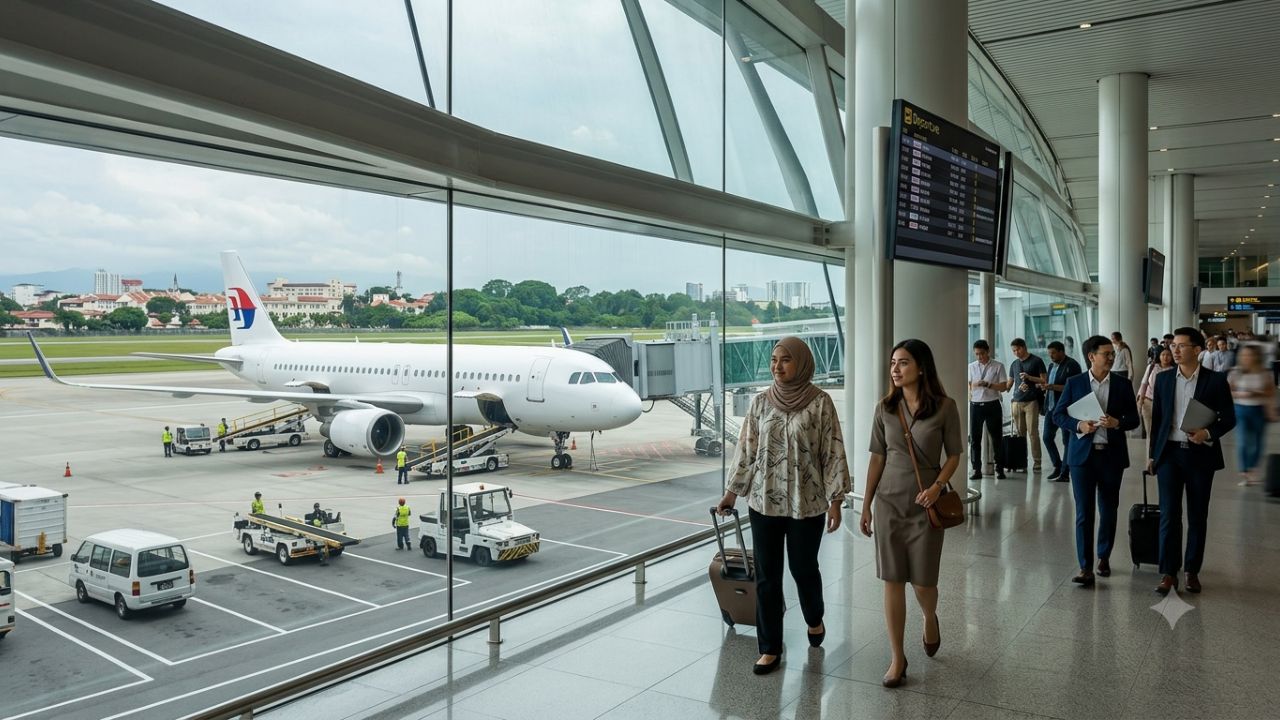
Penang International Airport's multi-million-dollar expansion increases annual capacity to 12 million passengers.
Penang International Airport is undergoing a major expansion to double its passenger throughput to 12 million passengers annually, backed by a new International Air Connectivity Fund to secure direct long-haul flights.
[George Town, Oct 6, 2026] — Penang is positioning itself for a major economic and tourism expansion as work progresses on the multi-million-dollar upgrade of Penang International Airport (PIA). The project addresses long-standing terminal capacity bottlenecks, doubling the airport’s annual handling capacity from 6.5 million to 12 million passengers.
Aligning state development plans with federal support under Malaysia’s Budget 2027 proposals, the expansion enables nonstop international flights connecting Penang directly to key global markets in East Asia, Australia, and the Middle East. The added capacity will support George Town’s UNESCO World Heritage tourism, expanding MICE (Meetings, Incentives, Conferences, and Exhibitions) events and regional air cargo logistics.
Penang International Airport Expansion Capacity Metrics
| Capacity Metric / Parameter | Pre-Expansion Baseline | Post-Expansion Capacity | Total Net Increase | Percentage Growth |
|---|---|---|---|---|
| Annual Passenger Throughput | 6.5 Million Passengers | 12.0 Million Passengers | +5.5 Million Passengers | +84.6% Capacity Gain |
| Terminal Area Footprint | Original Terminal Floorplan | Expanded Terminal Complex | Doubled Processing Area | Seamless Passenger Flow |
| Aircraft Parking Bays | Standard Bay Allocation | Expanded Apron Stands | Multi-Widebody Compatibility | Supports A350 & B787 Operations |
| Air Cargo Throughput | Regional Freight Capacity | High-Tech Cargo Hub | Integrated Air Logistics | Serves Semiconductor Sector |
International Air Connectivity Fund Focus Markets
To convert expanded terminal space into active flight routes, the Penang State Government and Malaysia Airports Holdings Berhad (MAHB) are launching the International Air Connectivity Fund. Structured as a cooperative matching-grant mechanism, the fund offers financial incentives for international airlines establishing new direct routes or increasing flight frequencies to Penang.
| Strategic Market Region | Target Outbound Passenger Profile | Primary Route Objective & Travel Value |
|---|---|---|
| Japan & South Korea | High-value cultural & heritage travelers | Nonstop flights from Tokyo, Osaka & Seoul to George Town |
| Australia | Long-haul leisure & business travelers | Direct connections from Sydney, Melbourne & Perth |
| Middle East (GCC) | High-yield Gulf travelers & European transit | Direct routes from Dubai, Doha & Abu Dhabi |
| Southeast Asia (ASEAN) | Regional short-haul & MICE delegates | Increased daily frequencies from Jakarta, Bangkok & Ho Chi Minh City |
Penang International Air Connectivity Strategy:
├── Direct Inbound Route Growth Targets
│   ├── East Asia: Japan (HND/NRT) & South Korea (ICN)
│   ├── Australasia: Australia (SYD/MEL/PER)
│   └── Middle East: GCC Gateways (DXB/DOH/AUH)
└── Supported Local Economic Pillars
    ├── Cultural Tourism (George Town UNESCO World Heritage Zone)
    ├── MICE & Corporate Events (SPICE Convention Centre)
    └── High-Tech Air Cargo (Semiconductor & Electronics Export)
Preserving George Town UNESCO Heritage and Community Tourism
As passenger arrivals scale toward 12 million, destination managers are taking steps to balance visitor growth with cultural preservation in George Town, inscribed as a UNESCO World Heritage site in 2008.
Penang Sustainable Tourism Distribution Model:
[Expanded PIA Passenger Arrivals (12M Cap)]
                     │
                     ▼
[George Town UNESCO Heritage Core Protection]
                     │
                     ├─► Heritage Streetscape & Shophouse Conservation
                     ├─► Culinary & Artisanal Craft Route Distribution
                     └─► Suburban & Eco-Tourism Extensions (Penang Hill & Batu Ferringhi)
The state's tourism strategy focuses on geographic distribution, encouraging visitors to explore culinary, artistic, and eco-tourism offerings beyond the central heritage core. Guided walking routes, heritage shophouse preservation, and sustainable transport links to Penang Hill and the national park ensure that visitor spending reaches local family-owned businesses.
Dual-Role Infrastructure: Semiconductor Air Cargo Logistics
Beyond passenger transit, the airport expansion enhances Penang’s position as an industrial and technology hub. Dubbed the "Silicon Valley of the East," Penang hosts a high concentration of multinational semiconductor, medical device, and electronics manufacturing facilities.
The upgraded cargo infrastructure will expand cold-chain storage and high-value freight processing areas. This allows technology manufacturers to ship time-sensitive electronic components directly to global supply chains, reinforcing Penang's dual role as a cultural tourism capital and regional air freight hub.
Frequently Asked Questions
What is the capacity increase for Penang International Airport?
The airport expansion increases annual passenger handling capacity from 6.5 million to 12.0 million passengers, representing an 84.6% (+5.5 million) gain in terminal and apron capacity.
Which focus markets are targeted by Penang's Air Connectivity Fund?
The International Air Connectivity Fund targets direct flight connections from Japan, South Korea, Australia, and GCC nations in the Middle East, alongside expanded ASEAN regional routes.
How does the airport expansion support Penang's industrial sector?
The project expands air freight handling facilities, enabling Penang's semiconductor and electronics manufacturers ("Silicon Valley of the East") to export high-value, time-sensitive components directly to global markets.
Related Travel Guides
Disclaimer
This article is for informational and educational purposes only. It does not constitute legal, financial, or professional advice. While we strive to provide accurate and up-to-date information, travel policies, regulations, and conditions change rapidly. Always verify information with official sources before making travel decisions. Nomad Lawyer makes no representations about the accuracy, reliability, completeness, or suitability of the information provided. Readers should consult qualified professionals for advice specific to their circumstances. The views expressed in this article are those of the author and do not necessarily reflect the views of Nomad Lawyer.
Raushan Kumar
Founder & Lead Developer
Full-stack developer with 11+ years of experience and a passionate traveller. Raushan built Nomad Lawyer from the ground up with a vision to create the best travel and law experience on the web.
Learn more about our team →