
Malaysia and Indonesia Aviation Crisis: Global Travel Chaos and Massive Flight Cancellations Loom as AirAsia Abruptly Suspends Key Australia-Bali Routes Amid Surging Fuel Costs
AirAsia has announced the suspension of its Melbourne and Adelaide to Bali routes from June 18, 2026, citing unmanageable fuel costs and geopolitical instability.

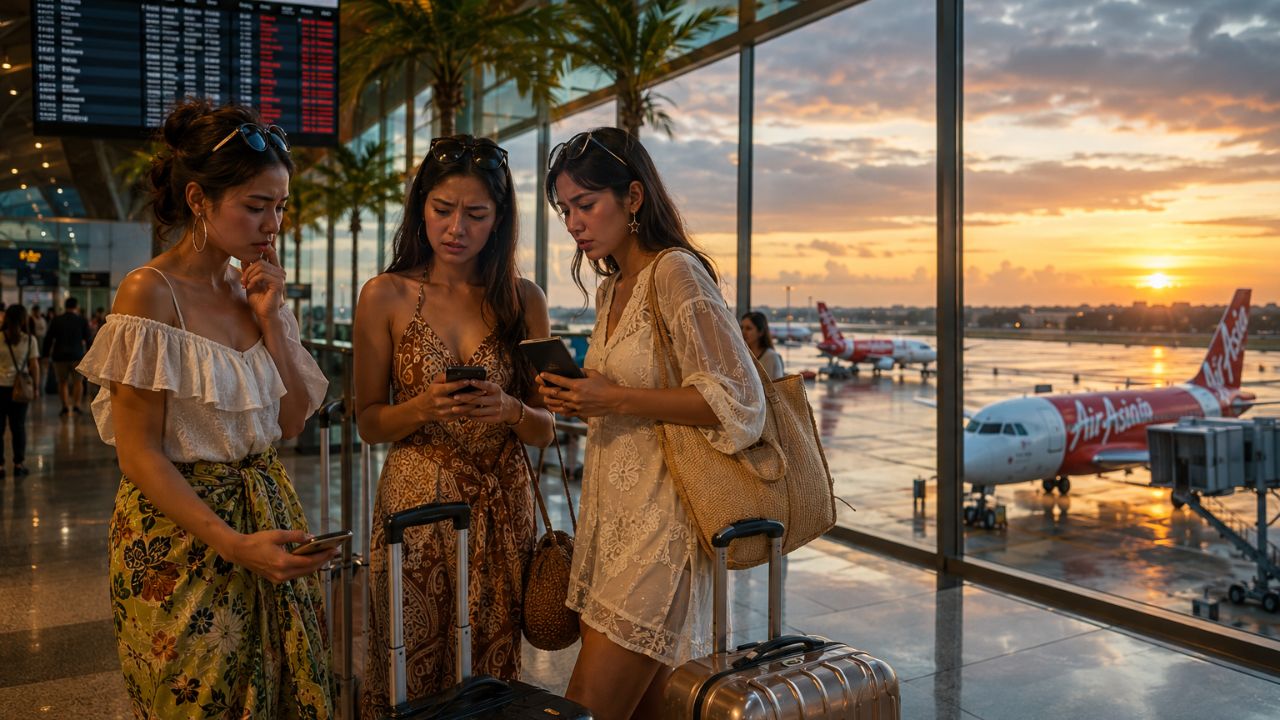
Image generated by AI
In a move that has sent shockwaves through the Southeast Asian and Australian tourism corridors, AirAsia has officially confirmed the immediate suspension of its critical Melbourne and Adelaide to Bali services. This major airline news update, set to take effect from June 18, 2026, arrives as the global aviation industry buckles under the weight of unmanageable fuel costs—now soaring past US$100 per barrel due to escalating geopolitical tensions and the strategic closure of the Strait of Hormuz. For thousands of Australian holidaymakers, this decision is the opening salvo of a broader era of travel chaos, triggering a wave of systemic flight cancellations that threaten to dismantle the affordability of the "Bali Escape." As carriers across the Asia-Pacific region scramble to adjust to this new reality, travelers are being warned to prepare for significant airport disruptions and a sharp surge in regional airfares.
Breaking: The 'Fuel Shock' Claims Its First Major Leisure Corridors
The suspension of the Melbourne–Denpasar (MEL-DPS) and Adelaide–Denpasar (ADL-DPS) routes marks a definitive shift in low-cost carrier (LCC) strategy. Only months after an aggressive expansion into the Australian leisure market, AirAsia has been forced into a defensive retreat. The primary driver is a "Relentless Fuel Squeeze," where jet fuel now accounts for nearly 30% of total operational expenditure.
Aviation analysts suggest that this is a textbook example of "Yield Protection." By cutting these direct, high-volume but low-margin routes, AirAsia is attempting to insulate its broader network from the secondary airport disruptions that occur when a carrier operates at a loss. However, for the Australian traveler, this move effectively turns a 6-hour direct flight into a 12-to-15-hour transit through Kuala Lumpur, adding a new layer of complexity to their 2026 winter itineraries.
Expanded Overview: The Ripple Effect on Malaysia and Indonesia Tourism
The impact of these flight cancellations extends far beyond the airline’s balance sheet. Bali’s tourism economy—which relies on Australia as a primary source market—is bracing for a significant downturn in budget-tier occupancy. While luxury villas may remain resilient, the hospitality sector in areas like Kuta and Seminyak is facing a "Capacity Crisis" that could soften tourism receipts during the peak July and August windows.
Simultaneously, Kuala Lumpur International Airport (KLIA) is set to become a bottleneck. As AirAsia reroutes its Australian traffic through the Malaysian hub, the risk of localized travel chaos at KLIA increases. Travelers must now navigate longer transit times and potential missed connections, making a robust aviation update on terminal logistics essential for any cross-border journey. This "Hub Pivot" is the airline’s only viable path to survival as global energy supply chains remain fractured by regional conflict.
Section-Wise Breakdown: Evaluating the Disrupted Network
The Australian Heartbreak: Melbourne and Adelaide
The loss of direct connectivity from Melbourne and Adelaide is a devastating blow to families and digital nomads. These routes were the lifelines of the "Budget Bali" lifestyle. With the final flights scheduled for June 18, travelers are being urged to lock in alternative bookings immediately before remaining carriers like Jetstar and Virgin Australia implement peak-season "Demand Pricing" surges.
The Southeast Asian Hub Pivot: Kuala Lumpur (KLIA)
By funneling Australian passengers through Malaysia, AirAsia is attempting to maintain its market share while reducing aircraft flying hours on direct legs. This strategy increases the "Transit Load" on KLIA, requiring travelers to be hyper-vigilant about aviation updates regarding their connecting flights. Any minor delay in the first leg could now lead to multi-day airport disruptions as the hub reaches saturation.
The Global Squeeze: Spirit and Air New Zealand
AirAsia is not alone in its struggle. The 2026 fuel crisis has already claimed Spirit Airlines, which ceased operations after 50 years, while Air New Zealand has warned of massive annual losses and mandatory fare increases. This industry-wide retreat proves that the era of hyper-affordable international flight is under threat from systemic energy volatility.
Bali’s Resilience: The Wellness and Digital Nomad Factor
Despite the direct route losses, the desire for Bali remains unshaken. The island’s unique mix of wellness tourism and remote-work infrastructure continues to pull travelers. However, the "Price of Paradise" is rising, and the 2026 traveler must now decide if the immersive culture is worth the logistical travel chaos of a multi-leg journey.
Flight Details: AirAsia Australia-Bali Network Disruption Matrix
The following table providing the operational specifics of the network retreat as of May 16, 2026.
AirAsia Australia-Bali Network Disruption Matrix
| Route Corridor | Current Status | Effective Date | Alternative Arrangement |
|---|---|---|---|
| Melbourne – Denpasar (DPS) | Suspended | June 18, 2026 | Transit via Kuala Lumpur (KLIA) |
| Adelaide – Denpasar (DPS) | Suspended | June 18, 2026 | Transit via Kuala Lumpur (KLIA) |
| Darwin – Denpasar (DPS) | Discontinued | 2025 | N/A |
| Darwin – Kuala Lumpur (KUL) | Discontinued | 2025 | N/A |
Strategic Drivers of Bali Tourism Demand (2026)
| Key Driver | Impact on Traveler Behavior |
|---|---|
| Competitive Hotel Pricing | Sustains demand despite higher airfares |
| Wellness & Retreat Culture | Encourages multi-week long-haul stays |
| Digital Nomad Infrastructure | Drives consistent, off-peak travel flows |
| Family-Friendly Facilities | Anchors the peak school holiday market |
Passenger Impact: The Rise of 'Fare Inflation' and Transit Fatigue
The human cost of these systematic flight cancellations is becoming a major point of friction for the 2026 traveler.
- Fare Inflation: With AirAsia’s low-cost seats removed from the direct market, remaining carriers are expected to raise prices by 30-50% during the Christmas and school holiday windows.
- Transit Fatigue: Rerouting through Kuala Lumpur adds significant physical and mental strain, increasing the likelihood of passengers getting caught in localized airport disruptions.
- Missed connections: A 2-hour delay in Melbourne can now lead to a 24-hour wait in KL, turning a simple tropical getaway into a scene of travel chaos.
- Financial Stress: The cost of overnight transit hotels and additional airport meals places a significant burden on budget-conscious families.
Industry Analysis: The Logic of Sustainability Over Expansion
Aviation analysts suggest that AirAsia’s retreat is a masterclass in "Operational Resilience."
- Fuel-Yield Management: LCCs cannot absorb $100/barrel oil without passing the cost to consumers. By rerouting through a hub, the airline can fill its aircraft to 95% capacity, maximizing fuel efficiency.
- Geopolitical Risk: The closure of the Strait of Hormuz has created a "Permanent Volatility" in the jet fuel market, forcing carriers to abandon "aggressive growth" in favor of "profitable consolidation."
- Hub Loyalty: By funneling passengers through KLIA, AirAsia is strengthening the Malaysian hub at the expense of secondary Australian airports, a move that may have long-term implications for regional connectivity.
Conclusion: A Defining Challenge for Southeast Asian Travel
The suspension of AirAsia’s Bali routes is a definitive aviation update that confirms the end of the "Post-Pandemic Expansion Phase." As the industry enters a cycle of fuel-driven travel chaos, the 2026 traveler must become more strategic, flexible, and better-funded. While Bali remains the crown jewel of Indonesian tourism, the path to its shores has become significantly more complex. As the first flight cancellations take effect in June, the world will watch to see if this is a temporary cost-control measure or the beginning of a permanent restructuring of the Asia-Pacific sky. For now, the message is clear: if you want to reach paradise, be prepared for a much longer journey.
Key Takeaways
- Event: AirAsia suspends Melbourne and Adelaide to Bali direct flights.
- Date: Suspension effective from June 18, 2026.
- Cause: Surging fuel costs (US$100+/bbl) and Middle East geopolitical tensions.
- Alternative: Passengers rerouted via Kuala Lumpur (KLIA).
- Impact: Higher regional airfares and increased travel chaos for Australians.
- Trend: Reflects a wider industry shift seen at Spirit Airlines and Air New Zealand.
- Advice: Book flexible itineraries and allow extra time for hub-based airport disruptions.
Related Travel Guides
- Qantas Launches Record-Breaking Sydney to London Nonstop Flight, Unlocking the Ultimate Bypass to Eliminate Long-Haul Travel Chaos and Global Airport Disruptions: Latest Airline News
- Walt Disney World Expands Luggage Transfer to American and United Airlines: A Strategic Move to Combat Travel Chaos and Airport Disruptions
- Charleston Travelers Grounded Across Southeast Hub Cities
Disclaimer
This article is for informational and educational purposes only. It does not constitute legal, financial, or professional advice. While we strive to provide accurate and up-to-date information, travel policies, regulations, and conditions change rapidly. Always verify information with official sources before making travel decisions. Nomad Lawyer makes no representations about the accuracy, reliability, completeness, or suitability of the information provided. Readers should consult qualified professionals for advice specific to their circumstances. The views expressed in this article are those of the author and do not necessarily reflect the views of Nomad Lawyer.
Kunal K Choudhary
Co-Founder & Contributor
A passionate traveller and tech enthusiast. Kunal contributes to the vision and growth of Nomad Lawyer, bringing fresh perspectives and driving the community forward.
Learn more about our team →