
AirAsia Sparks Holiday Travel Chaos: Thousands Impacted as Carrier Abruptly Cancels Melbourne and Adelaide to Bali Flights Amid Surging Jet Fuel Costs and Aviation Updates
AirAsia has cancelled its popular Bali routes from Melbourne and Adelaide, citing unmanageable fuel costs and triggering a wave of flight cancellations for Australian families.

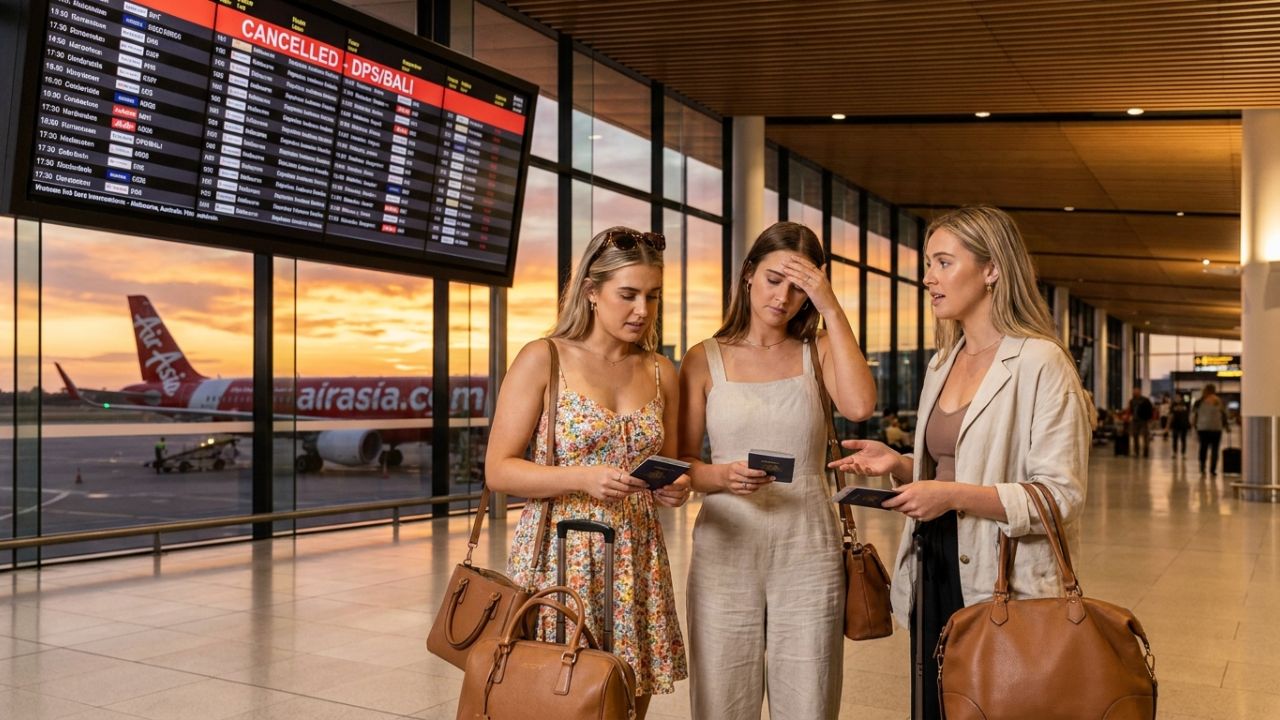
Image generated by AI
In a move that has sent shockwaves through the Australian tourism sector, AirAsia has announced the abrupt cancellation of its highly popular flight routes connecting Melbourne and Adelaide to Bali. Citing the crushing weight of rising jet fuel costs, the low-cost carrier (LCC) has effectively severed two of the most critical lifelines for Southern Australian holidaymakers bound for Indonesia’s iconic Island of the Gods. This major airline news update comes as a devastating blow to thousands of families and leisure travelers, triggering a wave of systemic flight cancellations just as the peak 2026 travel season approaches. For many, the sudden withdrawal has turned long-planned itineraries into a scene of travel chaos, sparking a desperate scramble for alternative seats on remaining carriers.
Breaking: The LCC Fuel Crisis Claims Its First Major Victims in 2026
The suspension of the Melbourne-Denpasar (MEL-DPS) and Adelaide-Denpasar (ADL-DPS) routes highlights the precarious nature of the budget aviation model in an era of volatile energy prices. AirAsia officials confirmed that the decision was driven by the unsustainable operational costs associated with these "thinner," leisure-focused corridors. By prioritizing high-yield routes from larger hubs like Sydney and Perth, the airline is attempting to insulate its broader network from the secondary airport disruptions that occur when a carrier operates at a loss.
Aviation analysts suggest that this is merely the "tip of the iceberg." As jet fuel continues to represent a staggering percentage of an airline's overhead, the budget sector is being forced to prune any route that doesn't meet strict profitability thresholds. For the residents of Melbourne and Adelaide, this means the loss of direct, affordable access to one of their most beloved international destinations.
Expanded Overview: The Ripple Effect on Australian-Bali Tourism
The impact of these flight cancellations extends far beyond the airport terminal. Bali’s tourism economy—which relies heavily on arrivals from Southern Australia—is bracing for a significant downturn in hotel occupancy and local spend. Historically, Melbourne and Adelaide have provided a steady stream of high-yield visitors to areas like Seminyak and Ubud. With the removal of AirAsia’s low-cost seats, the "accessibility gap" is set to widen, potentially pricing out the very families and budget-conscious couples that form the backbone of the island’s tourism recovery.
Furthermore, the sudden lack of capacity is expected to trigger a significant price surge on remaining direct services operated by Jetstar and Virgin Australia. As demand outstrips supply, the "Bali Budget" is being rewritten overnight, forcing travelers to either pay a premium for direct transit or navigate the logistical travel chaos of connecting through Singapore, Kuala Lumpur, or Darwin.
Section-Wise Breakdown: Navigating the Disrupted Corridor
Melbourne (MEL): The Loss of a Direct Gateway
As one of AirAsia’s primary Southern hubs, Melbourne has seen a dramatic reduction in its Bali connectivity. The suspension of the MEL-DPS service leaves a massive void in the market, particularly during school holidays. Affected passengers are being urged to check their aviation updates for refund options or rebooking via Sydney (SYD), though seat availability on these legs is already tightening.
Adelaide (ADL): A Regional Hub Under Strain
For Adelaide travelers, the news is even more dire. With fewer direct international options than the East Coast, the loss of the Denpasar link significantly limits their outbound holiday choices. Many are now facing the prospect of "double transiting"—flying first to Perth or Darwin before making the jump to Bali—a process that adds hours of transit time and increases the risk of further airport disruptions.
The AirAsia Response: Refunds and Rerouting
AirAsia has stated that it will offer full refunds to all impacted customers or the option to rebook on other international services where available. However, given the immediate nature of the cancellations, many travelers have found that rebooking options are either non-existent for their specific dates or require significant additional expenditure.
The Competition: A Windfall for Jetstar and Virgin?
While AirAsia retreats, the "Big Two" Australian carriers are likely to see a surge in bookings. However, travel experts warn that without the competitive pressure of AirAsia’s pricing, ticket costs on the Melbourne and Adelaide legs to Bali are set to skyrocket, further complicating the aviation updates for budget-conscious families.
Flight Details: AirAsia Australia-Bali Route Disruption Summary
The following table providing the operational specifics of the cancelled routes and the recommended alternatives for affected passengers.
AirAsia Australia-Bali Route Disruption Summary
| Disrupted Route | Current Status | Primary Reason | Recommended Alternative |
|---|---|---|---|
| Melbourne (MEL) -> Bali (DPS) | Suspended Immediately | Rising Jet Fuel Costs | Jetstar / Virgin Australia (Direct) |
| Adelaide (ADL) -> Bali (DPS) | Suspended Immediately | Rising Jet Fuel Costs | Connect via Perth (PER) or Darwin (DRW) |
| Melbourne -> KL -> Bali | Operating (Indirect) | Strategic Hub Consolidation | AirAsia X (via Kuala Lumpur) |
| Adelaide -> KL -> Bali | Operating (Indirect) | Strategic Hub Consolidation | AirAsia (via Kuala Lumpur) |
Passenger Impact: Missed Connections and Financial Stress
The human cost of these systematic flight cancellations is significant.
- Financial Loss on Non-Refundables: Many travelers have already paid for non-refundable hotel stays, villas, and local tours in Bali, which are now at risk if they cannot secure alternative flights.
- Travel Chaos during Peak Periods: The timing of the withdrawal—ahead of major school holiday windows—maximizes the logistical stress for families who have coordinated their annual leave around these dates.
- Extended Transit Times: For those forced to connect via major hubs, what was once a 6-hour direct flight can now become a 12-to-15-hour marathon, increasing the risk of luggage loss and missed connections.
- Increased Booking Costs: Last-minute rebookings on alternative carriers are typically 50% to 100% more expensive than the original budget fares.
Industry Analysis: The Fragility of the LCC Model in 2026
Aviation analysts suggest that AirAsia’s retreat is a symptom of a broader industry-wide "yield hunt."
- Fuel Sensitivity: Budget airlines operate on razor-thin margins. When fuel prices spike, the "leisure-only" routes are the first to be sacrificed to protect the profitability of business hubs.
- Hub Consolidation: By funneling Australian traffic through Sydney and Perth, AirAsia is effectively consolidating its operations to maximize aircraft load factors and reduce ground-side airport disruptions.
- Inflationary Pressures: Beyond fuel, the rising cost of labor and airport fees is making it increasingly difficult for LCCs to maintain the "$299 Bali Return" fare model that Australians have come to expect.
Conclusion: A Turning Point for Australian Budget Travel
AirAsia’s cancellation of its Bali routes from Melbourne and Adelaide marks a sobering turning point in the relationship between Southern Australians and their favorite holiday island. As the industry grapples with the new reality of high operational costs, the era of unlimited, hyper-cheap direct access may be coming to an end. For the 2026 traveler, the lesson is clear: flexibility, early booking, and a robust travel insurance policy are no longer optional—they are essential tools for navigating the unpredictable landscape of modern aviation updates. While Bali remains accessible, the path to the tropics has just become significantly more expensive and complex for those in the south.
Key Takeaways
- Routes Cancelled: Immediate suspension of AirAsia flights from Melbourne and Adelaide to Bali.
- Primary Cause: Soaring jet fuel costs making leisure-only routes unsustainable.
- Impact: Thousands of holiday travel plans disrupted; hotel and tour bookings in Bali affected.
- Options: Full refunds or rebooking via Sydney/Perth/KL are being offered.
- Alternatives: Expect price surges on direct services by Jetstar and Virgin Australia.
- Operational Shift: AirAsia is concentrating on high-yield hubs to mitigate systemic flight cancellations.
Related Travel Guides
Disclaimer
This article is for informational and educational purposes only. It does not constitute legal, financial, or professional advice. While we strive to provide accurate and up-to-date information, travel policies, regulations, and conditions change rapidly. Always verify information with official sources before making travel decisions. Nomad Lawyer makes no representations about the accuracy, reliability, completeness, or suitability of the information provided. Readers should consult qualified professionals for advice specific to their circumstances. The views expressed in this article are those of the author and do not necessarily reflect the views of Nomad Lawyer.
Kunal K Choudhary
Co-Founder & Contributor
A passionate traveller and tech enthusiast. Kunal contributes to the vision and growth of Nomad Lawyer, bringing fresh perspectives and driving the community forward.
Learn more about our team →