
Malaysia Launches 2026 Experience-Led Tourism Strategy with 300+ Annual Events to Drive GDP
Malaysia transitions from traditional sightseeing to an experience-led tourism model in 2026, leveraging over 300 annual events to boost domestic spending and international arrivals.

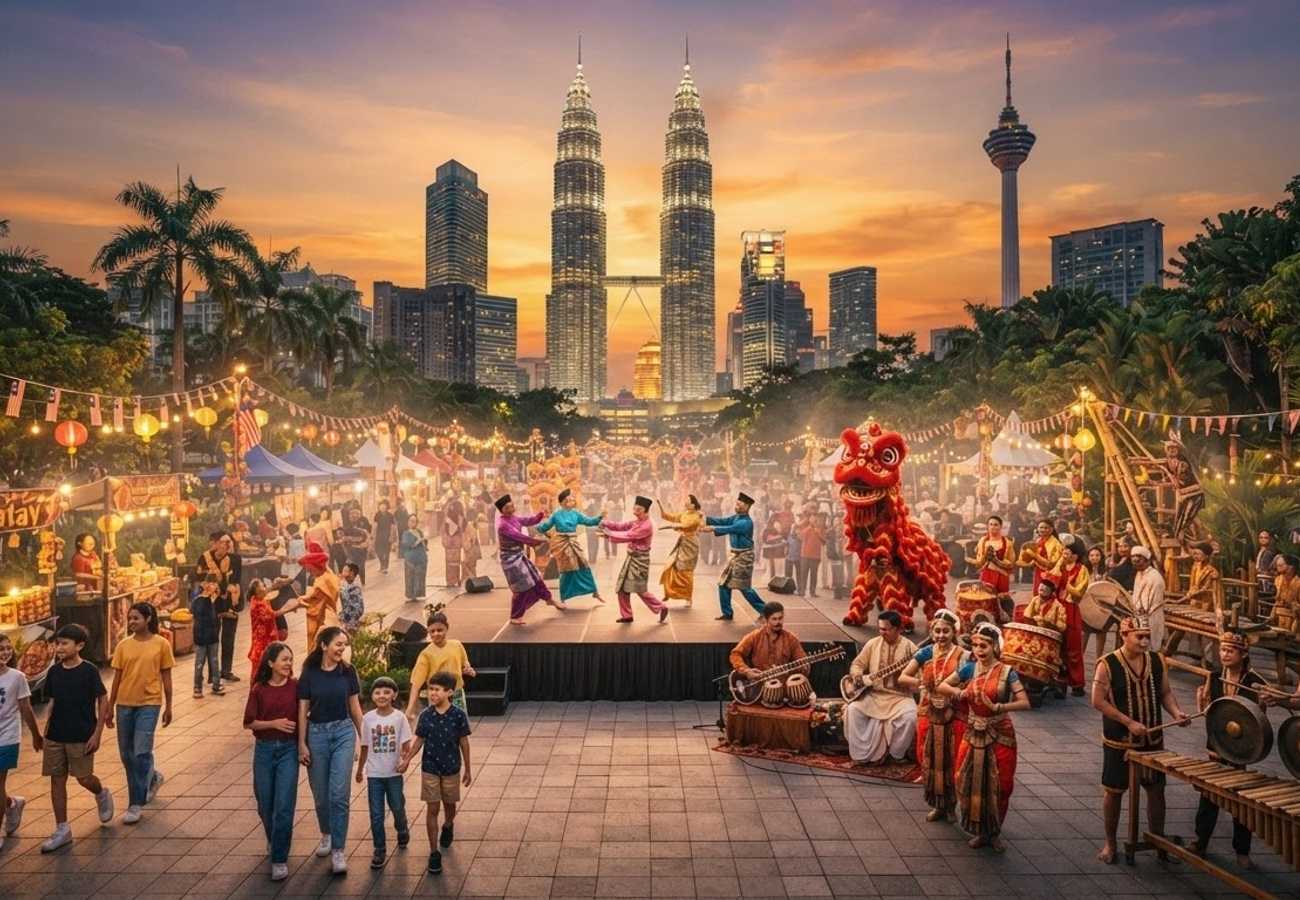
Image generated by AI
Malaysia is pivoting from passive sightseeing to a high-impact, experience-led tourism engine in 2026. By deploying a calendar of over 300 immersive events, the Ministry of Tourism, Arts and Culture aims to eliminate seasonal dips and distribute economic gains beyond primary urban hubs.
Transition to Experience-Led Tourism Architecture
Malaysia is fundamentally restructuring its tourism value proposition. While tropical islands and modern metropolitan centers remain core assets, the 2026 strategy shifts the focus toward "reasons to travel"—specific, time-bound events that compel visitors to book flights and hotels.
This model targets a global shift in traveler behavior where participation outweighs observation. By centering trips around live concerts, sporting events, and cultural festivals, Malaysia is increasing the average length of stay and the total spend per visitor. A traveler arriving for a two-hour concert is now encouraged to extend their visit to two or three nights, incorporating heritage tours and regional excursions.
This strategic pivot ensures that economic benefits reach smaller regions and independent businesses that typically fall outside the narrow corridors of traditional sightseeing routes.
Economic Foundation and Recovery Data
The current strategy is built upon a mature visitor economy. According to the Department of Statistics Malaysia, the tourism industry generated RM240.2 billion in 2019, accounting for 15.9% of the national GDP, with direct tourism GDP representing 6.8%.
A critical shift occurred in 2019 when domestic tourism expenditure reached RM92.6 billion, surpassing inbound expenditure for the first time since the Tourism Satellite Account began in 2005. This domestic resilience became the primary lifeline for the hospitality and transport sectors during the pandemic.
Recent data confirms this upward trajectory:
- 2025 Domestic Volume: 290.1 million visitors (11.5% increase from 260.1 million in 2024).
- 2025 Domestic Spend: RM121.3 billion (13.6% increase).
- Q1 2026 Performance: 74.7 million domestic visitors (7.2% increase over Q1 2025).
- Q1 2026 Spend: RM34 billion (15.8% year-on-year increase).
The average stay also saw a marginal but impactful increase from 2.49 nights in 2024 to 2.56 nights in 2025.
2026 National Event Calendar Specifications
The 2026 program utilizes a diverse event portfolio to create urgency and drive immediate bookings. The calendar emphasizes multiculturalism, integrating celebrations from the Malay, Chinese, Indian, and Indigenous communities.
Event Category and Economic Impact Matrix
| Experience Category | Tourism Opportunity | Primary Beneficiaries |
|---|---|---|
| Cultural Festivals | Longer stays & regional discovery | Local communities, guides, craft artisans |
| Concerts | Short urban breaks & fan travel | Hotels, airlines, entertainment venues |
| Sporting Events | High-volume travel on fixed dates | Transport, accommodation, restaurants |
| Food Experiences | Neighborhood & regional tourism | Hawkers, markets, independent eateries |
| Wellness Travel | High-value restorative stays | Luxury resorts, spas, rural retreats |
| Shopping Campaigns | Retail-led city & family breaks | Malls, retailers, urban hotels |
| National Celebrations | Domestic travel & cultural discovery | Event organizers, municipal businesses |
Key dates include Chinese New Year, Aidilfitri, Deepavali, and Christmas, alongside region-specific festivals such as Tadau Kaamatan in Sabah and Gawai Dayak in Sarawak.
Traveler Logistics Guide: Navigating Malaysia 2026
From a ground-level perspective, the best way to navigate this event-heavy calendar is to synchronize your itinerary with the regional festival dates to avoid the extreme congestion of Kuala Lumpur.
Booking Connections & Layovers When attending events in Sabah or Sarawak, book regional flights at least 60 days in advance. Event-driven spikes often lead to rapid capacity depletion on domestic routes. For those combining a Kuala Lumpur concert with a beach extension, a 24-hour layover in the capital is recommended to manage transit between the airport (KLIA) and city center, which can be unpredictable during major events.
Digital Transit & Customs Travelers should utilize the latest digital entry requirements to expedite customs. Ensure all digital arrival cards are completed 72 hours prior to landing. For domestic transit, ride-sharing apps remain the most efficient way to reach event venues, though public rail (LRT/MRT) is superior for avoiding traffic during peak festival hours in the Klang Valley.
Optimal Routing To maximize the "experience-led" model, plan a multi-stop journey. Start in Kuala Lumpur for shopping and urban events, then move to Peninsular Malaysia for cultural festivals, and conclude in East Malaysia (Sabah/Sarawak) for indigenous celebrations. This reduces the reliance on a single hub and allows for a more authentic exploration of the country's multicultural identity.
Infrastructure and Regional Impact Assessment
The shift toward experience-led tourism is designed to decentralize the tourism economy. By promoting events in Sabah and Sarawak, Tourism Malaysia is forcing an upgrade in regional connectivity. This requires airlines to increase frequency to secondary airports and encourages the development of boutique accommodation outside the major cities.
Furthermore, the reliance on domestic tourism—which saw spending grow faster than visitor volume in early 2026—provides a hedge against global geopolitical tensions and fluctuating exchange rates. By turning familiar destinations into "new experiences" via events, Malaysia is ensuring a stable, year-round revenue stream.
Malaysia is no longer just a destination to be seen, but a series of events to be experienced.
Related Travel Guides
Disclaimer
This article is for informational and educational purposes only. It does not constitute legal, financial, or professional advice. While we strive to provide accurate and up-to-date information, travel policies, regulations, and conditions change rapidly. Always verify information with official sources before making travel decisions. Nomad Lawyer makes no representations about the accuracy, reliability, completeness, or suitability of the information provided. Readers should consult qualified professionals for advice specific to their circumstances. The views expressed in this article are those of the author and do not necessarily reflect the views of Nomad Lawyer.
Kunal K Choudhary
Co-Founder & Contributor
A passionate traveller and tech enthusiast. Kunal contributes to the vision and growth of Nomad Lawyer, bringing fresh perspectives and driving the community forward.
Learn more about our team →