
Lake Malawi National Park: The UNESCO Freshwater Sanctuary Redefining African Eco-Tourism
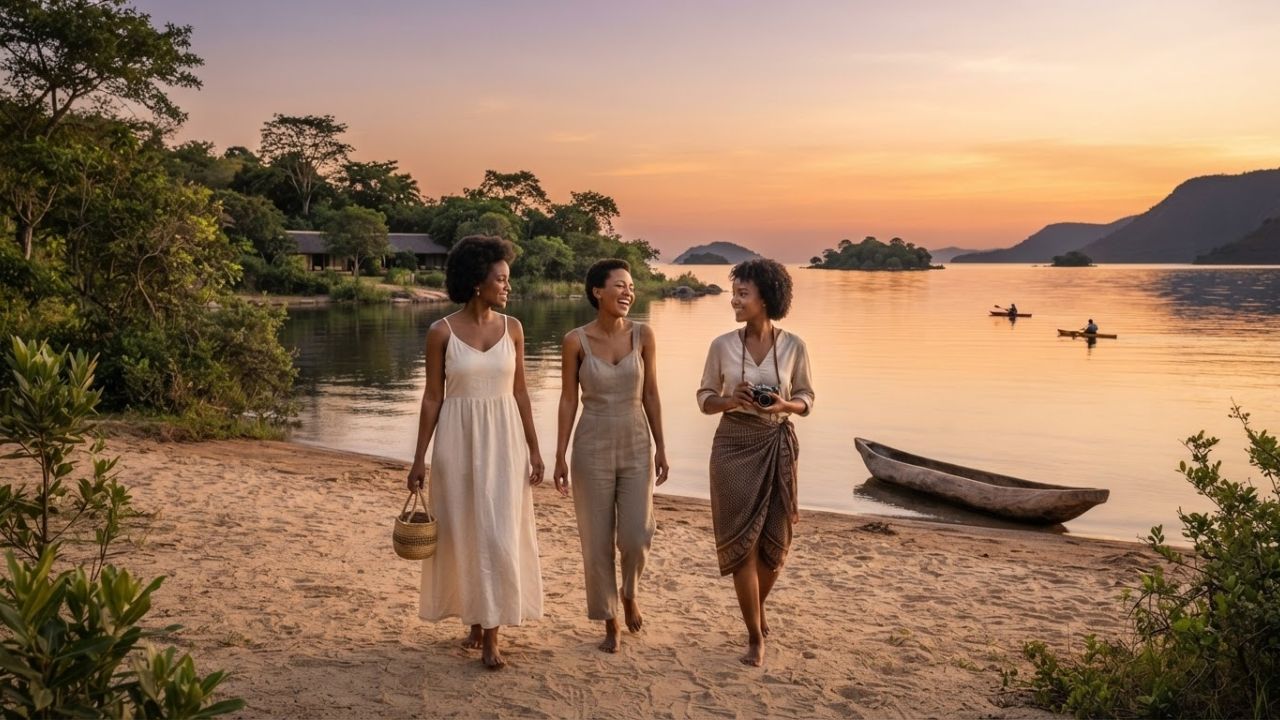
Image generated by AI
Lake Malawi National Park, established in 1980 and recognised as the world's first freshwater national park by UNESCO, protects the only place on earth where you can snorkel among hundreds of endemic cichlid species in a fully protected freshwater marine environment — and do it with virtually no crowd competition from mass tourism.
Why the World's First Freshwater National Park Still Flies Under the Radar
Malawi holds a geographic and ecological record that most travellers have never heard of. Lake Malawi National Park, gazetted in 1980 and designated a UNESCO World Heritage Site, carries the distinction of being the world's first freshwater national park. That is not a marketing slogan — it is the specific language used by UNESCO in its inscription, reflecting the singular global importance of what exists beneath the surface of this lake.
The park protects the Nankumba Peninsula along with surrounding lake waters and a cluster of offshore islands: Domwe Island, Mumbo Island, and Thumbi Island. Its greatest ecological significance lies underwater. The crystalline waters of the southern lake harbour an extraordinary density of endemic cichlid fish — species found nowhere else on earth — creating a freshwater biodiversity hotspot of global scientific importance that draws marine biologists and nature researchers alongside leisure travellers.
Above the waterline, the same protected land supports populations of baboons, antelopes, African fish eagles, cormorants, and hamerkops. The integration of terrestrial and aquatic ecosystems within a single protected zone is what makes this part of Malawi genuinely distinctive, not merely as an African destination, but as one of the world's most ecologically concentrated travel experiences.
Cape Maclear: The Anchor of Malawi's Eco-Tourism Economy
Cape Maclear, situated on the southern shore of the lake within the national park, is the practical base for most visitors. The village sits at the edge of the Nankumba Peninsula, where the lake's waters are at their clearest and the horizon extends uninterrupted to the north. The atmosphere here is shaped by the complete absence of resort-scale development — accommodation ranges from independent eco-lodges and backpacker guesthouses to a small number of mid-range lakeside properties, all operating within the park's conservation framework.
For the visitor arriving from a high-density coastal destination, the shift is immediate and physical. There are no jet skis. There is no amplified music competing with the lake. The evenings are defined by the sound of water and the light changing over the hills of the Nankumba. That is not an accident of geography — it is the direct consequence of the national park status that governs what can be built and how many visitors can move through the protected zone at any given time.
The Malawi Tourism Council has worked in coordination with the national parks authority to expand community-based tourism around Cape Maclear, ensuring that local fishing families, guides, and artisans capture a meaningful share of visitor spending rather than ceding revenue to external operators.
What the Lake Actually Offers Underwater and on the Water
The lake functions as an inland ocean in practical terms. Its surface stretches 580 kilometres from north to south, and the protected southern section around Cape Maclear maintains water clarity that supports snorkelling and diving at quality comparable to many saltwater reef systems. The cichlid fish that inhabit these shallows — many of them too small and brilliantly coloured to be believed without prior warning — are the primary draw for scientific and nature tourism.
For those who prefer the surface, kayaking between Domwe, Mumbo, and Thumbi Islands is a self-paced route through protected waters with no motorised traffic to contend with. Mumbo Island in particular operates as a conservation camp where accommodation is limited by design — the operator caps numbers to maintain the ecological integrity of the island rather than scaling up to meet demand.
The UNESCO inscription specifically notes the park's importance for the conservation of cichlid fish diversity. Visitors interested in the scientific context of what they are seeing can access information through the parks authority and through the research operations that continue to operate on the lake.
Liwonde, Majete, Mulanje, and Nyika — Beyond the Lake
Malawi's eco-tourism story extends well beyond the UNESCO lake park. Three additional ecosystems make a compelling case for extending any itinerary beyond Cape Maclear.
Liwonde National Park and Majete Wildlife Reserve have both undergone significant conservation transformations through strategic wildlife reintroduction programmes. Lions, cheetahs, and rhinos have been successfully reintroduced into habitats where they had been locally extirpated — an outcome that took sustained government oversight aligned with international conservation partnerships over multiple years. Both parks now sustain populations of elephants, hippos, crocodiles, and lions, offering safari experiences that are meaningfully different from the high-volume game-drive circuits of East and Southern Africa's more visited reserves.
The Mulanje Massif in the far south of the country rises to over 3,000 metres and provides multi-day trekking routes through montane forest and open plateau. Its scale and isolation make it one of the least-known significant mountain walking environments in the continent. The Nyika Plateau in the north offers a different ecological register entirely — expansive rolling grasslands at high altitude with roan antelope, zebra, and a bird list that draws dedicated ornithologists.
The combination of freshwater ecology, safari reserve, highland trekking, and cultural heritage across a single small country makes Malawi genuinely unusual in the range of natural experience it concentrates into an itinerary of manageable scale.
Cultural Encounters: Tea Estates, Markets, and Village-Based Tourism
The cultural dimension of travel in Malawi is woven into the same rural geography as its wildlife. Tea estates in the Mulanje and Thyolo regions operate open visits and are among the very few places in Africa where travellers can walk through working tea cultivation, meet the picking teams, and understand the agricultural economy of a community that has been shaped by plantation farming since the colonial period.
Village-based tourism around Cape Maclear invites direct participation in local craft production and market culture. The hand-carved wooden figures, woven baskets, and painted fabrics sold at community markets near the lake represent genuine local production, not imported souvenir stock. Spending at these outlets flows directly to the artisans and their families — a tangible contrast to the resort gift shops where margin is captured by management rather than makers.
The country's self-description as the Warm Heart of Africa has become a tourism positioning statement, but it is one that most visitors who reach Cape Maclear confirm independently. The population density along the lake shore is low, interactions are unhurried, and the social atmosphere that results is markedly different from the transactional energy that characterises high-traffic tourism zones.
Visitor Insider Tips: Planning a Malawi Eco-Trip
Best season for the lake: May through October is the dry season and the optimal window for lake clarity and comfortable temperatures. November through April brings the rains — the lake becomes murkier for diving but the surrounding vegetation is intensely green and birdlife is at its most active. Shoulder months of May and October offer the best combination of conditions with fewer visitors.
Mumbo Island — book well in advance: The camp on Mumbo Island operates with a strict guest limit. It books out months ahead during the dry season. This is not a last-minute destination.
Domwe Island for day trips: If Mumbo is booked, Domwe Island is accessible by kayak or arranged boat from Cape Maclear and offers snorkelling in the same protected waters. No prior booking required for day access.
Liwonde boat safaris over game drives: The Shire River that flows through Liwonde National Park is best explored by boat. Hippo and crocodile sightings are near-certain, and the riverine forest on both banks hosts an exceptional bird list. Most lodges offer both options — ask specifically for the morning boat.
Aquatic management rules apply: Lake Malawi National Park has restrictions on motorised watercraft in protected zones. Snorkelling and kayaking are permitted; commercial dive operators work to park-regulated standards. Confirm your operator's park accreditation before booking.
Getting there via Lilongwe or Blantyre: Kamuzu International Airport (LLW) in Lilongwe handles the majority of international connections. Transfer to Cape Maclear takes approximately four hours by road. For Liwonde and Majete, Chileka International Airport (BLZ) in Blantyre is closer. Road conditions are generally manageable in a standard vehicle during the dry season.
Currency and spending: Malawi uses the Malawian Kwacha. USD cash is widely accepted at lodges and eco-camps, but exchanging at registered forex bureaux in Lilongwe or Blantyre gives significantly better rates than airport or hotel exchange. Community market operators and local guides work in Kwacha.
Tourism Outlook: Can Malawi Stay Uncrowded?
The conservation architecture currently protecting Lake Malawi National Park — UNESCO designation, national park status, and the Malawi parks authority's visitor management framework — is the primary reason Cape Maclear remains genuinely uncrowded. That protection is real, but it depends on sustained enforcement and adequate resourcing.
The Malawi Tourism Council has been explicit in its commitment to a high-value, low-density visitor model, prioritising travellers who spend more time in the country and distribute their spending across communities rather than concentrating it within a single resort compound. That model requires premium accommodation and activity pricing to generate the conservation revenue that parks depend on — which means Malawi is positioning itself at the quality end of the African eco-tourism market rather than competing on price with higher-volume neighbours.
The reintroduction successes at Liwonde and Majete have strengthened the safari case for the country significantly over the past decade. If those population recoveries continue and the parks authority maintains its international partnerships, Malawi's wildlife offer will become more competitive against the East African circuit as game density increases.
For travellers who reach Malawi in the current window — before mass-market infrastructure arrives and before the destination becomes a standard itinerary stop — the experience available at Cape Maclear, on the Mulanje plateau, and along the Shire River in Liwonde is genuinely rare. The question is how long that window stays open.
FAQ: Lake Malawi National Park and Eco-Tourism 2026
What makes Lake Malawi National Park historically significant? Lake Malawi National Park, established in 1980, holds the distinction of being the world's first freshwater national park. It was designated a UNESCO World Heritage Site for its extraordinary endemic cichlid fish diversity and the ecological importance of its freshwater ecosystem.
Which wildlife can I see at Liwonde National Park and Majete Wildlife Reserve? Both reserves now support elephants, hippos, crocodiles, and lions following successful reintroduction programmes. Majete and Liwonde have also seen the return of cheetahs and rhinos, making them two of the most ecologically restored wildlife sanctuaries in Southern Africa.
What is the best base for visiting Lake Malawi National Park? Cape Maclear, located on the Nankumba Peninsula within the national park, is the primary visitor base. It provides direct access to snorkelling and kayaking around Domwe, Mumbo, and Thumbi Islands, as well as lake shore trekking trails above the shoreline.
Related Travel Guides
South Africa Township Tourism: The Real Cape Town, Durban and Johannesburg Beyond the Postcards
Kenya Wildlife Tourism Growth: Tsavo West and Conservation Gains 2026
The Best Lake Malawi Eco-Lodges and Cape Maclear Travel Guide 2026
Disclaimer
This article is for informational and educational purposes only. It does not constitute legal, financial, or professional advice. While we strive to provide accurate and up-to-date information, travel policies, regulations, and conditions change rapidly. Always verify information with official sources before making travel decisions. Nomad Lawyer makes no representations about the accuracy, reliability, completeness, or suitability of the information provided. Readers should consult qualified professionals for advice specific to their circumstances. The views expressed in this article are those of the author and do not necessarily reflect the views of Nomad Lawyer.