
Uganda Open Park Days 2026: Six African Nations Deepen Conservation Tourism Strategy
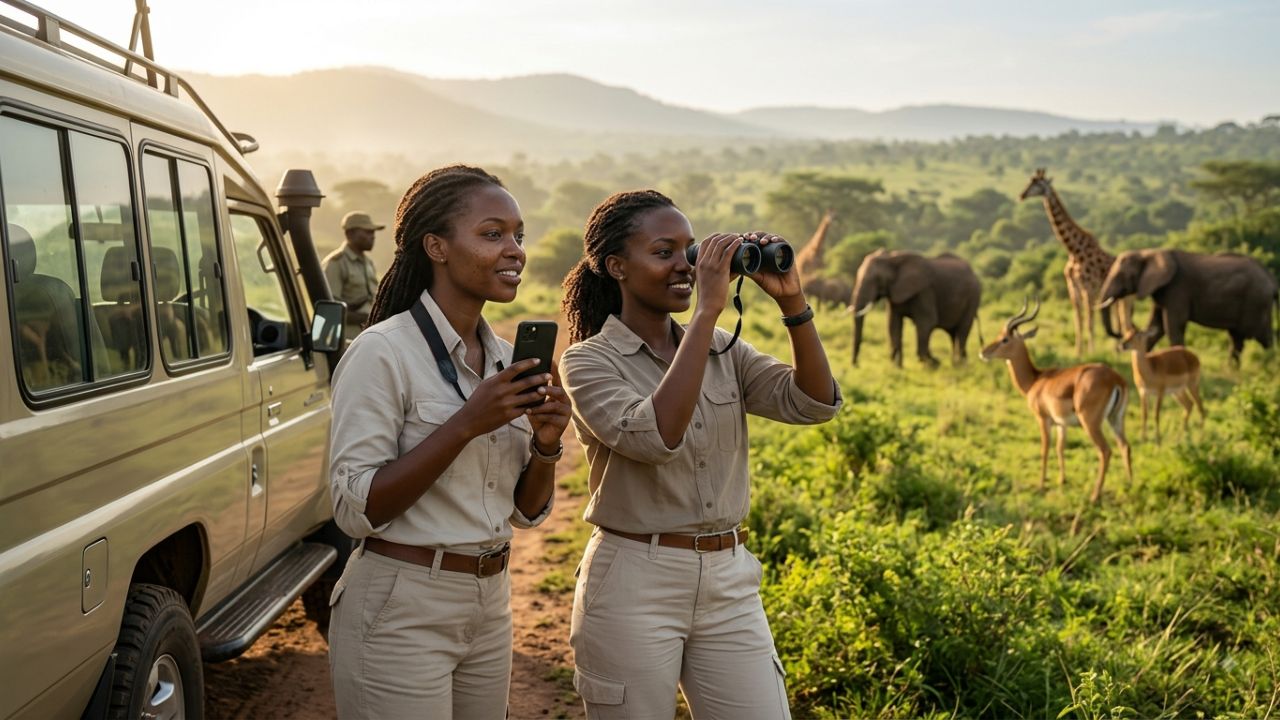
Image generated by AI
The Uganda Wildlife Authority has confirmed Open Park Days 2026 for September 25–27, 2026 — a three-day initiative opening Uganda's national parks to domestic visitors as part of a coordinated continental strategy now operating across six African nations simultaneously.
Uganda's Open Park Days: What Happens September 25–27, 2026
The Uganda Wildlife Authority (UWA) has set September 25 to 27, 2026 as the dates for Open Park Days 2026, a national initiative designed to bring Ugandan citizens into direct contact with the country's protected wildlife areas. The timing is deliberate — September sits in Uganda's short dry season, when park conditions are at their most accessible and game viewing is concentrated around water sources.
The initiative does more than open gates. It is structured to create a commercial ecosystem around the access window: tourism operators are expected to develop packages covering transport, accommodation, guided wildlife experiences, and safari activities linked directly to participating parks. The UWA is positioning the three days as both a conservation awareness moment and an active business development opportunity for the tourism sector.
Uganda's four primary national parks form the core of the campaign:
Murchison Falls National Park — Uganda's largest park, defined by the point where the Nile forces through a 7-metre gap to produce one of Africa's most powerful waterfalls. The surrounding savannah supports substantial populations of lions, elephants, giraffes, hippos, and over 450 bird species. Tourism businesses operating in the northern corridor around Murchison represent some of the highest-value wildlife experiences in East Africa.
Queen Elizabeth National Park — Located in western Uganda along the Rwenzori range, Queen Elizabeth combines open savannah with papyrus wetlands and the Kazinga Channel, a natural waterway connecting Lakes George and Edward. It is one of the few places in Africa where tree-climbing lions are reliably documented. The park's wildlife density makes it one of the continent's most ecologically diverse protected areas per square kilometre.
Lake Mburo National Park — The most accessible of Uganda's parks from Kampala (approximately three hours by road), Lake Mburo serves as the natural entry point for domestic travellers exploring wildlife tourism for the first time. It holds the largest population of impalas in Uganda and is one of the few parks where zebras are found west of the Nile.
Kidepo Valley National Park — Located in Uganda's remote northeastern corner near the South Sudan border, Kidepo operates in almost complete isolation from conventional tourist circuits. Its open, semi-arid valley floor supports cheetahs, lions, ostriches, bat-eared foxes, and a bird list exceeding 475 species. International visitors who reach it routinely rank it among the most authentic wildlife experiences in Africa.
Why Domestic Tourism Is Now Africa's Conservation Insurance Strategy
The strategic logic behind Open Park Days goes beyond national pride tourism. It is a risk management decision.
When the COVID-19 pandemic effectively ended international travel in 2020, wildlife parks across Africa lost the foreign-visitor revenue that funded anti-poaching operations, ranger salaries, infrastructure maintenance, and community programmes. The parks did not stop costing money — they simply stopped generating it. The result in several countries was increased poaching pressure, ranger departures, and degraded conservation capacity during precisely the period when protection was most needed.
Open Park Days is Uganda's practical response to that vulnerability. By building a domestic visitor base that treats wildlife tourism as a normal part of Ugandan life rather than an activity reserved for foreign guests, the UWA is creating a financial buffer that operates independently of international travel patterns. When overseas arrivals fall — whether due to geopolitical disruption, health emergencies, or economic downturns — local travellers can sustain the baseline revenue that conservation operations require.
According to the Uganda Tourism Board, domestic tourism development is now formally embedded in Uganda's national tourism strategy as a resilience mechanism, not merely a supplementary revenue stream.
How Five Other African Nations Are Running the Same Playbook
Uganda is not working in isolation. The September Open Park Days fit within a continental pattern where South Africa, Kenya, Tanzania, Rwanda, and Namibia are all pursuing variants of the same domestic resilience model.
South Africa has built one of Africa's most sophisticated domestic wildlife tourism systems through South African National Parks (SANParks), which operates affordable annual conservation permits and subsidised accommodation options specifically targeting South African citizens. The model turns national parks into national assets that South Africans visit repeatedly, generating year-round revenue stability alongside the high-yield international safari market. The approach is built on a simple premise: more South Africans visiting wildlife destinations means more public support for protecting those destinations through conservation policy and budget allocation.
Kenya has concentrated its domestic strategy on its most recognisable names: Maasai Mara, Amboseli, Tsavo, and Lake Nakuru. The Kenya Wildlife Service (KWS) has introduced resident pricing tiers and domestic safari package incentives designed to bring Kenyans into parks that many have never visited despite being world-famous for international travellers. When Kenyan citizens experience the Mara or the elephant herds of Amboseli directly, they become conservation advocates — a social dynamic that translates into stronger political support for wildlife protection budgets and anti-poaching enforcement.
Tanzania is applying the same approach to its four flagship reserves: Serengeti National Park, Ngorongoro Conservation Area, Tarangire National Park, and Ruaha National Park. Tanzania's challenge is scale — its parks are vast, infrastructure costs are high, and international visitors have traditionally cross-subsidised domestic access. The country's current strategy focuses on creating accessible entry points for domestic travellers without compromising the premium international experience that funds long-term conservation.
Rwanda has built its entire tourism identity around carefully managed conservation experiences through Volcanoes National Park (home to mountain gorilla trekking), Akagera National Park (Rwanda's Big Five safari destination), and Nyungwe Forest National Park (home to chimpanzees and the continent's largest montane rainforest). Rwanda's domestic tourism programme is positioned not around affordability alone but around the principle that Rwandans should experience and understand their natural heritage as part of national identity — a framing that has proven effective in building public conservation awareness.
Namibia operates the most community-integrated model on the continent. Its network of communal conservancies — managed directly by rural communities who receive wildlife revenue and direct a share back into anti-poaching and habitat management — represents the clearest proof that conservation works most durably when local populations are economic beneficiaries rather than observers. The Namibia Tourism Board credits the conservancy system with recovering wildlife populations including lions and elephants in areas where they had been functionally absent for decades.
For the Visitor: What These Parks Actually Deliver on the Ground
For international travellers considering Uganda as part of an East or Central African itinerary, the Open Park Days initiative signals a destination that is actively investing in its conservation infrastructure rather than running it down — which matters directly to the quality of wildlife experience available.
Murchison Falls in particular is worth extended time. The boat trip up the Nile to the base of the falls, followed by a walk to the top through the gorge, is one of the genuinely underrated wildlife experiences in Africa. Game density on the northern bank of the Nile — accessed by ferry — is high, and the landscape mix of savannah, riverine forest, and wetland gives the park a visual range that single-habitat reserves cannot match.
Kidepo rewards the effort required to reach it. The nearest town with reliable accommodation is Kidepo Valley itself, and the journey from Kampala typically requires either a domestic flight or an eight-to-nine-hour road trip. For travellers prepared to make that commitment, the park operates in a social silence — no crowds, no convoy culture, no compressed game-drive circuits — that has essentially disappeared from the more accessible East African parks.
Visitor Insider Tips: Planning Around Uganda Open Park Days 2026
Book September 25–27 accommodation well in advance: Open Park Days will drive domestic visitor numbers significantly above normal September levels. Lodges and camps adjacent to Murchison Falls and Queen Elizabeth typically have limited capacity. Secure accommodation before the campaign is formally promoted to the general public.
Lake Mburo for first-time domestic visitors: If you are introducing family members to wildlife travel in Uganda for the first time, Lake Mburo's proximity to Kampala (three hours), compact size, and zebra and impala populations make it the most manageable introduction. Save Murchison and Kidepo for return visits when comfort with longer journeys is established.
Kidepo flight timing: Pakuba Airstrip (for Murchison) and Kidepo Airstrip serve the remote parks via light aircraft from Entebbe International Airport (EBB). Charter and scheduled bush-plane services operate on these routes — check operators such as Aerolink Uganda for Open Park Days availability, as capacity is limited and books out ahead of the campaign dates.
Gorilla permits are separate: Mountain gorilla trekking in Bwindi Impenetrable National Park and Mgahinga Gorilla National Park operates under a separate permit system managed by the UWA and is not part of the Open Park Days general access programme. Permits must be booked in advance at a fixed fee — check the Uganda Wildlife Authority for current availability.
Kazinga Channel boat trip — go early: Queen Elizabeth's Kazinga Channel boat trips are most productive at 08:00 and 14:00. The 08:00 departure consistently offers the best hippo activity and kingfisher sightings. Afternoon trips during Open Park Days may face higher demand than normal — book through your lodge the evening before.
Currency: Uganda uses the Ugandan Shilling. USD cash is widely accepted at lodges and for park fees, but rates vary. Exchange at authorised forex bureaux in Kampala or Entebbe before heading to remote parks — ATM availability drops sharply outside major towns.
Tourism Outlook: Building a Safari Economy That Does Not Collapse When Flights Stop
The September 2026 Open Park Days and the broader African domestic tourism strategies they represent point toward a fundamental restructuring of how wildlife tourism economies are designed to survive.
The previous model — international arrivals fund conservation, domestic populations observe from outside — has been stress-tested by the past decade of global disruption and found structurally vulnerable. The new model inserts a domestic revenue floor beneath the international premium layer, so that when overseas visitor numbers contract (as they inevitably will, repeatedly, for a range of unpredictable reasons), the parks, the rangers, the anti-poaching teams, and the community programmes continue to operate.
Uganda's Open Park Days is a three-day event, but what it represents is a multi-year investment in creating a generation of Ugandan citizens who regard wildlife travel as a normal part of their own country's identity — not something others come to experience. The same dynamic is playing out in Rwanda's conservancy model, Namibia's communal conservancies, and Kenya's resident pricing tiers.
The destination that benefits most directly from this shift is not a single park. It is the entire African wildlife tourism system, which becomes meaningfully more durable every time a domestic visitor becomes a conservation advocate.
FAQ: Uganda Open Park Days and African Conservation Tourism 2026
When are Uganda's Open Park Days 2026? The Uganda Wildlife Authority has confirmed Open Park Days 2026 will be held on September 25, 26, and 27, 2026, with access spanning Uganda's major national parks including Murchison Falls, Queen Elizabeth, Lake Mburo, and Kidepo Valley.
Which African countries are building domestic conservation tourism strategies in 2026? Uganda, South Africa, Kenya, Tanzania, Rwanda, and Namibia are all implementing domestic tourism resilience programmes, using citizen access to national parks as a conservation awareness and economic stabilisation tool alongside their international visitor markets.
What makes Kidepo Valley National Park different from other Uganda parks? Kidepo Valley, located in Uganda's remote northeast, is one of the continent's most isolated major wildlife reserves. It supports cheetahs, lions, and over 475 bird species in a semi-arid valley environment with no significant tourist infrastructure pressure — delivering an experience that more accessible parks in the region no longer offer at the same scale.
Related Travel Guides
Kenya Wildlife Tourism Growth: Tsavo West and Conservation Gains 2026
South Africa Township Tourism: The Real Cape Town, Durban and Johannesburg Beyond the Postcards
Uganda and East Africa Safari Planning Guide: Best Parks and Open Season Windows 2026
Disclaimer
This article is for informational and educational purposes only. It does not constitute legal, financial, or professional advice. While we strive to provide accurate and up-to-date information, travel policies, regulations, and conditions change rapidly. Always verify information with official sources before making travel decisions. Nomad Lawyer makes no representations about the accuracy, reliability, completeness, or suitability of the information provided. Readers should consult qualified professionals for advice specific to their circumstances. The views expressed in this article are those of the author and do not necessarily reflect the views of Nomad Lawyer.