
Major Airlines Cancel 34 Flights as Delay Chaos Spreads Across Australia, New Zealand
34 flight cancellations and 272 delays across Australian and New Zealand airports in April 2026 reveal how tight airline schedules amplify operational shocks into system-wide disruptions affecting hundreds of passengers.

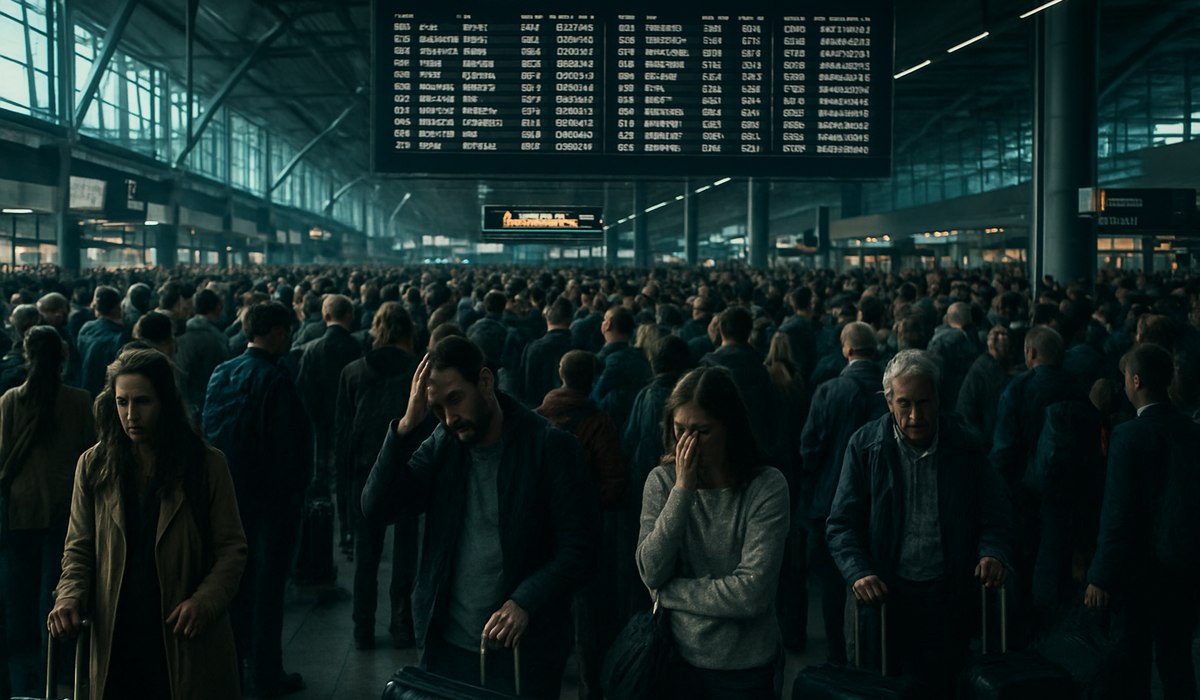
Image generated by AI
Regional Aviation Networks Buckling Under Operational Pressure
Major airlines cancel dozens of flights as 272 delays cascade through Sydney, Melbourne, and Auckland airports on April 27–28, 2026. Hundreds of passengers faced stranded conditions, missed connections, and overnight accommodation challenges after a wave of schedule disruptions exposed fragility in how modern airline networks handle even modest operational shocks. The incident underscores a troubling reality: regional aviation infrastructure operates with virtually no buffer capacity, meaning minor disruptions spiral into system-wide chaos within hours.
The scale of disruption, while modest compared to major holiday travel events, demonstrates how dependent contemporary aviation has become on perfect execution. When 34 flights are canceled and 272 more run significantly behind schedule across a single region in a single day, the consequences ripple far beyond affected airports.
Sydney, Melbourne, and Auckland Hit Hardest as Disruptions Cascade
Flight tracking data from FlightAware confirmed that Sydney (SYD), Melbourne (MEL), and Auckland (AKL) bore the brunt of the April 28 disruptions. These three hubs serve as critical connection points for transcontinental and transpacific traffic, meaning delays there immediately threatened onward service to Asia, North America, and Europe.
Witnesses at affected terminals reported crowded customer service counters, passengers sleeping on airport floors overnight, and widespread frustration over rebooking timelines. Airlines offered alternative flights, but many were two or more days out due to limited spare capacity. The situation worsened as crew duty time regulations forced additional cancellations when replacement personnel were unavailable.
Ground handling services and catering operations struggled to keep pace with the volume of stranded travelers. Hotels near major airports reported full occupancy as airlines struggled to secure accommodation vouchers. For families with young children and business passengers with critical commitments, the delays triggered significant personal and professional consequences.
Tight Schedules Leave No Room for Error
Modern airline scheduling prioritizes aircraft utilization, with short-haul jets often assigned eight to ten flight sectors per day. This aggressive optimization model works flawlessly when conditions are normal but becomes a liability during disruptions. A single morning delay immediately cascades into subsequent flights as planes and crews slip out of position.
When crew members approach legal duty time limits—strict regulations designed for safety—airlines must either cancel flights or source replacement crews from standby pools. In the April 28 event, insufficient standby capacity meant that scheduling dominoes continued to topple throughout the day. Aircraft that should have been in Sydney by noon were still airborne at 2 p.m., triggering a chain reaction of cancellations.
Industry analysts call this phenomenon "recovery fragility." Networks function smoothly under normal conditions but lose resilience when absorbing even modest shocks. Post-pandemic operational reviews flagged this exact vulnerability, yet many carriers have maintained lean staffing and reduced spare aircraft capacity to maximize profitability.
Global Ripple Effects: Long-Haul Services and Missed Connections
The disruptions at Australian and New Zealand airports immediately threatened connecting passengers on long-haul services. Travelers booked through Sydney to San Francisco, Los Angeles, and London faced missed connections and uncertain rebooking options. Similarly, passengers connecting through Auckland to Asian hubs experienced itinerary chaos.
Major airlines operating these routes were forced to hold inbound long-haul aircraft while waiting for connecting passengers or to operate with reduced passenger loads if connecting traffic was rebooked to later services. This inefficiency compounds the initial disruption, extending recovery timelines by hours or days.
The incident mirrors earlier disruptions documented across North America and Europe, where weather events, staff shortages, and airspace restrictions created similar cascading effects. These patterns suggest that global aviation networks are operating closer to operational limits than previously recognized.
A Pattern Emerging: Aviation at Breaking Point
The April 2026 disruptions in Australia and New Zealand follow similar episodes over the preceding twelve months. Elevated delay and cancellation rates have been documented across multiple regions, with flight tracking services and regulatory filings showing rates above pre-pandemic norms despite capacity exceeding 2019 levels.
Systemic vulnerabilities include insufficient spare aircraft reserves, tight crew scheduling, and compressed turnaround times between flights. Weather events in North America, regional disruptions throughout the Gulf, and political tensions in Middle Eastern airspace have all triggered visible network strain. The cumulative effect suggests an aviation system optimized for steady-state operations but vulnerable to any deviation from normal conditions.
Passenger advocacy groups have intensified calls for regulatory oversight of scheduling practices. Airlines argue that competitive pressure necessitates lean operations, but consumer advocates counter that network fragility ultimately harms the traveling public through higher cancellation rates and worse customer service during disruptions.
Key Disruption Data: April 27–28, 2026
| Metric | Details |
|---|---|
| Total Cancellations | 34 flights across regional network |
| Total Delays | 272 flights delayed beyond schedule |
| Primary Airports Affected | Sydney (SYD), Melbourne (MEL), Auckland (AKL) |
| Average Delay Duration | 2–4 hours for delayed services |
| Passenger Impact | Hundreds stranded; overnight accommodation required |
| Primary Cause | Crew duty time limits and aircraft positioning cascades |
| Long-Haul Connections Threatened | Services to North America, Europe, and Asia |
| Network Recovery Time | 24–48 hours for schedule normalization |
What This Means for Travelers: Immediate Action Checklist
If you are currently booked on Australian or New Zealand flights, follow these steps to protect your travel plans and entitlements:
-
Monitor Real-Time Status: Check FlightAware before heading to the airport. Verify gate assignments and departure times within one hour of scheduled departure.
-
Contact Your Airline Early: Call customer service or use your airline's mobile app to confirm your reservation status. Do not wait for automated cancellation notifications.
-
Request Alternatives Proactively: If your flight is delayed or canceled, ask for rebooking on the next available service to your destination, even if it is operated by a partner airline.
-
Document Expenses: Keep all receipts for meals, accommodation, ground transportation, and communication charges incurred due to the delay. Photograph your boarding pass and any airline communications.
-
Know Your Passenger Rights: Under Australian Consumer Law and New Zealand's Consumer Guarantees Act, passengers on canceled or significantly delayed flights may be entitled to compensation, accommodation, meals, and rebooking. Review your airline's policy and applicable regulations.
-
File a Complaint: Submit formal complaints to your airline and, if necessary, to relevant aviation authorities. Maintain records of all communications.
-
Consider Travel Insurance: For future bookings, purchase comprehensive travel insurance that covers airline disruptions, missed connections, and cancellation reimbursement.
FAQ: Passenger Questions About Flight Disruptions
Q: If my flight is canceled, does the airline have to rebook me free of charge?
A: Yes. Under consumer protection laws in Australia and New Zealand, airlines must offer free rebooking on an alternative service to your destination at the earliest opportunity, or arrange a refund. Some airlines offer rebooking on partner carriers as well.
Q: Am I entitled to compensation for a canceled flight?
A: Compensation eligibility depends on the cause of cancellation and your ticket type. Extraordinary circumstances like weather or air traffic control delays may exempt airlines from compensation, but operational failures typically do not. Check your airline's policy and consult local consumer protection authorities.
Q: How long can an airline delay a flight before it's considered a cancellation?
A: Airlines typically have discretion over delay length, but unreasonable delays (generally exceeding
Disclaimer
This article is for informational and educational purposes only. It does not constitute legal, financial, or professional advice. While we strive to provide accurate and up-to-date information, travel policies, regulations, and conditions change rapidly. Always verify information with official sources before making travel decisions. Nomad Lawyer makes no representations about the accuracy, reliability, completeness, or suitability of the information provided. Readers should consult qualified professionals for advice specific to their circumstances. The views expressed in this article are those of the author and do not necessarily reflect the views of Nomad Lawyer.
Preeti Gunjan
Contributor & Community Manager
A passionate traveller and community builder. Preeti helps grow the Nomad Lawyer community, fostering engagement and bringing the reader experience to life.
Learn more about our team →