
Maine Outdoor Tourism Surges to $9 Billion in Visitor Spending: Portland, Carrabassett Valley, and Gear Manufacturing Lead Global Growth
An editorial analysis of Maine's $16 billion tourism economy, evaluating $9 billion in direct overnight spending, 29,863 outdoor industry jobs, and recreation manufacturing growth across Portland and Carrabassett Valley.

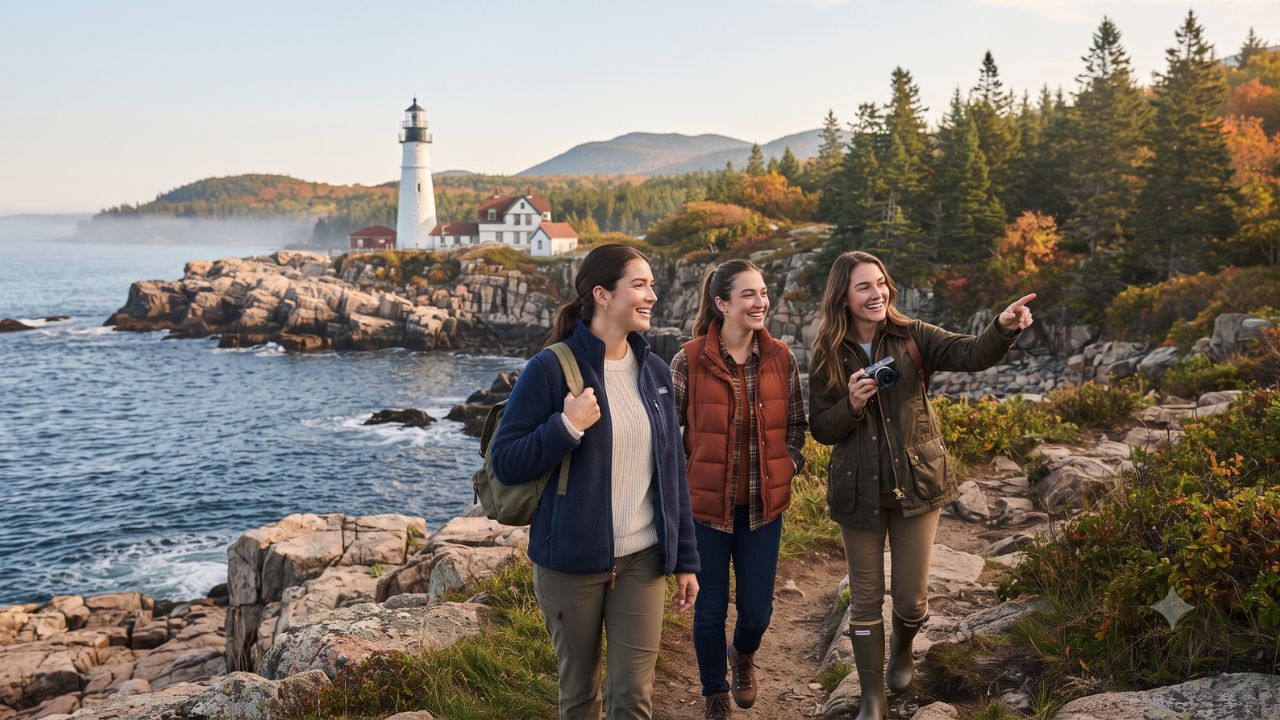
Generating over $9 billion in direct overnight visitor expenditures and delivering a total statewide economic impact surpassing $16 billion, Maine has leveraged outdoor recreation into a formidable engine of economic resilience. Official state tracking reveals that the influx of domestic and international travelers supports 29,863 specialized outdoor recreation jobs, while the domestic manufacturing of outdoor recreation equipment expanded 16.8% year-over-year to reach $311 million. From the working waterfronts and culinary quarters of Portland to the rugged alpine trail systems of Carrabassett Valley, Maine's strategic shift toward multi-day, experiential eco-tourism has successfully shielded its regional hospitality networks from macroeconomic volatility.
Rather than relying on brief summer sightseeing stops, the state has built an infrastructure capable of sustaining high traveler yields year-round. Overnight visitors now maintain an average stay duration of 4.6 nights, spreading lodging revenues across mid-week periods and extending seasonal profitability through autumn foliage and winter adventure cycles. By aligning public land management with strategic destination marketing, state agencies have turned natural geography into tax relief, saving resident households hundreds of dollars annually in municipal and state tax obligations.
The Strategic Shift: Transitioning Coastal Day-Trips into High-Yield Extended Stays
The cornerstone of Maine's contemporary visitor acquisition is its digital-first narrative managed under the "Forged by Nature" brand umbrella. Coordinated by the Maine Department of Economic and Community Development (DECD) and the Maine Office of Tourism, the state modernized its outreach to capture high-value out-of-state and international demographics. Analysis shows that more than 34% of active travelers cite online promotions, digital travel features, or social content as decisive factors prior to booking travel dates. Concurrently, digital activity bookings climbed by 35%, reflecting consumer demand for pre-arranged wilderness guide services, tidal kayaking expeditions, and backcountry ski permits.
Geographically, the state's commercial returns are anchored by two distinct, complementary hubs. In southern Maine, Portland acts as an international transit gateway and cultural base, pairing historic maritime infrastructure with celebrated culinary establishments that draw high-spending visitors. Further north in Franklin County, Carrabassett Valley—anchored by the Sugarloaf mountain massif—operates as an outdoor sports epicentre. The valley has gained international prominence as athletic competitions, alpine developments, and mountain biking networks attract overseas competitors and adventure travelers.
Federal land partnerships amplify this economic momentum. Data published by the National Park Service indicates that protected natural areas in Maine—headlined by Acadia National Park—generate nearly $500 million in direct annual visitor spending within local gateway communities, producing an aggregate local economic output approaching $770 million. These federal revenues directly fund natural resource preservation, trail maintenance, and wildlife corridor protection, establishing a circular economic framework where tourist foot traffic directly underwrites environmental conservation.
To sustain rural connectivity, federal-state financing mechanisms administered by the Northern Border Regional Commission (NBRC) provide crucial capital infusions. Through targeted grant mechanisms including the Catalyst, Forest Economy, and Timber for Transit programs, regional authorities have modernized rural roads, timber corridors, and public trailheads. These infrastructure upgrades allow smaller communities to absorb growing visitor numbers without overwhelming local road networks or degrading delicate ecological habitats.
Maine Outdoor Economy and Tourism Metrics: Fiscal Impact and Labor Benchmarks
A comprehensive examination of Maine's tourism and outdoor recreation sectors illustrates the scale of capital flowing into the state.
| Economic / Tourism Indicator | Recorded Performance & Volume | Structural Driver & Benchmark Context | Regional & Operational Impact |
|---|---|---|---|
| Direct Overnight Visitor Spending | Over $9 billion | Core leisure and adventure travel expenditure | Direct catalyst for retail, lodging, and food service businesses |
| Aggregate Statewide Economic Impact | Scaled past $16 billion | Comprehensive direct, indirect, and induced output | Broad economic multiplier across coastal and interior counties |
| Outdoor Industry Employment | 29,863 active professionals | Official state and federal economic accounts | Specialized guides, hospitality staff, resource technicians |
| Recreation Equipment Manufacturing | $311 million (+16.8% YoY) | Industrial gear, maritime craft, technical apparel | Rapid expansion of specialized manufacturing in Portland and interior hubs |
| Average Overnight Stay Duration | 4.6 nights | Exceeds national regional averages | Generates high mid-week lodging occupancy; buffers seasonal volatility |
| National Park Direct Spending | Nearly $500 million annually | Acadia and federal reserves | Drives $770 million in combined gateway economic output |
| Household Tax Burden Relief | Hundreds of dollars per household | Annual tax savings from tourist tax receipts | Offsets local property and municipal infrastructure tax burdens |
| Digital Activity Booking Growth | +35% increase | Mobile-first booking platforms and guide portals | High conversion from passive digital engagement to paid tours |
| Statewide Labor Stability | 3.2% unemployment; ~660,000 payrolls | Maine Department of Labor benchmarks | Provides dependable operational workforce for hospitality operators |
| Visitor Eco-Stewardship Rating | 95% to 98% strong recommendation | Longitudinal carrying-capacity surveys | Affirms traveler satisfaction with sustainable tourism practices |
Data compiled by Visit Maine reveals that the state's macroeconomic fundamentals reinforce this hospitality stability. The Maine Department of Labor reported a stable statewide unemployment rate of 3.2%, with nonfarm payroll employment remaining steady near 660,000 jobs. This low unemployment rate provides regional businesses with a dependable operational labor foundation, enabling operators in Portland and Carrabassett Valley to maintain consistent service standards even during peak winter and fall foliage seasons.
Crucially, visitor satisfaction remains exceptionally resilient despite expanding arrival numbers. State destination management surveys show that 95% to 98% of surveyed travelers strongly recommend Maine as an eco-conscious vacation destination. This high endorsement rate validates the state's use of carrying-capacity models, where visitor dispersal strategies steer traffic away from congested coastal choke points toward lesser-known inland waterways and mountain trails.
Expert Analysis: The Unit Economics of Gear Manufacturing and 4.6-Night Shoulder Yields
For travelers booking outdoor expeditions in Maine, the direct consequence is that travel logistics require far earlier commitment than in past decades. As average lengths of stay expand to 4.6 nights and digital activity reservations jump by 35%, premium guides, backcountry lodging, and boutique accommodations in Carrabassett Valley sell out months in advance of both ski and fall foliage seasons.
The commercial dynamic this creates means that Maine's tourism model is no longer reliant on disposable, low-margin day-trippers. An average stay of 4.6 nights fundamentally transforms hotel unit economics. It eliminates the operational friction of daily room turnover, stabilizes weekday food and beverage sales, and encourages visitors to venture beyond coastal Route 1 into interior mountain counties. By spreading visitor outlays across nearly five full days, tourism operators can justify paying higher wages to retain specialized outdoor guides, naturalists, and hospitality staff year-round.
Furthermore, the 16.8% surge in outdoor gear manufacturing to $311 million proves that Maine is successfully verticalizing its recreation economy. Travelers visiting Portland or the western mountains do not merely consume scenic views; they purchase technical cold-weather gear, handcrafted canoes, and specialized camping equipment manufactured locally. This industrial synergy ensures that visitor spending recirculates through domestic manufacturing supply chains rather than leaking out to national retailers.
The primary operational risk confronting Maine's tourism strategy is housing affordability for seasonal workers. In high-demand enclaves like Carrabassett Valley and coastal Portland, rapid short-term rental conversion has constrained the local residential housing supply. If service workers and outdoor guides are priced out of regional communities, the high service quality that underpins the state's 98% satisfaction rating could face strain. Nonetheless, through balanced NBRC infrastructure grants and carrying-capacity monitoring, Maine offers a textbook example of how a state can scale tourism revenue while safeguarding its ecological identity.
Key Takeaways
- $9 Billion Overnight Economy: Direct overnight tourist spending crossed $9 billion, driving Maine's aggregate statewide economic impact beyond $16 billion.
- Specialized Outdoor Labor Force: The outdoor recreation sector supports 29,863 jobs statewide, bolstered by a 16.8% increase in local outdoor gear manufacturing to $311 million.
- Extended Stays Flatten Volatility: Travelers stay an average of 4.6 nights, stabilizing mid-week hotel occupancy and spreading visitor expenditures into inland regions.
- Substantial Household Tax Relief: Robust tourism tax revenues save individual Maine resident households hundreds of dollars annually in state and municipal taxes.
- High Eco-Conscious Endorsement: Between 95% and 98% of surveyed visitors recommend Maine as a sustainable travel destination, demonstrating the success of carrying-capacity management.
FAQ: Maine Outdoor Tourism and Travel Economics 2026
What is the total economic impact of tourism in Maine?
Tourism delivers an aggregate economic output exceeding $16 billion across Maine, underpinned by over $9 billion in direct expenditures from overnight visitors.
How long does the average overnight visitor stay in Maine?
The average overnight traveler in Maine maintains a stay duration of 4.6 nights, allowing visitors to combine coastal hubs like Portland with inland adventure destinations like Carrabassett Valley.
How much do National Parks contribute to Maine's local economy?
National Park Service sites in Maine generate nearly $500 million in direct annual visitor spending, driving an aggregate local economic output approaching $770 million in surrounding communities.
Why is outdoor gear manufacturing growing in Maine?
Maine's outdoor recreation equipment manufacturing sector grew 16.8% to reach $311 million, driven by expanding international demand for locally crafted technical apparel, marine craft, and adventure gear.
[Maine's rise on the global travel stage proves that when pristine wilderness is paired with disciplined conservation and local manufacturing, outdoor recreation becomes an unbeatable economic engine.]
Related Travel Guides
- New York City Outpaces London, Melbourne, and Tokyo in Global Literary Tourism Index: Top 25 Ranking and Cultural Economics
- US October Heat Breaks Records in 2026: Autumn Foliage Delays, Great Lakes Gusts, and National Park Travel Planning
- Carrabassett Valley and Portland Maine Outdoor Recreation Expedition Guide 2026
Disclaimer
This article is for informational and educational purposes only. It does not constitute legal, financial, or professional advice. While we strive to provide accurate and up-to-date information, travel policies, regulations, and conditions change rapidly. Always verify information with official sources before making travel decisions. Nomad Lawyer makes no representations about the accuracy, reliability, completeness, or suitability of the information provided. Readers should consult qualified professionals for advice specific to their circumstances. The views expressed in this article are those of the author and do not necessarily reflect the views of Nomad Lawyer.
Kunal K Choudhary
Co-Founder & Contributor
A passionate traveller and tech enthusiast. Kunal contributes to the vision and growth of Nomad Lawyer, bringing fresh perspectives and driving the community forward.
Learn more about our team →