
Louisiana Tourism Surges for Seven Consecutive Months: $10.8 Billion Metropolitan Spending, New Orleans Air Hub, and Rural Decentralization
An editorial analysis of Louisiana's seven-month tourism surge in 2026, evaluating $10.8 billion in urban spending, 5.08 million MSY air passengers, and rural parish hospitality growth.

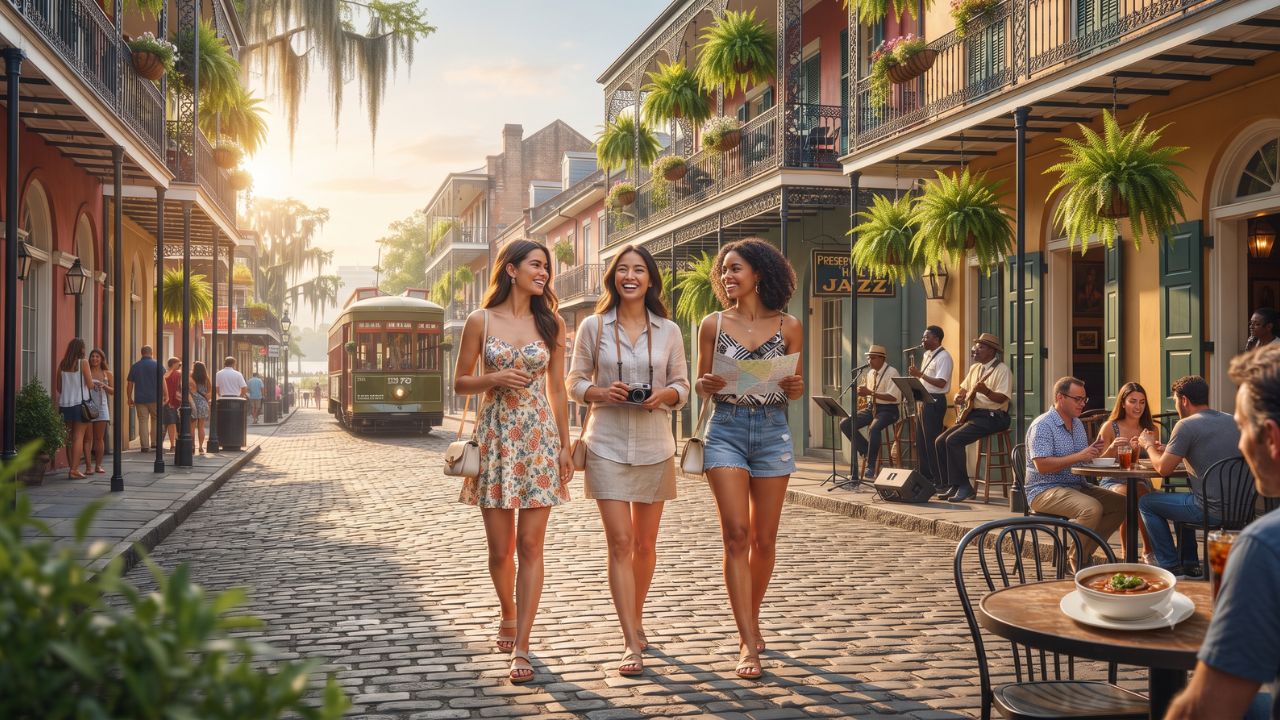
Sustaining seven consecutive months of record-breaking visitation gains across 2026 and driving metropolitan traveler spending north of $10.8 billion at an average daily outlay of $303 per person, Louisiana has demonstrated how aggressive geographic decentralization can transform a state visitor economy. Rather than confining tourist capital within the traditional municipal boundaries of New Orleans, state promotional frameworks spearheaded by Lieutenant Governor Billy Nungesser have channeled leisure travel into rural bayou parishes and secondary gaming corridors like Lake Charles. The policy shift has stabilized over 6,200 rural hospitality jobs while lifting statewide nonfarm payrolls past 2.01 million positions—a year-over-year net expansion of more than 16,700 jobs anchored by leisure, trade, and hospitality.
The economic resilience of the Bayou State is underpinned by exceptional community endorsement and sustained aviation volume. Between January and May 2026, Louis Armstrong New Orleans International Airport (MSY) handled approximately 5.08 million passengers, funneling high-yield out-of-state travelers into regional transit networks. Concurrently, regional research captured in the Southwest Louisiana Resident Sentiment Study revealed that 91% of surveyed residents view tourism as an overwhelming positive force, with 80% acknowledging its direct role in financing civic infrastructure. By balancing mega-event cultural draws with wetland conservation and culinary trails, Louisiana has created an enduring blueprint for post-pandemic destination management.
Strategic Decentralization: Diverting Traveler Traffic from Bourbon Street to Rural Parishes
The operational core of the 2026 surge stems from the state's flagship "Year of Outdoors" campaign. Executed by the Louisiana Office of Tourism, the initiative was conceived to relieve carrying-capacity pressure on historic downtown New Orleans while stimulating capital investment across under-visited rural districts. State marketing redirected travelers into state parks, wildlife management areas, and navigable waterways, producing a 15% year-over-year increase in guided wetland excursions and kayak eco-tours.
Cultural mega-events continue to anchor the state's international profile. Peak Carnival celebrations in New Orleans attracted approximately 1.2 million out-of-state visitors—a 20% surge over prior festival cycles—while downtown districts registered over 2.2 million localized visits. According to destination reporting from New Orleans & Company, the event generated multi-million-dollar windfalls in local sales and hotel occupancy taxes. However, the critical operational evolution in 2026 has been the post-festival dispersal: travelers increasingly pair three days of urban festivities with four days of self-drive exploration through the Cajun country parishes of Lafourche, Terrebonne, and Iberia.
In Southwest Louisiana, Calcasieu Parish has emerged as a major regional tourism engine. Centered on Lake Charles, the destination welcomed roughly 7.5 million visitors across the annual cycle, generating close to $900 million in direct annual visitor spending through its mix of casino resorts, coastal marsh tours, and regional music festivals. The region's economic model proves that secondary markets can capture substantial visitor spending when luxury gaming amenities are paired with authentic outdoor recreation.
State preservation grants have simultaneously fortified cultural heritage assets. State funding supports the active maintenance of more than 450 registered historic structures currently open for public heritage tours, ensuring that Creole plantations, historic churches, and historic musical halls maintain physical integrity while generating ongoing admissions revenue.
Louisiana Tourism and Hospitality Matrix: Regional Spending, Demographics, and Transit Benchmarks
Evaluating the state's tourism performance reveals how capital distributes across urban centers, airport gateways, culinary routes, and family travel parties.
| Economic & Tourism Metric | Recorded Volume / Performance | Comparative Growth & Demographic Context | Operational Significance |
|---|---|---|---|
| Consecutive Growth Window | 7 successive months in 2026 | Historic uninterrupted expansion | Consistent seasonal performance across shoulder months |
| Metropolitan Visitor Spending | North of $10.8 billion | Urban hubs (New Orleans, Baton Rouge) | High daily per-capita expenditure averaging $303/person |
| Lake Charles / Calcasieu Parish | Approx. 7.5M visitors / ~$900M spending | Gaming, golf, and coastal bayou tours | Second-largest visitor economic cluster in the state |
| MSY Airport Passenger Volume | 5.08 million passengers | January–May 2026 operational window | Primary international and domestic flight gateway |
| Mardi Gras Peak Out-of-State Crowds | Approx. 1.2 million visitors | +20% surge over previous cycles | Downtown recorded 2.2M+ localized visits |
| Culinary Tourism Expenditure | 32% of total out-of-state spend | Signature gumbo, boudin, and seafood trails | Direct fiscal support for independent restaurants and markets |
| Multi-Generational Travel Parties | Nearly 45% of total visitor volume | Outspends solo travelers by 2.4x margin | Drives high-occupancy suite bookings and group tour operators |
| Rural Hospitality Job Creation | Over 6,200 projected positions | Direct employment across rural parishes | Decentralization spreads payroll into non-urban economies |
| Statewide Nonfarm Employment | Broke past 2.01 million jobs | +16,700 jobs YoY (anchored by leisure) | Demonstrates broader macroeconomic stability |
| Repeat Visitor Affluence | Average household income: $124,646 | Tracked during National Travel Week audits | Insulates the hospitality sector from national economic dips |
| Resident Tourism Sentiment | 91% view tourism as positive | 80% cite infrastructure; 71% cite business growth | High civic pride protects host-community cultural authenticity |
Culinary exploration serves as the most potent economic multiplier in the regional ledger. Food and beverage outlays represent approximately 32% of all out-of-state tourist expenditures. From Creole fine dining in the French Quarter to roadside crawfish boils and boudin trails in Acadiana, gastronomic tourism directs money directly into family-owned purveyors, commercial fishing docks, and agricultural cooperatives.
Demographic tracking conducted during National Travel Week confirms that Louisiana benefits from an exceptionally loyal, affluent visitor base. Repeat travelers represent a dominant proportion of travel groups, exhibiting an average household income benchmark of $124,646. Furthermore, multi-generational family parties and organized travel groups comprise nearly 45% of total travel volume, with aggregate group spending outpacing solo travelers by a multiple of 2.4 times.
Expert Analysis: The Unit Economics of Culinary Trails and Multi-Generational Group Yields
For travelers planning a Louisiana itinerary, the direct consequence is that travel costs are increasingly dictated by dining reservations and regional vehicle rental availability rather than basic hotel rates alone. With culinary spending capturing 32% of all out-of-state budgets and group travel accounting for nearly 45% of total volume, popular Creole restaurants and specialized swamp tours require booking weeks in advance, especially during the spring and autumn festival calendars.
The pricing pressure this creates means that metropolitan hotel rates in New Orleans—supported by the $303 daily per-person spending baseline—remain resilient against broader national discount trends. However, families traveling in groups can optimize their travel budgets by establishing secondary lodging bases in communities like Lafayette, Houma, or Lake Charles. By splitting an itinerary between an urban weekend and several days in rural parishes, travelers can access $900 million entertainment hubs while bypassing peak French Quarter parking fees and lodging surcharges.
Operationally, the throughput of 5.08 million passengers across the first five months of 2026 at MSY airport demonstrates that airline seat capacity is keeping pace with regional demand. However, because Louisiana's tourism model now depends heavily on onward road travel into surrounding wetlands and historic plantations, ground transportation networks face periodic bottlenecks. Car rental rates at MSY can spike during major convention weeks and festival weekends, creating an operational challenge for international visitors attempting self-drive itineraries through rural parishes.
The true strength of Louisiana's model lies in its 91% local resident approval rating. In an era when overtourism sparks regulatory backlash across European capitals, Louisiana's community-backed strategy proves that when tourism revenues directly fund local municipal infrastructure and support over 6,200 rural jobs, residents actively protect the cultural authenticity that draws global travelers in the first place.
Key Takeaways
- Unprecedented Seven-Month Surge: Louisiana recorded seven consecutive months of record visitor growth in 2026, pushing urban visitor spending above $10.8 billion at $303 per person daily.
- Massive Aviation Gateway Influx: Louis Armstrong New Orleans International Airport (MSY) handled 5.08 million passengers between January and May 2026.
- Mardi Gras Attendance Record: Out-of-state Carnival attendance reached 1.2 million (+20% surge), driving over 2.2 million localized downtown visits in New Orleans.
- Lake Charles Regional Powerhouse: Calcasieu Parish welcomed approximately 7.5 million visitors, generating close to $900 million in direct annual economic output.
- High-Yield Gastronomic Tourism: Culinary activities account for 32% of visitor expenditures, while group travel represents 45% of volume and outspends solo travelers 2.4-fold.
FAQ: Louisiana Tourism Surge 2026
What caused Louisiana's historic tourism surge in 2026?
The growth was driven by the "Year of Outdoors" campaign, strategic decentralization into rural parishes by Lieutenant Governor Billy Nungesser, record Mardi Gras attendance, and expanding ecotourism.
How much do tourists spend in Louisiana?
Metropolitan visitor spending surpassed $10.8 billion with travelers averaging $303 per day, while regional hubs like Lake Charles generated nearly $900 million in direct annual expenditures.
How many passengers used New Orleans Airport in early 2026?
Louis Armstrong New Orleans International Airport (MSY) processed approximately 5.08 million passengers between January and May 2026, reflecting steady passenger distribution across the South.
What percentage of visitor spending goes to food in Louisiana?
Culinary tourism represents roughly 32% of total out-of-state visitor spending, supported by signature seafood markets, boudin trails, and Creole dining institutions.
[By turning regional culinary heritage and cypress wetlands into engines of rural job creation, Louisiana has proven that the future of cultural tourism lies far beyond the city limits.]
Related Travel Guides
- Maine Outdoor Tourism Surges to $9 Billion in Visitor Spending: Portland, Carrabassett Valley, and Gear Manufacturing Lead Global Growth
- New York City Outpaces London, Melbourne, and Tokyo in Global Literary Tourism Index: Top 25 Ranking and Cultural Economics
- New Orleans to Lake Charles Cajun Country Food and Swamp Tour Road Trip Guide 2026
Disclaimer
This article is for informational and educational purposes only. It does not constitute legal, financial, or professional advice. While we strive to provide accurate and up-to-date information, travel policies, regulations, and conditions change rapidly. Always verify information with official sources before making travel decisions. Nomad Lawyer makes no representations about the accuracy, reliability, completeness, or suitability of the information provided. Readers should consult qualified professionals for advice specific to their circumstances. The views expressed in this article are those of the author and do not necessarily reflect the views of Nomad Lawyer.
Kunal K Choudhary
Co-Founder & Contributor
A passionate traveller and tech enthusiast. Kunal contributes to the vision and growth of Nomad Lawyer, bringing fresh perspectives and driving the community forward.
Learn more about our team →