
Madison Wisconsin Lakeside Trails Conservation Parks Guide 2026

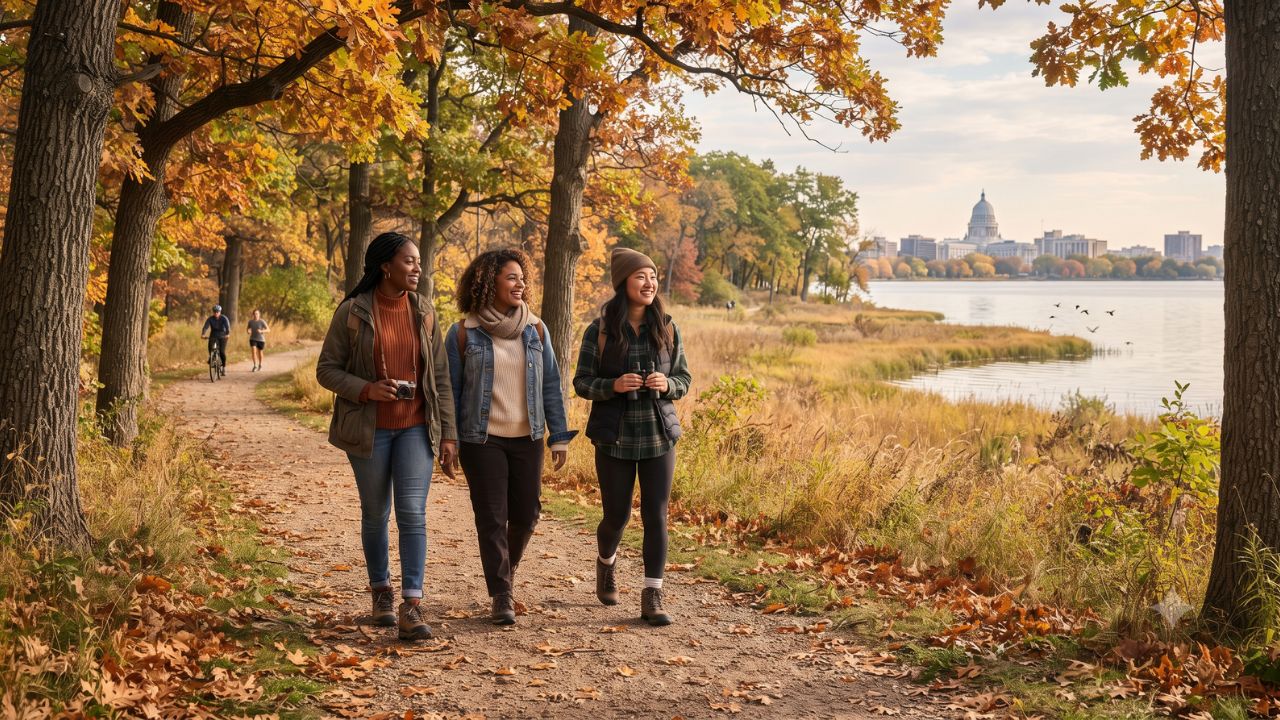
Madison is one of only two major North American cities built directly on an isthmus, yet while millions visit the granite Capitol dome and university campus, few realize the municipal boundaries safeguard over 1,600 acres of dedicated conservation parkland. Positioned between Lake Mendota and Lake Monona, Wisconsin's capital seamlessly integrates oak savannas, Ice Age geological moraines, sacred effigy mounds, and centuries-old wetlands just minutes from downtown sidewalks.
For travelers who prefer slow exploration over standard tourist loops, stepping away from the central Capitol Square reveals quiet shorelines, adaptive-reuse industrial hubs, and wildlife sanctuaries. From walking beneath towering bur oaks to sampling farm-to-table cuisine in a restored century-old mill, Madison offers an intimate Midwestern escape rooted in civic environmentalism.
Six Quiet Outdoor and Cultural Sanctuaries in Madison
Rather than treating the lakes merely as a scenic backdrop, Madison's municipal network connects urban neighborhoods to restored prairie and wetland habitats.
| Sanctuary / Site | Setting & Geography | Key Natural / Cultural Feature | Best Season & Activity |
|---|---|---|---|
| Turville Point Conservation Park | South shore of Lake Monona | 2.3 miles of trails under old-growth white & bur oaks | Spring wildflowers, autumn foliage, winter Nordic skiing |
| Cherokee Marsh Natural Resource Area | Upper Yahara River basin | Vast freshwater wetland & peat basin | Early morning birdwatching & boardwalk nature walks |
| Governor Nelson State Park | Northwest shore of Lake Mendota | 8+ miles of trails, sandy beach, effigy mounds | Lake swimming, sailing launches, cultural heritage hikes |
| Garver Feed Mill | East side near Starkweather Creek | Restored 100-year-old agricultural mill & food hall | Dane County Winter Farmers' Market & craft dining |
| Olbrich Botanical Gardens | Lake Monona east corridor | Bolz Conservatory indoor tropical biome & butterflies | Year-round tropical escape, exotic orchids, outdoor gardens |
| Owen Conservation Park | West side glacial ridge | Restored tallgrass prairie & Ice Age hill formations | Deer and wild turkey tracking, sunset photography |
Exploring Madison's Natural and Heritage Sanctuaries
Each of these preserved spaces provides a distinct window into Wisconsin's native ecosystems and agricultural history.
Turville Point Conservation Park
Situated just across the water from downtown high-rises on Lake Monona, Turville Point contains 2.3 miles of soft-surface trails winding through mature oak woodlands and open prairie clearings. Red, bur, and white oaks canopy the trails, sheltering spring ephemerals like bloodroot and trillium. Connected directly to Olin Park's parking and facilities, the reserve provides open shoreline views back toward the city skyline. During winter months with adequate snowfall, park staff groom the trails for free public cross-country skiing, turning the forest into a quiet snowshoeing retreat.
Cherokee Marsh Natural Resource Area
Covering extensive ground in northern Madison along the Yahara River inlet, Cherokee Marsh forms the largest remaining wetland complex in Dane County. The city began acquiring and protecting this critical watershed in the late 1960s to safeguard regional water quality and waterfowl nesting grounds. Visitors moving along the boardwalks and unpaved footpaths encounter tallgrass prairie, sedge meadows, and open water channels where sandhill cranes, herons, and migratory songbirds congregate.
Governor Nelson State Park
Perched along the northwestern rim of Lake Mendota, this state park offers expansive panoramic views back toward the Madison skyline and Capitol dome. Managed by the Wisconsin Department of Natural Resources, the 422-acre park features more than eight miles of walking trails, a 500-foot sand swimming beach, boat launches, and two accessible wildlife viewing platforms.
A primary cultural highlight is the Woodland Trail, which winds past ancient Native American effigy mounds shaped like animals and panthers, built over a millennium ago by Late Woodland cultures. Visitors must hold a valid Wisconsin state park vehicle admission sticker to access the grounds.
Garver Feed Mill
Standing on Madison's east side, the Garver Feed Mill represents a masterclass in agricultural preservation. Built in the early 20th century to process sugar beets and livestock feed, the sprawling brick industrial facility was meticulously restored into an artisan commerce hub.
Today, the historic complex houses micro-bakers, craft pizza artisans, regional coffee roasters, and wellness studios. During colder months from November through April, the venue hosts the indoor Dane County Winter Farmers' Market on Saturday mornings, allowing visitors to purchase artisan cheeses, heirloom root vegetables, and Wisconsin maple syrup directly from local producers.
Olbrich Botanical Gardens and Bolz Conservatory
Adjacent to Starkweather Creek, Olbrich Botanical Gardens operates through a public-private partnership between City of Madison Parks and the Olbrich Botanical Society. While the outdoor sunken gardens and Thai Pavilion draw summer crowds, the true year-round retreat is the Bolz Conservatory. Housed inside a 50-foot glass pyramid, this indoor tropical environment maintains an 80-degree climate filled with free-flying birds, cascading waterfalls, tropical fruit trees, and seasonal butterfly releases.
Owen Conservation Park
Tucked into Madison's western residential hills, Owen Conservation Park preserves native tallgrass prairie and oak savanna situated on terrain sculpted by the last glacial retreat. Unpaved footpaths climb rolling glacial hills where prairie grasses turn amber each October. The quiet grounds provide refuge for white-tailed deer, pileated woodpeckers, and wild turkeys.
What Makes Madison's Isthmus Geography Distinctive
Madison's physical layout is unique among American state capitals. The downtown district is compressed onto a narrow strip of land barely eight blocks wide between Lake Mendota and Lake Monona. This geographical boundary prevented suburban sprawl from consuming central waterfronts, prompting civic leaders in the mid-20th century to designate interconnected greenways and conservation zones.
As promoted by Destination Madison, the city balances vibrant university energy with accessible outdoor recreation. Over 200 miles of paved multi-use bike paths link neighborhoods directly to state trails and wildlife preserves, allowing travelers to navigate the entire city without relying on highway transit.
Visitor Insider Tips
- Walk Turville Point at Golden Hour: Visit Turville Point roughly one hour before sunset. The western-facing shorelines near Olin Park yield stunning reflections of the State Capitol dome illuminated across Lake Monona.
- Respect Effigy Mound Boundaries: When hiking the Woodland Trail at Governor Nelson State Park, stay strictly on designated dirt paths. The ancient effigy mounds are sacred burial and ceremonial earthworks protected by state and tribal preservation laws.
- Cycle the Capital City Trail to Garver Feed Mill: Skip driving and rent a Madison BCycle electric bike downtown. The paved Capital City Trail connects directly to the east side, leading straight to Garver Feed Mill and Olbrich Gardens with dedicated bike parking.
- Bring Binoculars to Cherokee Marsh at Dawn: Early morning hours offer the best birdwatching at Cherokee Marsh, particularly during spring and autumn migration when rare warblers and raptors hunt along the sedge meadows.
- Combine Bolz Conservatory with Winter Market Visits: On chilly winter Saturdays, pair a morning trip to the indoor farmers' market at Garver Feed Mill with a stroll through the warm tropical glasshouse at Olbrich Gardens.
Cultural and Environmental Context
The land encompassing Madison and the Four Lakes region—traditionally known as Teejop—is the ancestral homeland of the Ho-Chunk Nation, who have inhabited these shorelines for over 12,000 years. The conical and effigy earthworks scattered throughout Dane County represent the highest concentration of preserved prehistoric mounds in North America. Preserving these sites requires ongoing collaboration between city park naturalists, state heritage officers, and tribal preservation leaders.
Simultaneously, Madison's conservation park system plays a critical role in regional water management. Restored wetlands in Cherokee Marsh naturally filter runoff before it enters the Yahara River chain, mitigating seasonal flooding and algae blooms. By practicing strict leave-no-trace ethics and supporting sustainable local businesses in adaptive heritage structures like Garver Feed Mill, travelers help protect this unique Midwestern environmental legacy.
FAQ: Exploring Nature in Madison 2026
Do visitors need permits to hike in Madison conservation parks?
No permits or entry fees are required for city conservation parks like Turville Point, Cherokee Marsh, or Owen Park; entry is free and open daily from dawn to dusk.
Does Governor Nelson State Park require a vehicle pass?
Yes, a valid Wisconsin State Park vehicle admission sticker or daily pass is required for all vehicles entering Governor Nelson State Park.
Is Garver Feed Mill open to the public year-round?
Yes, Garver Feed Mill operates daily with public dining, bakeries, artisan retail, and seasonal indoor community markets on Saturdays.
How warm is the Bolz Conservatory inside Olbrich Gardens?
The Bolz Conservatory maintains a constant tropical temperature between 65°F and 80°F with high humidity, making it an ideal retreat during winter weather.
Related Travel Guides
- Michigan Ten Great Lakes Towns 48-Hour Escapes Guide 2026
- Washington State Autumn Travel Yakima Valley Harvest Guide 2026
- Anchorage Make It Alaskan Market Autumn Crafts Guide 2026
Wandering through Madison's quiet oak savannas and historic lakeside mills reveals that Wisconsin's capital is shaped not merely by politics, but by an enduring love for wild water and living land.
Disclaimer
This article is for informational and educational purposes only. It does not constitute legal, financial, or professional advice. While we strive to provide accurate and up-to-date information, travel policies, regulations, and conditions change rapidly. Always verify information with official sources before making travel decisions. Nomad Lawyer makes no representations about the accuracy, reliability, completeness, or suitability of the information provided. Readers should consult qualified professionals for advice specific to their circumstances. The views expressed in this article are those of the author and do not necessarily reflect the views of Nomad Lawyer.
Raushan Kumar
Founder & Lead Developer
Full-stack developer with 11+ years of experience and a passionate traveller. Raushan built Nomad Lawyer from the ground up with a vision to create the best travel and law experience on the web.
Learn more about our team →