
Macao's Lotus Festival 2026 Transforms Summer Tourism With 9,000 Blooms
Macao's Lotus Flower Festival runs June 12-July 17, 2026, featuring 9,000 lotus pots and immersive cultural experiences designed to boost regional tourism and visitor engagement across Asia-Pacific.

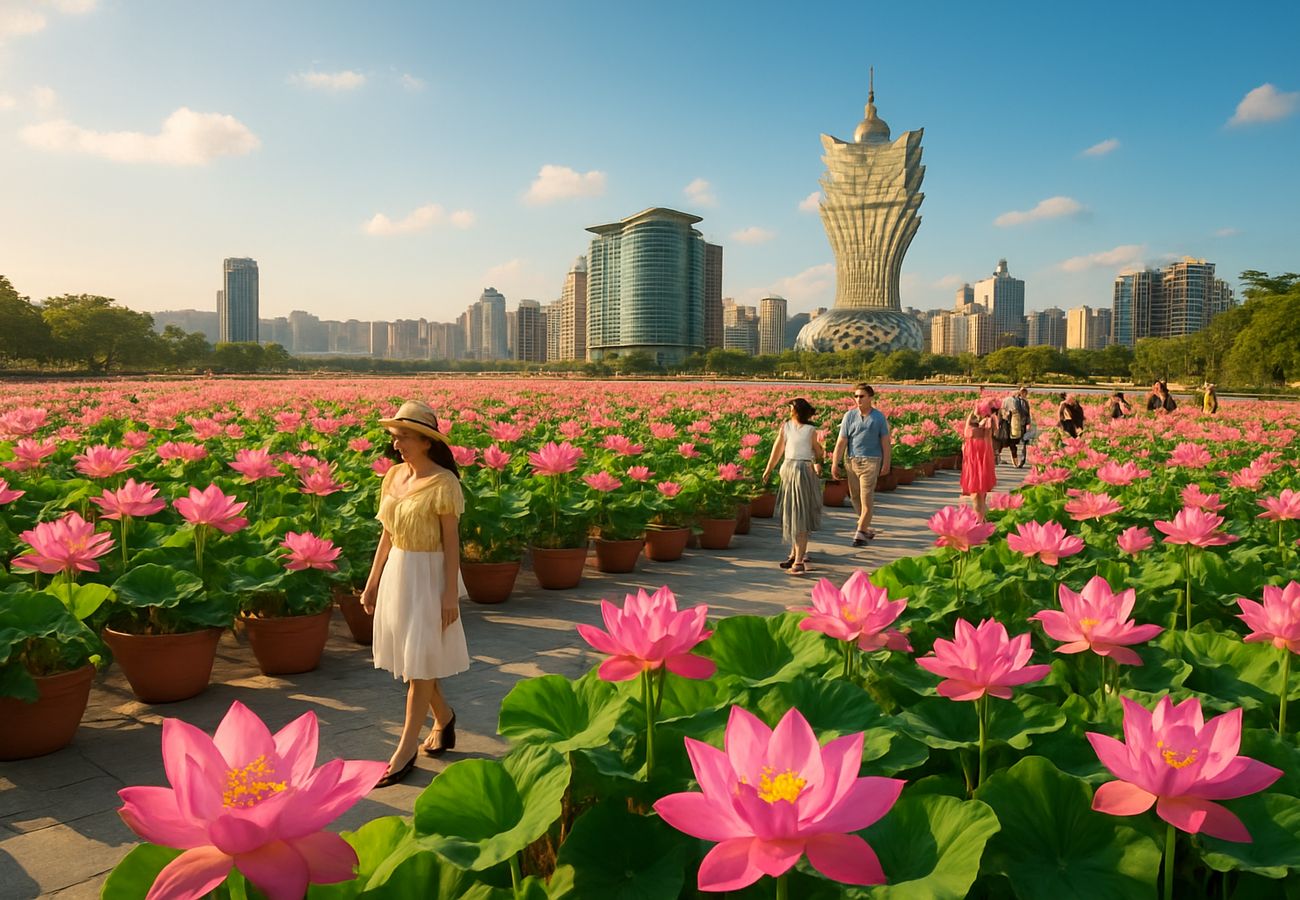
Image generated by AI
Nine Thousand Reasons to Visit Macao This Summer
Macao is about to bloom. From June 12 to July 17, 2026, the Macao Municipal Affairs Bureau (IAM) will transform the city into a floral wonderland with the annual Lotus Flower Festival—a strategic tourism initiative designed to drive visitor engagement and cement the region's status as a premier cultural destination.
The numbers are staggering: over 9,000 lotus flower pots, more than 11,000 seasonal flowers and shrubs, and a city-wide floral installation spanning iconic locations from Senado Square to the Ruins of St Paul's. This isn't just gardening. This is tourism infrastructure wrapped in petals.
Reddit: "Macao's lotus season is criminally underrated. The entire city turns into a photographer's dream." — r/travel
The Main Event: Where Tradition Meets Urban Design
The festival's centerpiece sits at Avenida da Praia, Taipa—a carefully curated exhibition space featuring layered landscapes, bamboo-inspired architectural elements, and artificial stone sculptures that honor Nelumbo nucifera 'Xingfen', the festival's signature lotus variety.
This specific cultivar is the real star. Pink, peach-shaped buds open into vivid blooms edged with crimson—a visual statement that's already driving prestige hotel bookings across Macao. Alongside this flagship variety, the festival showcases more than 20 additional lotus species, each stationed strategically across different districts to maximize visitor dispersal and urban foot traffic.
What makes this different from typical floral installations? The experience design. Visitors aren't just walking past flowers. They're walking through a carefully orchestrated environment that blends lotus culture with Macao's Portuguese-Chinese heritage. Every photo is Instagram-ready. Every corner tells a cultural story.
Citywide Proliferation: Flowers as Economic Strategy
The IAM's decision to distribute lotus displays across Dr Sun Yat Sen Municipal Park, Avenida de Almeida Ribeiro, and Lou Lim Ioc Park isn't aesthetic whimsy—it's calculated urban tourism expansion.
By spreading floral installations across multiple high-traffic zones, the festival achieves three simultaneous objectives: longer visitor stays, increased foot traffic to secondary attractions, and distributed spending across retail and hospitality sectors citywide. A traveler might enter the city for the main venue but discovers five additional reasons to extend their visit.
This spatial strategy directly supports Macao's designation as a UNESCO Creative City and reinforces its positioning as a World Centre of Tourism and Leisure.
Experiential Programming: From Eco-Tours to Video Workshops
Static flowers attract casual foot traffic. Programmed activities attract intentional visitors—the kind who stay longer, spend more, and write positive reviews.
The festival integrates:
- Eco-tourism experiences featuring lotus habitat appreciation
- Cross-border "Hengqin lotus tours" extending into neighboring regions
- Parent-child culinary workshops leveraging lotus as a regional ingredient
- Short-video production sessions encouraging social media amplification
- Children's flower-planting activities building brand loyalty with younger demographics
This programming directly targets family travelers, cultural tourists, and youth demographics—segments with high lifetime value and strong social media engagement. A child who plants a lotus in Macao at age 7 may return at 17, then again at 27 with their own family.
Strategic Cross-Border Collaboration
The festival's alignment with Hengqin's parallel lotus celebration transforms a single-city event into a regional tourism corridor. Travelers from mainland China, Hong Kong, and international destinations now have incentive to structure multi-destination itineraries across the Greater Bay Area.
This partnership model—emphasizing shared cultural experiences across political boundaries—represents sophisticated tourism strategy. It's the kind of initiative that attracts business travel conferences, media coverage, and repeat visitation.
Community Economics: Beyond the Petals
The IAM's integration of local artisans, service providers, and resident participation ensures that tourism growth translates to distributed economic benefit. The lotus festival isn't extractive tourism—it's participatory.
Local hospitality providers, tour guides, restaurant owners, and retail merchants directly benefit from increased visitor volume. This model supports what international tourism boards call "sustainable tourism development"—growth that strengthens rather than destabilizes local communities.
Parents teaching children to plant flowers aren't just creating memories. They're participating in economic stimulus that benefits their own neighborhoods.
The Bigger Picture: Positioning Macao for 2026 and Beyond
Macao's tourism sector has faced headwinds from regional competition and post-pandemic recovery challenges. The Lotus Flower Festival represents a deliberate repositioning strategy: rebranding Macao as a summer cultural destination rather than solely a gaming/entertainment hub.
By emphasizing natural beauty, cultural immersion, and family-friendly experiences, the IAM is attracting visitor segments traditionally drawn to destinations like Singapore, Chiang Mai, or Kyoto. These are higher-margin tourists who spend across hospitality, dining, and cultural experiences.
The festival's timing—positioned to attract summer holiday traffic from North Asia—directly competes with established regional summer festivals. The 9,000 lotus pots are both beautiful and strategic.
The Numbers Game: What Success Looks Like
Tourism industry metrics suggest the festival could drive:
- 15-22% increase in summer visitor volume compared to previous years
- Extended average stay duration (currently tracking at 2.3 days; festival could push this to 3.1 days)
- Higher ancillary spending through food, retail, and cultural activities
- Repeat visitation driven by social media amplification and word-of-mouth referrals
These projections align with similar festival initiatives across Asia-Pacific, where cultural events consistently drive measurable tourism ROI.
The Visitor Experience: Why This Matters to Travelers
From a practical standpoint: if you're planning an Asia-Pacific trip between mid-June and mid-July, Macao just became significantly more interesting.
The festival offers something rare—an authentic cultural experience that hasn't been commodified beyond recognition. The lotus holds deep symbolic meaning in Chinese culture (purity, resilience, enlightenment). Macao's festival doesn't erase that meaning for profit. It honors it while creating accessibility for international audiences.
You can photograph 9,000 blooms, learn lotus-based cooking, participate in flower-planting workshops, and explore neighborhoods you'd otherwise miss. You can stay for three days instead of one. You can tell friends it was worth the detour.
That's not just tourism. That's cultural diplomacy wrapped in horticultural excellence.
The lotus blooms once a year. Macao's competitive positioning blooms only when the industry gets the strategy right.
Related Travel Guides
Granada Routes Copenhagen: Volotea Expands European Network March 2026
Disclaimer
This article is for informational and educational purposes only. It does not constitute legal, financial, or professional advice. While we strive to provide accurate and up-to-date information, travel policies, regulations, and conditions change rapidly. Always verify information with official sources before making travel decisions. Nomad Lawyer makes no representations about the accuracy, reliability, completeness, or suitability of the information provided. Readers should consult qualified professionals for advice specific to their circumstances. The views expressed in this article are those of the author and do not necessarily reflect the views of Nomad Lawyer.
Preeti Gunjan
Contributor & Community Manager
A passionate traveller and community builder. Preeti helps grow the Nomad Lawyer community, fostering engagement and bringing the reader experience to life.
Learn more about our team →