
Luis Muñoz Marín Airport Chaos: 28 Delays and 10 Cancellations Hit JetBlue, Frontier, Southwest in June 2026
Travel chaos erupts at Puerto Rico's Luis Muñoz Marín International Airport as 28 flights delayed and 10 cancelled across Caribbean and US routes affecting JetBlue, Frontier, Southwest, and regional carriers.

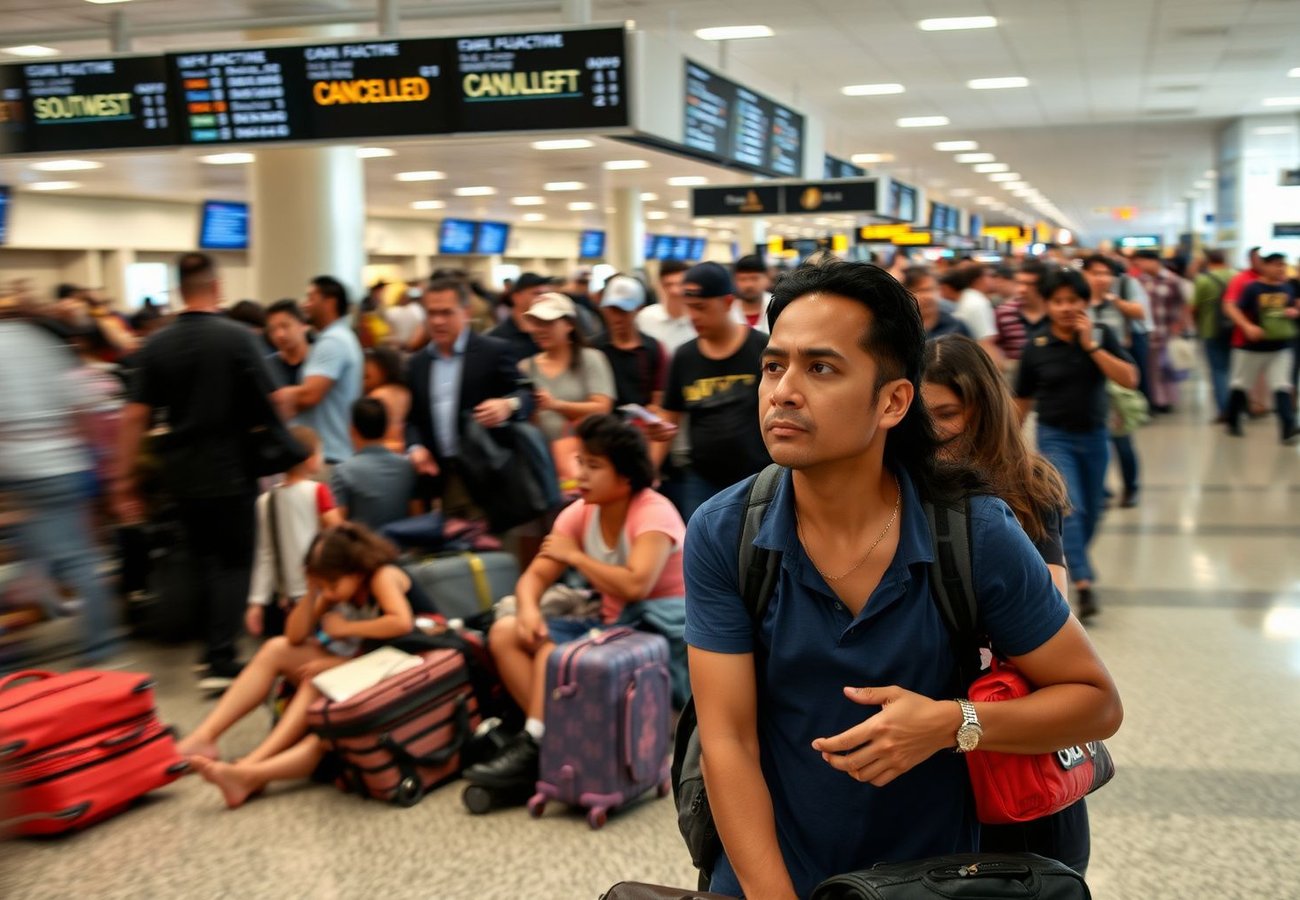
Image generated by AI
Travel Nightmare Unfolds at Puerto Rico's Busiest Hub
Luis Muñoz Marín International Airport descended into operational chaos on June 5, 2026, as 28 flights were delayed and 10 others cancelled across regional and international routes. The disruptions rippled through the Caribbean and continental United States, leaving thousands of passengers stranded or scrambling to rebook flights to critical destinations.
Multiple carriers faced operational meltdowns simultaneously. JetBlue, Frontier Airlines, Southwest Airlines, United Airlines, Tradewind Airways, InterCaribbean Airways, Avianca, Cape Air, and Air Cargo Carriers all reported significant service interruptions. The scale and simultaneity of these failures suggested systemic airport or network-wide issues rather than isolated airline problems.
Reddit: "Got stuck at SJU for 6 hours on a Frontier flight to Miami. No updates, no compensation offers. Total nightmare." — r/travel
Regional Carriers Hit Hardest: The Vulnerability Gap
The data reveals a stark disparity in operational resilience. InterCaribbean Airways reported a catastrophic 28% cancellation rate, while Tradewind Airlines saw 11% of flights cancelled. These small regional carriers, which dominate Caribbean connectivity, proved far more vulnerable to disruptions than their larger competitors.
Frontier Airlines recorded 2 cancellations with a 10% delay rate, while JetBlue and Air Cargo Carriers accounted for the largest share of delayed flights across their respective networks. Cape Air, Southwest, United, and Avianca each contributed varying degrees of operational chaos, with delay percentages ranging from 3% to 16%.
This pattern underscores a critical vulnerability in Caribbean air travel infrastructure: when major hubs experience disruptions, smaller carriers operating thin-margin routes collapse first. Unlike JetBlue or Southwest, which can reroute passengers through alternative hubs, regional carriers often operate single or limited flight frequencies on each route.
The Geographic Cascade: 15+ Airports and 5 Countries Affected
The disruptions didn't stop at San Juan. The chaos rippled outward across an interconnected network spanning five countries:
Origin airports impacted included Orlando International (MCO), John F. Kennedy International (JFK), Chicago O'Hare (ORD), Houston Bush Intercontinental (IAH), Fort Lauderdale International (FLL), Tampa International (TPA), Reagan National (DCA), and El Dorado International in Bogotá (BOG).
Destination airports experiencing inbound disruptions included Punta Cana International (PUJ), Gustaf III in Saint Barthélemy (SBH), Cyril E. King in Saint Croix (STX), Henry E. Rohlsen (STX), Terrance B. Lettsome in Tortola (EIS), and Virgin Gorda (VIJ).
The affected cities spanned from Washington D.C. and Chicago to Bogotá, Punta Cana, and the entire US Virgin Islands. For travelers connecting through San Juan to onward destinations across the Caribbean, the delays multiplied exponentially—a 3-hour delay in Puerto Rico could trigger missed connections in Tortola or Bogotá.
Route-by-Route Analysis: Where the Pain Was Worst
The 33% cancellation rate on Virgin Gorda routes essentially suspended service to one of the region's key business and leisure destinations. The 28% InterCaribbean cancellation rate devastated travelers on routes connecting Puerto Rico to Dominican Republic and British Virgin Islands destinations.
Longer-haul delays hit Chicago O'Hare, Punta Cana, and Cyril E. King particularly hard, suggesting fleet rotation or crew scheduling issues compounding the initial disruptions. Passengers on Caribbean island-to-island flights faced the highest cancellation risk, while those on US mainland routes experienced systematic delays rather than outright cancellations.
The data indicates that Puerto Rico functions as a critical hub for US-Caribbean connectivity. When this hub experiences disruptions, the entire region's air traffic becomes vulnerable—a lesson major airport operators continue to grapple with.
What Stranded Passengers Need to Know
If your flight was affected, here's your action plan:
Immediate steps: Contact your airline immediately if your flight was cancelled. Don't rely on automated rebooking—major carriers like JetBlue and Southwest are processing thousands of rebooking requests simultaneously, and early contact increases your chances of preferred alternate flights.
For delays: Monitor your airline's official app for real-time updates. Regional carriers sometimes provide limited transparency, so refresh continuously and don't assume departure times remain unchanged.
Connections: If you're connecting through San Juan, plan for 3+ hour layovers minimum on high-disruption days. A 1-hour connection becomes a missed flight risk when departures are running 90+ minutes late.
Compensation eligibility: Under US Department of Transportation regulations, passengers on flights within US jurisdiction can claim $250-$750 depending on delay length. File claims directly with your airline or via third-party compensation services.
Travel insurance review: Check your policy immediately. Most policies require claims within 30-60 days. Ensure your coverage includes flight cancellation, delay accommodation, and missed connection protection—critical for Caribbean travel where alternate flight options are limited.
Why Puerto Rico Remains Vulnerable
Luis Muñoz Marín International Airport handles approximately 4 million passengers annually, making it one of the Caribbean's most critical travel hubs. Yet its operational dependence on regional carriers and narrow route scheduling means that single-point failures cascade rapidly.
Unlike larger US mainland hubs operating dozens of daily flights on each route, Puerto Rico routes often feature 2-3 daily frequencies. Lose one flight, and passengers face 24+ hour waits for the next available service. This structural vulnerability explains why a 28-flight delay disruption felt catastrophic to the region's travel ecosystem.
The June 5 disruptions serve as a stark reminder: travelers routing through Caribbean hubs should build substantial time buffers into connections and maintain flexibility in booking. When these smaller hubs experience congestion, there's often no backup plan.
Travel through Caribbean hubs with your eyes open—redundancy isn't built into these networks.
Related Travel Guides
Travel Insurance War Armed Conflict Cover: Go Insurance Fills Critical Policy Gap in 2026
Emirates SkyCargo Launches Game-Changing Freighter Service at Toronto Pearson
John Wayne Airport Disruptions: Spirit, American, and Southwest Face Delays in Orange County
Disclaimer
This article is for informational and educational purposes only. It does not constitute legal, financial, or professional advice. While we strive to provide accurate and up-to-date information, travel policies, regulations, and conditions change rapidly. Always verify information with official sources before making travel decisions. Nomad Lawyer makes no representations about the accuracy, reliability, completeness, or suitability of the information provided. Readers should consult qualified professionals for advice specific to their circumstances. The views expressed in this article are those of the author and do not necessarily reflect the views of Nomad Lawyer.
Preeti Gunjan
Contributor & Community Manager
A passionate traveller and community builder. Preeti helps grow the Nomad Lawyer community, fostering engagement and bringing the reader experience to life.
Learn more about our team →