
Frankfurt Travel Chaos: Lufthansa Flight LH450 Cancelled as Terrifying Boeing 787 Nose-Gear Collapse Triggers Massive Airport Disruptions
As terrifying airport disruptions paralyze European corridors, Lufthansa delivers urgent airline news, triggering massive travel chaos when a Boeing 787 suffers a freak nose-gear collapse.

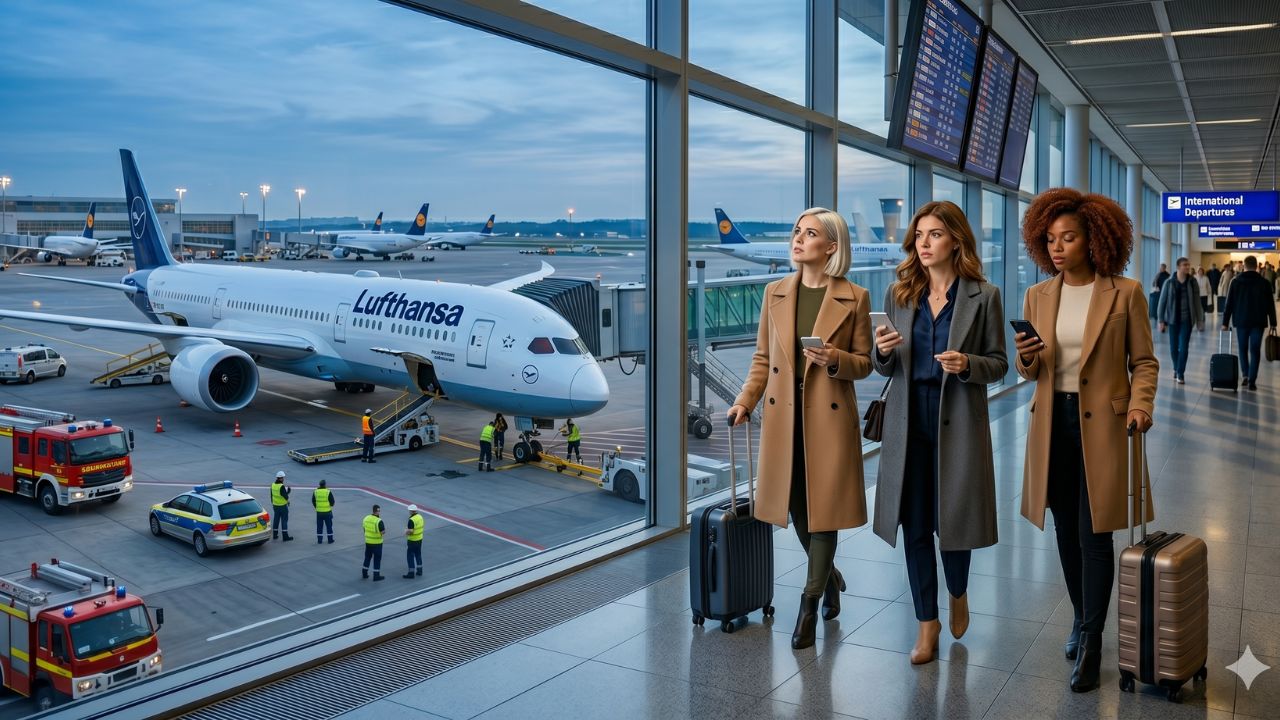
Image generated by AI
A Massive Mechanical Collapse Amidst German Terminal Panic
While massive sectors of the global passenger network frequently battle highly unpredictable extreme weather events, synchronized logistical bottlenecks, and horrific commercial fleet shortages, sudden catastrophic mechanical failures right at the terminal gate remain the absolute most terrifying catalysts for massive airport disruptions. Delivering highly urgent, breaking airline news, verified European aviation trackers confirm that a massive operational disaster has actively detonated within Germany, aiming to completely devastate vulnerable international commuter capacity and trigger severe travel chaos across the highly congested transatlantic network. Today, highly disruptive operational news forcefully emerged confirming that Lufthansa has suffered a horrifying mechanical breakdown, executing a sudden flight cancellation after a nearly brand-new Boeing 787-9 violently collapsed onto the Frankfurt tarmac.
While desperate travelers usually attempt to navigate terrifying terminal friction caused by localized weather delays, these exclusive aviation updates reveal a highly systemic, incredibly intense logistical scramble attempting to contain a terrifying industrial accident. On Thursday, June 4, 2026, the European aviation industry officially confirmed that Frankfurt Main Airport was violently crushed by a severe ground emergency. A state-of-the-art Lufthansa Boeing 787-9 Dreamliner, registered as D-ABPQ, experienced an unexpected, complete landing gear failure while actively preparing for a long-haul journey to Los Angeles. The dramatic impact violently injured multiple ground staff and flight crew members working inside the jet, instantly paralyzing the departure gate and triggering massive logistical nightmares for hundreds of stranded vacationers forced to navigate the sudden travel chaos.
Expanded Overview: The Scale of the Aviation Paralyzation
The highly publicized execution of this massive mechanical failure serves as an undeniable example of how rapidly complex international transit can devolve into absolute terror when highly advanced aircraft suffer sudden structural failures. While it is an incredible miracle that passenger boarding had not yet commenced when the front assembly completely gave way, the immediate operational shockwave violently rippled through Frankfurt Main Airport. The sudden cancellation of a fully booked transcontinental widebody jet instantly displaces massive volumes of passengers, severely stressing the already fragile European summer schedule.
The terrifying reality of modern global transit is that the aviation industry is currently operating with absolutely zero spare capacity. Carriers simply do not have backup Boeing 787s sitting idle on the tarmac. Consequently, when Lufthansa's flagship Dreamliner violently collapsed, the airline was mathematically forced to execute terrifying, unannounced flight cancellations. Because the Boeing 787 utilizes a unique, high-tech carbon-fiber composite hull structure instead of traditional aluminum panels, standalone airline technical teams must execute highly complex, time-consuming structural scans before the jet can ever fly again. This extensive repair process permanently sidelined one of Lufthansa’s newest long-haul assets, directly generating massive equipment shortages and travel chaos for everyday passengers.
Section-Wise Breakdown of the Frankfurt Mechanical Disaster
The Terrifying Nose-Gear Collapse
The operational shockwave was violently accelerated at approximately 12:45 PM local time as ground teams serviced the massive passenger aircraft. The sophisticated twin-engine widebody was positioned at a Frankfurt departure gate, securely attached to an active passenger jet bridge. Suddenly, without any structural warning, the twin-wheel front landing assembly buckled forward and completely retracted into the nose bay. The entire front half of the composite fuselage slammed violently onto the concrete airport apron, triggering terrifying alarms across the terminal and causing severe injuries to the crew operating inside the cockpit.
Crushing the Ground Equipment
The travel chaos is aggressively compounded by the horrific physical damage inflicted upon the tarmac equipment. At the exact moment of the violent collapse, a large baggage loading vehicle was positioned directly under the right forward cargo door. The plunging nose of the aircraft immediately trapped the service vehicle, pinning it violently beneath the lower carbon-fiber skin. Furthermore, eyewitnesses reported the terrifying sight of both massive jet engines dipping low enough to make direct physical contact with the tarmac. The extreme downward force completely destroyed the nose landing gear doors, violently snapping them off their metal hinges.
Transatlantic Flight LH450 Cancellations
Because of the severe physical damage to the airframe, Lufthansa was immediately forced to execute a massive flight cancellation for flight LH450 bound for Los Angeles International Airport (LAX). This unexpected cancellation forced airline customer service agents to scramble to manually rebook nearly 280 completely stranded international travelers onto alternative flights. While landing gear accidents are incredibly rare, the loss of a 280-seat widebody instantly creates massive logistical headaches and terrifying delays for vacationers attempting to reach the United States west coast.
Verified Aviation Disruption and Mechanical Data
To fully comprehend the massive operational scale and strategic deployment dictating this highly disruptive crisis, the following mandatory table explicitly details the exact mechanical failure metrics paralyzing the European aviation sector today:
Complete Lufthansa Boeing 787 Disruption Breakdown
While European networks attempt to recover, this mechanical failure triggered massive delays.
| Operational Failure Metric | Verified Aviation Data | Direct Impact on Commercial Logistics |
|---|---|---|
| Operating Carrier | Lufthansa | Massive flagship asset removed from the European network. |
| Aircraft Hull Type | Boeing 787-9 Dreamliner | Composite hull requires massive, complex structural repairs. |
| Aircraft Registration | D-ABPQ | Year-old aircraft violently disabled on the tarmac. |
| Flight Number | LH450 | Officially cancelled, severing the vital LAX connection. |
| Scheduled Routing | Frankfurt to Los Angeles | 280 international passengers completely stranded. |
| Incident Timeline | June 4, 2026 (12:45 PM) | Triggered massive daytime operational gridlock at FRA. |
| Casualty Report | Ground & Crew Injuries | Medical emergencies halted all surrounding gate operations. |
| Structural Damage | Engines & Cargo Doors | Right forward cargo door pinned a baggage loading vehicle. |
Passenger Impact: Surviving the Equipment Squeeze
For the modern global commuter attempting to navigate this highly volatile international network, the passenger impact of leveraging this highly disruptive mechanical failure is completely terrifying. Reliable, scheduled widebody capacity is the absolute backbone of surviving massive transit hubs like Frankfurt, and this violent wave of structural collapse completely shatters that promise against the threat of massive equipment downgrades and sudden route cancellations.
Immediate Strategies for Global Passengers:
- Anticipate Sudden Equipment Swaps: By aggressively understanding that Lufthansa is violently missing a flagship Boeing 787-9, corporate executives must anticipate terrifying, last-minute equipment downgrades where widebody jets are abruptly swapped for smaller, cramped aircraft on other long-haul routes to compensate for the lost D-ABPQ hull.
- Execute Digital Rebooking: Because international legacy carriers continually battle massive passenger backlogs caused by cancelled 280-seat flights, stranded travelers must instantly utilize airline mobile platforms to rebook cancelled LH450 tickets before the massive physical customer service lines violently overwhelm the terminal.
- Execute Insurance Protocols: Travelers caught in this terrifying maintenance gridlock are aggressively urged to purchase comprehensive travel insurance that explicitly covers mechanical breakdowns and sudden flight cancellations, ensuring massive overnight hotel expenses in Frankfurt are fully covered.
Conclusion: A Highly Disruptive Mechanical Disaster
The massive, highly publicized Boeing 787-9 nose-gear collapse at Frankfurt Airport represents a massive, incredibly terrifying wake-up call for the global aviation sector. By actively demonstrating that state-of-the-art aircraft can violently collapse at the gate without warning, this violent event highlights the incredible fragility of the summer vacation network. As executive leadership and German aviation safety authorities continue to heavily investigate the massive mechanical failure, high-tier corporate travelers and international tourists are heavily urged to actively prepare for their journeys by fiercely anticipating severe schedule modifications, completely expecting the unprecedented disasters triggering massive regional travel chaos today.
Key Takeaways
- Terrifying Mechanical Collapse: A brand-new Lufthansa Boeing 787-9 Dreamliner (D-ABPQ) suffered a sudden, violent nose-gear retraction while parked at a jet bridge in Frankfurt.
- Flight LH450 Cancelled: The highly disruptive incident immediately forced the cancellation of flight LH450 to Los Angeles, completely stranding nearly 280 passengers.
- Severe Ground Injuries: While no passengers were aboard, multiple flight crew members and ground workers sustained injuries during the violent fuselage drop.
- Massive Structural Damage: The extreme impact crushed a baggage loading vehicle under the right forward cargo door and forced both massive jet engines onto the tarmac.
- Passenger Survival Tactics: Travelers caught in this terrifying capacity crunch are aggressively urged to anticipate sudden equipment downgrades and utilize mobile rebooking platforms to bypass physical terminal chaos.
Disclaimer: The specific aircraft hull types, passenger counts (280), flight numbers (LH450), and structural damage reports presented in this report are based on verified operational data released regarding the Lufthansa Frankfurt incident on June 4, 2026. Official airline fleet rotations, specific flight operations, and regional airport ATC capacities are highly volatile and subject to continuous, real-time update based on active structural investigations. Prospective passengers are urgently advised to fiercely monitor active travel itineraries directly via official airline portals prior to airport arrival to guard against unannounced equipment swaps.
Disclaimer
This article is for informational and educational purposes only. It does not constitute legal, financial, or professional advice. While we strive to provide accurate and up-to-date information, travel policies, regulations, and conditions change rapidly. Always verify information with official sources before making travel decisions. Nomad Lawyer makes no representations about the accuracy, reliability, completeness, or suitability of the information provided. Readers should consult qualified professionals for advice specific to their circumstances. The views expressed in this article are those of the author and do not necessarily reflect the views of Nomad Lawyer.
Kunal K Choudhary
Co-Founder & Contributor
A passionate traveller and tech enthusiast. Kunal contributes to the vision and growth of Nomad Lawyer, bringing fresh perspectives and driving the community forward.
Learn more about our team →