
Lufthansa Accelerates European Expansion With Nine New Summer Routes Across Key Hubs
Breaking airline news and aviation industry updates for 2026.

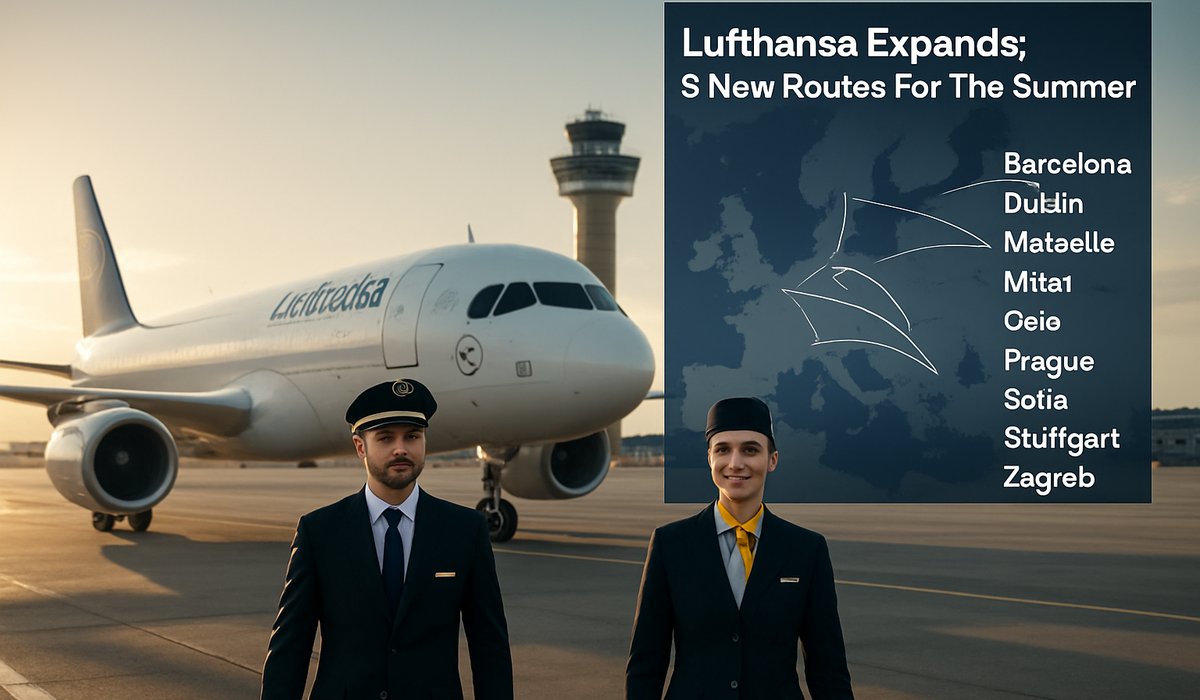
Image generated by AI
Lufthansa Accelerates European Expansion With Nine New Summer Routes Across Key Hubs
Germany's flagship carrier strengthens its grip on Frankfurt and Munich airports while competing in post-pandemic aviation recovery
Major Network Expansion Signals Market Confidence
Lufthansa is making a decisive strategic move this summer by launching nine new routes across its network, reinforcing its dominant position in European aviation. The expansion reflects the carrier's confidence in sustained travel demand recovery and its determination to capture market share as the industry rebounds from pandemic-related disruptions.
The German airline giant operates from two primary command centers: Frankfurt Airport (FRA) and Munich Airport (MUC), where it maintains unparalleled operational dominance. According to operational data from Cirium's Diio analytics platform, Lufthansa controls more than half of all services at Frankfurt, commanding a substantial 52% market share. The carrier's influence grows even stronger at Munich, where it operates 56% of all scheduled flights—a position that makes it the de facto gatekeeper for Central European aviation traffic.
Domestic Dominance Reshapes Regional Aviation Landscape
The carrier's grip tightens further when examining domestic German routes. Lufthansa operates nearly nine of every ten flights on German domestic services, a concentration that underscores its near-monopoly status within national airspace. This commanding position provides the airline with significant flexibility in pricing, scheduling, and route planning—advantages it is now leveraging to expand regionally.
Strategic Implications for European Aviation
The announcement comes as European carriers face mounting pressure to expand capacity and maintain profitability amid volatile jet fuel prices, persistent labor negotiations, and intensifying competition from low-cost carriers. Lufthansa's aggressive summer expansion suggests the carrier is betting on sustained leisure and business travel demand, despite economic uncertainties across the eurozone.
Industry analysts view the route additions as a calculated response to changing travel patterns post-pandemic, with particular emphasis on secondary European markets where demand remains underserved. By leveraging its hub infrastructure at Frankfurt and Munich, Lufthansa can efficiently feed passengers onto these new routes while maximizing aircraft utilization and operational efficiency.
What This Means for Travelers
Passengers in affected regions can expect enhanced connectivity and potentially more competitive pricing as Lufthansa introduces service on previously underserved routes. However, the carrier's dominant position at both hubs means consumers will have limited alternatives on many domestic and regional connections, which historically translates to higher fares on non-competitive routes.
The expansion also signals confidence that aviation demand will sustain current trajectory, suggesting the industry has largely moved beyond pandemic recovery into expansion mode—despite macroeconomic headwinds affecting consumer spending.
FAQ: Lufthansa Routes, Airlines Fees & European Aviation
Q1: How does Lufthansa's market share at Frankfurt and Munich compare to other European airlines? Lufthansa's 52-56% dominance at its two primary hubs is exceptional globally. Most major European airports distribute traffic among 5-8 significant carriers, making Lufthansa's concentration unusual and operationally significant.
Q2: Will these new routes lead to higher airline fees and baggage charges? Route expansion typically occurs on competitive segments to stimulate demand. Conversely, highly monopolized routes often carry higher base fares but may have standardized baggage policies across the network.
Q3: How do jet fuel prices impact Lufthansa's expansion strategy? Fuel costs remain aviation's largest variable expense. Expanding during relatively stable fuel markets allows carriers to lock in profitable route economics before potential price spikes.
Q4: What destinations are likely included in Lufthansa's nine new summer routes? Secondary European cities with growing tourism or business travel demand are typical targets, likely including emerging leisure destinations and underserved business hubs across Central and Southern Europe.
Q5: How will this expansion affect baggage allowances and ancillary travel costs? New route additions on competitive segments may feature promotional fares with restricted baggage policies, while premium products typically maintain generous allowances to justify higher ticket prices.
Related Travel Guides
External Resources
Disclaimer
This article is for informational and educational purposes only. It does not constitute legal, financial, or professional advice. While we strive to provide accurate and up-to-date information, travel policies, regulations, and conditions change rapidly. Always verify information with official sources before making travel decisions. Nomad Lawyer makes no representations about the accuracy, reliability, completeness, or suitability of the information provided. Readers should consult qualified professionals for advice specific to their circumstances. The views expressed in this article are those of the author and do not necessarily reflect the views of Nomad Lawyer.
Preeti Gunjan
Contributor & Community Manager
A passionate traveller and community builder. Preeti helps grow the Nomad Lawyer community, fostering engagement and bringing the reader experience to life.
Learn more about our team →