
Lufthansa, Air France, British Airways Lead Vietnam Route Expansion Surge in 2026
Major global carriers including Lufthansa, Air France, and British Airways are accelerating Vietnam flights amid record 12.3M arrivals in H1 2026, reshaping Asia-Pacific aviation capacity.

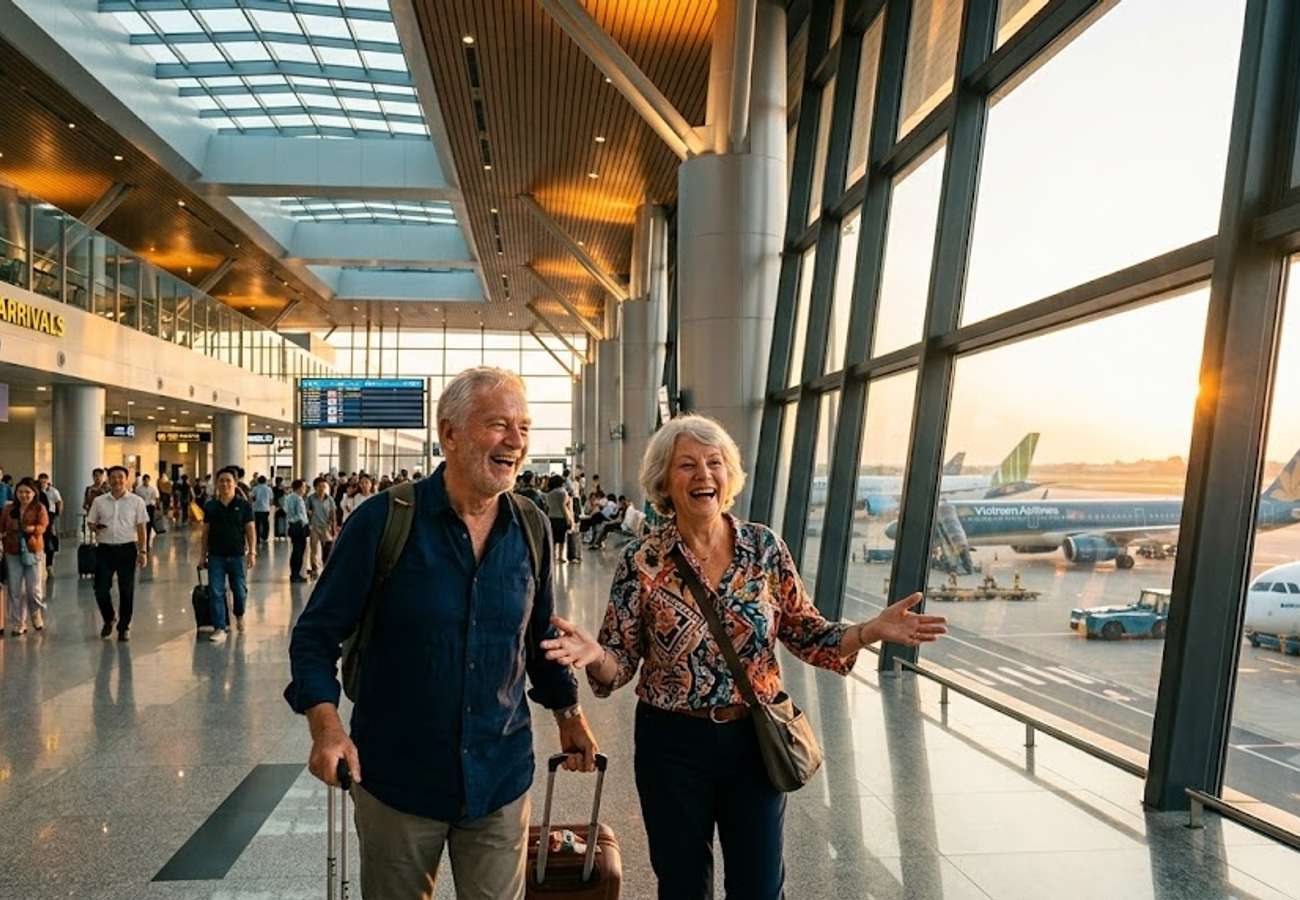
Image generated by AI
Lufthansa, Air France, British Airways, Qantas, China Southern Airlines, and a coordinated wave of global carriers are simultaneously launching and strengthening Vietnam-bound services, signalling a structural shift in Asia-Pacific aviation networks. Vietnam has welcomed 12.3 million international arrivals in the first half of 2026—a 14.9% year-on-year surge—triggering unprecedented capacity pressure and competitive route additions across continents.
The expansion reflects three converging market forces: explosive Asian source market growth (China, South Korea, India), accelerating European long-haul demand, and explosive intra-ASEAN short-haul tourism. Airlines are no longer responding to cyclical demand; they are reconfiguring permanent network architecture to capture Vietnam's transformation from secondary Southeast Asian destination into a primary global aviation hub.
The Scale of Airline Participation Signals Structural Market Shift
Vietnam's 2026 tourism acceleration is not driven by single-carrier expansion. It is a coordinated international response. Lufthansa, Air France, British Airways, Qantas, China Southern Airlines, Korean Air, Singapore Airlines, Air India, and regional carriers including VietJet Air and AirAsia are all intensifying Vietnam operations simultaneously.
This synchronized participation indicates airlines recognize Vietnam tourism as a permanent, high-growth revenue stream—not a temporary capacity reallocation. The convergence pressures regional airport infrastructure at Hanoi (HAN), Ho Chi Minh City (SGN), and Da Nang (DAD) to expand terminal and runway capacity.
European Long-Haul Premium Demand Accelerates Above Expectations
Lufthansa and European peers are driving the fastest-growing inbound segment. Western European arrivals are growing at 50%-plus year-on-year rates, driven by visa exemptions, improved e-visa processing, and Vietnam's repositioning toward heritage and luxury coastal tourism rather than budget-segment-only positioning.
Air France and British Airways are capturing high-value leisure and business travellers seeking extended Vietnam stays. These carriers bring premium cabin revenue, longer average stay durations, and elevated per-visitor spending compared to budget-tier competition. Infrastructure pressure is forcing Hanoi Noi Bai International Airport and Ho Chi Minh City Tan Son Nhat International Airport to accelerate ground handling and international gate allocation.
Asia-Pacific Volume Growth Dominated by Chinese and Korean Airlines
Volume leadership remains concentrated among China Southern Airlines, China Eastern Airlines, Air China, Korean Air, Asiana Airlines, Singapore Airlines, and Scoot. China and South Korea account for approximately 40% of Vietnam's total inbound arrivals—the backbone of absolute passenger volume.
Chinese tourism demand rebounded explosively following visa policy relaxation. South Korea maintains structural importance as Vietnam's second-largest inbound market. These carriers operate the highest-frequency schedules into Vietnam, often deploying narrowbody aircraft (Boeing 737, Airbus A320 families) on multiple daily departures from regional hubs.
India Emerges as Fastest-Growing High-Value Corridor
Air India, IndiGo, and Akasa Air are expanding India-Vietnam connectivity at rates exceeding China and South Korea growth. India's outbound tourism is structurally expanding as middle-class purchasing power accelerates across metro regions.
New direct routes including Delhi-Hanoi, Mumbai-Hanoi, and Bangalore-Ho Chi Minh City have launched or are confirmed for 2026 deployment. Akasa Air's entry into the Vietnam market signals budget-carrier recognition of India-Vietnam as a high-volume, scalable corridor. Indian travellers are driving wedding tourism, group leisure travel, and extended family visit segments—historically underserved by legacy carriers.
ASEAN Short-Haul Tourism Explosion Reshapes Regional Networks
Thai Airways, AirAsia, VietJet Air, Malaysia Airlines, and Cebu Pacific are operating the fastest-frequency growth segment. Philippines tourism to Vietnam is up 67% year-over-year; Cambodia is up 41%; Singapore is up 29%.
This explosion reflects weekend travel culture, low-cost carrier saturation in regional markets, and Vietnam's repositioning as an ASEAN weekend tourism hub. Weekend trips from Bangkok, Kuala Lumpur, and Manila to Hanoi, Ho Chi Minh City, and coastal destinations are driving densification of daily short-haul schedules. Capacity constraints are forcing some carriers to deploy larger narrowbody aircraft (Boeing 737-9, Airbus A321neo) on routes historically served by smaller equipment.
Major International Carrier Route Expansion Summary
| Airline | Hub Country | Primary Vietnam Routes | Aircraft Type | Weekly Frequency | Segment Focus |
|---|---|---|---|---|---|
| Lufthansa | Germany | Frankfurt–Hanoi, Frankfurt–Ho Chi Minh City | Boeing 787-9, Airbus A350 | 7–10 | Premium long-haul |
| Air France | France | Paris–Hanoi, Paris–Ho Chi Minh City | Boeing 787, Airbus A380 (seasonal) | 7–10 | Luxury cultural tourism |
| British Airways | United Kingdom | London–Vietnam (via codeshare partners) | Boeing 787, Airbus A350 | 5–7 | High-value leisure |
| Qantas | Australia | Sydney–Ho Chi Minh City, Melbourne–Da Nang | Boeing 787-9 Dreamliner | 7–10 | Long-haul leisure |
| China Southern Airlines | China | Guangzhou–Hanoi, Guangzhou–Ho Chi Minh City, Guangzhou–Da Nang | Airbus A380, Boeing 787, Airbus A320 family | 21–28 | Mass volume tourism |
| Korean Air | South Korea | Seoul–Hanoi, Seoul–Da Nang | Boeing 787, Airbus A350, Boeing 777 | 14–21 | Top-2 inbound market |
| Singapore Airlines | Singapore | Singapore–Hanoi, Singapore–Ho Chi Minh City | Airbus A350, Boeing 777 | 10–14 | Premium regional hub |
| Scoot | Singapore | Singapore–Phu Quoc, Singapore–Da Nang | Boeing 787-8 Dreamliner | 7–10 | Budget short-haul |
| Air India | India | Delhi–Hanoi, Mumbai–Ho Chi Minh City | Boeing 787-8, Airbus A320 family | 7–14 | Rapid growth corridor |
| Akasa Air | India | Mumbai–Hanoi (2026 launch) | Airbus A320neo | 3–5 | Budget leisure segment |
| VietJet Air | Vietnam | Regional Asia expansion (Hanoi/Da Nang hubs) | Airbus A320 family, Airbus A321neo | 35–42 | Regional low-cost growth |
| Vietnam Airlines | Vietnam | Hanoi–Europe, Ho Chi Minh City–Australia | Boeing 787-9, Airbus A350 | 7–14 | Premium backbone |
Structural Drivers Behind Synchronized Airline Expansion
Four market conditions are forcing simultaneous capacity additions and route launches across competing carrier networks.
First, visa liberalisation has eliminated travel friction. Vietnam's expanded visa exemption program (now covering 90+ countries) and rapid e-visa processing have reduced decision barriers for leisure travellers. European tourists face negligible entry obstacles; Indian tourists benefit from simplified digital systems.
Second, airport capacity is constrained relative to demand growth. Hanoi and Ho Chi Minh City airports are operating near peak seasonal capacity. Airlines are competing for gate slots and landing rights during peak demand windows (November–February). Infrastructure expansion at both airports is underway but lags demand acceleration by 18–24 months.
Third, Vietnam is repositioning toward premium and luxury tourism segments. Beach resorts in Phu Quoc, wellness destinations, and heritage experiences in Hanoi command premium pricing. Premium airlines recognize higher revenue-per-available-seat-mile potential compared to three years ago. This justifies widebody aircraft deployment and premium cabin density.
Fourth, ASEAN liberalisation policies are eliminating bilateral route restrictions. Open skies agreements are enabling low-cost carriers to operate high-frequency short-haul services. Budget carriers can now deploy Airbus A320neo and Boeing 737 MAX aircraft at frequency levels previously constrained by bilateral agreements.
Direct Tourism Revenue Impact: Multiplier Effects Across Ground Economy
Airline capacity expansion is accelerating Vietnam's tourism economy through five measurable channels.
International accessibility is rising. Direct routes from Frankfurt, Paris, London, Sydney, Delhi, and Mumbai reduce travel friction for leisure and business segments. Average journey time reductions drive conversion of "considering Vietnam" to "booking Vietnam" among European and Indian source markets.
Hotel occupancy in premium segments is accelerating. Five-star properties in Hanoi, Ho Chi Minh City, and Phu Quoc are reporting 85%+ occupancy rates during peak season. Mid-tier (3–4 star) hotels are filling faster in secondary cities like Da Nang and Hoi An. This is directly attributable to increased flight frequency and reduced airfare volatility.
Per-visitor spending is increasing. Premium airline passengers (Lufthansa, Air France, Qantas) spend 40%–60% more on accommodation, dining, and experiences than budget-carrier passengers. This shifts Vietnam's tourism revenue composition toward higher-margin experiences.
Source market diversification is reducing revenue volatility. Vietnam is no longer dependent on Chinese tourists or Korean visitors. European arrivals now represent 18% of total inbound (vs. 12% in 2024). Indian arrivals are growing 35%+ year-over-year. This geographic diversification reduces seasonal bottlenecks and extends peak tourism periods.
Regional connectivity is creating hub effects. Increased flight frequency is making Vietnam a regional hub for Southeast Asian travelers. Passengers from Cambodia, Laos, and Myanmar are using Hanoi and Ho Chi Minh City as gateways to onward flights. This generates additional airport revenue and positions Vietnam as a regional aviation interchange.
Strategic Implications for Airline Capacity Planning and Competitive Positioning
Airline network decisions in Vietnam reveal three strategic patterns.
Legacy carriers are defending premium positioning. Lufthansa, Air France, and British Airways are deploying widebody aircraft and premium cabin density to capture high-yield leisure and business segments. These carriers are not competing on frequency; they compete on experience and destination positioning.
Asian carriers are competing on frequency and volume. China Southern Airlines, Korean Air, and Singapore Airlines are deploying daily or near-daily service from regional hubs. These carriers capture volume-sensitive segments and position Vietnam as a necessary hub within their broader Asian network.
Budget carriers are expanding route networks aggressively. AirAsia, Scoot, VietJet Air, and Akasa Air are deploying Airbus A320 family aircraft at high-frequency schedules. These carriers target price-sensitive leisure segments and drive absolute passenger volume growth.
The three-tier competitive structure indicates Vietnam's aviation market is now too large for single-carrier dominance. Airlines must position within specific segments (premium, volume-legacy, budget) rather than compete across all segments simultaneously.
Capacity Constraints and Infrastructure Pressure Points Through 2026
Airport infrastructure is the immediate bottleneck limiting airline expansion velocity. Hanoi Noi Bai International Airport and Ho Chi Minh City Tan Son Nhat International Airport are operating at 85%+ utilization during peak months (November–February, summer school holidays).
Gate availability during 07:00–11:00 morning bank is the most constrained window. Airlines are increasingly shifting flights to shoulder periods (05:30–07:00, 23:30–01:00) to secure available gates. This creates operational friction and passenger experience degradation.
Ground handling capacity (baggage systems, customs processing, passenger boarding bridges) is also constrained. Peak-hour congestion at both airports has increased average turnaround times from 45 minutes to 55+ minutes for international narrow-body flights. This forces airlines to stage aircraft overnight rather than achieve multiple daily rotations.
Both airports are executing capacity expansion programs: Hanoi is expanding Terminal 1 (completion targeted Q4 2026); Ho Chi Minh City is accelerating Terminal 3 opening (targeted Q2 2027). These expansions will relieve constraints but lag demand acceleration by 12–18 months.
Visa Policy and Travel Friction as Multiplier for Airline Demand
Vietnam's government has systematically reduced travel friction through three policy mechanisms: expanding visa-exempt entry to 90+ nationalities, extending e-visa validity to 12 months (vs. 3 months historically), and implementing rapid digital processing.
These policies directly enabled the 14.9% year-over-year arrival surge. European and Indian source markets are particularly sensitive to visa friction. Lufthansa, Air France, and Air India have transparently cited visa policy improvements as justification for route additions and frequency increases.
Policy continuation is critical. Any visa policy reversal would immediately slow tourism growth and reduce airline utilization assumptions. Conversely, further policy liberalisation (e.g., visa-free entry extended to additional nationalities) would accelerate airline capacity additions.
2026 Outlook:
Disclaimer
This article is for informational and educational purposes only. It does not constitute legal, financial, or professional advice. While we strive to provide accurate and up-to-date information, travel policies, regulations, and conditions change rapidly. Always verify information with official sources before making travel decisions. Nomad Lawyer makes no representations about the accuracy, reliability, completeness, or suitability of the information provided. Readers should consult qualified professionals for advice specific to their circumstances. The views expressed in this article are those of the author and do not necessarily reflect the views of Nomad Lawyer.
Kunal K Choudhary
Co-Founder & Contributor
A passionate traveller and tech enthusiast. Kunal contributes to the vision and growth of Nomad Lawyer, bringing fresh perspectives and driving the community forward.
Learn more about our team →