
Las Vegas Tourism Woes Continue as Harry Reid International Airport Sees 4.5 Million Passengers and Sharp Drop in Domestic and International Traffic
Harry Reid International Airport reports a sharp drop in May 2026 traffic to 4.5M passengers as Las Vegas tourism faces

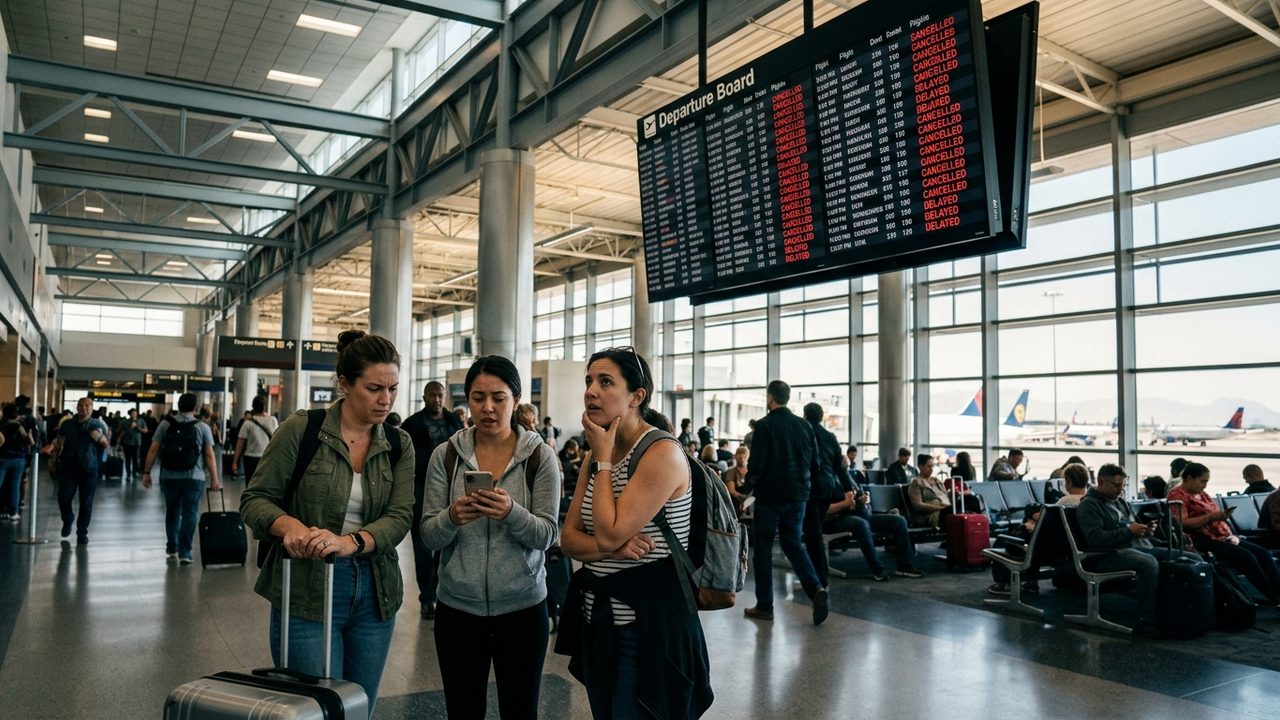
Image generated by AI
[Las Vegas, June 27, 2026] — Tourism demand in Las Vegas is facing significant headwinds as Harry Reid International Airport (LAS) reported a sharp decline in passenger traffic for May 2026. Approximately 4.5 million travelers passed through the hub, marking a substantial year-on-year drop that signals weakening interest in both domestic and international travel to the Nevada destination.
The downturn is attributed to a combination of softer demand from primary source markets and a critical reduction in airline capacity. Industry observers point to the sudden withdrawal of a major ultra-low-cost carrier as a primary driver for the loss of available seating, which has exacerbated the overall decline in visitor inflows.
Passenger Volumes Drop at Harry Reid International Airport
The scale of the contraction is evident when comparing current data to the previous year. In May 2025, the airport handled nearly five million passengers; the current figure of 4.5 million represents a decrease of more than 8%.
This slump is not limited to a single travel segment. Domestic traffic, which serves as the backbone of Las Vegas connectivity, fell by 8.6%. Simultaneously, international arrivals dipped by 5.7%. The broad-based nature of these declines suggests that the city is struggling to attract both short-haul regional visitors and long-haul international tourists.
The trend is not an isolated monthly occurrence. From January through May 2026, total passenger throughput at LAS reached 21.5 million. This reflects a year-to-date contraction of approximately 6.2%, meaning the airport has lost nearly 1.42 million passengers compared to the same window in 2025.
Airline Capacity Shifts and Carrier Performance
The reduction in passenger numbers is closely tied to structural changes in how airlines are servicing the Las Vegas market. A pivotal shift occurred on May 2, 2026, when Spirit Airlines ceased its operations at the airport.
The impact of this exit was profound: in May 2025, the ultra-low-cost carrier transported over 511,000 passengers. By May 2026, that number plummeted to fewer than 4,000. This created a massive void in low-cost seating options, making the destination less accessible to budget-conscious travelers.
Other major carriers also experienced declines, though less severe than the low-cost segment:
| Airline | May 2026 Performance/Volume | Year-on-Year Change |
|---|---|---|
| Southwest Airlines | 1.95 Million Passengers | -0.4% |
| American Airlines | Not Specified | -2.9% |
| Spirit Airlines | < 4,000 Passengers | Massive Decline |
The data indicates that even the dominant carriers, such as Southwest and American Airlines, are seeing a slight erosion in volume, compounding the loss caused by the Spirit Airlines exit.
Divergence Between Visitation and Gaming Revenue
Despite the drop in air arrivals, the Las Vegas economy is presenting a complex financial picture. While the number of people arriving by air is falling, the amount of money being spent on gaming remains resilient.
Preliminary data shows that overall visitation through April 2026 was down by roughly 1.8%, following a much steeper 7.5% drop the previous year. However, the Las Vegas Strip saw a nearly 7% increase in gross gaming revenue (GGR) during April 2026. Year-to-date, Strip GGR has climbed to over $2.9 billion, a 1.9% increase over the previous year.
This divergence suggests a shift in the demographic of visitors. While fewer people are visiting, those who do arrive appear to be spending more per capita, particularly within premium gaming segments.
May 2026 Gaming Projections and Market Variables
Analysts remain cautiously optimistic about the gaming sector's ability to maintain growth. However, they note that May 2025 had an extra weekend day, making the current year-over-year comparison more difficult.
Industry reports suggest that Strip gaming revenue could still surpass the May 2025 total of approximately $713.7 million. Much of this growth is expected to be driven by high-value gaming, specifically baccarat. This particular game attracts high-spending international players and saw an unusual surge in April due to high winning margins. Should these margins normalize, the growth for May may be more modest.
High Fuel Costs Impacting Drive-In Tourism
The tourism slump is not confined to the airport. Road-based travel is also under pressure. The Las Vegas Convention and Visitors Authority (LVCVA) is expected to report a decline in vehicle arrivals via the I-15 and I-11 corridors, which connect the city to California and Arizona.
High fuel prices across the Western United States are cited as a primary deterrent. In Southern California, regular gasoline prices exceeded $6 per gallon in May 2026. Because California faces high taxation and limited refining capacity, these costs are deterring the "weekend warrior" demographic—short-duration travelers who typically drive into the city for brief stays.
Why This Matters: A Shift Toward High-Value Tourism
The current data suggests that Las Vegas is entering a structural adjustment phase. The simultaneous decline in air passenger volumes, the loss of ultra-low-cost carrier capacity, and the drop in regional drive-in traffic indicate that the era of mass-volume, budget-driven tourism may be cooling.
However, the resilience of gaming revenue—growing even as visitor numbers fall—points to a strategic pivot in the destination's economic engine. The industry is seeing a transition toward "high-value, low-volume" travel. This means the city is becoming more dependent on premium travelers and high-rollers who are less sensitive to airfare hikes or gasoline prices.
For the aviation industry, the collapse of the low-cost segment at LAS creates a potential opportunity for other budget carriers to fill the void, but the overall decline in domestic demand suggests that the market may be saturated or that consumer spending habits have fundamentally shifted.
Related Travel Guides
Disclaimer
This article is for informational and educational purposes only. It does not constitute legal, financial, or professional advice. While we strive to provide accurate and up-to-date information, travel policies, regulations, and conditions change rapidly. Always verify information with official sources before making travel decisions. Nomad Lawyer makes no representations about the accuracy, reliability, completeness, or suitability of the information provided. Readers should consult qualified professionals for advice specific to their circumstances. The views expressed in this article are those of the author and do not necessarily reflect the views of Nomad Lawyer.
Kunal K Choudhary
Co-Founder & Contributor
A passionate traveller and tech enthusiast. Kunal contributes to the vision and growth of Nomad Lawyer, bringing fresh perspectives and driving the community forward.
Learn more about our team →