
Airlines Largest Mainline Fleets Dominate North America's 2026 Aviation
Six airlines largest mainline fleets in North America command over 5,000 aircraft combined in 2026. Southwest, Delta, United, American, Air Canada, and Alaska operate interconnected networks moving millions daily across the continent.

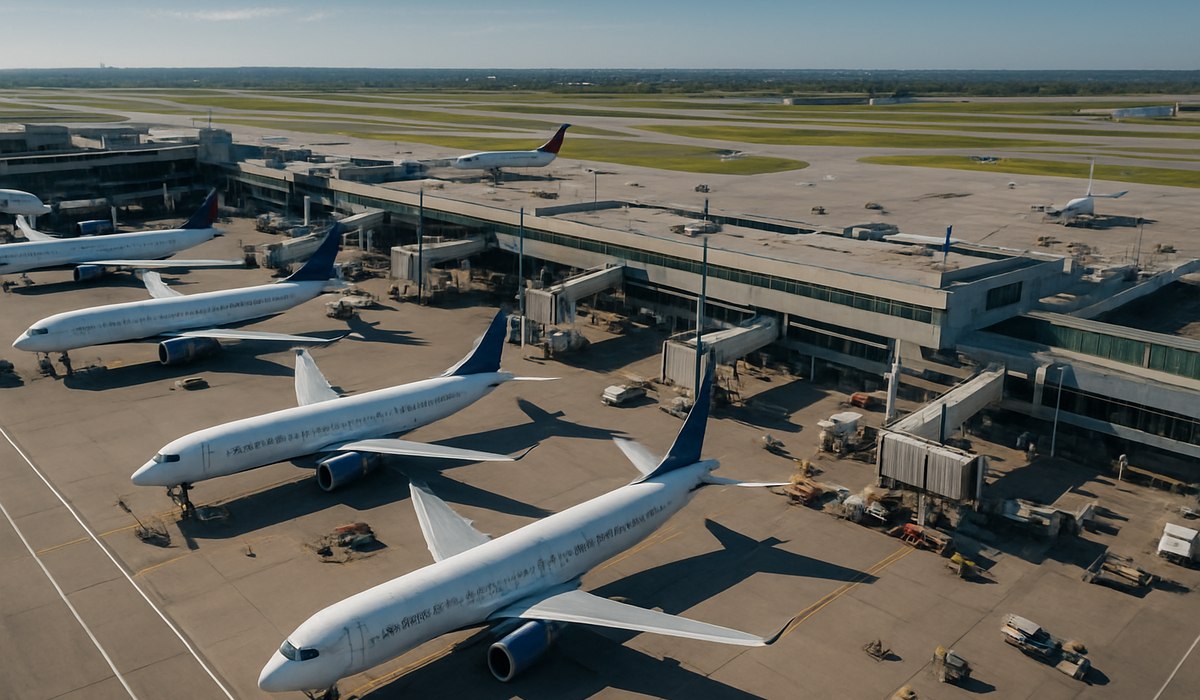
Image generated by AI
The Continental Powerhouses: North America's Biggest Carriers Take Flight
Six North American carriers command the continent's aviation landscape with unprecedented mainline fleets. Southwest Airlines, Delta Air Lines, United Airlines, American Airlines, Air Canada, and Alaska Airlines together operate over 5,000 aircraft, facilitating millions of daily passenger movements across interconnected domestic and international networks. This scale represents the culmination of decades of strategic expansion and operational refinement within the region's most competitive aviation market.
The concentration of capacity among these airlines largest mainline operators shapes travel patterns, pricing dynamics, and service availability for North American travelers. Understanding their fleet compositions and operational reach provides insight into how modern aviation serves the continent's 370 million residents and countless international visitors annually.
The Scale of North American Aviation
North America's aviation infrastructure has evolved into a sophisticated ecosystem supporting economic growth, tourism, and connectivity. The six largest carriers operate from major hubs spanning every time zone, with coordinated scheduling that enables seamless connections across thousands of daily flights.
Each carrier maintains primary hub-and-spoke networks designed for maximum efficiency. Southwest operates from Dallas, Denver, and Las Vegas. Delta maintains major hubs in Atlanta, Minneapolis, and Detroit. United anchors operations in Chicago, Houston, and San Francisco. American Airlines commands presence from Dallas, Charlotte, and Phoenix. Air Canada concentrates Canadian operations from Toronto and Vancouver. Alaska Airlines serves the western region from Seattle and Los Angeles.
This geographic distribution ensures no single point of failure dominates the network. Passengers benefit from redundancy, choice, and competitive pressure that keeps fares reasonable during peak travel seasons. Visit FlightAware to track real-time fleet movements and operational efficiency metrics across these carriers.
Fleet Breakdown by Carrier
Each airline maintains a precisely calibrated mix of narrow-body and wide-body aircraft optimized for route-specific demand. Southwest operates exclusively narrow-body Boeing 737 variants, numbering over 750 aircraft. This single-aircraft strategy simplifies crew training, maintenance scheduling, and parts inventory while maximizing operational efficiency on domestic routes.
Delta maintains North America's largest overall fleet exceeding 900 aircraft. The carrier operates Boeing 757s, 767s, 777s, 787 Dreamliners, and Airbus A320 families across domestic and international routes. United Airlines operates approximately 850 aircraft including Boeing 737s, 757s, 767s, 777s, 787s, and Airbus A320s.
American Airlines commands roughly 900 aircraft combining Boeing 737s, 757s, 767s, 777s, 787s, and Airbus A320 family aircraft. Air Canada operates approximately 400 mainline aircraft serving North American and international destinations. Alaska Airlines maintains a fleet near 300 aircraft focused on domestic and Alaska service with Boeing 737 variants dominating its roster.
Operational Logistics and Coordination
Managing fleets of this magnitude requires unprecedented coordination across scheduling, maintenance, crew planning, and passenger services. Airlines largest mainline operations employ thousands of ground personnel, mechanics, and administrative staff maintaining 24/7 operational readiness.
Daily maintenance inspections, component replacements, and system checks occur simultaneously across multiple aircraft at dispersed locations. A single aircraft might complete four to six flight segments daily, requiring precision turnaround times measured in minutes. Fuel optimization, weight distribution, and route planning algorithms process millions of data points to minimize costs while maximizing schedule reliability.
Weather disruptions, mechanical issues, or crew unavailability cascade through schedules affecting hundreds of connected flights. The Federal Aviation Administration maintains oversight through [the FAA's official portal](https://www.faa.gov), while the Department of Transportation enforces passenger protection regulations. Airlines absorb significant costs maintaining this infrastructure to deliver reliable service passengers expect.
Market Dominance and Capacity Leadership
These six carriers collectively control approximately 85% of North American aviation capacity. Their dominance creates both benefits and concerns for traveling consumers. Established airline loyalty programs reward frequent passengers with elite status, upgrades, and lounge access.
Conversely, market concentration limits low-cost carrier expansion on premium routes. Slot restrictions at congested hubs like Atlanta, Chicago, and New York prevent new entrants from challenging established carriers. The U.S. Department of Transportation monitors competitive practices, merger activities, and consumer complaint patterns across the industry.
Despite regulatory oversight, these six airlines largest mainline fleets generate substantial revenue through capacity control on lucrative transcontinental and transpacific routes. Passengers on competitive routes enjoy better pricing; those on monopoly routes face premium fares. Understanding carrier capacity dynamics helps travelers anticipate price movements and schedule their bookings strategically.
Fleet Statistics and Operational Data
| Carrier | Mainline Aircraft | Primary Hubs | Geographic Focus | Approximate Daily Flights |
|---|---|---|---|---|
| Southwest Airlines | 750+ | Dallas, Denver, Las Vegas | Domestic USA | 4,000+ |
| Delta Air Lines | 900+ | Atlanta, Minneapolis, Detroit | North America, International | 5,500+ |
| United Airlines | 850+ | Chicago, Houston, San Francisco | North America, International | 4,800+ |
| American Airlines | 900+ | Dallas, Charlotte, Phoenix | North America, International | 5,200+ |
| Air Canada | 400+ | Toronto, Vancouver | Canada, USA, International | 1,500+ |
| Alaska Airlines | 300+ | Seattle, Los Angeles | Western USA, Alaska | 1,200+ |
What This Means for Travelers
The dominance of these six airlines largest mainline fleets shapes your travel experience across multiple dimensions. Recognition of their market power empowers smarter decision-making when booking flights, selecting airlines, and managing expectations around service levels.
Traveler Action Checklist
- Compare carriers on your specific route – Check if multiple carriers serve your destination, as competition drives better pricing and service standards
- Monitor airline schedule changes – Sign up for notifications through airline apps or FlightAware to catch schedule changes affecting your bookings
- Understand frequent flyer programs – Each carrier's loyalty program offers distinct benefits; choose based on your travel patterns and preferred airlines
- Review baggage policies before booking – Mainline carriers apply different baggage allowances; read policies thoroughly to avoid surprises
- Document your itinerary – Keep confirmation numbers, booking references, and flight details accessible for faster rebooking if disruptions occur
- Know your passenger rights – Visit the DOT consumer protection page for compensation eligibility and dispute procedures
Frequently Asked Questions
Which North American airline operates the largest mainline fleet in 2026? Delta Air Lines and American Airlines both operate approximately 900+ mainline aircraft, competing for the largest fleet size on the continent. Delta historically maintains slight capacity advantage through newer aircraft and higher aircraft utilization rates across its network.
Why do airlines largest mainline fleets matter for travelers? Fleet size directly correlates with carrier capacity, schedule frequency, and pricing power. Larger fleets enable more flights on popular routes, potentially improving availability during peak travel periods. However, fleet dominance also influences pricing on routes with limited competition.
How do these six carriers maintain such massive fleets operationally? Centralized maintenance facilities, predictive analytics, and substantial capital investment enable fleet management at this scale. Airlines employ thousands of mechanics, ground crew, and support staff. Scheduled maintenance windows, component standardization across aircraft types, and redundant systems minimize unplanned disruptions.
Can travelers track specific aircraft movements across the North American network? Yes, FlightAware provides real-time flight tracking across all
Disclaimer
This article is for informational and educational purposes only. It does not constitute legal, financial, or professional advice. While we strive to provide accurate and up-to-date information, travel policies, regulations, and conditions change rapidly. Always verify information with official sources before making travel decisions. Nomad Lawyer makes no representations about the accuracy, reliability, completeness, or suitability of the information provided. Readers should consult qualified professionals for advice specific to their circumstances. The views expressed in this article are those of the author and do not necessarily reflect the views of Nomad Lawyer.
Kunal K Choudhary
Co-Founder & Contributor
A passionate traveller and tech enthusiast. Kunal contributes to the vision and growth of Nomad Lawyer, bringing fresh perspectives and driving the community forward.
Learn more about our team →