
Largest Glacial Lakes in the United States Drive Nature Tourism
The Great Lakes, created by retreating Ice Age glaciers, continue to drive sustainable nature tourism and regional economies.

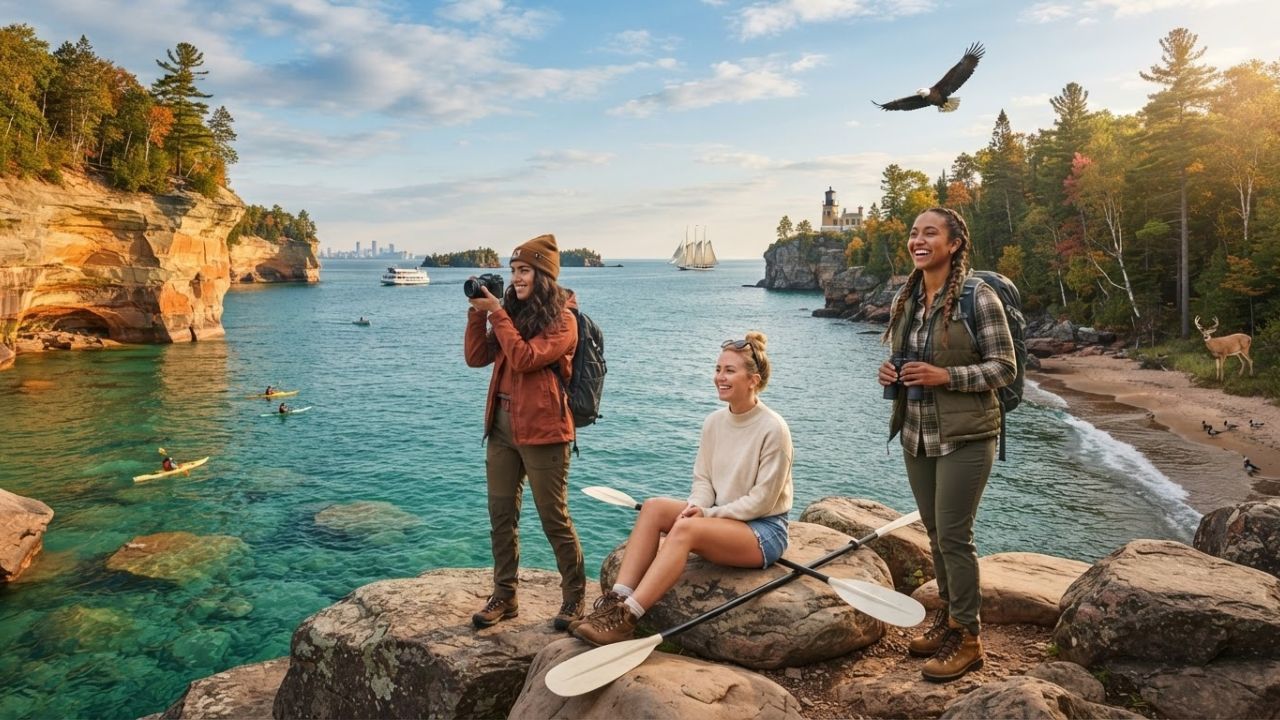
Image generated by AI
Chicago, July 26, 2026 — Geological registry data confirms that the largest glacial lakes in the United States attract millions of nature travelers seeking expansive freshwater landscapes and coastal recreation. Formed during the Ice Age, these massive basins shape regional trade and sustainable tourism.
Maritime and environmental logs show that these lakes, shared largely between the United States and Canada, are key recreation corridors. By investing in National Lakeshore protections, park systems support hiking, kayaking, and cruise transit across the region.
Dimensions and Geologic Profiles of the Great Lakes
The five glacial basins offer varied depths and coastal conditions for travelers:
- Lake Superior: Spans 31,700 square miles with a maximum depth of 1,333 feet. Known for Pictured Rocks, Isle Royale, and the Apostle Islands sea caves.
- Lake Huron: Spans 23,000 square miles with a maximum depth of 750 feet. Features Manitoulin Island, the world’s largest freshwater island, and Georgian Bay.
- Lake Michigan: Spans 22,400 square miles with a maximum depth of 925 feet. The only Great Lake located completely within U.S. borders, connecting Chicago and Sleeping Bear Dunes.
- Lake Erie: Spans 9,910 square miles with a shallow maximum depth of 210 feet. Renowned for its productive walleye fishery and warm summer beaches.
- Lake Ontario: Spans 7,340 square miles with a maximum depth of 802 feet. Serves as the gateway to the Atlantic Ocean via the St. Lawrence River.
Flight and Ferry Passenger Protection Guidelines
For travelers booking transits across Great Lakes gateways:
- US DOT Flight Refund Rights: Key gateway airports include Chicago O'Hare (ORD) and Detroit Metropolitan (DTW). If a flight is canceled or significantly delayed (3+ hours domestic), and the passenger chooses not to travel, they are entitled to a full cash refund of their ticket cost.
- Canadian APPR Rights: For flights landing at Toronto Pearson (YYZ), if a flight is delayed or canceled for controllable, non-safety reasons, passengers are entitled to compensation up to CAD 1,000.
- Ferry Cancellation Protections: If ferry crossings to remote spots like Isle Royale or Manitoulin Island (MS Chi-Cheemaun) are canceled due to high winds or gale warnings, passengers are entitled to a full ticket refund or free rebooking, but operators are not liable for lodging.
- Cold Water Safety Warning: Water temperatures in Lake Superior average 40°F (4°C) year-round. Hypothermia can develop within 15 minutes of immersion, making drysuits mandatory for kayakers exploring sea caves.
U.S. Great Lakes Dimensional and Travel Profiles
| Rank | Glacial Lake Name | Surface Area (sq mi) | Maximum Depth (ft) | Key Regional Travel Highlights |
|---|---|---|---|---|
| 1 | Lake Superior | 31,700 | 1,333 | Pictured Rocks National Lakeshore, Isle Royale National Park, Apostle Islands sea caves |
| 2 | Lake Huron | 23,000 | 750 | Georgian Bay cruises, Manitoulin Island hiking, North Channel sailing |
| 3 | Lake Michigan | 22,400 | 925 | Chicago lakefront, Sleeping Bear Dunes National Lakeshore, Milwaukee harbor |
| 4 | Lake Erie | 9,910 | 210 | Walleye sport fishing, public beaches, coastal state parks |
| 5 | Lake Ontario | 7,340 | 802 | Toronto waterfront trails, Thousand Islands sightseeing cruises, Rochester marinas |
Why This Matters
For travelers on this route, the real impact is that because these lakes behave like inland seas, sudden squalls can create waves up to 20 feet, making it essential to check marine forecast warnings before taking small boats onto open water. From a logistical perspective, this means that travelers must book national park campsite permits at least six months in advance, as wilderness islands enforce strict daily visitor caps. Visitors must carry thermal wear, as surface temperatures drop rapidly away from the coast.
Industry Outlook
Aviation planners are deploying advanced weather sensors to minimize wind shear delays around Great Lakes airports. As ferry operators adopt modern catamaran hulls, transit times between island parks will decrease. Over the next year, expect municipalities to link coastal hiking trails with regional bus networks to support car-free exploration. This transit coordination will benefit eco-travelers.
Related Travel Guides
Disclaimer
This article is for informational and educational purposes only. It does not constitute legal, financial, or professional advice. While we strive to provide accurate and up-to-date information, travel policies, regulations, and conditions change rapidly. Always verify information with official sources before making travel decisions. Nomad Lawyer makes no representations about the accuracy, reliability, completeness, or suitability of the information provided. Readers should consult qualified professionals for advice specific to their circumstances. The views expressed in this article are those of the author and do not necessarily reflect the views of Nomad Lawyer.
Preeti Gunjan
Contributor & Community Manager
A passionate traveller and community builder. Preeti helps grow the Nomad Lawyer community, fostering engagement and bringing the reader experience to life.
Learn more about our team →