
Ladakh Expands Year-Round Himalayan Tourism with Ladakh Festival 2026 as Visitor Arrivals Reach 4.37 Lakh
Ladakh transforms into a year-round destination with the inauguration of Ladakh Festival 2026 in Leh. Regional arrivals reach 4.37 lakh by September 16, 2026.

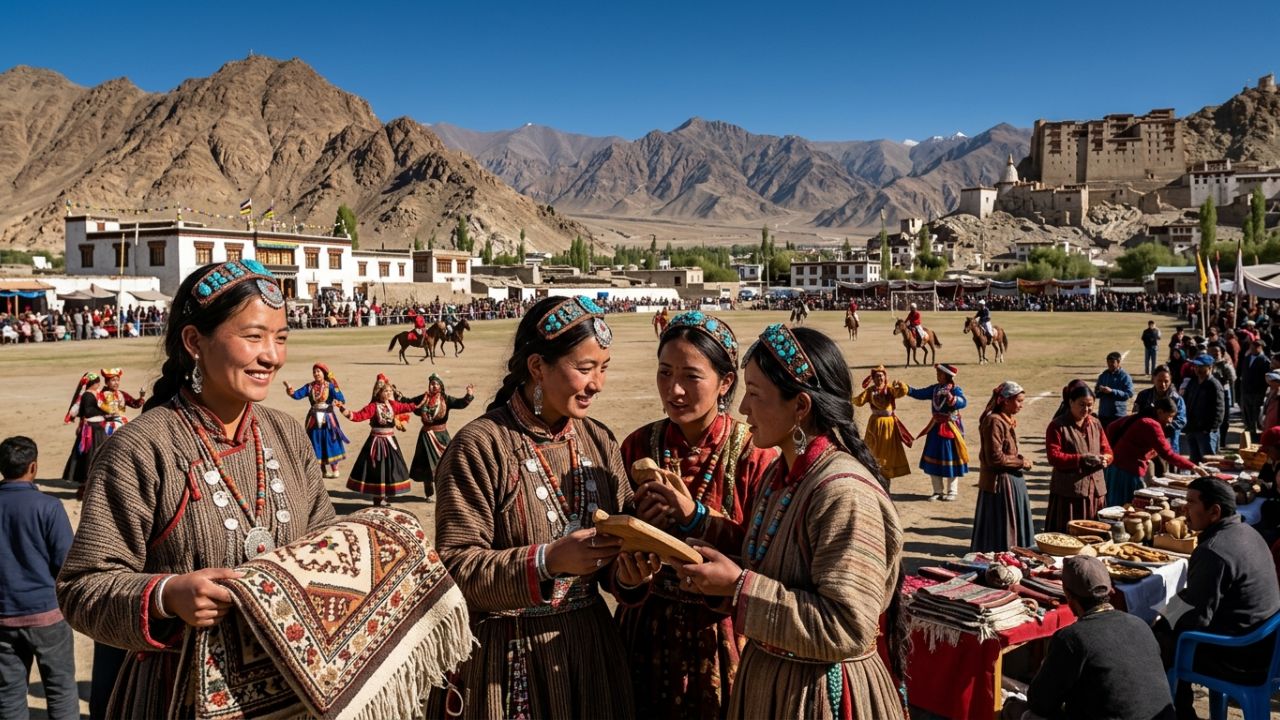
Image credit Ladakh Tourism
The Union Territory of Ladakh has launched its strategic expansion into year-round Himalayan tourism following the inauguration of the three-day Ladakh Festival 2026 at the historic Polo Ground in Leh. Official regional statistics confirm that Ladakh welcomed 4.37 lakh (437,000) tourists by September 16, 2026, surpassing the total visitor volume recorded across the entire calendar year of 2025.
The annual festival marks a policy pivot for the high-altitude territory, moving beyond summer mountain trekking toward multi-sector tourism. By integrating winter sports, astro-tourism stargazing initiatives, wellness retreats, river rafting, and village homestay networks, the Ladakh administration is establishing an all-season travel economy designed to support local artisans, hospitality providers, and transport operators throughout the calendar year.
Cultural Showcases and Equestrian Sports Infrastructure at Polo Ground Leh
The opening ceremonies of the Ladakh Festival 2026 featured a cultural procession originating from Karzoo and culminating at the Polo Ground in Leh. The parade included monastic delegations, traditional folk musicians, village representatives, equestrian troupes, and featured musical appearances by the Stringmo Sisters and the Shillong Chamber Choir.
Equestrian heritage remains a central component of the festival program, highlighted by traditional horse polo matches and a dedicated women's polo exhibition game. To support youth sports development and athletic tourism, regional authorities announced plans to develop the Chuchot Shagaran Ground into a permanent Horse Polo Academy and Centre of Excellence.
| Festival Event / Activity | Primary Venue & Location | Core Tourism Focus & Infrastructure Objective |
|---|---|---|
| Cultural Parade & Opening | Karzoo to Polo Ground, Leh | Monastic heritage, folk music, & community representation |
| Horse Polo Exhibitions | Polo Ground & Chuchot Shagaran | Equestrian sports tourism & proposed Horse Polo Academy |
| Traditional Archery | Leh Polo Ground Archery Arena | Heritage sports promotion & local club integration |
| Handicraft & Handloom Market | Leh Central Market Enclosure | Direct sales for Pashmina weavers, woodcarvers & artisans |
| Astro-Tourism & Stargazing | Leh & Hanle Dark Sky Reserve | High-altitude night-sky photography & eco-astronomy |
| River Rafting & Adventure | Indus & Zanskar River Confluence | White-water rafting, mountain biking & trekking expansion |
All-Season Tourism Strategy and Economic Impact on Local Communities
Historically, tourism in Ladakh was concentrated within a four-month summer window (May to August) when mountain passes opened for overland vehicular travel. The 2026 initiative promotes year-round travel sectors that operate independently of seasonal road closures:
- Astro-Tourism: Leveraging high atmospheric transparency, the Hanle Dark Sky Reserve and Leh stargazing sites attract international astronomers and night-sky photographers.
- Winter & Ice Tourism: Developing frozen river trekking (Chadar Trek along the Zanskar River), winter ice hockey tournaments, and snow leopard tracking expeditions in Hemis National Park.
- Village & Eco-Tourism: Expanding authentic homestays across rural villages, allowing travelers to experience traditional Ladakhi culinary arts, agriculture, and monastic life.
- Handicraft Economy: Direct sales of hand-woven Pashmina shawls, wool garments, and traditional wooden crafts provide sustained winter income for rural artisan families.
| Tourism Sector | Key Destinations / Hubs | Primary Seasonal Window | Visitor Activities & Experiences |
|---|---|---|---|
| Astro-Tourism | Hanle, Pangong Tso, Leh | Year-Round (Optimal: Sep–Mar) | Stargazing, astrophotography, dark-sky astronomy |
| Adventure & Rafting | Zanskar River, Sangam, Khardung La | Summer & Winter | White-water rafting, high-pass cycling, Chadar ice trek |
| Cultural & Heritage | Hemis, Thiksey, Diskit Monasteries | Year-Round | Monastic festivals, Ladakhi cuisine, museum tours |
| Equestrian & Sports | Chuchot Shagaran, Leh Polo Ground | Autumn & Spring | Horse polo tournaments, traditional archery matches |
Traveler Logistics Guide: Flight Access, Altitude Acclimatization, and Permits
Navigating high-altitude travel in Ladakh requires strict adherence to health protocols and administrative transit rules due to elevation conditions averaging 3,500 meters (11,500 feet) above sea level.
1. Mandatory Altitude Acclimatization Protocol
- The 48-Hour Rule: All air travelers arriving at Leh Kushok Bakula Rimpochee Airport (IXL) must undergo a mandatory 48-hour complete rest period in Leh before traveling to higher passes such as Khardung La (5,359 meters / 17,582 feet) or Chang La (5,360 meters / 17,586 feet).
- Medical Readiness: Travelers should monitor oxygen saturation levels using pulse oximeters provided by hotels, remain hydrated, and consult medical professionals regarding preventive altitude medication (such as Acetazolamide/Diamox).
2. Permit Logistics: Inner Line Permits (ILP) and Protected Area Permits (PAP)
- Permit Requirements: Indian domestic tourists require an Inner Line Permit (ILP), while foreign nationals require a Protected Area Permit (PAP) to visit restricted border zones, including Pangong Tso, Nubra Valley, Tso Moriri, and Hanle.
- Digital Application: Permits must be registered via the official LAHDC Leh portal (
lahdclehpermit.in) or obtained through registered travel agencies in Leh town.
3. Overland Transit Corridors vs. Year-Round Air Access
- Air Connectivity: Leh Airport (IXL) operates daily direct flights connecting to Delhi (DEL), Mumbai (BOM), and Srinagar (SXR). Early morning flights are subject to thermal wind delays; travelers should maintain flexible flight buffer windows.
- Srinagar-Leh Highway (NH-44 / NH-1D): Connects Srinagar to Leh via Zoji La pass (3,528 meters). Typically operational from April through November.
- Manali-Leh Highway (NH-3): Traverses high passes including Atal Tunnel, Baralacha La, and Tanglang La. Operational from May through October.
Responsible Environmental Management in High-Altitude Ecosystems
With visitor numbers reaching 4.37 lakh by mid-September 2026, the Ladakh administration is enforcing strict environmental management rules to protect the fragile Himalayan watershed. Travelers are encouraged to utilize refillable water filtration systems instead of single-use plastic bottles, respect sacred monastic customs, and support certified community-owned eco-lodges.
By combining sustainable tourism management with rich cultural heritage, Ladakh's year-round travel model ensures long-term economic resilience for mountain communities while preserving the unique identity of the region.
FAQ: Ladakh Festival & Travel Logistics 2026
Where is the Ladakh Festival 2026 held?
The main cultural events and equestrian sports exhibitions of the Ladakh Festival 2026 are held at the historic Polo Ground in Leh.
How many tourists visited Ladakh by September 16, 2026?
Ladakh recorded 4.37 lakh (437,000) tourist arrivals by September 16, 2026, exceeding total arrivals for the entire year of 2025.
What permits are required for visiting Nubra Valley, Pangong Tso, and Hanle?
Indian citizens require an Inner Line Permit (ILP), while international travelers require a Protected Area Permit (PAP), obtainable online via the official LAHDC Leh permit portal.
What is the recommended acclimatization period upon flying into Leh?
A mandatory 48-hour rest period in Leh (3,500 meters elevation) is required prior to traveling to higher mountain passes or lakes to prevent acute mountain sickness (AMS).
Related Travel Guides
Disclaimer
This article is for informational and educational purposes only. It does not constitute legal, financial, or professional advice. While we strive to provide accurate and up-to-date information, travel policies, regulations, and conditions change rapidly. Always verify information with official sources before making travel decisions. Nomad Lawyer makes no representations about the accuracy, reliability, completeness, or suitability of the information provided. Readers should consult qualified professionals for advice specific to their circumstances. The views expressed in this article are those of the author and do not necessarily reflect the views of Nomad Lawyer.
Kunal K Choudhary
Co-Founder & Contributor
A passionate traveller and tech enthusiast. Kunal contributes to the vision and growth of Nomad Lawyer, bringing fresh perspectives and driving the community forward.
Learn more about our team →