
Bulgaria Proposes 50% Tourism Tax Revenue Reallocation to Fund Airline Connectivity and Drive 8 Million Foreign Arrivals
Bulgaria proposes allocating 50% of municipal tourism tax revenue to international destination marketing and airline route development to double foreign arrivals to 8 million.

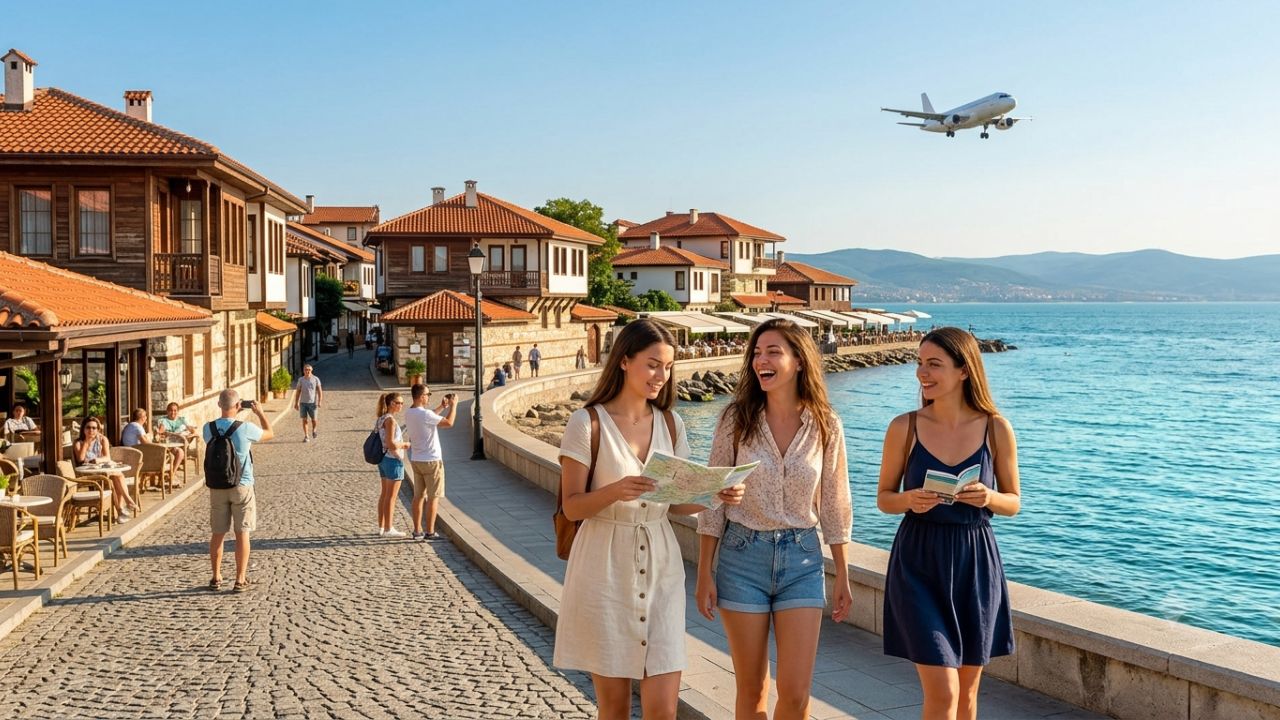
Image generated by AI
The Bulgarian government has unveiled a comprehensive tourism funding reform proposing that 50% of all municipal tourism tax revenue be reallocated directly toward international destination marketing, route development incentives for airlines, and year-round cultural events. The policy shift underpins an ambitious national strategy to double annual foreign tourist arrivals from 4 million to 8 million by the conclusion of the current administrative term.
The proposed reform decentralizes destination promotion, allowing regional municipalities and coastal hubs along the Black Sea to fund seasonal events, establish low-cost airline co-op marketing, and expand shoulder-season travel. Supporting an industry that employs approximately 135,000 workers, the initiative connects transport accessibility with international marketing to position Bulgaria as a competitive year-round destination across Southeastern Europe.
Key Financial and Strategic Pillars of Bulgaria's Tourism Tax Reform
Under the proposed framework, half of all collected hotel and resort tourist tax revenues will be ring-fenced for promotion, air link subsidies, and international event hosting.
| Policy Pillar | Revenue Allocation / Target | Strategic Objectives & Implementation |
|---|---|---|
| Tax Revenue Reallocation | 50% of Municipal Tourism Tax | Dedicated funding for global marketing, flight incentives & events |
| Foreign Visitor Target | 8 Million Arrivals (from 4M baseline) | Doubling international visitor volume by end of government term |
| Workforce Impact | 135,000 Direct Jobs Supported | Strengthening employment across hotels, transit, & local services |
| Global Operator Alliance | 3-Year TUI Group Framework | Joint promotional campaigns & international hotel brand developments |
| Regional Balkan Tourism | Multi-Country Balkan Promotion | Collaborative cross-border travel itineraries with neighboring nations |
Corporate Alliances: 3-Year Framework Agreement with TUI Group
To guarantee long-term visitor growth, the Bulgarian Ministry of Tourism has established a three-year strategic framework agreement with global travel operator TUI Group. The partnership focuses on expanding summer charter flight capacity into coastal airports, conducting joint digital marketing campaigns across key European source markets (including Germany, the UK, and Scandinavia), and evaluating international brand hotel development along the Black Sea coast.
In addition to commercial tour operator alliances, Bulgaria is investing in major regional event hosting to extend the travel season. Highlights include a new international marathon event scheduled in Burgas, positioned strategically between Eurovision activities and the start of the summer beach season to attract athletic and city-break visitors.
| Tourism Sector | Primary Gateway Cities | Key Strategic Focus Areas | Target Visitor Source Markets |
|---|---|---|---|
| Cultural & City Tourism | Sofia (SOF), Plovdiv (PDV) | Year-round heritage tours, gastronomy, business travel | Germany, UK, Italy, Greece |
| Black Sea Coastal Resorts | Varna (VAR), Burgas (BOJ) | Summer beach resorts, family holidays, charter flights | UK, Germany, Poland, Czechia |
| Mountain & Winter Sports | Bansko, Borovets, Pamporovo | Skiing, snowboarding, autumn eco-tourism | UK, Romania, Serbia, Greece |
Regional Balkan Cooperation and Transport Integration
As part of its long-term strategy, Bulgaria is advocating for a unified Balkan regional tourism initiative. By encouraging neighboring Southeastern European nations to coordinate promotional programs and simplify cross-border transit, the government aims to create multi-destination Balkan itineraries for long-haul international travelers from Asia, North America, and the Gulf region.
Improved air links into Sofia Airport (SOF), Varna Airport (VAR), Burgas Airport (BOJ), and Plovdiv Airport (PDV) are identified as essential prerequisites for capturing multi-city regional travel.
Practical Traveler Logistics Guide: Navigating Bulgaria
Travelers visiting Bulgaria can optimize travel logistics across coastal, mountain, and historic city destinations by reviewing key operational rules:
1. International Airport Gateways
- Sofia International Airport (SOF): Main national hub with Metro Line 1 connections directly into central Sofia (20-minute transit time).
- Coastal Gateways (Varna VAR & Burgas BOJ): Handle heavy seasonal charter and low-cost flight volume from May through October.
- Plovdiv Airport (PDV): Primary gateway for Southern Bulgarian ski resorts in Pamporovo.
2. Visa & Border Rules
- Schengen Status: Bulgaria's accession to the Schengen Area covers air and sea borders, removing passport controls for passengers arriving on flights from other Schengen member states. Land border controls remain operational pending full integration.
- Passport Validity: Non-EU/EEA passport holders must hold passports valid for at least three months beyond their intended departure date.
3. Local Tourist Taxes and Currency
- Municipal Tourist Tax: Ranging between 0.20 BGN and 3.00 BGN (€0.10 to €1.50) per person per night, tourist tax is collected directly at hotel check-in.
- Currency: The official currency is the Bulgarian Lev (BGN), pegged to the Euro at a rate of 1 EUR = 1.95583 BGN. Credit card acceptance is widespread in major cities and resorts, though carrying cash is advised for rural mountain villages.
FAQ: Bulgaria Tourism Tax Reform 2026
What proportion of Bulgaria's tourism tax will be reallocated under the new plan?
Under the proposed reform, 50% of municipal tourism tax revenues will be allocated directly to destination marketing, event hosting, and air connectivity incentives.
What is Bulgaria's official target for foreign tourist arrivals?
Bulgaria aims to double its annual foreign tourist arrivals from 4 million to 8 million visitors by the end of the current administrative term.
What major tour operator partnership has Bulgaria secured?
Bulgaria signed a three-year framework agreement with TUI Group covering joint destination marketing, charter flight capacity expansion, and hotel development.
How many workers are employed in Bulgaria's tourism sector?
The tourism industry directly supports approximately 135,000 jobs across Bulgaria.
Related Travel Guides
Disclaimer
This article is for informational and educational purposes only. It does not constitute legal, financial, or professional advice. While we strive to provide accurate and up-to-date information, travel policies, regulations, and conditions change rapidly. Always verify information with official sources before making travel decisions. Nomad Lawyer makes no representations about the accuracy, reliability, completeness, or suitability of the information provided. Readers should consult qualified professionals for advice specific to their circumstances. The views expressed in this article are those of the author and do not necessarily reflect the views of Nomad Lawyer.
Kunal K Choudhary
Co-Founder & Contributor
A passionate traveller and tech enthusiast. Kunal contributes to the vision and growth of Nomad Lawyer, bringing fresh perspectives and driving the community forward.
Learn more about our team →