
Kuwait International Airport Faces Global Disruptions With 51 Flight Delays and 4 Cancellations Affecting Gulf and Asia Routes in 2026
Kuwait International Airport reports 51 flight delays and 4 cancellations, primarily impacting Kuwait Airways and Jazeera Airways across Gulf, India, and Asia routes.

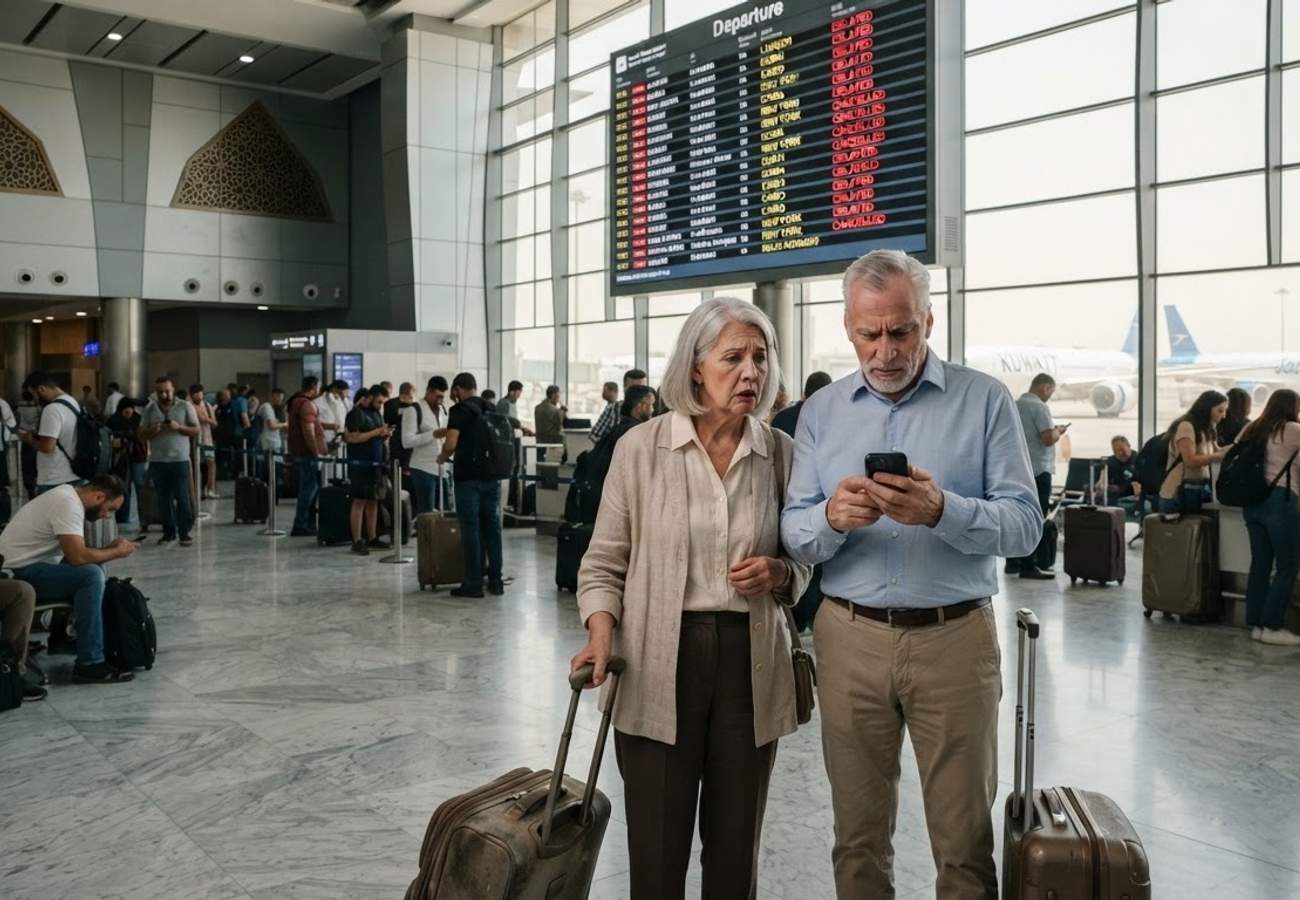
Image generated by AI
Kuwait International Airport is currently experiencing significant operational instability, resulting in 51 flight delays and 4 cancellations. The disruptions impact critical corridors connecting Kuwait City with major hubs across the Gulf, South Asia, and the Middle East.
Our analysis of real-time aviation data indicates that while total cancellations remain low, the volume of delays is creating substantial ripple effects for passengers on onward journeys and connecting flights.
Flight and Airport Impact Breakdown
The disruption is widespread, affecting both national carriers and international operators. Flight tracking systems show the following distribution of impact:
Airline Performance Data
- Kuwait Airways Corporation: Most affected carrier with 30 delays, representing approximately 38% of its listed operations.
- Jazeera Airways: 9 delays and 2 cancellations.
- Akasa Air: 2 cancellations.
- Air India Express: 2 delays (100% of listed flights affected).
- Etihad Airways: 2 delays.
- IndiGo: 2 delays.
- Nile Air: 2 delays.
- Air Arabia Abu Dhabi, Gulf Air, Oman Air, and Air Arabia: 1 delay each.
Primary Destination Hubs Affected
- Dubai (DXB): 1 cancellation and 2 delays.
- Cairo (CAI): 3 delays.
- Mumbai (BOM): 1 cancellation.
- Abu Dhabi (AUH): 2 delays.
- Kathmandu (KTM): 2 delays.
- Other Regional Impact: 1 delay each reported for Sharjah (SHJ), Bahrain (BAH), Riyadh (RUH), Muscat (MCT), Doha (DOH), and Istanbul Sabiha Gokcen (SAW).
South Asia and Global Route Impact Specific delays have been recorded for flights arriving from or departing to:
- India: Ahmedabad (AMD), Bengaluru (BLR), Hyderabad (HYD), Chennai (MAA), and Thiruvananthapuram (TRV) each recorded 1 delay.
- Asia/Middle East: Dhaka (DAC), Colombo (CMB), Alexandria (HBE), Sohag (HMB), Amman (ADJ), Beirut (BEY), Damascus (DAM), Guangzhou (CAN), and Manila (MNL) each reported 1 delay.
Passenger Rights & Advisory
Passengers facing delays or cancellations at Kuwait International Airport should be aware of their rights and the necessary steps to mitigate travel losses.
Immediate Action Plan
- Status Verification: Verify flight status via the airline's official app or FlightAware before departing for the airport.
- Transit Coordination: Passengers with tight connections in Kuwait must contact their next carrier immediately to request a "protected transfer" or rebooking if the incoming flight is delayed.
- Documentation: Keep all boarding passes, receipts for out-of-pocket expenses (food, water, hotels), and screenshots of delay notifications.
Compensation and Rebooking Rights
- Rebooking: Under standard aviation policy, passengers on cancelled flights are entitled to be re-routed to their final destination at the earliest opportunity or receive a full refund.
- Duty of Care: Depending on the length of the delay and the airline's home country regulations (e.g., EU261 for European carriers or equivalent national policies), passengers may be entitled to meal and refreshment vouchers.
- Hotel Accommodations: If a cancellation or delay necessitates an overnight stay, airlines are generally expected to provide or reimburse reasonable hotel accommodations and transport between the airport and the hotel.
Industry Analyst View
The current operational pressure at Kuwait International Airport highlights the fragility of regional hub-and-spoke models. When a primary gateway experiences a cluster of delays—particularly affecting a national carrier like Kuwait Airways—it creates a "domino effect" across the network.
The fact that delays are spread across multiple carriers rather than concentrated in one operator suggests a systemic airport operational issue rather than an airline-specific technical failure. For carriers like Jazeera Airways and Kuwait Airways, the high percentage of affected flights indicates a struggle with aircraft rotation and crew scheduling, which often persists for 24 to 48 hours after the initial disruption.
Operational recovery is expected as airlines stabilize aircraft rotations and crew duty limits.
Related Travel Guides
Disclaimer
This article is for informational and educational purposes only. It does not constitute legal, financial, or professional advice. While we strive to provide accurate and up-to-date information, travel policies, regulations, and conditions change rapidly. Always verify information with official sources before making travel decisions. Nomad Lawyer makes no representations about the accuracy, reliability, completeness, or suitability of the information provided. Readers should consult qualified professionals for advice specific to their circumstances. The views expressed in this article are those of the author and do not necessarily reflect the views of Nomad Lawyer.
Raushan Kumar
Founder & Lead Developer
Full-stack developer with 11+ years of experience and a passionate traveller. Raushan built Nomad Lawyer from the ground up with a vision to create the best travel and law experience on the web.
Learn more about our team →