
Konark Sun Temple Odisha 2026: The 13th-Century Chariot in Stone
The Konark Sun Temple remains a masterpiece of 13th-century Indian engineering, featuring 24 intricate sundial wheels and stone carvings that capture the vibrant social life of the Eastern Ganga Dynasty.

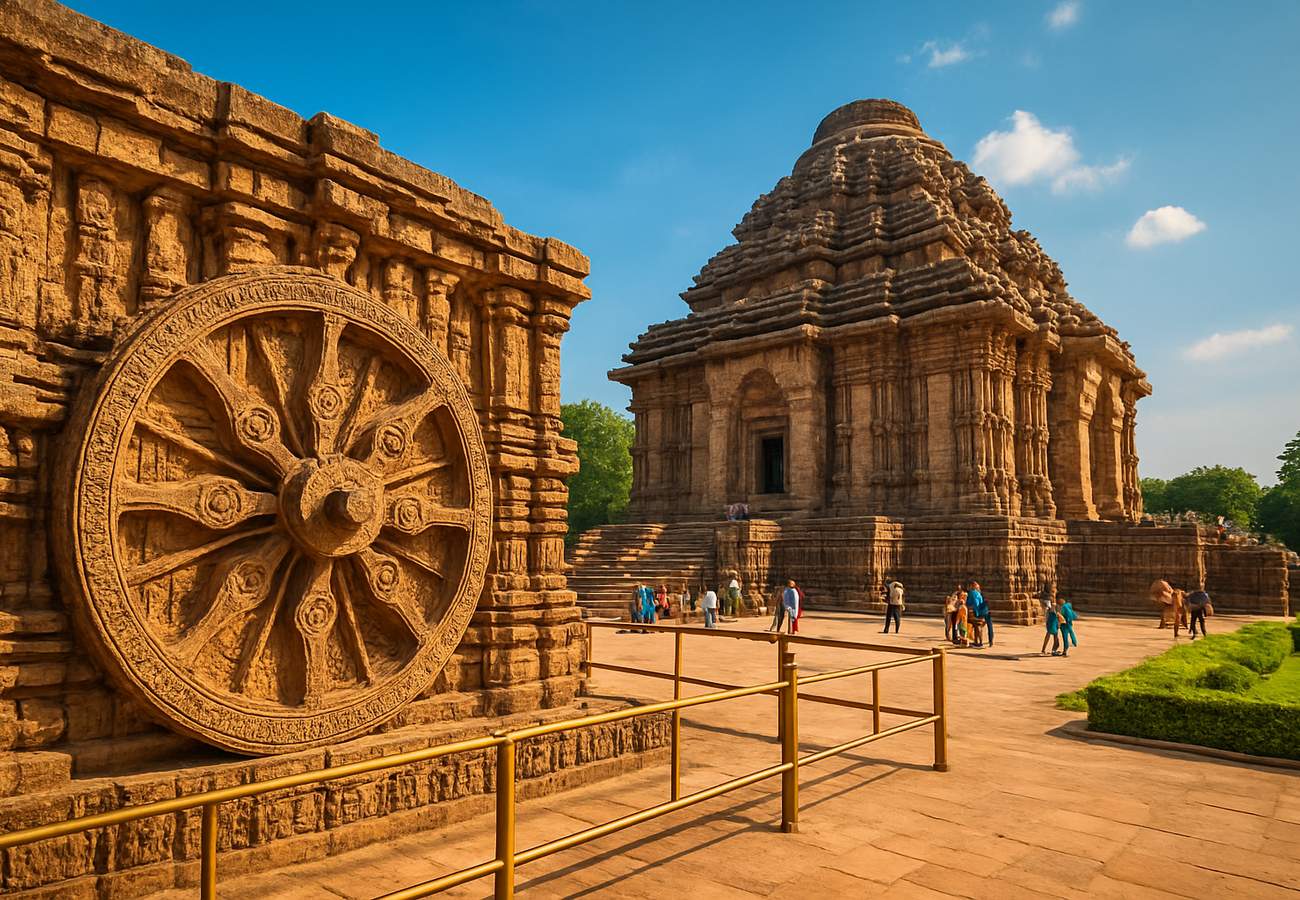
Image generated by AI
Quick Summary
- Dynastic Legacy: Constructed in the 13th century by King Narasimhadeva I of the Eastern Ganga Dynasty, the temple is dedicated to the Sun God, Surya.
- Engineering Marvel: Shaped like a colossal stone chariot, it features 24 wheels that function as precise sundials and 7 horses representing the days of the week.
- Historical Record: The temple walls are adorned with intricate carvings depicting daily life, dancers, musicians, and royal weddings from medieval India.
- Global Recognition: Designated a UNESCO World Heritage Site in 1984, the temple continues to be a major hub for historians, photographers, and heritage travelers in 2026.
The Konark Sun Temple, situated on the coastline of Odisha, stands as one of the most sophisticated examples of ancient Indian architecture and astronomical precision. In 2026, it remains a primary destination for those seeking to understand the fusion of science and art in the 13th century. Designed as a celestial chariot for the Sun God, the temple’s geometry allows it to function as a giant timekeeping device, with its stone wheels marking the hours with remarkable accuracy. Beyond its scientific significance, the temple serves as a "stone library," preserving the social, cultural, and mythological narratives of the Eastern Ganga Dynasty through thousands of detailed sculptures that wrap around its massive sandstone base.
Konark Sun Temple: Architectural Features and Visitor Logistics 2026
The temple’s design is a complex integration of religious symbolism and structural engineering.
| Feature / Detail | Specification | Historical / Tourism Significance |
|---|---|---|
| Structure Type | Chariot of the Sun God | Symbolic of Surya’s celestial journey |
| Wheels | 24 Intricately Carved Wheels | Function as Sundials to mark time |
| Horses | 7 Stone Horses | Representing the 7 days of the week |
| Dynasty | Eastern Ganga Dynasty | High point of Odishan temple architecture |
| UNESCO Status | World Heritage Site (1984) | Global recognition of cultural value |
| Best Time to Visit | October to February | Ideal weather and Konark Dance Festival |
| Nearest Airport | Bhubaneswar (BBI) | 65 kilometres from the temple |
A Chariot in Stone: The Symbolism of the 24 Wheels and 7 Horses
The Konark Sun Temple is built as a chariot with 12 pairs of wheels, each approximately 10 feet in diameter:
- The Wheels: These are not merely decorative; the spokes of the wheels cast shadows that can be used to tell the time of day with near-perfect precision.
- The Horses: Seven stone horses draw the chariot, symbolizing the passage of time through the week.
- Material: The structure was primarily built from three types of stone: chlorite, laterite, and khondalite, used strategically for durability and fine carving.
13th-Century Life: Detailed Carvings as a Historical Record
The temple's exterior acts as a window into the daily life of 13th-century Odisha:
- Social Scenes: Carvings depict everything from royal court scenes and military processions to simple daily chores and hunting trips.
- Artistic Expression: Thousands of figures of dancers and musicians in various poses illustrate the rich cultural traditions that existed during the Eastern Ganga reign.
- Mythology: Elaborate sculptures of deities, celestial beings, and mythical creatures populate the temple’s friezes, reflecting the era’s deep religious devotion.
UNESCO World Heritage Status and Global Conservation
Since its 1984 designation, the Konark Sun Temple has been a focal point of international conservation efforts:
- Preservation: While the main sanctum (Vimana) is in ruins, the audience hall (Jagamohana) remains largely intact and is the subject of ongoing archaeological study.
- Global Appeal: In 2026, the temple attracts over a million visitors annually, contributing significantly to Odisha’s tourism-linked economic growth.
- Cultural Symbol: The iconic wheel of Konark is a widely recognized symbol of India, even appearing on the national currency.
The Konark Dance Festival: A December Cultural Highlight
For travelers in 2026, the month of December offers a unique immersive experience:
- Konark Dance Festival: Held annually with the temple as a backdrop, this festival showcases traditional Indian classical dance forms like Odissi, Bharatanatyam, and Kathak.
- Handicraft Fair: A concurrent fair allows visitors to purchase traditional Odishan textiles and stone crafts directly from local artisans.
Regional Heritage: Integrating Konark with Puri and Chilika Lake
A visit to Konark is typically part of a broader "Golden Triangle" heritage circuit:
- Puri (35 km): Home to the historic Jagannath Temple, another 12th-century marvel.
- Chilika Lake: Asia’s largest brackish water lagoon, famous for its bird sanctuary and Irrawaddy dolphin sightings.
- Bhubaneswar (65 km): The "Temple City of India," featuring the 11th-century Lingaraj Temple.
FAQ: Konark Sun Temple 2026
How do the wheels of Konark tell the time? The 24 wheels act as sundials. By observing the shadow cast by the hub on the spokes, one can determine the precise time of day.
Can you go inside the Konark Sun Temple? Visitors can explore the external grounds and the audience hall, but the main sanctum was filled with sand in the early 20th century to prevent structural collapse.
What is the best way to reach Konark? The temple is best reached by road from Bhubaneswar (65 km) or Puri (35 km). Taxis and regular bus services are available from both cities.
Related Travel Guides
Disclaimer
This article is for informational and educational purposes only. It does not constitute legal, financial, or professional advice. While we strive to provide accurate and up-to-date information, travel policies, regulations, and conditions change rapidly. Always verify information with official sources before making travel decisions. Nomad Lawyer makes no representations about the accuracy, reliability, completeness, or suitability of the information provided. Readers should consult qualified professionals for advice specific to their circumstances. The views expressed in this article are those of the author and do not necessarily reflect the views of Nomad Lawyer.
Kunal K Choudhary
Co-Founder & Contributor
A passionate traveller and tech enthusiast. Kunal contributes to the vision and growth of Nomad Lawyer, bringing fresh perspectives and driving the community forward.
Learn more about our team →