
KLM Cityhopper Marks 60 Years of Regional Aviation with 350 Daily Flights
KLM Cityhopper celebrates 60 years of operations, serving 80+ destinations with 350 daily flights via Amsterdam Schiphol using Embraer E195-E2 aircraft.

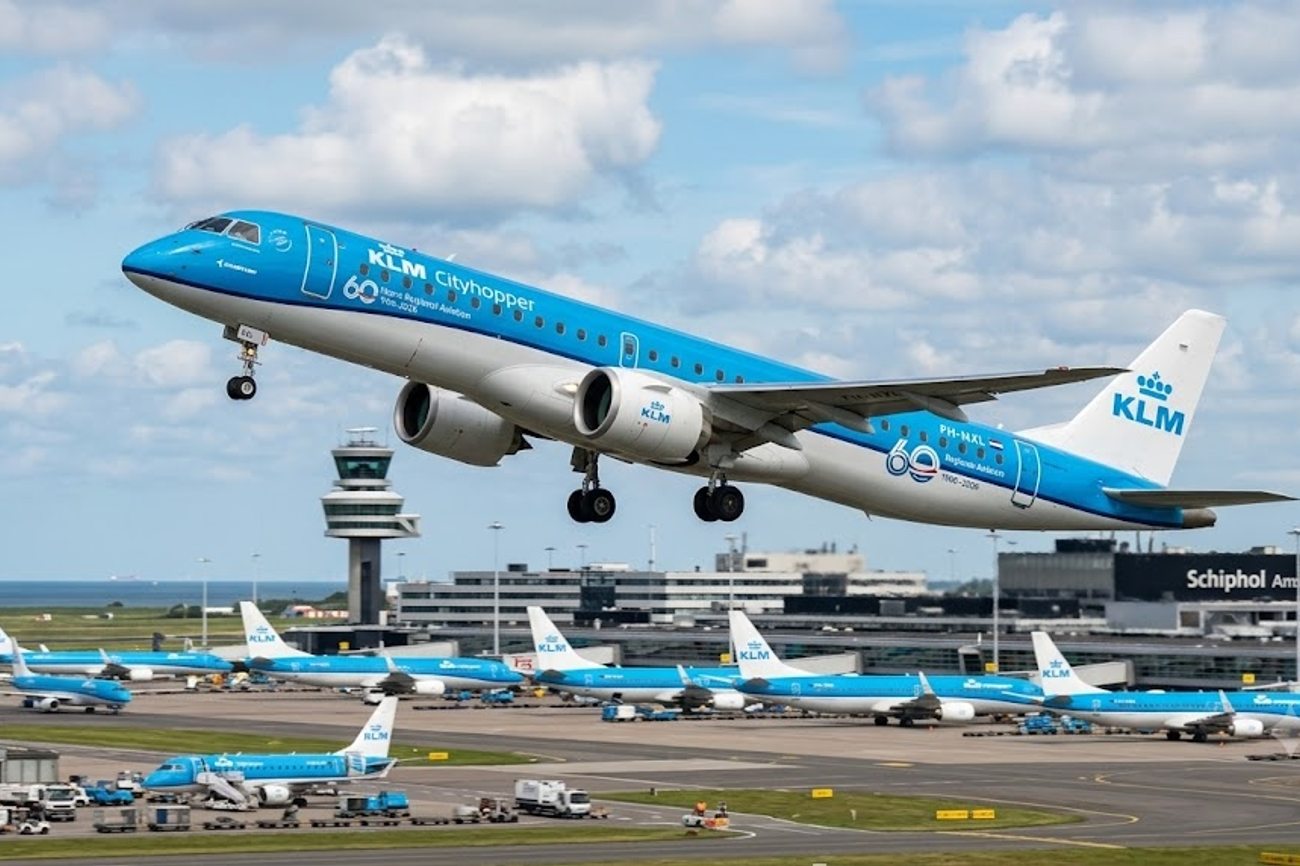
Image generated by AI
[AMSTERDAM, September 11, 2026] — KLM Cityhopper is celebrating its 60th anniversary, marking six decades of scaling its regional operations from a modest domestic carrier into a cornerstone of European aviation. Since its inception in 1966, the airline has expanded to a fleet of 58 aircraft, facilitating more than 350 daily flights across a network of over 80 destinations.
The carrier serves as the primary feeder for the Amsterdam Airport Schiphol hub, transporting roughly 11 million passengers each year. By providing high-frequency short-haul connectivity, the airline enables seamless transitions for travelers moving between smaller European cities and KLM’s extensive long-haul global network.
Evolution from NLM to a European Powerhouse
The airline's origins date back to 1966 with the founding of Nederlandse Luchtvaart Maatschappij (NLM). In its earliest days, the operation was lean, utilizing only two leased Fokker aircraft to provide basic domestic connectivity within the Netherlands. As demand for regional travel grew, the company looked beyond national borders, steadily integrating more European routes into its schedule.
The transition to the "Cityhopper" brand occurred in 1976, a move that signaled a strategic shift toward a broader regional identity. The airline's current scale is the result of several key consolidations, including a 1991 merger with NetherLines and the subsequent integration of KLM UK. These milestones transformed the carrier from a local service provider into the regional arm of one of the world's oldest airlines.
Expanding the European Footprint
To maintain its competitive edge and support the Netherlands' status as a global aviation crossroads, KLM Cityhopper has aggressively pursued network expansion. The airline has recently added several strategic destinations to its map, increasing accessibility for passengers in diverse markets.
New additions to the route network include:
- Spain: Santiago de Compostela and Oviedo
- Portugal/France: Biarritz
- UK/Channel Islands: Exeter and Jersey
- Ireland: Cork
- Croatia/Slovenia: Dubrovnik and Ljubljana
Maarten Koopmans, Managing Director of KLM Cityhopper, attributed this growth to an entrepreneurial spirit and the dedication of the workforce, noting that the airline now plays a pivotal role in bridging the gap between European regional centers and the rest of the world.
Driving Aviation Innovation and Sustainability
Due to its smaller scale and operational agility, KLM Cityhopper frequently serves as a laboratory for the wider KLM Group. The airline implements new technologies and operational workflows on a regional scale before they are scaled across the larger organization.
One such advancement is the integration of virtual reality (VR) into pilot training. By utilizing VR, the airline has created a sustainable alternative to traditional, resource-heavy flight simulators and live aircraft training, allowing pilots to hone their skills with greater flexibility.
The airline has also deployed "OptiClimb," a digital optimization tool designed to slash fuel consumption. OptiClimb analyzes real-time variables—including aircraft weight, current weather patterns, aircraft type, and specific route data—to provide flight crews with the most efficient climb speeds. This precision reduces carbon emissions and lowers overall fuel burn per flight.
Furthermore, the carrier is an active participant in "The Aviation Challenge." Now in its fourth year, this initiative focuses on five key pillars of modernization:
- Integration of Artificial Intelligence (AI)
- Scaling Sustainable Aviation Fuel (SAF)
- Reduction of total aircraft weight
- Mitigation of onboard food waste
- Electrification of ground support operations
Fleet Modernization and the Shift to Embraer
The airline's hardware has evolved as significantly as its software. For decades, the carrier relied on aircraft from the Dutch manufacturer Fokker. However, a strategic pivot in 2008 led to the adoption of Embraer aircraft, which now form the backbone of the regional fleet.
The centerpiece of the current modernization effort is the Embraer E195-E2. This aircraft model was selected specifically for its operational efficiency and environmental profile. The E195-E2 offers significantly lower noise levels and superior fuel efficiency compared to previous generations, aligning with the airline's goals to reduce its environmental footprint while maintaining high passenger capacity.
| Metric | Detail |
|---|---|
| Founded | 1966 (as NLM) |
| Current Fleet Size | 58 Aircraft |
| Daily Flight Volume | 350+ Flights |
| Annual Passenger Volume | ~11 Million |
| Primary Hub | Amsterdam Airport Schiphol (AMS) |
| Core Aircraft Model | Embraer E195-E2 |
| Total Destinations | 80+ |
Why This Matters: The Impact on the Modern Traveler
For the average traveler, the evolution of KLM Cityhopper represents more than just corporate growth; it signifies a shift in how regional Europe is accessed. The transition to the Embraer E195-E2 means passengers experience quieter cabins and more modern interiors, while the expansion into cities like Ljubljana and Oviedo reduces the need for cumbersome ground transfers from larger hubs.
From a logistical standpoint, the use of tools like OptiClimb and VR training indicates a move toward "precision aviation." When an airline optimizes climb speeds and training, it reduces the likelihood of delays and lowers the cost of operations—efficiencies that are essential for maintaining the viability of short-haul routes in an era of rising fuel costs and strict environmental regulations.
The airline's focus on "The Aviation Challenge" suggests that regional carriers will be the primary drivers of the "green transition." Because regional flights are more frequent and shorter, they provide the ideal testing ground for electric ground operations and SAF integration, which will eventually trickle down to the long-haul experience.
Related Travel Guides
Disclaimer
This article is for informational and educational purposes only. It does not constitute legal, financial, or professional advice. While we strive to provide accurate and up-to-date information, travel policies, regulations, and conditions change rapidly. Always verify information with official sources before making travel decisions. Nomad Lawyer makes no representations about the accuracy, reliability, completeness, or suitability of the information provided. Readers should consult qualified professionals for advice specific to their circumstances. The views expressed in this article are those of the author and do not necessarily reflect the views of Nomad Lawyer.
Preeti Gunjan
Contributor & Community Manager
A passionate traveller and community builder. Preeti helps grow the Nomad Lawyer community, fostering engagement and bringing the reader experience to life.
Learn more about our team →