
Kissing Elephants Rock Arch Collapse in Malta Kills One, Injures Another Near Comino Tourist Zone
A devastating limestone arch collapse near Comino kills a 26-year-old jet skier and injures another after a tourist jumps from the fragile formation, sparking urgent Mediterranean coastal safety debates.

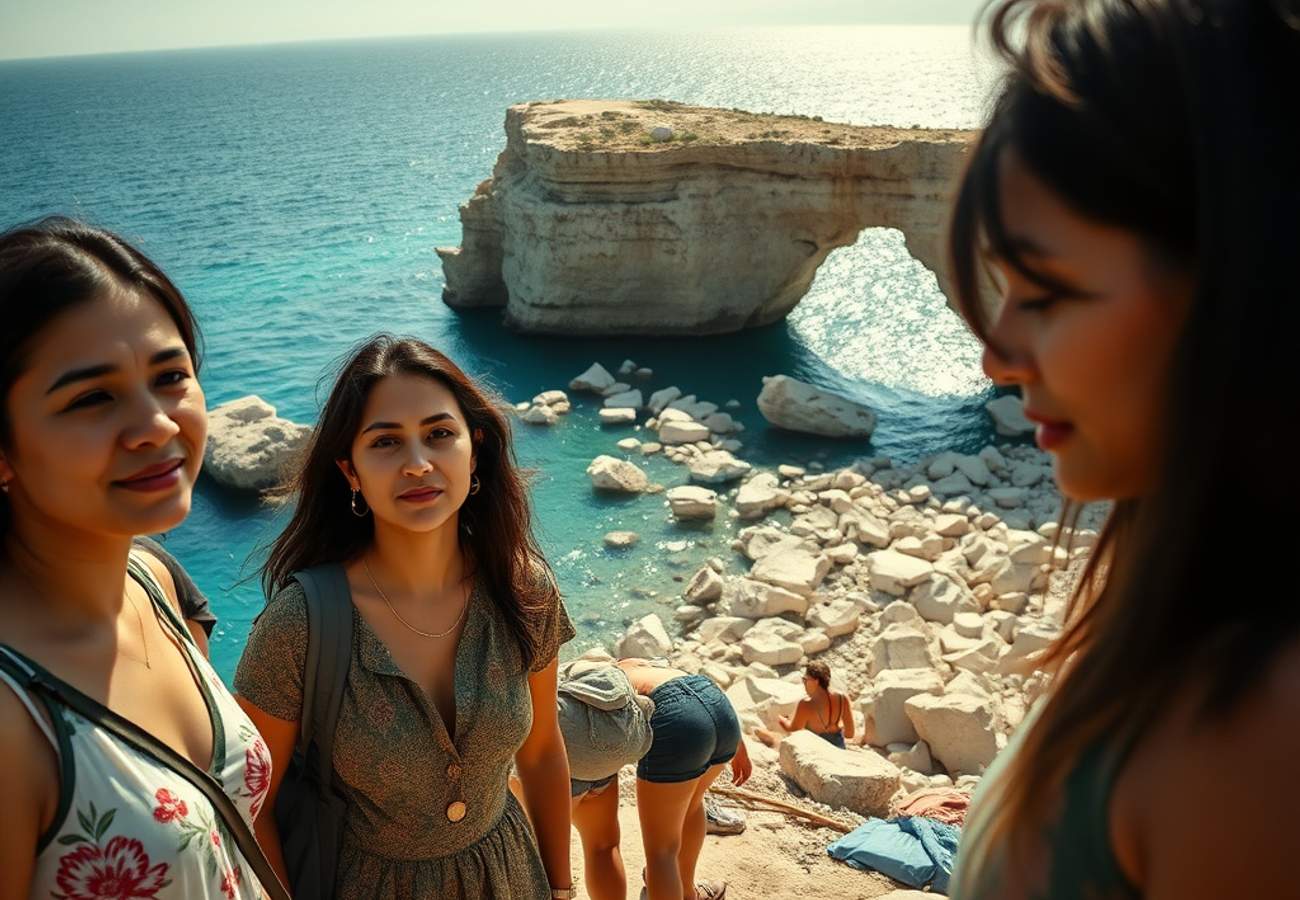
Image generated by AI
A Catastrophic Collapse Transforms Malta's Iconic Landmark Into a Crime Scene
The Mediterranean just claimed another victim in a way few could have predicted. On July 1, 2026, the dramatic "Kissing Elephants" limestone arch—a natural rock formation beloved by tourists worldwide—collapsed without warning near Comino, one of Malta's most visited coastal zones. One person is dead. Another fights for recovery from serious injuries. And questions about unregulated tourism at fragile geological sites are now screaming louder than ever.
The victims tell a grim story: a 26-year-old Chinese jet skier who died at the scene, and a 27-year-old woman who sustained severe injuries. They were in the wrong place when 32 million tons of limestone decided to return to the sea.
Reddit: "I was there just three weeks ago. We were all climbing on those rocks. This could have been any of us." — r/travel
The Human Element: A Jump That Changed Everything
Here's where the narrative darkens. Eyewitnesses report that a 32-year-old American tourist jumped from the top of the fragile arch into the water below. Moments later—seconds that might as well have been a countdown timer—the entire formation began its catastrophic descent.
Large sections of limestone crashed into the surrounding water with force enough to strike the jet skier with fatal impact. The woman nearby sustained serious injuries from the debris field. Emergency responders arrived to a scene of geological chaos: massive rock fragments scattered across the seafloor, limited visibility, and no time for those in the water to escape.
The timing was brutal. The impact was instantaneous. The outcome was irreversible.
Preliminary investigations haven't officially determined causation, but early indicators point in one direction: human activity destabilized an already fragile structure. These limestone arches in the Mediterranean region are naturally eroded, continuously weakened by wind, wave action, and saltwater exposure. They're ticking clocks—and sometimes tourists accidentally hit the alarm.
Emergency Services Launch Major Recovery Operation
What followed was one of Malta's most complex maritime rescue operations in recent memory. Maltese emergency services—police units, marine divers, and specialized recovery teams—mobilized immediately to handle both victims and the underwater debris field.
The challenge was immense. Rescue teams relied on surveillance footage from a nearby beach club to reconstruct the exact sequence of events and pinpoint where victims were located. This footage became invaluable in guiding operations and assessing the underwater impact zone.
Because of the scale of submerged debris, authorities deployed heavy crane barges to clear massive limestone fragments and create safe access routes for divers. The terrain beneath the surface was unstable, visibility was poor, and the risk of secondary collapses loomed throughout the operation.
Divers worked under dangerous conditions for several hours, navigating the wreckage while prioritizing both recovery and operational safety. It was the kind of coordinated effort that only happens when tragedy forces every hand on deck.
Why the "Kissing Elephants" Mattered—And Why It's Now a Warning
The "Kissing Elephants" got its name from an obvious reason: the two peaks of the limestone arch resembled elephant heads facing each other. For years, it was the Instagram shot, the diving spot, the place where adventure-seekers and casual tourists converged to capture Mediterranean magic.
The formation sits in one of the Mediterranean's busiest tourist corridors. Boating, jet skiing, swimming, cliff diving—all concentrated in waters near Comino during peak summer months when visitor density reaches critical levels.
But here's what tourism boards rarely advertise: limestone formations in this region are inherently unstable. They've been eroding for millennia, and every storm, every wave, every human foot adds stress to structures that are already running on borrowed geological time.
What experts are now openly asking is this: Should tourists have unrestricted access to formations that are, quite literally, falling apart?
Environmental observers point out that increased tourist activity—climbing, jumping, swimming beneath these arches—may actively accelerate erosion and destabilize weakened rock. Add summer crowds, add recreational activities, add the occasional poor judgment call, and you've got a recipe for exactly what happened here.
The Investigation and the Uncomfortable Questions Ahead
Malta's authorities have launched a formal investigation. They'll examine geological stability reports, weather conditions in the days preceding the collapse, visitor behavior patterns, and whether the structural failure was inevitable or human-triggered.
They'll also likely review—and probably overhaul—existing safety guidelines for coastal attractions involving natural rock formations. As it stands, many such sites across the Mediterranean operate without formal safety barriers, warning systems, or visitor supervision.
Tourism authorities face a brutal balancing act: promote Malta's legendary natural beauty while ensuring visitors don't die exploring it.
Reddit: "I've been to twelve countries around the Med. None of them have proper warning signs at these unstable rock sites. This tragedy needed to happen to change that mindset." — r/adventure
This incident will almost certainly trigger broader discussions about restricting access to vulnerable formations, implementing mandatory warning systems, and educating tourists about the genuine risks of cliff jumping and climbing on ancient limestone.
Broader Mediterranean Implications: When Tourism Meets Fragile Geology
This isn't just a Malta problem. It's a Mediterranean problem.
Across Greece, Croatia, Spain, and Italy, natural rock formations—arches, stacks, sea cliffs—attract massive tourist volumes every summer. Most lack formal safety infrastructure. Many are geologically unstable. Few visitors truly understand that the beautiful limestone formation they're posing in front of could fail at any moment.
According to geological surveys, limestone coastal formations across the Mediterranean are experiencing accelerated erosion due to climate change, increased wave action, and tourism pressure. The combination creates what experts call a "perfect storm" for incidents like Comino.
Peak tourism season amplifies the risk exponentially. July through August sees visitor densities that put enormous pressure on already-vulnerable sites. The math is simple and terrifying: more people + fragile rocks + recreational risk-taking = statistical inevitability of tragedy.
What Travelers Need to Know Right Now
If you're planning Mediterranean travel, understand this: natural rock formations are not theme park attractions. They're not engineered for safety. They're not inspected by regulators.
When a local guide or tourism operator tells you a cliff jump is "totally safe," remember that safety was never a factor when that limestone arch formed 65 million years ago. Natural beauty and structural stability are not correlated.
Before visiting any Mediterranean coastal site involving natural rock formations, check current travel advisories from your government and local tourism authorities. Ask about recent incidents, geological stability, and visitor policies.
The Uncomfortable Truth: Malta's Reckoning Has Just Begun
The "Kissing Elephants" collapse represents something larger than a single incident. It's a collision between mass tourism and geological fragility—a reminder that not everything Instagram-famous is safe, not everything scenic is stable, and not every natural formation can survive the weight of human recreation.
For Malta, investigations will continue. Tourism operators will adjust. Access policies may change. But the fundamental challenge remains: How do you invite millions of visitors to experience natural beauty without creating the conditions for tragedy?
The 26-year-old jet skier and the injured woman didn't get to choose their answer to that question. They just happened to be in the water when Malta's most iconic rock formation decided it was time to fall.
Tourism agencies across the Mediterranean are watching closely—because if Comino can happen, it can happen anywhere.
Related Travel Guides
Disclaimer
This article is for informational and educational purposes only. It does not constitute legal, financial, or professional advice. While we strive to provide accurate and up-to-date information, travel policies, regulations, and conditions change rapidly. Always verify information with official sources before making travel decisions. Nomad Lawyer makes no representations about the accuracy, reliability, completeness, or suitability of the information provided. Readers should consult qualified professionals for advice specific to their circumstances. The views expressed in this article are those of the author and do not necessarily reflect the views of Nomad Lawyer.
Kunal K Choudhary
Co-Founder & Contributor
A passionate traveller and tech enthusiast. Kunal contributes to the vision and growth of Nomad Lawyer, bringing fresh perspectives and driving the community forward.
Learn more about our team →