
Kintetsu Kyoto Line Derailment at Kyoto Station Halts Services: Japan Rail Safety Alert June 2026
A derailment on Japan's Kintetsu Kyoto Line at Kyoto Station triggered immediate service suspensions and emergency protocols. No injuries reported, but investigations ongoing.

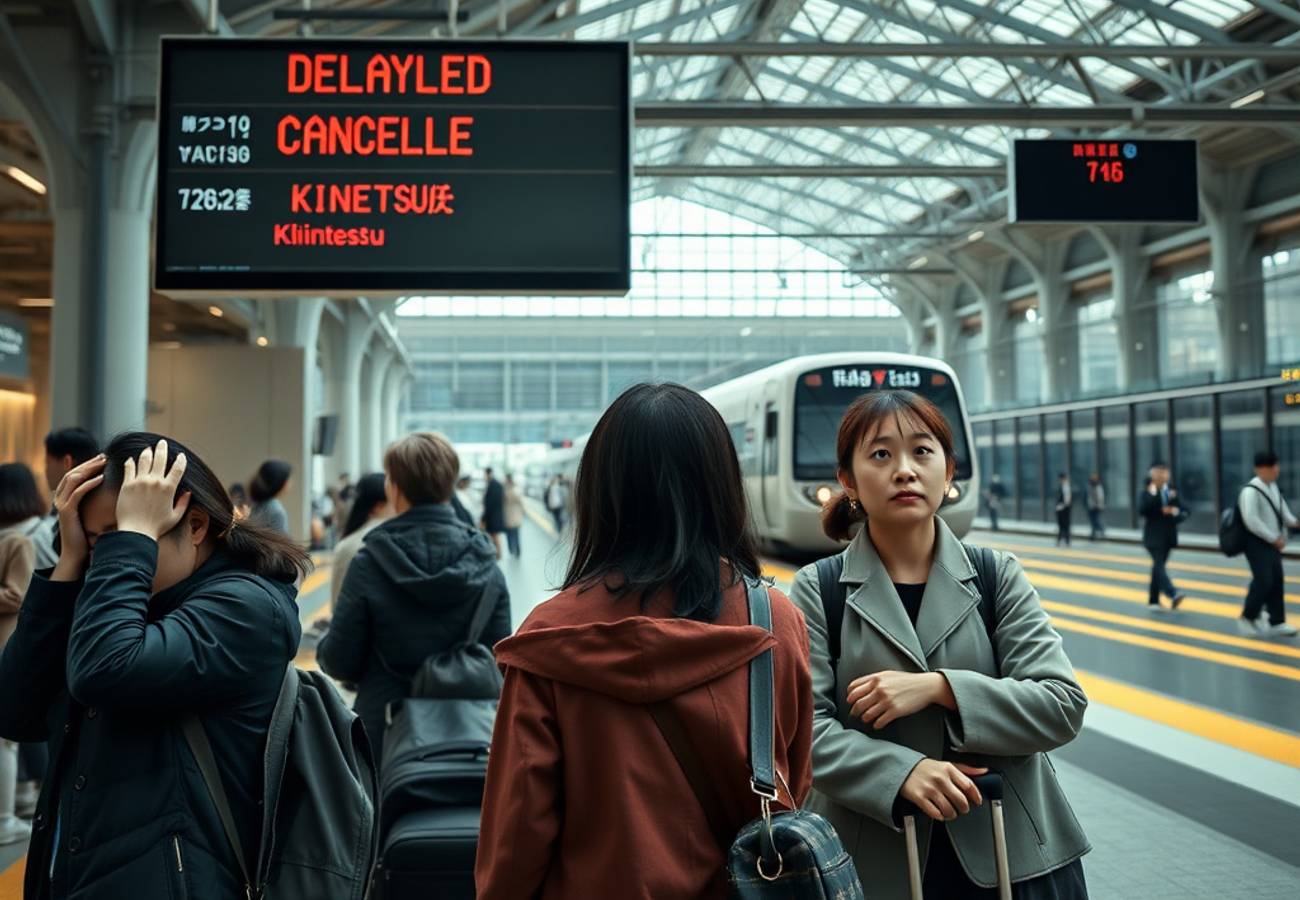
Image generated by AI
A Kintetsu Kyoto Line train derailed within the operational premises of Kyoto Station on June 29, 2026, triggering immediate service suspensions across one of Japan's busiest regional commuter corridors. Emergency response protocols were activated within minutes, and railway authorities confirmed no injuries at the time of reporting.
The incident unfolded during peak operational hours at the major transport hub, which connects multiple rail networks serving both local commuters and intercity travellers. The derailment raised immediate concerns about service stability, though officials maintained that passenger safety remained fully controlled throughout the emergency response.
Immediate Service Shutdown and Emergency Response Activation
The moment derailment was confirmed, Kintetsu Railway operators halted all train movements in the affected track section. Emergency teams deployed immediately to inspect infrastructure and assess operational risks.
Kyoto Station, handling thousands of passengers daily, shifted into controlled operational mode. Authorities implemented restricted platform access to prevent overcrowding while inspection crews worked to stabilize conditions. Station announcements guided passengers to safe zones, and staff members were positioned across platforms to assist commuters.
Reddit: "Kyoto Station derailment is a reminder why Japanese railways maintain such strict safety protocols—they stop everything immediately." — r/japan
No Reported Injuries, But Investigation Deepens
The absence of injury reports in the immediate aftermath represented the most critical positive development. Passengers in the vicinity were safely managed by station personnel and emergency responders without requiring full station evacuation.
Railway authorities emphasized that safety verification remained the top priority before resuming full service. This cautious approach aligns with Japan's established rail safety framework, which prioritizes infrastructure inspection over schedule restoration.
Emergency Protocols: The Japan Standard
Kintetsu Railway implemented a comprehensive emergency response checklist:
• Train operations on the affected line section were temporarily suspended • Safety inspection teams assessed track alignment, wheel conditions, and infrastructure integrity • Signalling systems in surrounding networks were checked for operational continuity • Alternative routing was coordinated with connected rail services to maintain partial network function • Real-time passenger updates were communicated through official channels
These measures are part of Japan's established post-incident procedures. The suspension was explicitly temporary, with restoration timelines dependent entirely on technical safety clearance.
Service Disruption Impact on the Kyoto Region
The derailment created immediate cascading effects across connected rail corridors. Kyoto Station's role as a central interchange meant that even localized disruptions rippled across the broader regional network.
Peak-hour commuter schedules experienced delays, and select services were rerouted through alternative lines. Operators introduced controlled boarding procedures to manage platform congestion during the transition period. Train frequency on adjacent operational routes was adjusted to accommodate displaced passenger volumes.
Reddit: "Living in Kyoto—the announcement came through immediately. Within 30 minutes, staff had redirected most of us to bus alternatives." — r/kyoto
Technical Investigation Launched
Railway engineers immediately launched a formal investigation into the derailment's root cause. At the time of reporting, no official conclusions had been issued regarding what triggered the incident.
Focus areas include track infrastructure condition at the derailment point, wheel and axle performance of the affected train unit, signal coordination logs, and maintenance history of the rail segment. External environmental or technical influences are also being examined as part of the comprehensive technical audit.
These investigations are standard procedure following any derailment and essential for long-term system safety. Officials are expected to release findings once initial inspections are completed and verified.
Japan's Rail Safety Record Under Examination
Japan's railway system ranks among the world's most advanced and safest, featuring strict maintenance schedules and rapid emergency response mechanisms. Derailments remain rare occurrences, yet this incident underscores the critical importance of continuous infrastructure monitoring in high-density rail environments.
The rapid deployment of inspection teams and passenger safety management demonstrated the effectiveness of Japan's established protocols. According to Japan's Ministry of Land, Infrastructure, Transport and Tourism, safety verification procedures are non-negotiable regardless of schedule impact.
When Will Services Resume?
As of the report date, Kintetsu Kyoto Line services remained temporarily suspended pending full safety clearance. Railway authorities confirmed they were working to restore normal operations once technical assessments and inspections were completed.
Passengers were advised to monitor official Kintetsu Railway updates for real-time service information and alternative travel arrangements. Further updates were expected as investigations progressed and restoration work advanced.
The situation represents a significant reminder of how Japan's rail system prioritizes safety verification over operational schedule—a philosophy that has made Japanese railways among the world's safest.
Stay alert to official railway updates if traveling to or through Kyoto in the coming days.
Related Travel Guides
Disclaimer
This article is for informational and educational purposes only. It does not constitute legal, financial, or professional advice. While we strive to provide accurate and up-to-date information, travel policies, regulations, and conditions change rapidly. Always verify information with official sources before making travel decisions. Nomad Lawyer makes no representations about the accuracy, reliability, completeness, or suitability of the information provided. Readers should consult qualified professionals for advice specific to their circumstances. The views expressed in this article are those of the author and do not necessarily reflect the views of Nomad Lawyer.
Raushan Kumar
Founder & Lead Developer
Full-stack developer with 11+ years of experience and a passionate traveller. Raushan built Nomad Lawyer from the ground up with a vision to create the best travel and law experience on the web.
Learn more about our team →