
Kazakhstan Deploys Digital Tenge CBDC Across Tourism Sector to Eliminate Foreign Card Fees and Enable Dual-Offline Wilderness Payments
Kazakhstan integrates its Digital Tenge CBDC into tourism infrastructure, eliminating 4.5% credit card fees and introducing dual-offline payments in remote parks.

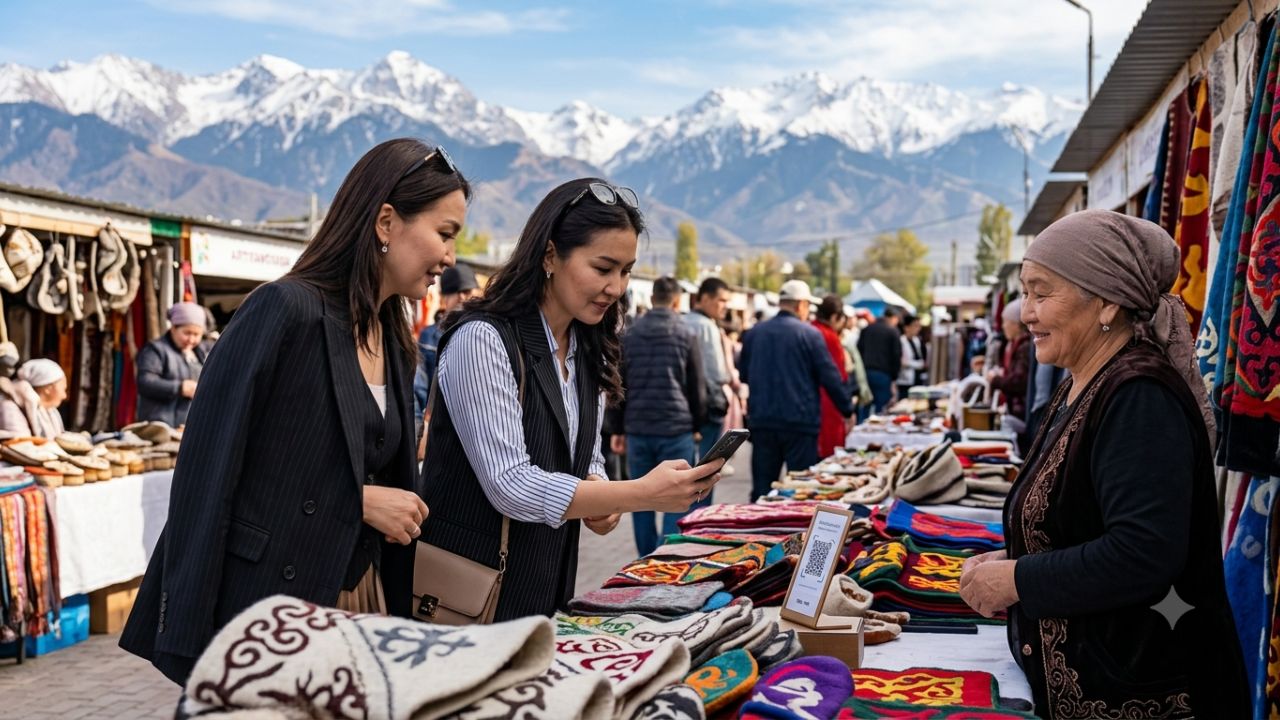
The National Bank of Kazakhstan is expanding its sovereign Central Bank Digital Currency (CBDC), the Digital Tenge, across the national travel and hospitality sector, eliminating traditional 4.5% credit card processing markups and enabling instant, dual-offline payments in remote national parks.
Engineered in partnership with the National Payment Corporation, the two-tiered digital monetary infrastructure replaces legacy international correspondent banking and credit card networks with programmable smart contracts and direct atomic settlement.
With Kazakhstan's visitor economy welcoming 15.7 million foreign travelers and capturing 1.8 trillion KZT in international expenditure, the digital currency upgrade guarantees that tourism capital flows directly to local hotels, guides, and artisans in Almaty, Astana, and Aktau rather than being drained by foreign exchange spreads and merchant fee tollgates.
===================================================================================
     KAZAKHSTAN DIGITAL TENGE & TOURISM FINTECH BENCHMARK 2026
===================================================================================
 [MACROECONOMIC TOURISM FOUNDATION]
  * Total Foreign Inbound Visitors: 15.7 million travelers.
  * Official Tourist Arrivals: 11.1 million visitors.
  * International Tourist Expenditure: 1.8 trillion KZT (~US$3.8 billion).
  * Total Sectoral Economic Output: 5.0 trillion KZT (~US$10.5 billion).
  * National Tourism Employment: Over 600,000 citizens (~7% of workforce).
  * Capital Investment in Tourism: 2.2 trillion KZT across hundreds of projects.
  * Annual Accommodation Spend: 350.6 billion KZT nationwide.

 [DIGITAL TENGE ARCHITECTURE & IMPACT]
  * Circulating CBDC Volume: Reached 336.6 billion KZT in active financial supply.
  * Transaction Fee Reduction: Slashed from 4.0%–5.0% legacy interchange to near zero.
  * Dual-Offline Chip Capability: Enables hardware peer-to-peer payments without internet.
  * Smart Contract Airport VAT Rebates: Instant digital tax refunds at customs gates.
===================================================================================
Two-Tiered Sovereign Monetary Architecture: The Digital Tenge Framework
The National Bank of Kazakhstan, operating through its specialized entity the National Payment Corporation, designed the Digital Tenge to achieve absolute monetary stability while encouraging private commercial innovation.
The platform utilizes a structured two-tiered operational framework:
- Tier 1 (Wholesale Core): Managed exclusively by the central bank, this tier governs digital token issuance, lifecycle verification, and master ledger accounting. Tokens represent a direct legal claim on the National Bank of Kazakhstan, entirely free of commercial bank default risks.
- Tier 2 (Retail Distribution): Licensed commercial banks, non-bank financial institutions, and authorized fintech platforms operate consumer-facing mobile wallets and manage point-of-sale (POS) merchant acquiring networks across urban commercial districts.
DIGITAL TENGE TWO-TIERED OPERATIONAL ARCHITECTURE
| Entity / Route | Metrics | Operational Status |
|---|---|---|
| TIER LEVEL | MANAGING ENTITY | CORE OPERATIONAL ROLE |
| Tier 1: Wholesale | National Bank of Kazakhstan & | Central ledger maintenance, |
| Infrastructure | National Payment Corporation | token minting, PvP bridges |
| Tier 2: Retail | Commercial Banks, Fintechs, | Mobile wallets, merchant QR |
| Distribution | and Payment Service Providers | grids, POS acquiring, KYC |
By guaranteeing that digital tokens represent sovereign central bank liabilities rather than commercial bank deposits, international tourists and domestic businesses enjoy risk-free liquidity.
Programmable smart contract engines embedded in the protocol permit rule-based conditional spending, automated tax reconciliation, and instant cross-border settlement.
| Monetary Characteristic | Legacy Commercial Card Networks | Digital Tenge Sovereign Platform |
|---|---|---|
| Merchant Processing Fees | 3.5% to 5.0% per foreign transaction | Zero interchange; fractional utility cost |
| Settlement Timeframe | 2 to 5 business days; rolling reserves | Instant, atomic on-chain settlement |
| FX Conversion Method | Inflated retail DCC markups (3% to 6%) | Institutional wholesale spot exchange |
| Connectivity Dependency | Continuous online cloud handshake | Dual-offline cryptographic chip enabled |
| Hardware Terminals | Expensive proprietary POS card terminals | Universal standardized mobile QR codes |
| VAT Refund Clearance | 3 to 8 weeks via paper forms (-30% fee) | Instant automated smart contract deposit |
| Chargeback Vulnerability | High fraud and merchant clawback risks | Final, irreversible cryptographic execution |
Dismantling Legacy Credit Card Tollgates in International Tourism
For decades, international credit card conglomerates extracted substantial tollgate fees from international visitors and host destinations.
Whenever a foreign traveler used an international credit or debit card in Kazakhstan—whether dining in Almaty, booking a ski pass at Shymbulak, or hiring a guide in Lake Kolsai—a cascade of intermediaries subtracted value from the transaction:
- Issuing Bank Interchange: A percentage fee levied by the traveler's home-country bank (typically 1.5% to 2.5%).
- Card Scheme Assessment Fees: Network routing charges levied by international card brands.
- Cross-Border Processing Surcharges: Special foreign transaction fees applied to overseas merchants.
- Dynamic Currency Conversion (DCC) Markups: Predatory currency conversion spreads that secretly add 3% to 7% above interbank foreign exchange rates.
In major tourist centers like Almaty, Astana, and the Caspian port of Aktau, local hotels and tour operators lost over 4.5% of gross revenue solely to electronic payment frictions.
FOREIGN TOURIST PAYMENT FEE CASCADE COMPARISON
| Entity / Route | Metrics | Operational Status |
|---|---|---|
| TRANSACTION STEP | LEGACY CREDIT CARD RAIL | DIGITAL TENGE CBDC |
| $100 Hotel Payment | Merchant receives $95.50 | Merchant receives $100 |
| Intermediary Tolls | Interchange, network fees, DCC | Zero interchange toll |
| Foreign Exchange Spread | Hidden 4% to 6% markup | Wholesale interbank rate |
| Settlement Delay | 48 to 72 hours hold | Settled in 2 seconds |
| Chargeback Protection | Merchant bears fraud liability | Irreversible tokenized |
The Digital Tenge dismantles this extractive model. By routing cross-border payments directly across sovereign central bank channels, transactions settle instantly with zero interchange fees.
The elimination of merchant holds and processing deductions allows domestic hospitality businesses to preserve net margins, supporting higher wages and reinvestment into tourist facilities.
Payment-versus-Payment Atomic Swaps: Transparent Foreign Exchange
Traditional cross-border payments rely on the legacy correspondent banking system, utilizing multi-layered SWIFT messaging networks and Nostro/Vostro account balances.
This fragmented structure creates delays, unpredictable intermediary fees, and wide foreign exchange spreads that heavily penalize travelers.
===================================================================================
       PAYMENT-VERSUS-PAYMENT (PvP) ATOMIC CROSS-CHAIN SWAP MECHANISM
===================================================================================
 [STEP 1: INITIATION]
  * Tourist scans a standardized merchant QR code at a Kazakh hotel or restaurant.
  * Payment prompt requests authorization in the tourist's domestic currency.

 [STEP 2: SMART CONTRACT VALIDATION]
  * Smart contract queries real-time wholesale interbank liquidity pools.
  * Locks the precise institutional spot exchange rate without DCC markups.

 [STEP 3: ATOMIC EXECUTION]
  * Dual-leg settlement executes simultaneously: foreign currency is debited,
    and Digital Tenge is credited to the merchant in a single cryptographic block.
  * Neither party bears counterparty, settlement, or currency fluctuation risk.
===================================================================================
By utilizing Payment-versus-Payment (PvP) atomic cross-chain swaps, the Digital Tenge platform enables foreign sovereign digital wallets to interface directly with Kazakhstan's domestic payment rails.
When an overseas traveler scans a merchant QR code, the smart contract simultaneously debits the traveler's home digital wallet and credits the merchant's account in Digital Tenge at institutional spot rates.
This real-time mechanism bypasses third-party clearing hubs and US Dollar conversions, protecting travelers from inflated exchange rate markups.
Dual-Offline Cryptographic Protocols: Cashless Travel in Remote Wilderness
A major structural impediment to cashless travel in Central Asia has been the absence of stable cellular coverage across expansive wilderness areas.
High-altitude trekking circuits in the Altai Mountains, alpine tarns at Kolsai Lakes, and remote desert formations across the Ustyurt Plateau possess no cellular reception, making traditional card payments impossible.
To overcome this infrastructure hurdle, the Digital Tenge incorporates dual-offline cryptographic technology.
DUAL-OFFLINE CRYPTOGRAPHIC SETTLEMENT WORKFLOW
| Column 1 |
|---|
| ENVIRONMENT: REMOTE WILDERNESS (ZERO CELLULAR OR WI-FI CONNECTIVITY) |
| [TOURIST SMARTPHONE / SMART CARD] ---- NFC / Bluetooth ----> [LOCAL GUIDE DEVICE] |
| * Secure Hardware Element * Secure Element |
| * Cryptographically signed token * Token balance |
| deduction verified locally credited locally |
| [OFFLINE TRANSACTION VERIFIED] |
| ↓ |
| (DEVICE RETURNS TO CELLULAR ZONE) |
| ↓ |
| [AUTOMATIC CLOUD SYNC] ---------> [NATIONAL BANK OF KAZAKHSTAN WHOLESALE LEDGER] |
Using secure hardware enclaves embedded within smartphones and specialized smart cards, two devices can complete verifiable transactions without an active internet connection:
- Local Cryptographic Handshake: The tourist's device communicates with the local guide or yurt camp operator via encrypted Near Field Communication (NFC) or localized Bluetooth protocols.
- Secure Token Deduction: The hardware chip verifies cryptographic digital signatures and debits the traveler's pre-loaded offline token balance while crediting the merchant's secure enclave.
- Automated Ledger Reconciliation: Once either device reconnects to a cellular or satellite network, the stored transaction logs automatically synchronize with the central bank wholesale ledger, guaranteeing zero double-spending risks.
This technical breakthrough allows eco-lodges, mountain guides, and horse-trekking cooperatives in remote national parks to operate completely cashless without requiring costly satellite terminals.
| National Park / Destination | Geographic Setting | Telecom Environment | Digital Tenge Operational Utility |
|---|---|---|---|
| Kolsai Lakes & Kaindy | Northern Tien Shan | No cellular in upper gorges | Dual-offline boat rentals & homestay fees |
| Charyn Canyon | Almaty Region | Patchy canyon-floor signal | Offline yurt camp and guided tour payments |
| Shymbulak Ski Resort | Zailiyskiy Alatau | 5G covered alpine hub | Instant QR ski pass & equipment rental |
| Turkistan (Silk Road) | Southern Steppe | Dense urban connectivity | Smart city transit & museum micro-tokens |
| Ustyurt Plateau | Mangystau Region | Extreme remote desert | Dual-offline 4WD expedition & camp fees |
On-Chain Duty-Free Smart Contracts: Automated Airport VAT Refunds
Traditional tax-free shopping systems impose immense friction on international visitors, requiring paper receipts, customs stamp queues, and third-party refund agencies that deduct 30% to 50% in administrative commissions.
In addition, refunds credited back to foreign credit cards frequently take up to two months to process.
Kazakhstan's digital currency integration solves this problem by connecting the Digital Tenge ledger directly to the State Revenue Committee and customs databases:
===================================================================================
          ON-CHAIN SMART CONTRACT AUTOMATED VAT REFUND PIPELINE
===================================================================================
 [POINT OF SALE (RETAIL PURCHASE)]
  * Tourist purchases certified artisanal goods or luxury retail in Almaty/Astana.
  * Merchant POS generates an immutable, tokenized digital tax-free receipt.
  * Transaction metadata logs directly onto the secure customs verification ledger.

 [AIRPORT DEPARTURE (CUSTOMS GATEWAY)]
  * Tourist approaches customs checkpoints at Almaty (ALA) or Astana (NQZ) airports.
  * Digital passport scan or biometric gate automatically verifies departure.
  * Smart contract triggers an instant, atomic release of the full 12% VAT amount.
  * Refund deposits immediately into traveler's digital wallet in home currency.
===================================================================================
By eliminating intermediary processing agents, international travelers receive 100% of their statutory tax rebate instantly upon airport departure, providing immediate disposable funds to spend at airport dining and duty-free retail outlets.
Traveler Logistics Guide: Navigating Kazakhstan with Digital Payments
International visitors traveling to Kazakhstan can easily navigate the digital payment ecosystem, avoiding inflated foreign exchange fees while traveling safely across urban and wilderness destinations.
===================================================================================
               KAZAKHSTAN VISITOR FINTECH & TRANSIT CHECKLIST
===================================================================================
 [CURRENCY & MONETARY LOGISTICS]
  * National Currency: Kazakhstani Tenge (KZT). Official rate ~480–495 KZT = $1 USD.
  * Cashless Infrastructure: Kazakhstan is one of the world's most cashless societies;
    QR code payments via mobile banking apps (Kaspi, Halyk) are ubiquitous.
  * Digital Tenge Access: International tourists can link home digital wallets or
    download authorized partner travel wallets upon airport arrival.

 [URBAN MOBILITY & TRANSPORT APPS]
  * On-Demand Taxis: Yandex Go operates reliably in Almaty, Astana, and Shymkent;
    fares link directly to digital wallets or cards with upfront fixed pricing.
  * Public Transit Smart Cards:
    - Almaty: Onay transit card / mobile QR for metro and green buses (~100 KZT).
    - Astana: Transcard transit card for city bus networks (~90 KZT).

 [HIGH-ALTITUDE & WILDERNESS GEAR]
  * Alpine Excursions: When visiting Medeu (1,691m) or Shymbulak (2,260m–3,200m),
    pack layered thermal clothing even in summer; download offline trail maps.
===================================================================================
Digital Wallet Setup and QR Code Payments
In Kazakhstan's cities, standard payment practices have shifted almost entirely to mobile QR codes:
- Download Authorized Travel Wallets: Upon arrival at Almaty International Airport (ALA) or Nursultan Nazarbayev International Airport (NQZ), travelers can download approved partner digital wallets compatible with the Digital Tenge network.
- Universal QR Compatibility: Merchants display a unified national QR code standard. International visitors simply open their digital wallet application, scan the printed or digital QR code, and verify the transaction in their home currency.
- Emergency Cash Reserves: While metropolitan centers are completely cashless, travelers heading into remote villages should carry modest amounts of physical KZT banknotes in small denominations (500, 1,000, and 2,000 KZT) as backup for dual-offline digital payments.
Transit Connections Between Almaty and Scenic National Parks
To reach iconic southern destinations from Almaty:
- Shymbulak Mountain Resort: Board the Route 12 municipal bus from the Hotel Kazakhstan bus stop in downtown Almaty directly to the Medeu ice rink (30 minutes; 100 KZT via Onay card). Transfer to the high-speed scenic gondola cable car climbing directly into Shymbulak.
- Lake Kolsai and Charyn Canyon: Book scheduled day tours or shared 4WD transport departing from central Almaty. Journey times average three hours to Charyn Canyon and four hours to Kolsai Lakes along the modern Kulzha highway corridor.
Macroeconomic Expansion: Reinvesting Capital in Regional Communities
The integration of the Digital Tenge represents a transformative economic policy for Kazakhstan's tourism sector.
With total tourism output reaching 5 trillion KZT and sustaining over 600,000 jobs, reducing financial friction is a critical national economic imperative.
TOURISM FINTECH ECONOMIC MULTIPLIER EFFECT
| Category / Entity | Details / Impact |
|---|---|
| ECONOMIC COMPONENT | STRUCTURAL EFFECT ON LOCAL COMMUNITIES |
| Net Merchant Margins | Saves 4.5% processing fee, boosting small business ROI |
| Rural Capital Retention | Dual-offline payments keep spending inside yurt camps |
| Capital Investment Surge | Complements 2.2 trillion KZT in new tourism projects |
| Accommodation Growth | Retains value across 350.6 billion KZT lodging sector |
| Currency Independence | Direct sovereign settlement avoids US Dollar markups |
Boosting Net Profitability for Rural Entrepreneurs
In peripheral regions such as Mangystau or East Kazakhstan, small-scale tourism operators work on thin operating margins.
When foreign credit card networks deduct 4.5% in transaction fees, a significant portion of local profits is lost to overseas clearinghouses.
By eliminating these intermediary deductions, the Digital Tenge directly increases the net take-home earnings of family-run guesthouses, local drivers, and regional artisans.
Accelerating Infrastructure Reinvestment
The capital retained within the domestic economy directly reinforces the 2.2 trillion KZT in private and public tourism investments currently funding modernization projects across Kazakhstan.
From upgraded eco-lodges along the Caspian Sea in Aktau to expanded ski facilities in Almaty, frictionless digital payments provide the financial foundation for sustainable, high-yield regional tourism.
Through sovereign innovation, zero-interchange public utility rails, and dual-offline resilience, Kazakhstan is pioneering a progressive digital travel economy that places local communities, independent businesses, and international travelers at the center of national prosperity.
Frequently Asked Questions
What is Kazakhstan's Digital Tenge, and how does it benefit international tourists?
The Digital Tenge is Kazakhstan's official Central Bank Digital Currency (CBDC). It benefits tourists by eliminating international credit card fees (typically 4%–5%), providing transparent wholesale exchange rates, and removing Dynamic Currency Conversion markups.
Do tourists need a Kazakh bank account to use the Digital Tenge?
No. Cross-border CBDC arrangements allow international travelers to pay local merchants directly using compatible digital wallets from their home countries by scanning universal merchant QR codes.
Can travelers use digital payments in remote national parks without internet?
Yes. The Digital Tenge features dual-offline cryptographic hardware technology, allowing two mobile devices or smart cards to complete instant, secure token payments in remote areas like Lake Kolsai or Charyn Canyon without cellular connectivity.
How does the Digital Tenge speed up airport VAT tax refunds?
Point-of-sale purchases generate an immutable cryptographic receipt. When departing through customs at Almaty or Astana airports, an automated smart contract instantly deposits the 12% VAT refund into the traveler's digital wallet without paper forms or third-party fee deductions.
Related Travel Guides
Disclaimer
This article is for informational and educational purposes only. It does not constitute legal, financial, or professional advice. While we strive to provide accurate and up-to-date information, travel policies, regulations, and conditions change rapidly. Always verify information with official sources before making travel decisions. Nomad Lawyer makes no representations about the accuracy, reliability, completeness, or suitability of the information provided. Readers should consult qualified professionals for advice specific to their circumstances. The views expressed in this article are those of the author and do not necessarily reflect the views of Nomad Lawyer.
Raushan Kumar
Founder & Lead Developer
Full-stack developer with 11+ years of experience and a passionate traveller. Raushan built Nomad Lawyer from the ground up with a vision to create the best travel and law experience on the web.
Learn more about our team →