
Kansas Tourism Milestone: Seventy Nine Thousand International Travellers Discover Flint Hills and Heritage Trails
Kansas welcomes 79,000 international visitors, signaling a rising trend in slow, heritage-focused travel beyond traditional American coastal gateways.

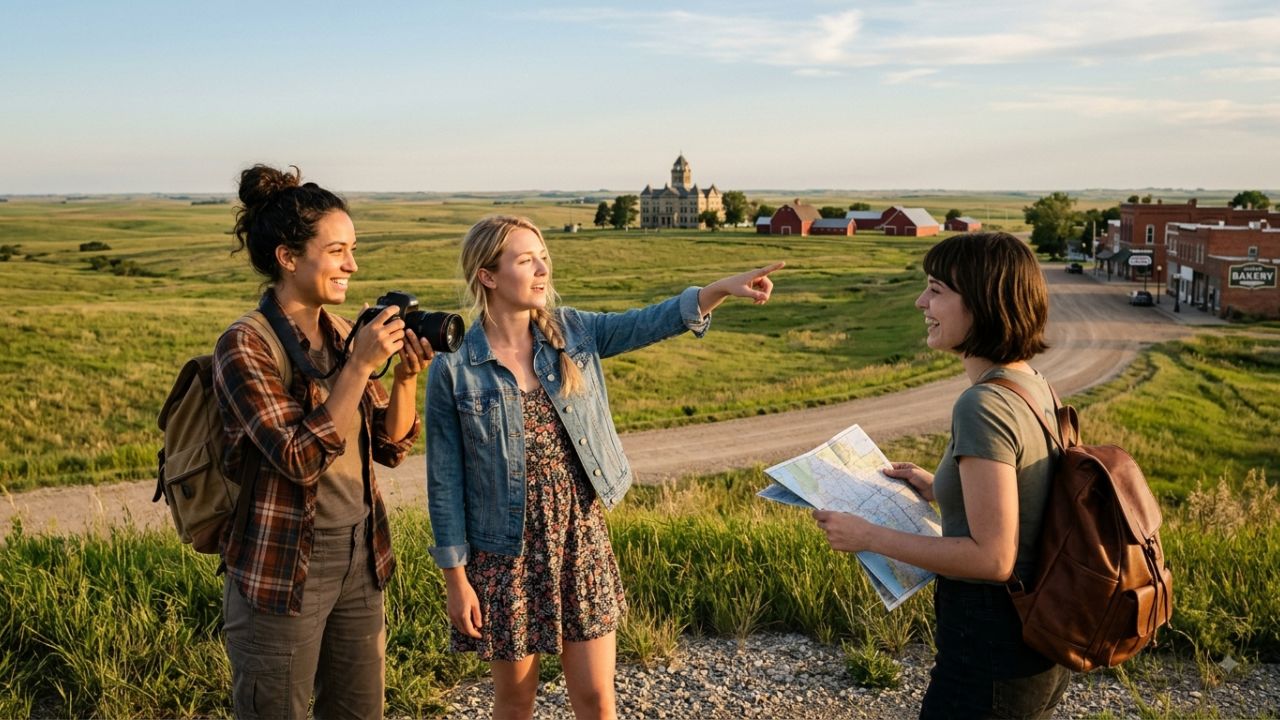
Image generated by AI
Welcoming 79,000 international travellers in 2025, Kansas has achieved a significant tourism milestone by attracting global visitors to its hidden heritage sites and rural communities. This shift highlights the growing demand for slow, authentic travel options beyond traditional American gateway states, distributing economic benefits directly to local businesses.
The international travel sector is experiencing a gradual recovery, though the return of overseas visitor spending across the United States remains uneven. Data from the National Travel and Tourism Office (NTTO)—a division of the United States Department of Commerce—shows that travel-related exports generated approximately $20.9 billion in May 2026, slightly exceeding the $20.3 billion recorded in May 2019. However, when adjusted for inflation, this pre-pandemic benchmark represents a much higher economic value. This discrepancy means the real purchasing power and economic impact of international tourism spending remain below pre-pandemic levels. The difference highlights the ongoing efforts of regional offices to capture high-value visitors who spend on hospitality, dining, and local services.
For the traveler, the real impact of this recovery is the opening of new routes and experiences away from overcrowded coastal hubs. Overseas visitors are moving past classic landmarks, choosing instead to focus on scenic topography, historical trails, and community-driven recreation. This shift helps support family-run enterprises and conservation efforts in areas that historically saw fewer foreign arrivals. By choosing secondary destinations, international tourists help diversify local economies and support the preservation of cultural heritage. Municipal chambers of commerce work alongside regional tourism boards to promote local heritage sites, ensuring that visitor spending flows directly to independent merchants and rural craftsmen. Local retail shops, family-run diners, and rural hotels gain vital support from this spending, which builds economic resilience in communities that do not typically host large volumes of tourists.
Realigning American Travel Routes: The Rise of Secondary Destinations
Inbound travel to the United States remains heavily concentrated in a few established gateway states. Florida leads the nation, welcoming approximately 9.3 million international visitors drawn to its coastlines and entertainment hubs. New York follows closely with around 9.1 million overseas visitors, leveraging the cultural and business appeal of its primary metropolis. California ranks third, attracting about 6.6 million international visitors to its cities and regional parks. Together, these three gateways capture more than 25 million overseas visitors, representing a substantial portion of the total market. Other leading states, including Nevada, Texas, Hawaii, Massachusetts, and Illinois, also capture significant shares due to their established travel hubs and internationally recognized attractions like Las Vegas, Chicago, and Boston. Illinois benefits from the global draw of Chicago's cultural institutions, while Texas leverages its diverse arts and music centers in Austin, Houston, and Dallas.
Despite this concentration, smaller destinations are securing a larger share of experience-driven travel. Leisure travel is the leading driver of international arrivals, with more than 23 million overseas travellers visiting the country for holidays. Personal connections also play a major role, with more than 12 million visitors travelling to see friends and relatives, alongside millions of business travelers. Once inside the country, shopping attracts more than 28 million international travellers, while sightseeing draws over 26 million visitors. Secondary destinations like Kansas, which welcomed 79,000 international travellers in 2025, are benefiting from this interest. Global travelers are increasingly seeking out less crowded, more meaningful journeys, looking to experience the historic trail routes and open prairie environments that define the American heartland.
Environmental Stewardship: Ecotourism in the Tallgrass Prairie
The growth of tourism in Kansas centers on ecological preservation and heritage education. For the visitor, the real impact is the opportunity to experience the Tallgrass Prairie National Preserve, which protects one of the last remaining expanses of the tallgrass prairie ecosystem. Managed in partnership by the National Park Service and local conservation bodies, the preserve allows travelers to observe native bison herds and participate in community science projects, directly supporting regional conservation. This focus on eco-tourism helps direct visitor spending into rural economies that are highly sensitive to tourism revenue.
On a population-adjusted basis, smaller states experience a profound economic impact from international arrivals. Hawaii leads this dependency, welcoming more than 1,200 international visitors for every 1,000 residents, followed by Nevada, Florida, and New York. States like Wyoming and Massachusetts also demonstrate how overseas arrivals support local retail and hospitality. In Kansas, the introduction of agricultural tours and historic trail guides helps sustain rural towns. This community-led focus helps preserve the distinct history of Volga German settlers in Ellis County, connecting travelers with regional heritage. Tourists can explore geological wonders like the Monument Rocks chalk formations in western Kansas—which date back to the Cretaceous period—or the Permian-era underground salt beds of Strataca in Hutchinson, ensuring that tourism proceeds benefit local communities directly. These activities provide travelers with unique experiences while generating essential revenue for regional cultural organizations.
Destination Specialist Local Insider Tips
To help you explore the historical trails and open spaces of Kansas safely and responsibly, local destination specialists recommend the following insider tips:
- Visit During the Spring and Autumn Windows: Plan your trip to the Flint Hills between late April and early June to see the prairie turn vibrant green, or between September and October for comfortable hiking temperatures. Summer temperatures regularly exceed 90°F (32°C) with high humidity, making outdoor activity demanding.
- Explore Strataca and Monument Rocks: Travel to Hutchinson to visit Strataca, an active salt mine located 650 feet (198 meters) underground. Afterward, head to western Gove County to see Monument Rocks, a series of chalk pyramids that serve as an under-the-radar geological wonder.
- Savor Authentic Kansas City Burnt Ends: When visiting the eastern border, stop in Wyandotte County to sample traditional beef burnt ends, a local barbecue specialty slow-cooked over oak and hickory. In western communities, look for local bakeries serving Volga German runzas, which are yeast dough pockets filled with beef and cabbage.
- Observe the Rural Passing Gesture: When driving along gravel county roads in rural areas, it is customary to perform the "one-finger wave"—briefly raising your index finger off the steering wheel to greet passing drivers.
- Respect Private Ranch Land Boundaries: Much of the scenic prairie terrain in the Flint Hills is privately owned ranch land. Always stay on marked public trails or seek landowner permission before entering private pastures to avoid trespassing.
Long-Term Outlook for Heartland Tourism
The long-term outlook for tourism in Kansas is positive, supported by the growing demand for authentic, low-impact travel options. By focusing on historical preservation, agricultural tourism, and the protection of natural habitats, the state is positioned to attract a steady stream of international visitors who prioritize slow travel. Collaborative marketing campaigns by Kansas Tourism and regional heritage associations will continue to highlight the appeal of the American plains, helping to support local businesses and preserve the region's cultural heritage.
While inflation continues to influence the purchasing power of international tourism exports across the country, the rising interest in destinations beyond Florida, New York, and California ensures a more balanced distribution of visitor spending. Over time, this diversification will build more resilient regional economies, helping to fund the conservation of critical habitats and historical monuments throughout the heartland, while offering global travelers a deeper understanding of America's heritage.
Related Travel Guides
Disclaimer
This article is for informational and educational purposes only. It does not constitute legal, financial, or professional advice. While we strive to provide accurate and up-to-date information, travel policies, regulations, and conditions change rapidly. Always verify information with official sources before making travel decisions. Nomad Lawyer makes no representations about the accuracy, reliability, completeness, or suitability of the information provided. Readers should consult qualified professionals for advice specific to their circumstances. The views expressed in this article are those of the author and do not necessarily reflect the views of Nomad Lawyer.
Kunal K Choudhary
Co-Founder & Contributor
A passionate traveller and tech enthusiast. Kunal contributes to the vision and growth of Nomad Lawyer, bringing fresh perspectives and driving the community forward.
Learn more about our team →