
JR East Restores Wakashio Express Rail Link Between Tokyo and Chiba Following Heavy Rain 2026
JR East has officially resumed limited express Wakashio services connecting Tokyo and the Boso Peninsula after severe weather disruptions caused widespread cancellations on the Sotobo Line.

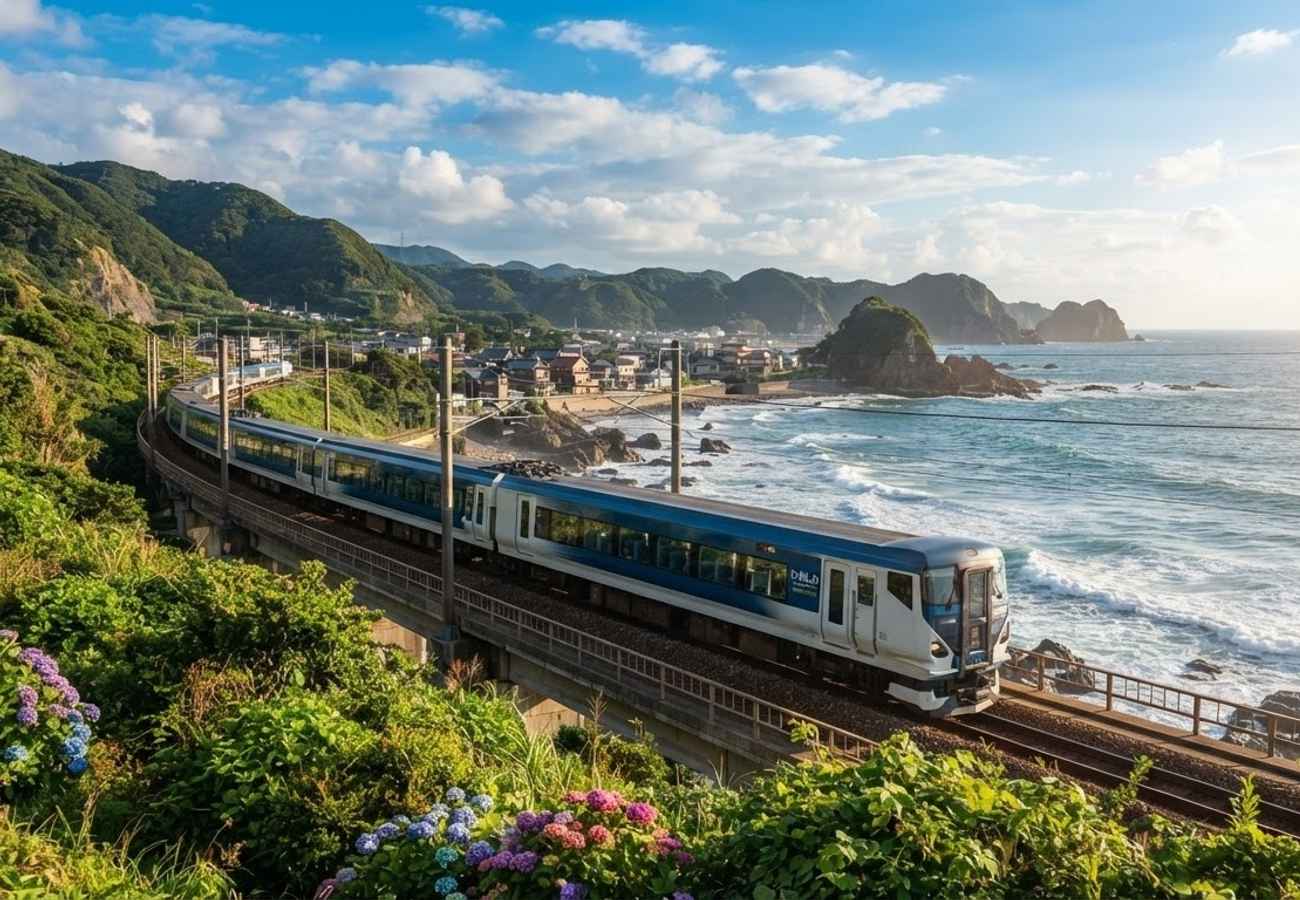
Image generated by AI
The primary fast rail artery connecting central Tokyo to the coastal resorts of the Boso Peninsula is operational once again. After several days of total suspension due to extreme rainfall, JR East has restored the limited express Wakashio services.
The resumption of the Wakashio limited express marks the end of a critical service gap for travelers heading to the eastern coast of Chiba Prefecture. The service, which utilizes the Sotobo Line as its primary corridor, had been fully cancelled across all operating sections, including the Shinjuku Wakashio variants.
This restoration follows a rigorous period of infrastructure checks and safety inspections conducted by JR East to ensure the integrity of the tracks after intense weather events.
Strategic Importance of the Wakashio Route
The Wakashio is not merely a commuter train; it is the definitive fast-link for those traveling from Tokyo Station to destinations such as Awa-Kamogawa. By bypassing the need for multiple transfers at intermediate hubs like Soga or Chiba, the service significantly reduces transit times.
The route serves a dual purpose:
- Leisure Tourism: Providing direct access to Pacific-side beaches, hot springs, and resort towns.
- Commuter Efficiency: Offering reserved-seat options for those requiring reliable, high-speed transit into the capital.
The return of the Shinjuku-originating services is particularly beneficial for passengers based in western Tokyo, as these trains utilize the Chuo and Sobu corridors before merging onto the Sotobo Line.
Timeline of Weather-Related Disruptions
The instability began around August 13, 2026, when intense rainfall triggered a cascade of cancellations across the Chiba rail network. JR East’s status bulletins confirmed that every scheduled departure from Tokyo to Katsuura and Awa-Kamogawa was halted to prioritize passenger safety.
This disruption was not an isolated incident but part of a broader regional pattern. Similar extreme weather events recently impacted the Narita Express (connecting Tokyo to Narita Airport) and other long-distance limited express brands.
JR East typically employs a staged resumption strategy during such crises. First, local and rapid services are restored to verify track stability; once the Sotobo Line's mainline traffic recovered, the company had the operational capacity to reintroduce the higher-speed limited express paths.
Impact on Regional Travel and Logistics
For international tourists and domestic vacationers, the restoration of the Wakashio is timed for the peak late-summer season. The limited express typically cuts the journey from Tokyo to key Sotobo destinations down to approximately one to two hours—a fraction of the time required for local services.
The restoration of this link alleviates pressure on the wider Chiba network. During the suspension, the lack of express capacity forced more passengers onto suburban lines, creating bottlenecks. With the full timetable returning, the network can now accommodate both high-speed leisure travel and standard suburban commuting.
Infrastructure Resilience in Eastern Japan
The vulnerability of the Boso Peninsula's coastal corridors to heavy rain highlights the ongoing challenge of climate-driven rail disruptions in Japan. JR East has indicated a continued focus on strengthening infrastructure resilience to reduce recovery times.
To manage passenger expectations during these events, JR East utilizes multilingual status pages (English, Chinese, and Korean). These platforms are designed to provide real-time updates on whether specific brands—such as the Wakashio, Sazanami, or Shiosai—are running, delayed, or cancelled.
Travelers are advised to maintain flexibility in their itineraries during the typhoon and rainy seasons, as single-corridor routes like the Sotobo Line are more susceptible to weather-induced closures than diversified urban networks.
Current Operational Status Summary
| Service Brand | Route Segment | Status | Primary Impact |
|---|---|---|---|
| Wakashio | Tokyo $\rightarrow$ Awa-Kamogawa | Restored | Fast link to Boso Peninsula |
| Shinjuku Wakashio | Shinjuku $\rightarrow$ Sotobo Coast | Restored | Western Tokyo access |
| Sotobo Line | Local/Rapid Services | Operational | Base network capacity |
| Narita Express | Tokyo $\rightarrow$ Narita Airport | Monitored | Intermittent weather delays |
Key Takeaways
- Service Restoration: The Wakashio limited express is fully operational between Tokyo and the Boso Peninsula.
- Cause of Delay: Heavy rainfall starting August 13, 2026, led to safety-mandated suspensions.
- Travel Benefit: Direct transit to Awa-Kamogawa and Katsuura is restored, reducing travel time to 1–2 hours.
- Safety First: Resumption only occurred after comprehensive infrastructure inspections of the Sotobo Line.
FAQ
How long does the Wakashio take from Tokyo to the Boso Peninsula? The journey typically takes between one and two hours, depending on the specific destination along the Sotobo Line.
Do I need a reservation for the Wakashio? Yes, the Wakashio is a limited express service that primarily offers reserved-seat options.
Where can I check for real-time delays on the Sotobo Line? Passengers should use the official JR East multilingual train status pages for the most accurate, real-time information.
Safe travels through the scenic coastlines of Chiba.
Related Travel Guides
Disclaimer
This article is for informational and educational purposes only. It does not constitute legal, financial, or professional advice. While we strive to provide accurate and up-to-date information, travel policies, regulations, and conditions change rapidly. Always verify information with official sources before making travel decisions. Nomad Lawyer makes no representations about the accuracy, reliability, completeness, or suitability of the information provided. Readers should consult qualified professionals for advice specific to their circumstances. The views expressed in this article are those of the author and do not necessarily reflect the views of Nomad Lawyer.
Preeti Gunjan
Contributor & Community Manager
A passionate traveller and community builder. Preeti helps grow the Nomad Lawyer community, fostering engagement and bringing the reader experience to life.
Learn more about our team →