
JFK Airport Delays and Cancellations Disrupt April 2026 Travel
JFK Airport faced significant operational strain on April 10, 2026, with 49 delays and 10 cancellations affecting Delta, Lufthansa, and American Airlines across transatlantic and domestic routes.

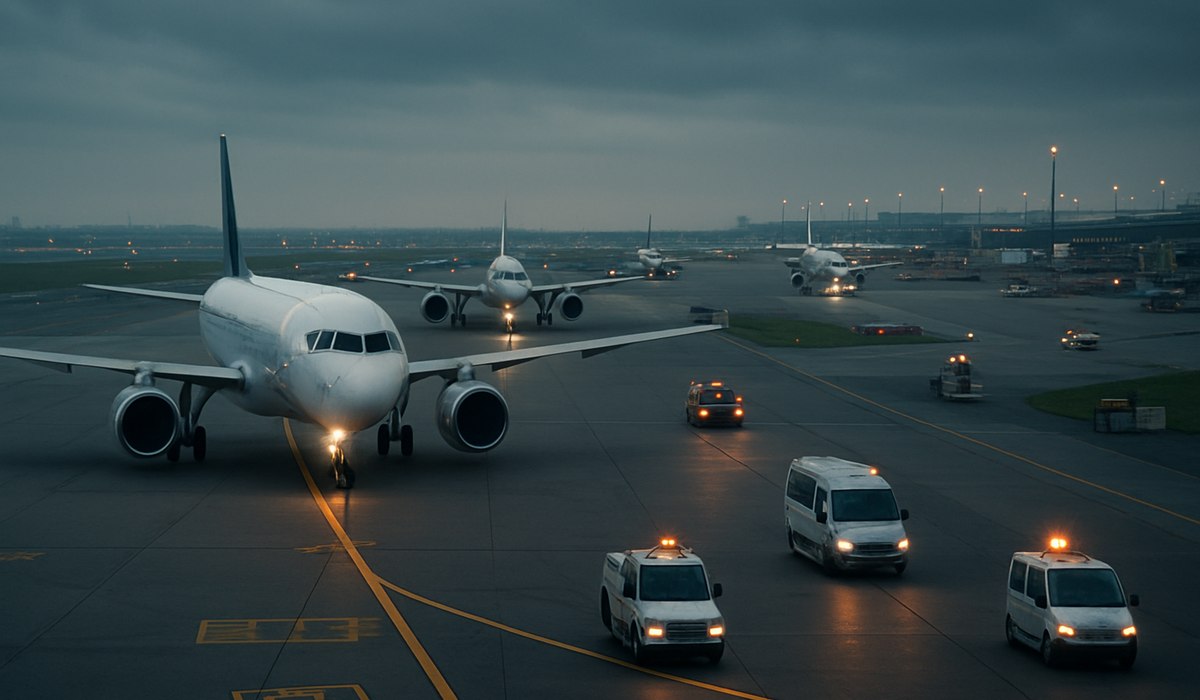
Image generated by AI
Breaking News: Major Disruptions at New York's Busiest Hub
JFK Airport experienced substantial operational turbulence on April 10, 2026, with flight tracking systems recording 49 delays and 10 cancellations across leading carriers. Delta Air Lines, Lufthansa, and American Airlines bore the brunt of the disruptions, which cascaded through transatlantic and domestic networks. Passengers destined for London, Dubai, and major U.S. cities faced extended waits, rebooking challenges, and missed connections as the airport struggled with peak-hour congestion and constrained runway capacity.
Disruptions Build at One of America's Busiest Gateways
JFK's operational strain on April 10 highlighted the vulnerabilities of one of the hemisphere's most congested aviation hubs. The combination of 49 flight delays and 10 outright cancellations might appear modest relative to the airport's total daily movements, but their impact rippled through interconnected global networks.
Peak morning and afternoon departure banks witnessed the most severe cascading delays. During these windows, European arrivals synchronize with long-haul transatlantic departures and dense domestic schedules. Even minor ground delays create bottlenecks on taxiways and at gate positions. When paired with constrained runway capacity or weather variability along the Eastern Seaboard, these delays multiply exponentially.
Aviation tracking platforms flagged JFK as experiencing "extreme" conditions for passengers. Extended security queues, compressed check-in windows, and bunched flight schedules forced travelers into extended holding patterns. The airport's infrastructure, while world-class, faces inherent limitations during such concentrated disruption periods. Passengers were rebooked onto later same-day flights or routed through alternative hubs including Boston, Washington, Atlanta, and Chicago. For long-haul travelers, alternative connections remained scarce, often resulting in involuntary overnight hotel stays and downstream missed connections.
Peak Hour Congestion Creates Cascading Delays
The structural vulnerabilities of JFK's operations became evident as peak-hour congestion triggered system-wide delays. Modern airport operations depend on precisely choreographed timing—aircraft turnarounds, crew duty cycles, and gate availability operate on narrow margins.
When delays accumulate during peak banks, the system's elasticity breaks down. A 30-minute ground delay early in the morning compounds into 50-minute average delays by afternoon, according to flight tracking data. Aircraft that depart late from JFK arrive late at downstream hubs, consuming reserve time built into subsequent rotations.
This cascade effect creates particular pressure on hub-and-spoke operators like Delta Air Lines, which maintains extensive New York operations. Aircraft operating multiple daily legs across the network cannot absorb significant delays without triggering secondary disruptions. A morning delay at JFK translates directly into afternoon delays in Miami, Dallas, Los Angeles, or Chicago—cities where tightly scheduled turnarounds demand precision.
Weather variability, though not exclusively responsible for April 10's disruptions, amplified existing constraints. Eastern Seaboard wind patterns and spring precipitation create runway occupancy challenges during already-busy periods. Terminal operations slowed as ground crews prioritized safety protocols over schedule recovery.
Passenger Impact and Rebooking Challenges
The 10 cancellations recorded at JFK forced thousands of travelers into rebooking queues, presenting complex logistical challenges for both passengers and airlines. Same-day alternatives on transatlantic routes proved especially scarce, as long-haul aircraft operate on fixed daily rotations rather than frequent shuttle patterns typical of domestic markets.
Passengers booked on cancelled Lufthansa services to Frankfurt and Munich faced limited options. European gateways anchored overnight rotations with specific crew assignments and fuel planning. Rebooking passengers onto alternative flights sometimes required waitlists extending 24 to 72 hours.
American Airlines passengers headed to London, Miami, or Dallas encountered similar constraints. The airline's JFK operations feed complex hub networks where late arrivals compress turnaround windows and cascade delays across the entire system. Passengers rerouted through Boston or Washington experienced extended journeys, additional transit times, and missed onward connection windows.
For Gulf-bound travelers, disruptions at JFK complicated already-complex transit arrangements. Dubai-based hubs operate around overnight arrival windows and early morning departure banks. A delayed JFK departure pushed travelers onto later services, sometimes forcing 12 to 24-hour itinerary extensions.
Airlines processed rebooking requests through FlightAware and integrated systems, but the volume overwhelmed standard recovery protocols. Passengers frequently required hotels, meal vouchers, and schedule adjustments to accommodate rebooking scenarios.
Major Airlines Feel the Strain on Transatlantic and Domestic Routes
Delta Air Lines, operating extensive JFK operations, faced average delays approaching 50 minutes by mid-afternoon. The carrier's highly interconnected New York hub concentrates both domestic and international traffic. Delays ripple through its entire Eastern operation, affecting subsequent legs into Miami, Atlanta, Dallas, and Los Angeles.
Lufthansa's transatlantic operations from JFK to Frankfurt and Munich proved especially vulnerable. Overnight rotations depend on precise inbound timing to meet crew regulations and prepare aircraft for return flights. A late morning arrival from Europe forces a late evening departure, narrowing crew duty windows and eliminating operational buffers. Cancellations disrupt continental European connections, affecting onward passengers heading to cities across Western and Eastern Europe, the Middle East, and North Africa.
American Airlines' JFK presence spans both domestic and international networks. Services to London, the airline's largest transatlantic destination from New York, experienced delays that compressed ground handling windows and threatened onward connections. Domestic services feeding Miami, Dallas, Los Angeles, and Chicago also felt operational strain, as delayed New York departures postpone arrival times into these major hubs where aircraft turnarounds operate on minimal margins.
Smaller international carriers, including Gulf-region airlines connecting JFK with Dubai, and low-cost operators managing East Coast shuttle routes, shared the disruption burden. For passengers, this broad-based impact meant no single airline offered preferential service recovery, spreading rebooking challenges across carrier-specific phone lines and systems.
Ripple Effects Reaching London, Dubai, and U.S. Hub Cities
JFK's April 10 disruptions extended far beyond New York's terminals. Transatlantic connections to London Heathrow and Gatwick—among the world's most heavily traveled routes—carried delayed passengers into evening arrival windows in the United Kingdom. Evening Heathrow arrivals trigger congested customs processing periods and limit onward domestic or European transfer options, often forcing passenger waits exceeding two hours.
Long-haul services to Dubai and other Gulf destinations proved equally sensitive to New York delays. These routes anchor global networks organized around overnight hub arrivals. A departure delayed two hours from JFK compresses transit windows in Dubai, forcing rebooked passengers onto later services connecting them to Asia, Africa, and Australia. Hub operators like Emirates manage precisely scheduled arrival and departure windows; disruptions at source airports cascade through entire network plans.
U.S. domestic connections felt equally significant impacts. Delayed JFK departures postpone arrivals in Boston, Washington, Atlanta, Chicago, and Los Angeles—major hubs where connecting passengers miss narrow transfer windows. Passengers catching onward flights faced the choice of rebooking or overnight standby arrangements, adding cost and inconvenience.
Live Flight Tracking and Real-Time Information Resources
Passengers navigating April 10's disruptions found real-time tracking essential. FlightAware provided minute-by-minute updates on ground delays, taxi times, and cancellation notifications. The FAA's official website offered system status information and delay explanations by facility.
Airline apps and reservations systems pushed notifications as situations developed, though information sometimes lagged actual gate delays. Passengers monitoring flight status independently gained critical minutes to contact airlines, explore alternative routings, or arrange ground transportation adjustments.
Traveler
Disclaimer
This article is for informational and educational purposes only. It does not constitute legal, financial, or professional advice. While we strive to provide accurate and up-to-date information, travel policies, regulations, and conditions change rapidly. Always verify information with official sources before making travel decisions. Nomad Lawyer makes no representations about the accuracy, reliability, completeness, or suitability of the information provided. Readers should consult qualified professionals for advice specific to their circumstances. The views expressed in this article are those of the author and do not necessarily reflect the views of Nomad Lawyer.
Preeti Gunjan
Contributor & Community Manager
A passionate traveller and community builder. Preeti helps grow the Nomad Lawyer community, fostering engagement and bringing the reader experience to life.
Learn more about our team →