
JetBlue Disruptions Boston: Logan Grounding Cascades Across U.S. and Europe
A grounded JetBlue aircraft at Boston Logan triggered network-wide delays in 2026, affecting domestic routes to Austin and Salt Lake City plus transatlantic flights to Lisbon and Keflavik during peak travel week.

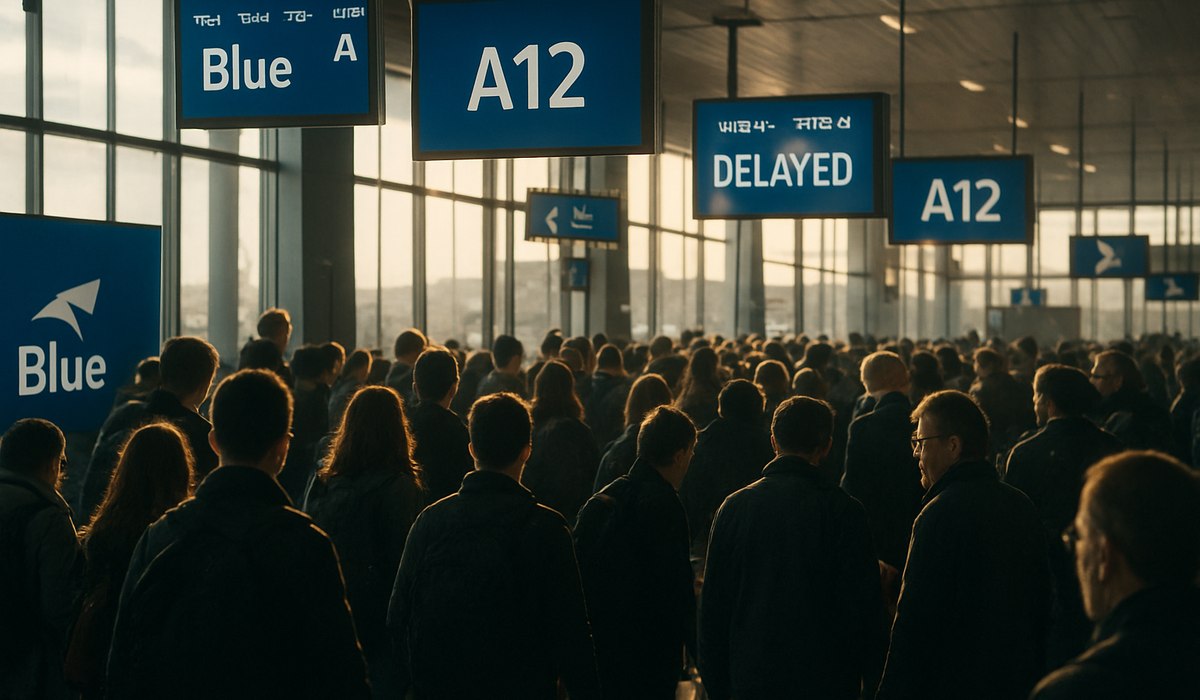
Image generated by AI
Grounded JetBlue Flight Triggers Network-Wide Travel Chaos at Boston Logan
A single grounded JetBlue aircraft at Boston Logan International Airport sparked cascading delays across the airline's domestic and transatlantic network this week. The disruption affected high-demand routes connecting Boston to Austin, Salt Lake City, Portland, Lisbon, and Keflavik during one of the busiest travel periods of the year. Flight-tracking data from May 7 showed over 250 delays and multiple cancellations across all carriers at Logan, with JetBlue among the most significantly impacted operators at the facility.
The incident underscores how a single operational hiccup at a major airline hub can create ripple effects across hundreds of travelers and multiple continents. When aircraft remain grounded during peak travel hours, crew scheduling conflicts, gate availability constraints, and downstream rotation issues multiply rapidly throughout the network. Boston's role as a JetBlue focus city amplifies this vulnerability, given the carrier's high-frequency operations and tight turnaround windows at Logan.
Single Grounded Aircraft Triggers Cascade of Delays at Boston Hub
Boston Logan's status as one of JetBlue's largest operational bases makes it particularly susceptible to network-wide disruption. The airport handles multiple daily JetBlue departures across both domestic and international routes, with many flights scheduled to connect seamlessly. When aircraft get grounded for maintenance, weather, or operational issues, the impact extends far beyond the single affected flight.
A grounded JetBlue departure creates immediate pressure on gate assignments, crew positioning, and aircraft rotation schedules. Ground crews cannot serve simultaneous departures to multiple cities. Pilots and flight attendants assigned to subsequent legs face duty-time constraints. Passengers booked on connecting flights encounter mounting delays as gates remain occupied longer than scheduled.
Industry operational analyses demonstrate that concentrated hub operations at single cities—like JetBlue's Boston presence—generate amplified disruption relative to distributed networks. Each delay compounds through the day as aircraft fall further behind schedule. Evening long-haul flights absorb accumulated delays from morning and afternoon operations. This cascading effect characterizes why airport congestion on May 7 saw delays exceeding typical daily averages.
Travelers shared accounts of extended waits at JetBlue gates as departure times slipped incrementally throughout the afternoon. The airline's staffing and ground services worked through operational recovery, but the single grounded aircraft remained the primary constraint. Recovery protocols involve repositioning aircraft from other cities, rebooking passengers, and managing crew duty limitations—all time-consuming processes.
Transatlantic and Domestic Routes Face Extended Disruptions
The JetBlue disruptions at Boston simultaneously affected both U.S. domestic and European transatlantic services. Domestic routes to Austin, Salt Lake City, and Portland experienced significant delays as ground crews prioritized aircraft maintenance and gate management. These longer-haul domestic flights typically depart in afternoon or early evening windows, making them vulnerable to accumulated morning disruptions.
Austin and Salt Lake City routes serve both leisure and business travelers heading to technology hubs and outdoor recreation destinations. When JetBlue experiences Boston Logan flight delays, passengers face uncertainty about connection times and arrival schedules. Salt Lake City connections to mountain resort destinations become particularly problematic when evening departures slip past 8 p.m., forcing ground transportation and ski area accommodations to shift dates.
Transatlantic services to Keflavik and Lisbon operate on even tighter schedules, with overnight departures designed to arrive in Europe during business hours. When a Boston-originating aircraft gets grounded, European connecting flights face compression. Overnight transatlantic flights cannot simply depart later—international air traffic control windows and crew duty limitations impose firm constraints. Passengers destined for Lisbon or Keflavik experienced cascading uncertainty as connection times compressed and alternative routing became necessary.
European connections downstream from JetBlue transatlantic flights faced particular stress. Travelers connecting through Lisbon or Keflavik to regional European cities found themselves managing missed connections and rebooking procedures. The impact extended beyond JetBlue passengers to European partners relying on timely arrivals from Boston.
Why Boston Logan's Hub Status Amplifies Network-Wide Impact
Boston Logan functions as JetBlue's largest operational base outside Fort Lauderdale, Florida. The carrier operates multiple daily frequencies across transcontinental domestic routes and regular transatlantic services. This concentration creates efficiency during normal operations but amplifies vulnerability during disruptions.
Hub-and-spoke network designs depend on precise synchronization. Aircraft rotating through multiple cities daily must arrive and depart on schedule. Crews face federal duty-time limitations preventing extended waits between flights. Gate availability constrains simultaneous operations. When single disruptions occur at major hubs, all downstream operations cascade.
Boston Logan International Airport handled 250+ delays across all carriers on May 7, reflecting broader network stress beyond JetBlue alone. However, the airline's concentrated presence meant its operations absorbed disproportionate impact. Spring weather patterns, staffing challenges, and air traffic congestion at Boston created compound stress on JetBlue's already-tight scheduling.
JetBlue's operational model emphasizes high-frequency service and rapid turnarounds. While efficient under normal conditions, this approach provides minimal buffer capacity when disruptions occur. Airlines with more distributed networks or longer turnaround times experience less dramatic cascading effects. Boston's position as a major JetBlue base meant each missed rotation affected dozens of subsequent flights across the network.
What Travelers Should Know About JetBlue Operations
Understanding JetBlue's Boston hub dynamics helps travelers anticipate and manage potential disruptions. The airline prioritizes operational recovery through aircraft repositioning and crew optimization rather than cancellations when possible. This recovery approach can extend delays rather than resolve them quickly.
Passengers booked on afternoon and evening Boston departures should monitor flight status actively throughout the day. Morning delays at Logan frequently impact later flights. Building buffer time into connections—especially for transatlantic flights—provides security against cascading disruptions. The FAA's flight delay status offers real-time departure information helpful for travel planning.
JetBlue provides policy flexibility during disruptions: passengers can rebook on alternative flights without change fees, request hotel accommodations for overnight delays, and claim reimbursement for meals and ground transportation under EU261 regulations (for European departures). Proactive communication via the airline's mobile app alerts passengers to changing conditions faster than airport announcements.
Travelers connecting through Boston should consider overnight stays rather than same-day connections when possible. The airport's congestion history suggests schedule uncertainty remains elevated throughout spring and early summer 2026. Leisure travelers retain flexibility advantages over business passengers when navigating disruptions.
International travelers should verify passport validity and visa requirements early, as rebooking on different airlines may alter routing. Travel insurance covering flight delays provides additional protection during high-disruption periods at major hubs like Boston Logan.
Key Data: JetBlue Boston Disruption Impact
| Metric | Details |
|---|---|
| Affected Hub | Boston Logan International Airport (BOS) |
| Primary Trigger | Single grounded JetBlue aircraft |
| Disruption Date | May 7, 2026 |
| Total Delays at Logan | 250+ across all carriers |
| Domestic Routes Impacted | Austin (AUS), Salt Lake City (SLC), Portland (PDX) |
| Transatlantic Routes Impacted | Keflavik (KEF), Lisbon (LIS) |
| Network Sensitivity | High (hub operations with tight crew rotations) |
| Typical Recovery Time | 6-12 hours for cascading delays |
| Passenger Impact |
Disclaimer
This article is for informational and educational purposes only. It does not constitute legal, financial, or professional advice. While we strive to provide accurate and up-to-date information, travel policies, regulations, and conditions change rapidly. Always verify information with official sources before making travel decisions. Nomad Lawyer makes no representations about the accuracy, reliability, completeness, or suitability of the information provided. Readers should consult qualified professionals for advice specific to their circumstances. The views expressed in this article are those of the author and do not necessarily reflect the views of Nomad Lawyer.
Raushan Kumar
Founder & Lead Developer
Full-stack developer with 11+ years of experience and a passionate traveller. Raushan built Nomad Lawyer from the ground up with a vision to create the best travel and law experience on the web.
Learn more about our team →